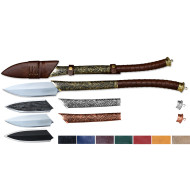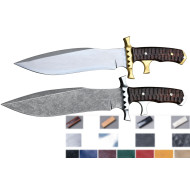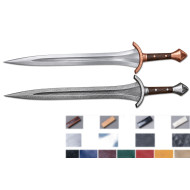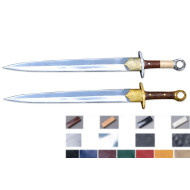
- Model: Fanstasy Dagger
- Product Code: FDD20
- Location: Kathmandu, Nepal
The Black Wraith — A Hand-Forged Fantasy Dagger, Built the Way You Want It
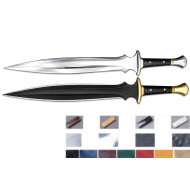
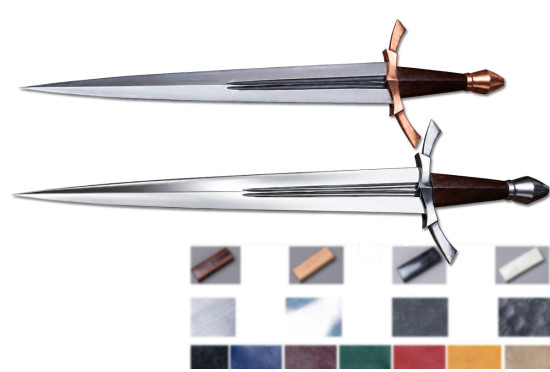
Choose the blade finish, the handle, the fittings and the scabbard colour, then add your engraving — and we forge that exact dagger. Every selection updates the preview on screen. There are 480 possible builds before personalisation, and each one is forged to order in Kathmandu.
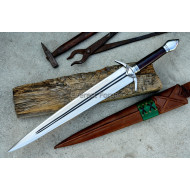
Underneath every combination is the same blade: 20 inches of hand-forged 5160 spring steel, double-edged, running in a long even taper from a broad base to an acute point, with twin fullers cut down the centre. The hilt is cruciform with swept quillons and a conical pommel, and the grip is short and deliberate at 4.5 inches — sized for one hand and nothing else. At 28 inches overall it is a dagger only by name: in the hand it carries like a short sword, with the reach and the point to match.
Your Four Choices
Blade length and construction are fixed on this pattern. For a different size, an engraved name or a design of your own, use our custom forge service.
Dagger, or Short Sword?
Both words are defensible, and it is worth being clear about which is doing the work. By hilt design this is a quillon dagger: the cruciform guard, the short one-hand grip and the heavy pommel are the pattern medieval smiths used for a knightly sidearm worn at the belt. By blade length it is a short sword. Historical quillon daggers ran roughly 10 to 16 inches of blade; this one runs 20, which puts it past the daggers and into the territory of the cinquedea and the medieval short sword.
That is the point of the piece. It keeps the compact, controlled hilt of a dagger and gives it a sword's reach, a combination that exists in fantasy rather than in the archaeological record. We build it because it looks and handles like nothing else in the range, not because a museum has one.
The Twin Fullers
The two grooves running down the centre of the blade are fullers. They are not blood grooves — that myth attaches itself to every fullered blade ever made. Taking steel out of the middle of a blade, where it contributes least to stiffness, lightens it while the ridges either side keep it rigid, in the same way an I-beam carries load with far less metal than a solid bar. On a 20-inch blade that difference is what keeps 740 grams of steel feeling quick rather than dead in the hand.
They also do something for the eye, and the blade finish decides how much. On a satin or polished blade the fullers sit dark against bright steel and draw a line the full length of the piece; on a raw forge or acid wash blade they disappear into the surface and the whole thing reads older and heavier.
Which Blade Finish Suits the Wraith?
Handle and Fittings
Rosewood is our standard grip: dense, dark and warm in the hand, and the best all-round choice. Whitewood is the pale timber and gives the sharpest contrast against a black coated or acid wash blade. Buffalo horn is glossy black and takes a deep polish, which suits the name better than anything else on the list, though it is the least forgiving of very dry heated rooms. The rosewood + whitewood grip bands the two timbers along the handle for a two-tone build that reads as your own rather than a stock piece.
The fittings are the swept quillons and the pommel — the parts that give this dagger its silhouette, so the metal matters more here than on a plain hilt. Silver-tone is a bright white metal that stays bright longest and gives the cleanest medieval look. Brass is warm gold and pairs naturally with rosewood. Copper is warmer still and darkens fastest, which ages a build quickly. Black fittings with a black coated blade and a black scabbard give the darkest build available, and the one the name was written for.
Scabbard and Engraving
The scabbard is leather, in six colours. Black and brown are the most restrained; red and blue are the boldest against bright fittings; green suits a woodland or ranger theme; white is the most striking and shows wear soonest.
The personalisation field takes a name, initials, a date or a short line of your choosing, engraved before the dagger ships, and you can upload a crest, arms, a logo or a photograph for us to reproduce. A 20-inch blade gives a long, flat canvas, so longer inscriptions and detailed artwork both work on this one.
Want It Built Differently?
A longer or shorter blade, a different pommel or quillon shape, blackened or antiqued fittings, a matched pair or a fantasy design of your own — anything outside this option list goes through our custom forge service, where we quote your build individually.
Request a Custom Forge →Why This Dagger Works
Standard Build Specification
Blade, hilt and overall length are fixed in this configurator and do not change with your selections. Because every piece is hand-forged, small variation in weight, dimensions, grain and finish is normal.
An Honest Note on This Dagger
An honest note. Three things worth saying plainly. First, this is a fantasy design, not a reproduction: the hilt follows a real medieval pattern, but no surviving quillon dagger carries a 20-inch blade, so do not buy it for inspected reenactment where a documented type is required. Second, the grip is 4.5 inches — there is no room for a second hand, and the piece is meant to be used with the control of a dagger rather than the swing of a sword. Third, the silver-tone fittings are a bright white metal, not sterling silver, and 5160 is not stainless: it will rust if left wet or stored damp in its scabbard, so wipe it dry and keep a light film of oil on it.
This Dagger Suits
- Collectors who want a fantasy blade with real forged geometry behind it
- Cosplay and costume builds needing a sidearm with presence, matched to your colours
- Display, where the twin fullers and swept quillons carry the length
- Anyone who finds most daggers too short and most swords too long
Look Elsewhere If
- You need a documented historical type for inspected reenactment
- You want a two-handed grip
- You want a working outdoor tool rather than a collection piece
- You want a stainless blade that tolerates neglect
How Your Order Is Made
Caring for Your Dagger
Wipe the blade dry after handling — skin acid marks carbon steel within days — and keep a light film of oil on it; mineral or camellia oil both work. Pay attention to the fullers, where oil and moisture both collect, and to the line where the blade meets the quillons, which a cloth drawn along the flat never reaches. Do not store the dagger in its scabbard for long periods, because leather holds moisture against steel; a stand or a dry drawer is better. Brass and copper fittings patina with handling and polish back with any metal polish if you prefer them bright. Give a timber grip a little oil once or twice a year, and keep horn away from radiators and direct sun. Light surface rust, if it appears, comes off with fine steel wool and a re-oil.
Shipping, Returns and Warranty
Every piece is prepared at the forge in seven to ten days, and shipping adds a further seven to ten days. Orders to the USA and Canada travel with FedEx; everywhere else ships on a DDP service, which means duties and taxes are settled before the parcel moves so there is nothing to pay on delivery. Every piece carries the Everest Forge manufacturer warranty against defects in forging and heat treatment. Because a configured and engraved dagger is made to your specification, it falls outside our standard returns window except where the blade is faulty — full terms are on our shipping and returns page. Import rules on edged blades vary by country and are the buyer's responsibility to check before ordering.
Explore More Everest Forge Blades
Questions About the Black Wraith
Is it a dagger or a short sword?
The hilt is a dagger hilt: cruciform guard, a 4.5-inch one-hand grip and a heavy pommel, following the late-medieval quillon dagger pattern. The blade is short-sword length at 20 inches, well past the 10 to 16 inches of historical quillon daggers. We call it a dagger because that is how it handles, and we give you the measurement so you can decide what to call it.
Is the design historical?
The hilt is; the proportions are not. Swept quillons, a short grip and a conical pommel are all real medieval features, but no surviving quillon dagger carries a blade this long. It is a fantasy piece built on real geometry, and we would rather say so than sell it as a reproduction.
Which build is the "black wraith" build?
Black coated blade, black fittings, black scabbard, and either buffalo horn or rosewood for the grip. That is the darkest combination available and the one the name was written for. The preview shows it before you order — and if you want the opposite, polished blade with silver-tone fittings and a white scabbard is the brightest build on the page.
What are the grooves down the blade?
Fullers. Taking steel out of the centre of a blade, where it does least for stiffness, lightens it while the ridges either side keep it rigid, exactly as an I-beam does. They are not blood grooves, which is a myth attached to every fullered blade. How much they show depends on your finish: they read dark on satin and polished, and disappear into raw forge and acid wash.
How heavy is it in the hand?
The blade alone is about 740 grams and the finished piece about 1,000 grams. That is substantial for a dagger and light for a sword of the same length, which is what the twin fullers are doing. Expect it to feel controlled and point-forward rather than whippy.
Which handle should I choose?
Rosewood is our standard and the best all-round choice: dense, dark and stable. Whitewood gives the sharpest contrast against a dark blade. Buffalo horn is glossy black and takes a deep polish, which suits the name, though it prefers to stay out of dry heated rooms. The rosewood + whitewood grip bands the two timbers for a two-tone build.
Are the silver fittings real silver?
No. The silver-tone option is a bright white metal chosen for a silver look. It stays bright longer than brass or copper and needs no special care. Sterling fittings can be quoted through custom forge.
What can I have engraved?
A name, initials, a date, a dedication or a short line, typed into the personalisation field, or a crest, arms, logo or photograph uploaded as a file. The 20-inch blade gives a long flat canvas, so longer inscriptions and detailed artwork both sit well on this one.
Is it sharp, and can I get it blunt?
Both edges ship sharpened and the point is acute, so handle it with care on unboxing. For cosplay, stage use or countries that restrict sharpened blades, add "Stage combat build — rebated edge, rounded tip." in the order note and we will build it that way; our stage combat standard explains what changes. Do not blunt a sharpened blade yourself.
What steel is it, and will it rust?
5160 high-carbon spring steel, hardened and tempered by hand. It is not stainless, and that is a deliberate trade: 5160 is tougher and takes a better edge than the stainless used in most fantasy blades, at the cost of needing care. Wipe it dry, keep a light film of oil on it and store it out of the scabbard. Black coated and acid wash reduce the upkeep.
Can I order a different blade length?
Not through this configurator, which keeps the blade at 20 inches. A longer or shorter blade, a different pommel or quillon shape, or a design of your own is quoted individually through our custom forge service.
Is a dagger this size legal where I live?
We cannot answer that for you. Owning, carrying and importing an edged blade are three separate legal questions, and the answers differ by country and sometimes by city. Check all three for your own address before ordering, or contact us if import is the concern.