Menu
Your Cart

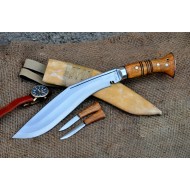
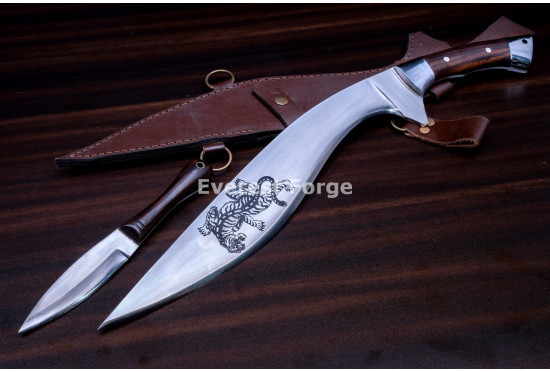
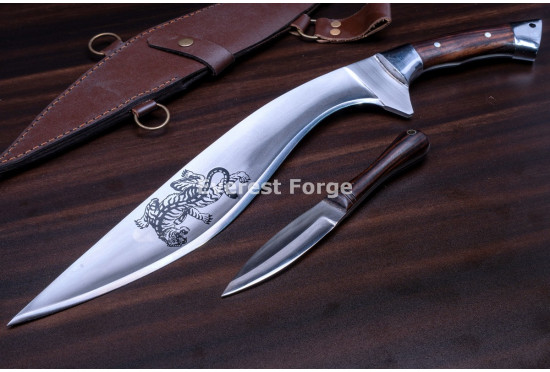
Hand-Forged Kukri Knife, Tiger Etched Blade

Hand-Forged Kukri Knife, Tiger Etched Blade
$194.99
Ex Tax: $194.99
  • Model: Signature Kukri/Khukuri
  • Product Code: SingnatureBlade050
  • Location: Kathmandu, Nepal

Available Options

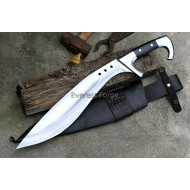
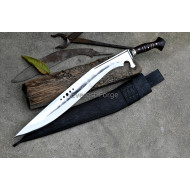
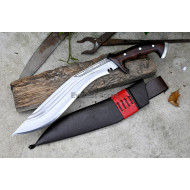
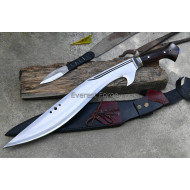
Hand-Forged Kukri Knife — Tiger Etched Blade with Panawal Rosewood Grip

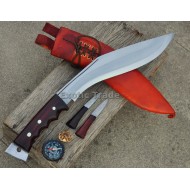
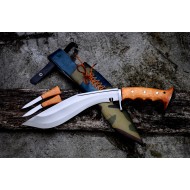
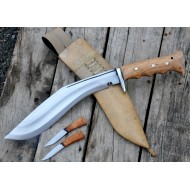
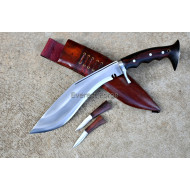
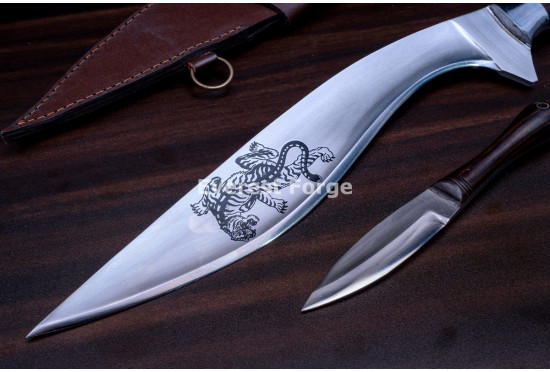
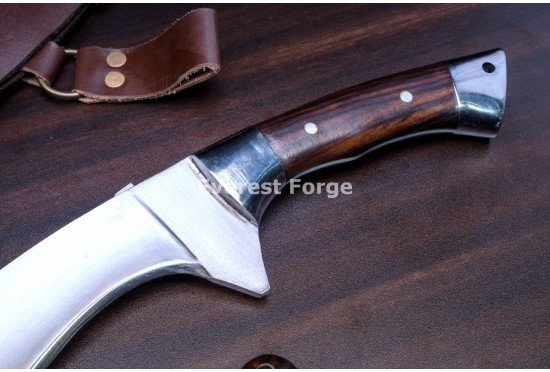
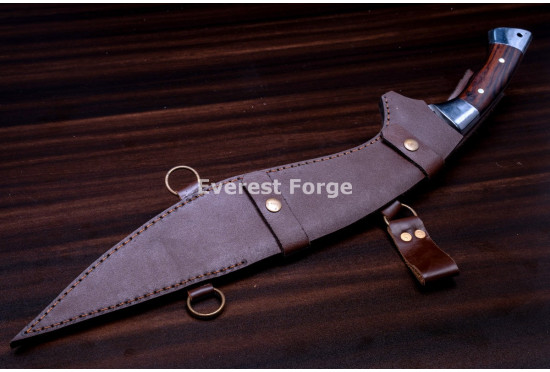
This is a hand-forged, fully functional kukri — the traditional forward-curved knife of Nepal, forged at our workshop in Kathmandu from 5160 high-carbon spring steel, oil-tempered, full tang, and sharpened to a true edge. The blade carries the cho notch at its base, a satin finish, and an etched tiger on the flat. The hilt is panawal construction: rosewood scales riveted straight through a full-width tang, with a polished steel bolster and butt cap. It ships with a brown leather scabbard and a matching karda companion knife. Every kukri is made to order in your chosen size, finish, and engraving.

The standard blade is 16.5 inches on a 6.5-inch handle with a 4-inch grip, for an overall length around 23 inches. That is a large kukri — a service pattern runs nearer 11 inches — so this is a heavy chopper rather than a belt knife, with the mass and reach to take down green wood in one stroke. The oil-tempered 5160 steel and riveted full tang make it a working blade, not a display piece.

An honest note. This is a big kukri and you should know what that means before ordering. At 16.5 inches of blade it is well beyond the standard service size, which makes it a superb chopper and an awkward everyday carry — it is heavy in the hand and it needs room to swing. If you want a kukri to wear on a belt, use around camp, or hand to someone learning, a shorter blade will serve you better and we will build one. The other honest point: this is made by our smiths in Kathmandu in the traditional way, but it is a modern working knife rather than a reproduction of a specific historical or regimental pattern.

Bespoke Service

Forge a Kukri to Your Own Design

Want a shorter service-size blade, a different etching, buffalo horn instead of rosewood, or a full karda and chakmak set? Our Custom Forge service builds to your spec, by hand in Kathmandu.

Request a Custom Forge →

What Is a Kukri?

The kukri, or khukuri, is the national knife of Nepal — a forward-curved single-edged blade that has served as a farm tool, a household knife and a weapon for centuries, and as the sidearm of the Gurkha regiments since the 19th century. Its defining features are the inward bend of the blade, the wide belly that carries the mass forward, and the cho — the small notch cut into the edge where the blade meets the bolster. Traditionally it is carried with two small companion blades in the scabbard: the karda, a utility knife, and the chakmak, a blunt burnisher used to true the edge. In Nepal these are working tools first. Every village has a kami, a smith, and most kukris in daily use across the country were forged from vehicle leaf spring long before anyone wrote a steel specification for it.

Real Forged BladeHand-forged 5160 spring steel, full tang, oil-tempered and sharpened.
Panawal ConstructionRosewood scales riveted through a full-width tang — the stronger traditional build.
Traditional Cho NotchThe notch at the blade root that marks a genuine kukri rather than a copy.
Etched TigerHand-applied tiger etching on the blade flat.
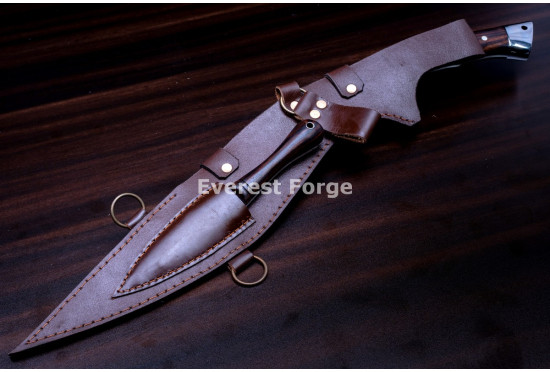
Karda IncludedA matching rosewood-handled companion knife, carried in the scabbard.
Made in KathmanduForged by our own smiths in Nepal, where the kukri comes from.

Specifications

TypeHand-forged Nepali kukri, large chopping pattern
Blade Length16.5 inches standard (custom sizes to order)
Handle Length6.5 inches overall, 4-inch grip section
Overall LengthApprox 23 inches at standard blade size
WeightApprox 1240 g total, 960 g blade
Blade Steel5160 high-carbon spring steel (truck leaf spring)
Heat TreatmentOil-tempered — hard edge, flexible spine
Blade StyleForward-curved single edge, wide belly, cho notch at the root, satin finish, sharpened
Blade DetailEtched tiger on the blade flat
TangFull tang, panawal construction with riveted scales
HandleRosewood scales with polished steel bolster and butt cap
Included BladesOne karda companion knife with rosewood handle
ScabbardBrown leather with brass fittings and belt frog, included
OriginHand-forged in Tokha-3, Kathmandu, Nepal

Customize Your Kukri

Every kukri is forged to order. Set your options before you add to cart:

Blade LengthStandard 16.5 inches, or a service-size blade nearer 11 inches, or your own spec.
Blade FinishSatin as standard, or polished, dark forge finish, or antiqued.
EtchingTiger as standard, or a different motif, a name, or no etching at all.
Handle MaterialRosewood as standard, or buffalo horn, bone, or walnut.
Companion BladesKarda as standard, or a full traditional karda and chakmak set.
EdgeSharpened to a working edge, or left display-blunt on request.

Hand-Forged, Not a Souvenir Kukri

This Kukri

  • Hand-forged 5160 high-carbon spring steel
  • Oil-tempered, hard edge and flexible spine
  • Full tang, panawal construction, riveted scales
  • Cho notch cut properly at the blade root
  • Sharpened, balanced, forged in Nepal by Nepali smiths

A Souvenir Kukri

  • Unhardened mild steel or stainless
  • No real heat treatment, edge rolls on first use
  • Stick tang glued into a hollow handle
  • Cho stamped on as decoration, or missing entirely
  • Blunt, made for a shelf

How It Is Made

You set the spec — blade length, finish, etching, handle material, companion blades and edge.
A smith forges the blade from a 5160 leaf-spring billet, drawing the forward curve and cutting the cho.
The blade is oil-tempered, then polished to a satin finish, etched, and hand-sharpened along the belly.
We fit the bolster, rivet the rosewood scales through the tang, make the scabbard and karda, and ship worldwide tracked.

Who It Is For

  • Collectors of Nepali and Gurkha blades who want one forged in Nepal rather than copied elsewhere
  • Bushcraft and outdoor users who want a serious chopping tool for green wood
  • Buyers who want a large display kukri with genuine working construction underneath
  • Anyone replacing a souvenir kukri that failed at the handle
  • Gift buyers personalizing a blade with a name or their own etching
  • Not for everyday belt carry — see the honest note above, and order a shorter blade instead

What Is Included

  • One hand-forged kukri, built to your chosen spec
  • One karda companion knife with a matching rosewood handle
  • Brown leather scabbard with brass fittings and belt frog
  • Rosewood panawal grip with polished steel bolster and butt cap
  • Etched tiger on the blade flat, or your own etching if ordered
  • Everest Forge manufacturer warranty

Explore More Hand-Forged Blades

Shipping, Returns & Care

Shipping

In-stock specs dispatch within 2 to 3 business days; fully custom builds take roughly 4 to 6 weeks to forge before dispatch. We ship worldwide by DHL or FedEx in 7 to 14 business days, tracked. Import and blade laws vary by country, so please check your local rules before ordering.

Returns & Warranty

Every blade is backed by the Everest Forge warranty against forging and material defects. If something is wrong with your order, we will repair, replace, or refund it. Personalized and custom-etched blades are made to order, so please confirm your spec carefully before purchase.

Care

Wipe the blade clean and dry after use and keep a light film of oil on it — 5160 is carbon steel and it will rust if neglected, and sap from green wood is acidic enough to mark a blade overnight. Give the rosewood an occasional wipe with oil to keep it fed. Do not store the kukri inside the leather scabbard for long periods: leather is tanned with acids and holds damp, and both work against carbon steel over months.

From The Forge

Build a Kukri That Is Yours Alone

Beyond the options here, our Custom Forge service will build to a service size, a regimental pattern, a full karda and chakmak set, or your own etching — direct from our smiths in Kathmandu, roughly 4 to 6 weeks from order.

Start a Custom Forge →

Frequently Asked Questions

What is a kukri knife?

The kukri, or khukuri, is the national knife of Nepal — a forward-curved single-edged blade used as a farm tool, a household knife and a weapon for centuries, and carried as the sidearm of the Gurkha regiments since the 19th century. It is defined by the inward bend of the blade, the wide belly that carries the weight forward, and the cho notch at the blade root. Traditionally it is worn with two small companion blades in the scabbard: the karda, a utility knife, and the chakmak, a blunt burnisher for truing the edge.

What is the notch at the base of the blade for?

That is the cho, sometimes called the kaudi, and it is the single most reliable mark of a genuine kukri — a knife without one is a recurved chopper wearing the name. What it is for is genuinely disputed, and anyone who tells you there is one settled answer is overstating the evidence. The explanations you will hear are that it stops sap, blood or water running back onto the grip; that it is a stress riser deliberately placed to stop a crack travelling from the edge into the handle; that it marks the practical end of the sharpened edge so a sharpening stone does not run into the bolster; and that it carries religious meaning, variously read as a trident of Shiva or a representation of a cow's hoof. The structural argument is the most convincing to smiths, because a sharp internal corner really does terminate a crack. The honest answer is that all of these are held sincerely in Nepal and the origin is old enough that no one can settle it.

Why is a kukri blade bent forward?

The angle does two things at once, which is why the shape has survived unchanged for so long. First, it puts the centre of percussion — the point that delivers the cleanest strike — out in the wide belly of the blade rather than near your hand, so a chop lands with the mass of the knife behind it, much like an axe. Second, because the edge sits at an angle to the line of the swing, it meets the target obliquely even on a straight downward stroke, so the blade slices as it drives in rather than wedging straight through. A straight knife has to be angled deliberately to do that. The trade-off is that the bend puts a twisting load on the wrist and the handle, which is precisely why traditional construction runs the tang the full width of the grip.

What is the small knife included with it?

That is the karda, the traditional utility companion knife carried in a pocket on the kukri's scabbard. It handles the small jobs a 16-inch chopper is hopeless at — cutting cord, food preparation, fine carving, skinning. It is a real knife, forged and sharpened, not a decorative fitting. The full traditional pairing also includes a chakmak, a blunt steel burnisher used to straighten and true the working edge in the field and, historically, to strike sparks from flint. This kukri ships with the karda; if you want the chakmak as well, order the full set through the companion blades option.

Is this a real, functional kukri?

Yes. It is hand-forged from 5160 high-carbon spring steel, oil-tempered, sharpened, and built on a full tang with the rosewood scales riveted straight through it. It will chop green wood, clear brush and take the abuse a working knife is meant to take. Do not use it on stone, metal, nails hidden in old timber, or seasoned hardwood knots, and check the rivets and edge after heavy use.

What steel is it, and is it oil-tempered?

The blade is forged from 5160 high-carbon spring steel, the same alloy used in heavy-duty truck leaf springs, prized for toughness and edge retention. It is oil-tempered for a hard cutting edge backed by a flexible, shock-absorbent spine. There is a nice continuity here: Nepali village smiths have forged kukris from vehicle leaf spring for generations, long before anyone in Nepal was quoting an alloy number. It became the traditional material because it was available and because it works — a chopping blade needs to absorb shock without chipping far more than it needs extreme hardness.

Is it full tang, and what does panawal mean?

Yes, full tang. Panawal is the Nepali term for exactly this construction: the tang runs the full width and length of the handle and the scales are riveted straight through it, so the grip is mechanically fastened to the steel rather than held by adhesive. The traditional alternative is a narrow stick tang set into a solid handle and peened at the butt, which is lighter and looks cleaner but is the part that fails first on a hard-used knife — it is why so many souvenir kukris break at the handle rather than the blade. On a blade this size, with the twisting load the forward bend generates, panawal is the right build.

What is the tiger etching on the blade?

A tiger etched into the flat of the blade, applied by hand after the blade is finished. Tigers are a common motif on decorative Nepali blades and on presentation kukris, and this one sits where the blade is widest so it is visible when the knife is displayed or carried edge-down. It is etched into the steel rather than printed on, so it will not wear off with handling, though it will soften slightly if the blade is ever heavily re-polished. Other motifs, a name, or a plain undecorated blade are all available to order.

Does it arrive sharpened?

Yes, sharpened to a working edge along the belly, finished by hand. If you need it blunt for display, or to satisfy import rules where you live, choose the display-blunt option or tell us in your order notes. There is no extra charge either way. Note that the edge near the cho and back toward the bolster is traditionally left unsharpened, which is normal and not an oversight.

What is the scabbard like?

A brown leather scabbard with brass fittings, a belt frog and a pocket for the karda, made by hand to fit the blade you order. Traditionally a kukri sheath is built around a wooden core covered in leather or hide, which is what holds the blade securely and stops the edge cutting through. As with any leather scabbard, store the knife outside it rather than in it for the long term.

Can I order a smaller blade or a full karda and chakmak set?

Yes to both, and the size question is worth thinking about properly. A service-size kukri of around 11 inches is far more useful for belt carry, camp work and general handling than this one, and most people who own several end up reaching for the smaller blade. Order the size that matches what you will actually do with it, and tell us the job rather than only the dimension — we will say honestly what will serve you. The full traditional set with both karda and chakmak is available through the companion blades option.

Do you ship worldwide, and how long does it take?

Yes. We ship worldwide from Nepal by DHL or FedEx in 7 to 14 business days with tracking. In-stock specs dispatch within 2 to 3 business days; fully custom builds take roughly 4 to 6 weeks to forge first. Import and blade laws vary by country, so please check your local rules before ordering.

Specification
Blade: 16.5 inches. Hand forged from 5160 carbon steel
Total Length: 23 inches
Handle: 6.5 inches overall with a 4 inch grip section. Full tang panawal construction, rosewood scales riveted through the tang, with polished steel bolster and butt cap
Weight: Approx 1240 grams total (blade approx 960 grams)
Note: As every piece is forged by hand, slight variation in weight, dimensions and finish may occur. Rosewood grain varies between pieces. Includes a karda companion knife. Keep the blade lightly oiled when not in use.

Write a review

Note: HTML is not translated!
Bad Good
Captcha