Menu
Your Cart

Hand-Forged Mutiny-Pattern Khukuri

Hand-Forged Mutiny-Pattern Khukuri
$174.99
Ex Tax: $174.99
  • Model: Historical Khukuri
  • Product Code: Mutiny014
  • Location: Kathmandu, Nepal

Available Options

What Is a Mutiny-Pattern Khukuri?

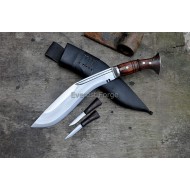
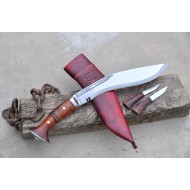
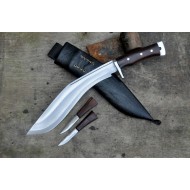
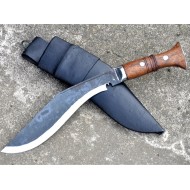
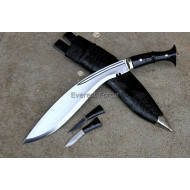
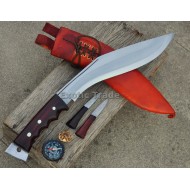
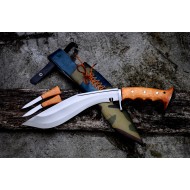
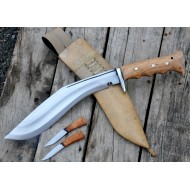
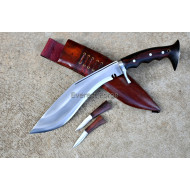
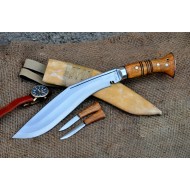
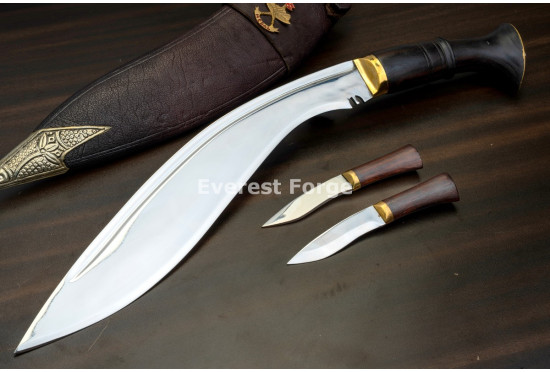
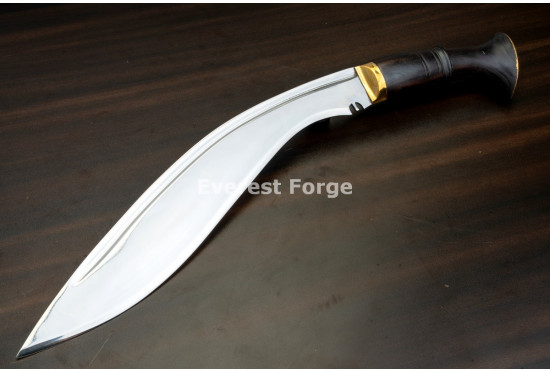
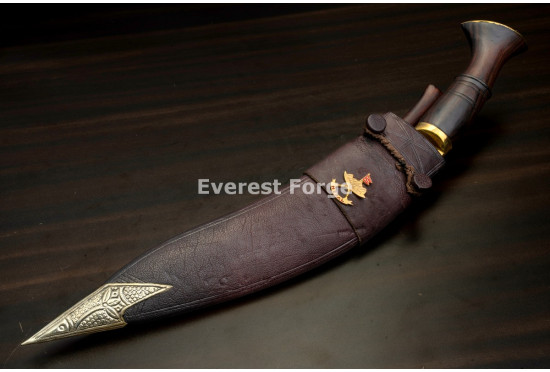
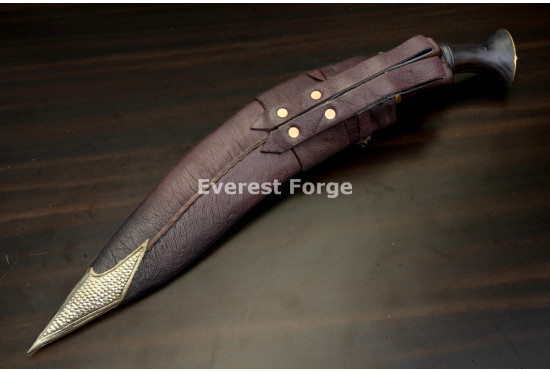
The Mutiny pattern takes its name from the Indian Mutiny of 1857, and it describes khukuris of the generation that fought it: longer in the blade than anything the twentieth century issued, broad through the belly, with a single fuller cut along the spine and a flaring butt. This one is 14 inches of blade on a 6 inch grip, 20 inches overall, hand-forged in Kathmandu from 5160 high-carbon spring steel, with karda and chakmak in a dark leather scabbard finished with a cast brass chape.

What makes the period interesting is that no standard existed yet. The first officially specified British service khukuri was still nearly half a century away in 1903. A Gurkha in 1857 carried whatever he had brought from home or drawn from a Nepali arsenal, which is why surviving Mutiny-era pieces vary so much and why the pattern is defined by what collectors found rather than by any drawing.

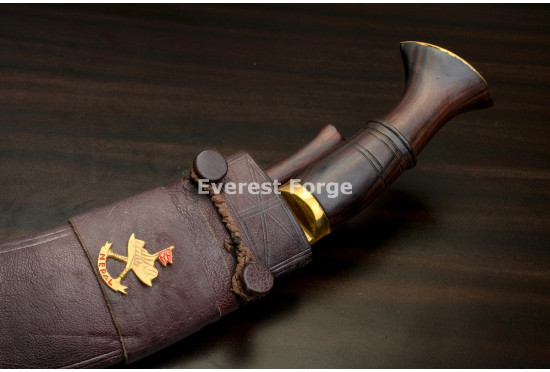
An honest note on the badge. The scabbard carries an enamelled NEPAL badge with crossed khukuris. That is a modern emblem, not a period one, and it would look wrong to anyone who knows the era. It is attractive and a great many Nepali-made khukuris carry something similar, but on a piece named for 1857 it is an anachronism and we would rather point it out than let you notice later. We will build this without the badge at no extra cost, and for a display piece meant to read as period we would recommend it. On the related question of arsenal and inspection stamps, our policy is set out on our MK1-pattern khukuri page: we do not reproduce them.

An honest note on the pattern. This is a khukuri built to Mutiny-era proportions, not a reproduction of a documented example. Genuine pieces of the period were frequently laminated rather than made from a single steel, often carry fine decorative filework along the spine, and were fitted with hardware and scabbards that vary enormously from piece to piece. Ours is honest modern work in the old shape.

Please check your local law before ordering. At 14 inches this blade is above the everyday carry allowance almost everywhere, and the khukuri's distinctive shape draws customs attention in some countries. Rules for owning one at home, carrying one in the field and importing one across a border are frequently three separate questions with three different answers.

Custom Forge

Want It Without the Badge?

A plain scabbard reads far closer to the period, and it costs nothing extra. We will also cut spine filework in the mid nineteenth century manner if you want the piece to look its age properly.

Specify a Period Build →

Why This Khukuri Is Built the Way It Is

Mutiny-Era LengthFourteen inches of blade. Surviving pieces of the period commonly run between fourteen and fifteen inches, well beyond anything the later service patterns specified.
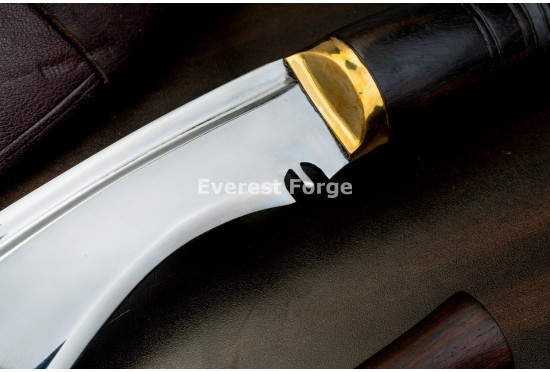
Single Spine FullerOne groove taking weight out of the thickest part of the blade while leaving the spine rigid. On a blade this long it is the difference between usable and exhausting.
Deep BellyMass carried two thirds of the way down, which is where a forward-angled blade lands its impact. The fuller removes weight from everywhere except there.
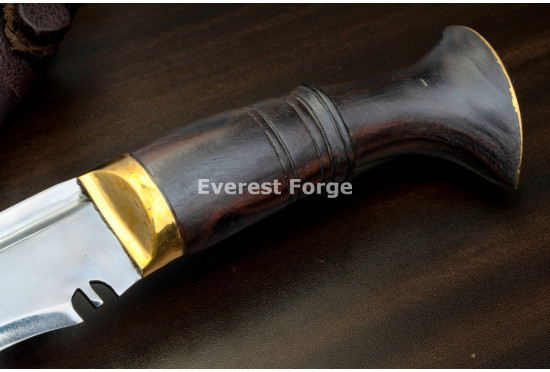
Flared ButtThe grip widens sharply at the end so a hand pulling through a swing runs into something solid. A khukuri has no guard and does not need one.
5160 Spring SteelForged down from leaf spring in the Nepali tradition, oil-quenched and tempered back. Tough enough to be swung at things and re-sharpened in the field.
Cast Brass ChapeA decorated tip protecting the point of the scabbard, where the blade bears every time it is sheathed and where plain leather wears through first.

Full Specifications

TypeKhukuri, Mutiny-era pattern, with karda and chakmak
Period ReferenceMid nineteenth century, before any service pattern was specified
Blade Length14 inches
Handle Length6 inches
Overall Length20 inches
Blade Steel5160 high-carbon spring steel, oil-quenched and tempered
Blade ProfileBroad forward-angled blade with a deep belly and a single spine fuller
ConstructionMonosteel. Period examples were frequently laminated; see the questions below
FittingsBrass bolster and cast brass chape
HandleRing-grooved with a flared butt and a fitted cap
Scabbard BadgeEnamelled NEPAL emblem. Modern, not period. Omitted on request at no extra cost
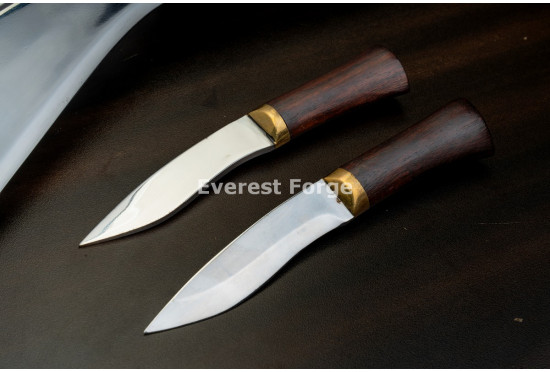
CompanionsKarda utility knife and chakmak burnisher in fitted scabbard pockets
Weight650 g the khukuri, 1030 g with the scabbard
ScabbardDark leather over a rigid core with a riveted retaining panel
OriginHand-forged in Tokha-3, Kathmandu, Nepal

Blade length, blade finish and handle material are selectable on this listing. The figures above describe the standard build as photographed; what you receive will match the options you choose at checkout. Small variations in weight, dimension and finish are normal in hand-forged work.

Build It Your Way

No BadgeThe scabbard built plain, which is what a period piece would carry. No extra cost, and our recommendation for anyone buying this as a historical display.
Spine FileworkFine decorative cutting along the spine in the mid nineteenth century manner, which is one of the marks of a good blade of the era. Quoted separately; it is slow work.
Blade LengthShorter at 11 or 12 inches for easier carry and wider legality, or longer toward the largest surviving examples of the period.
Handle MaterialWater buffalo horn is the traditional choice and raises no CITES question. Rosewood is the harder-wearing option and better for a knife you will use.
Blade FinishPolished as photographed, satin, or a dark forge finish. A forge finish reads far closer to a working blade of the period.
Personal EngravingYour name, a date or a dedication, cut rather than stamped. We do not reproduce arsenal or inspection marks; the reasoning is on our MK1 page.

What This Khukuri Does Well, and What It Does Not

What It Is Good At

  • Chopping. Fourteen inches with a deep belly is real authority, and the fuller keeps it swingable
  • Camp and field work: clearing, splitting kindling, general heavy cutting
  • Display, particularly as part of a period series alongside the later service patterns
  • Handling. At 650 grams it is lively for its length rather than punishing
  • Being a complete set, with the karda for small jobs and the chakmak for edge maintenance

What It Is Not Good At

  • Passing as period. The badge is modern and the blade is monosteel rather than laminated
  • Being an investment. A reproduction does not appreciate; see the question on the collector market
  • Fine work. It is far too large, which is exactly why the karda is in the scabbard
  • Neglect. Carbon steel spots within a day of being put away damp
  • Discreet carry. At 20 inches with a curved scabbard it is conspicuous

How to Order a Custom Khukuri

Decide whether you want the badge. Plain is closer to the period and costs nothing extra.
Pick your remaining options on this page, or use the custom forge form for anything outside them.
Tell us your jurisdiction if length is a concern, and we will build a shorter version at no extra cost.
We confirm the specification in writing and quote before any steel is cut. Nothing is charged until you agree it.
Our smiths forge, grind, heat treat and finish the blade, fit the bolster and handle, forge the companions, then build the scabbard to the finished set.
It ships tracked by DHL or FedEx from Kathmandu, with the customs paperwork made out correctly for your country.
The Series

Four Patterns, Four Points in the History

The Mutiny era, the 1903 MK1, the First World War proportions and the WWII chirra. Each covers a different stage in how the khukuri changed as it went from a village tool to issued equipment.

See the Full Khukuri Range →

Who This Khukuri Is For

  • Collectors building a period series, since this is the earliest pattern we make and the others descend from it
  • Anyone interested in the 1857 campaign and the Gurkha regiments that fought it
  • Campers and outdoors users wanting a long chopping blade that the fullering keeps manageable
  • Buyers who want length without going up to the very large heritage sizes
  • Gift buyers, because a three-piece set with a decorated scabbard presents far better than a bare blade

It is not for you if you want a documented service reproduction, in which case browse the historical replica collection, or if you are buying as an investment, in which case buy an antique from a specialist dealer instead.

What Is Included

  • The hand-forged khukuri, sharpened and ready to use
  • A karda companion utility knife and a chakmak companion burnisher
  • A leather scabbard over a rigid core, with fitted pockets for both companions
  • A certificate of authenticity, care instructions, and the Everest Forge manufacturer warranty

Other Blades From the Everest Forge Workshop

Shipping, Returns and Care

Dispatch. Stock pieces leave the workshop within 2-3 business days. Custom builds take 4-6 weeks depending on the queue, and spine filework sits at the longer end because it is cut by hand.

Shipping. Tracked worldwide by DHL or FedEx, typically 7-14 business days in transit from Kathmandu. Customs paperwork is completed accurately and in full. The khukuri is a recognisable shape and attracts more import scrutiny than a plain knife; please check your own country's rules before ordering.

Returns and warranty. Covered by the Everest Forge manufacturer warranty against defects in forging and materials. Custom builds made to your own specification cannot be returned for a change of mind, which is why we confirm everything in writing first.

Care. Wipe the blade dry after every use and keep a light film of oil on it; carbon steel spots within a day of being put away damp, and there are three blades here rather than one, so check the companion pockets too. Run a cloth along the fuller specifically, since a groove holds moisture and a general wipe skips over it. Feed the scabbard leather once or twice a year, keeping conditioner off the brass and off the enamelled badge, where solvents will lift the colour. Store all three out of the scabbard.

Questions Answered

What is a Mutiny-pattern khukuri?

It is a khukuri built to the proportions of the generation that fought the Indian Mutiny of 1857: longer in the blade than anything later issued, broad through the belly, usually with a single spine fuller and a pronounced flare at the butt. The important thing to understand is that no standard existed. The first officially specified British service khukuri, the MK1, was still nearly fifty years away in 1903. A Gurkha in 1857 carried a knife brought from his own village or drawn from a Nepali arsenal, so the pieces vary enormously and the pattern is defined by what survives rather than by any drawing. That is also why the term is a collector's label rather than a military designation, and why it covers a range rather than a specification.

What actually happened at Hindu Rao's House?

It is the action the Mutiny khukuri is remembered for, and it deserves telling properly. Hindu Rao's House stood at the highest point of the ridge above Delhi, commanding the entire British position; if it fell, the siege failed. The Sirmoor Battalion, which later became the 2nd Gurkha Rifles, held it for over three months in the summer of 1857 and repelled twenty-six major assaults. They lost 327 men out of 490. That is a casualty rate of two thirds, sustained over a whole summer in Delhi heat, in a building that was steadily reduced around them. The Gurkhas were fighting alongside the 60th Rifles, and the two regiments came out of it with a mutual regard that outlasted both the campaign and the century. When people say the kukri earned its reputation in 1857, that is the specific engagement they mean.

Is this a replica of a particular knife?

No. It is built to the proportions and general character of the period rather than copied from a documented example, and we would rather say that than imply a provenance it does not have. Three differences are worth knowing. Genuine pieces of the era were frequently laminated rather than forged from a single steel, which is covered below. Many carry fine decorative filework along the spine, which we cut only as a custom option because it is slow. And the hardware and scabbards on surviving examples vary so widely, having often been repaired, replaced or re-fitted over a working life, that there is no single correct arrangement to copy. Ours is honest modern work in the old shape.

Were mutiny-era blades made differently?

Often, yes, and the difference is worth understanding because it explains something about how the old blades feel. Many khukuris of the mid nineteenth century were laminated: a hard, high-carbon cutting steel forge-welded into a body of softer, tougher iron or low-carbon steel. The reasoning was partly metallurgical and partly economic. Good steel was scarce and expensive in Nepal, so putting it only where it was needed, at the edge, made sense; and the softer surrounding material absorbed shock in a way a fully hardened blade could not, so the knife tolerated abuse. Collectors sometimes etch old blades to reveal the weld line running along the edge. This khukuri is monosteel: a single piece of 5160 spring steel, differentially treated so the edge is hard and the spine stays tough. Modern spring steel is a far more consistent material than anything available in 1857, and the result is a tougher blade overall. It simply is not made the way the originals were.

Why do genuine mutiny-era khukuris cost so much?

Scarcity plus provenance. Twentieth century service patterns survive in quantity because they were made in quantity: an ordinary MK2 can be had for the price of a decent dinner, and an MK1 for somewhat more. Anything from the Mutiny or the Frontier Wars sits in a different bracket entirely, and Victorian officers' pieces with silver mounts and engraved blades reach several hundred pounds and beyond. The three things that drive value are date, provenance and regimental connection, in that order. A knife with a documented history attached to a named man or unit is worth a multiple of an identical knife without one. It follows, and we would rather be blunt about it, that a reproduction is not an investment. This khukuri is worth what a well-made hand-forged knife is worth, and it will stay there. If you are buying to hold value, buy an antique from a specialist dealer and expect to pay accordingly.

What is the badge on the scabbard?

It is an enamelled emblem reading NEPAL with a crossed-khukuri device, and it is modern. Crossed khukuris are the badge motif of most Gurkha regiments and the design has since become a general Nepali emblem, appearing on a great deal of khukuri work made for sale. It is nicely done and many buyers like it. But it is not a nineteenth century feature, and on a piece named for 1857 it is an anachronism that anyone who knows the era will notice immediately. We flag it rather than leaving you to discover it, and we will build the scabbard plain at no extra cost, which is what we would recommend if the knife is going on a wall as a period piece. The related question of reproducing arsenal and inspection stamps is a different matter entirely, and our policy on that is set out on our MK1-pattern khukuri page.

Why is the blade 14 inches?

Because that is where the surviving pieces sit. Collectors handling mutiny-era khukuris report blades commonly in the fourteen to fifteen inch range, which is markedly longer than the twelve to thirteen inches the later service patterns specified. The reason is that in 1857 the khukuri was still a primary weapon rather than a secondary tool: a soldier carrying a muzzle-loading musket that took twenty seconds to reload had a very different relationship with his knife than one carrying a bolt-action rifle. As firearms improved, blade length stopped earning its weight and the patterns shrank. Fourteen inches is therefore a period-honest length, and it is also about the practical limit for a blade you would actually want to carry and swing all day.

Does it come with the karda and chakmak?

Yes, both, in fitted pockets on the scabbard. The karda is the small sharpened utility knife for jobs a 14 inch blade cannot manage, and the chakmak is a burnisher for truing the khukuri's edge between sharpenings and for striking sparks from flint. The chakmak is meant to be blunt and that is not a fault; our kukri with karda and chakmak page explains what both tools do and how to use the chakmak properly.

How does it compare with your other period khukuris?

Four pages now, covering four points in the same story. This is the earliest and the longest at 14 inches, from the era before any standard existed. Our MK1-pattern khukuri is the 1903 service shape at 13 inches, the first time anyone wrote a specification down. Our WWI-era pattern is the largest at 15 inches, built to the older heritage proportions that persisted in civilian hands. Our WWII-era chirra is the most robustly built, with multiple fullers and riveted panawal construction. Read together they show the khukuri shrinking and standardising as it moved from a weapon to a tool, which is the actual story of the last two centuries.

Is a khukuri this size legal where I live?

We cannot answer that for you and you should be careful of any seller who claims they can. At 14 inches this blade is above the everyday carry allowance in nearly every jurisdiction, and the khukuri's distinctive shape means it is sometimes named or recognised specifically where a plain knife of the same size would pass without comment. Rules for owning one at home, carrying one while working outdoors and importing one across a border are frequently three separate matters with three different answers. Check all three for your own address before ordering. If length is the obstacle, an 11 or 12 inch build costs no more.

What steel is it, and how is it heat treated?

5160 high-carbon spring steel, forged down from leaf spring in the Nepali tradition, which is the same stock and the same method our smiths use for khukuris that go to working households in Nepal. It is oil-quenched and then tempered back. On a chopping blade toughness matters more than outright hardness, because the edge will meet things it was not aiming at, and a blade that rolls and can be trued back is far more use than one that chips. It is not stainless: it will take a patina with use and it will rust if left wet.

Will my khukuri look exactly like the photographs?

Close, but not identical. The curve is drawn out by eye and hammered rather than cut from a template, so the sweep of the belly varies from smith to smith and from piece to piece; two khukuris from the same bench on the same day differ visibly in profile. The fuller is ground by hand to follow that individual curve, the bolster is fitted by hand, and the handle material differs piece to piece in colour and figure. The scabbard core is shaped to the individual blade. What does not vary is the specification: length, steel, construction, heat treatment and sharpness are held to the same standard on every piece.

Specification
Blade: 14 inches. Hand forged from 5160 carbon steel
Total Length: 20 inches
Handle: 6 inches. Ring-grooved with brass bolster and flared butt
Weight: 650 grams the khukuri, 1030 grams with the scabbard
Note: Handmade variation in weight, dimensions and finish may occur. Keep blade lightly oiled when not in use.

Write a review

Note: HTML is not translated!
Bad Good
Captcha