Menu
Your Cart

Hand-Forged Kukri, Karda and Chakmak

Hand-Forged Kukri, Karda and Chakmak
$164.99
Ex Tax: $164.99
  • Model: Historical khukuri
  • Product Code: HISTORICAL13
  • Location: Kathmandu, Nepal

Available Options

What Is a Kukri With Karda and Chakmak?

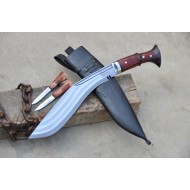
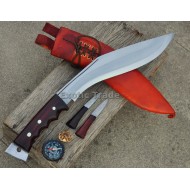
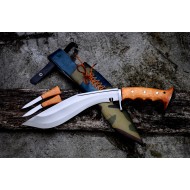
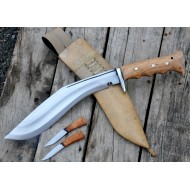
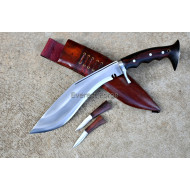
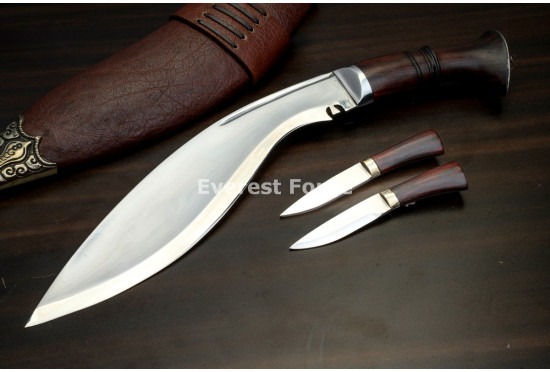
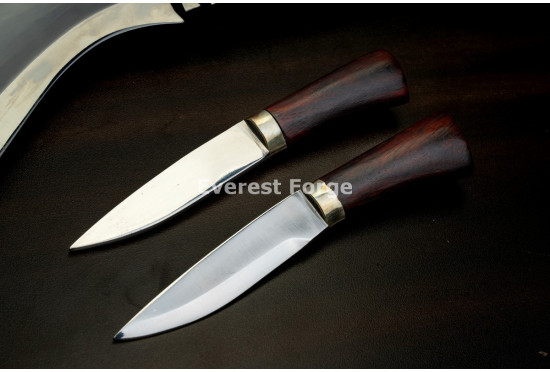
A traditional kukri does not travel alone. Tucked into pockets on the back of the scabbard are two small companion knives: the karda, a little utility blade for the jobs a 13 inch chopper is far too big for, and the chakmak, a blunt steel burnisher used to true the kukri's edge between proper sharpenings. A kukri sold without them is a blade; a kukri sold with them is the complete working set a Nepali household would recognise.

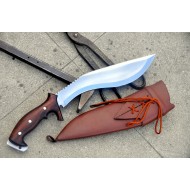
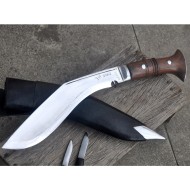
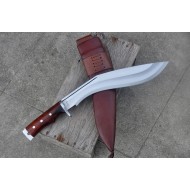
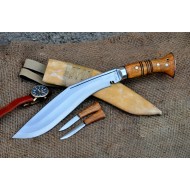
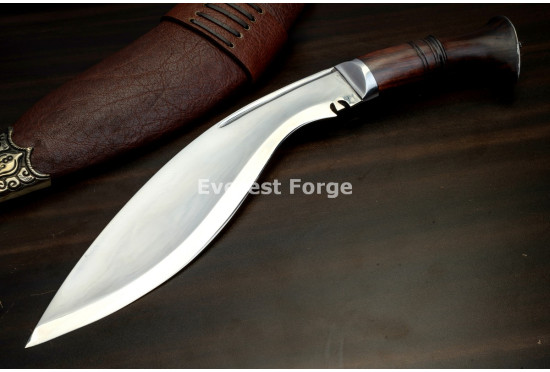
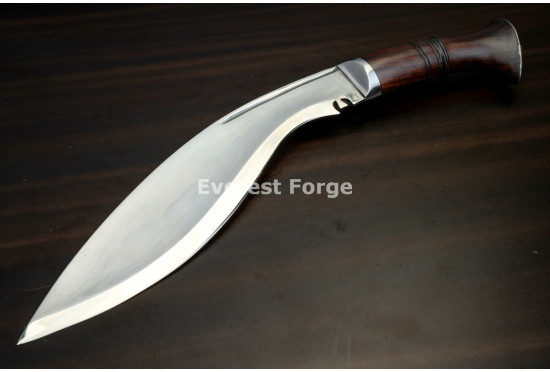
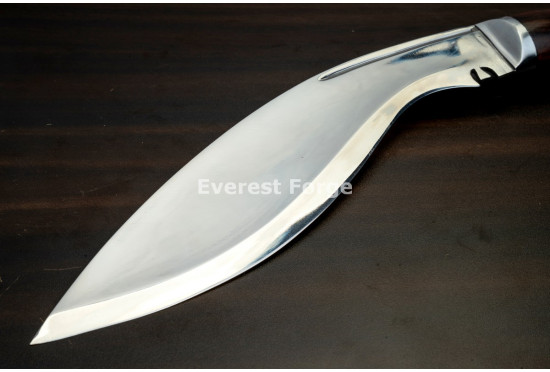
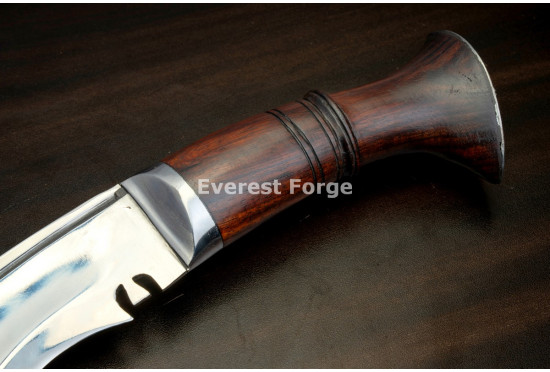
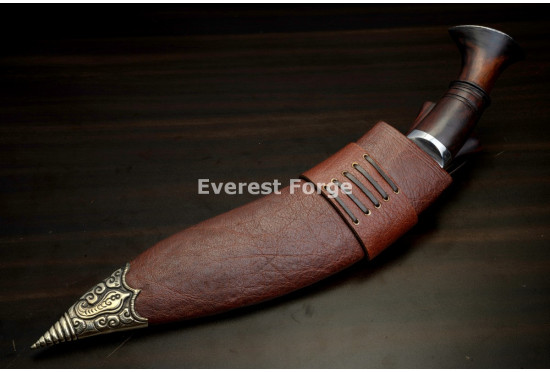
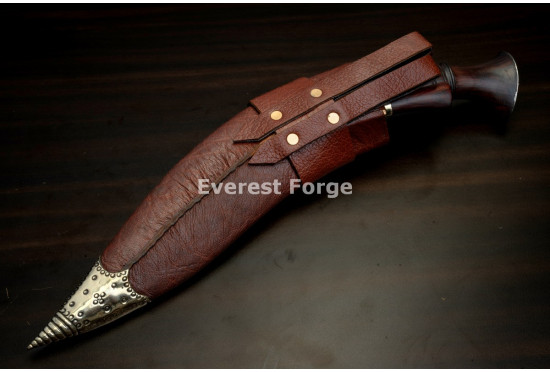
This one has a 13 inch hand-forged blade with the classic deep forward-angled belly, a polished bolster, a flared rosewood grip, and 18.5 inches overall. It is forged in Kathmandu from 5160 high-carbon spring steel and carried in a brown leather scabbard over a rigid core, with a decorated metal chape and a laced retaining panel.

An honest note on the chakmak. The chakmak is supposed to be blunt, and that is not a defect. It has two traditional jobs and both depend on it having no edge: it burnishes and realigns the kukri's edge the way a butcher's steel does a kitchen knife, and its hardened spine strikes sparks from flint. A sharpened chakmak can do neither. It becomes, in effect, a second karda. A number of makers now ship them sharpened because customers complain otherwise, and we would rather explain the tool than quietly change it. If yours arrives with an edge and you want the traditional blunt burnisher instead, tell us and we will replace it.

An honest note on materials. Our specification for this build lists a satin-style polished finish, polished metal fittings and a brass-style scabbard tip. Where we use language like that it means the component is finished to look like a material rather than being solid stock of it, and we would rather write it plainly than let a photograph imply otherwise. Solid brass fittings and a solid brass chape are available as a custom build at additional cost. See the question below.

Please check your local law before ordering. At 13 inches this blade is above the everyday carry allowance almost everywhere, and the kukri's recognisable shape attracts attention from customs in some countries. Rules for owning a knife at home, carrying one in the field and importing one are frequently three different things. Check all three for your own address before ordering, because a parcel seized at your border cannot be recovered.

Custom Forge

Want It Built as a Working Kukri?

Tell us and we will forge it with a blunt traditional chakmak, solid brass fittings, and a blade length sized to the work you have in mind. Our smiths build to order in Kathmandu.

Specify a Custom Build →

Why This Kukri Is Built the Way It Is

Forward-Angled BladeThe bend puts the point of impact ahead of your hand, so a swing lands with far more force than a straight blade of the same weight. It is the whole reason the shape exists.
Deep BellyWeight concentrated in the widest section, two thirds of the way down the blade. That is where the chopping happens and where the mass needs to be.
Karda and ChakmakA small utility knife and a blunt burnisher, carried in pockets on the scabbard. The kukri does the heavy work; these two do everything it cannot.
Flared GripThe handle widens toward the butt so a hand pulling through a hard swing runs into timber rather than sliding off it. A kukri has no guard and does not need one.
5160 Spring SteelForged down from leaf spring in the Nepali tradition, oil-quenched and tempered back. Tough enough to be swung at things, and it re-sharpens in the field on a stone.
Rigid-Core ScabbardLeather over a shaped two-piece core, with a decorated chape and a laced retaining panel. A soft sheath cannot hold a blade this heavy safely.

Full Specifications

TypeKukri with karda and chakmak companion knives
Blade Length13 inches
Handle Length5.5 inches
Overall Length18.5 inches
Blade Steel5160 high-carbon spring steel, oil-quenched and tempered
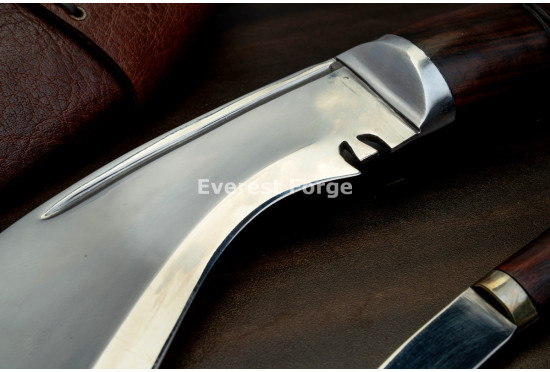
Blade ProfileTraditional forward-angled kukri with a deep belly and a narrow fuller at the spine
Blade FinishSatin-style polished finish
GuardNone. Retention is by the flared grip
HandleRosewood, flared at the butt, with a polished bolster
FittingsPolished metal. Solid brass available as a custom build
KardaSmall sharpened utility knife with a rosewood grip
ChakmakBurnisher for edge maintenance and striking flint; traditionally unsharpened
ScabbardBrown leather over a rigid core, with a laced panel and a brass-style tip
SharpnessShips working sharp, hand-finished on stones
OriginHand-forged in Tokha-3, Kathmandu, Nepal

Blade length, blade finish and handle material are selectable on this listing. The figures above describe the standard build as photographed; what you receive will match the options you choose at checkout. Small variations in weight, dimension and finish are normal in hand-forged work.

Build It Your Way

Traditional Blunt ChakmakThe companion burnisher left unsharpened so it can do the job it exists for. No extra cost, and it is what we would choose.
Solid Brass FittingsSolid brass bolster and chape rather than brass-finished, quoted at checkout. They patina through and polish back indefinitely.
Blade LengthShorter at 10 or 11 inches for a lighter carry, or longer for more chopping authority. The curve is redrawn rather than scaled.
Handle MaterialRosewood as standard. Water buffalo horn is the traditional alternative and raises no CITES question.
Blade FinishSatin as photographed, mirror polish, or a dark forge finish. The forge finish hides working marks best.
Scabbard and CarryLeather colour, chape pattern, and belt loop or frog. Say how you intend to carry it and we will build for that.

What This Kukri Does Well, and What It Does Not

What It Is Good At

  • Chopping. The forward angle multiplies the force of every swing, and nothing else in our range matches it
  • Clearing, splitting kindling, and general camp work where a heavy blade earns its keep
  • Being a complete set. The karda handles the small jobs and the chakmak keeps the edge true between sharpenings
  • Field maintenance. Carbon steel and a burnisher on the same belt is a self-sufficient arrangement
  • Display. It is the most recognisable blade shape in the world and it looks the part

What It Is Not Good At

  • Fine work. The kukri is far too big for it, which is precisely why the karda is in the scabbard
  • Thrusting. The forward angle puts the point somewhere your hand does not expect, and there is no guard
  • Discreet carry. At 18.5 inches with a curved scabbard, it is conspicuous and heavy on a belt
  • Neglect. Carbon steel spots within a day of being put away damp, and a leather scabbard holds moisture
  • Slicing on a board. The curve lifts most of the edge off any flat surface

How to Order a Custom Kukri

Tell us whether you want the chakmak blunt in the traditional way or sharpened as a second small knife.
Pick your remaining options on this page, or use the custom forge form for anything outside them.
Tell us your jurisdiction if length is a concern, and we will build a shorter version at no extra cost.
We confirm the specification in writing and quote before any steel is cut. Nothing is charged until you agree it.
Our smiths forge, grind, heat treat and finish the blade, fit the handle, forge the companions, then build the scabbard to the finished set.
It ships tracked by DHL or FedEx from Kathmandu, with the customs paperwork made out correctly for your country.
The Range

Want a Kukri Built for a Different Job?

We forge the kukri in a dozen patterns, from light machetes for clearing to heavy choppers for wood. This is the traditional complete set; the others are specialists.

See the Kukri Range →

Who This Kukri Is For

  • Buyers who want the complete traditional set rather than a blade on its own
  • Campers and outdoors users needing one heavy blade plus a small knife for everything else
  • Collectors of Nepali arms, for whom a kukri without its companions is incomplete
  • Anyone learning to maintain carbon steel, since the chakmak is a genuine teaching tool
  • Gift buyers, because a three-piece set in a fitted scabbard presents far better than a single knife

It is not for you if you want a slicing knife, in which case our straight camp knife is the better tool, or something discreet, in which case nothing about a kukri will suit.

What Is Included

  • The hand-forged kukri, sharpened and ready to use
  • A karda companion utility knife
  • A chakmak companion burnisher
  • A brown leather scabbard over a rigid core, with fitted pockets for both companions
  • A certificate of authenticity, care instructions, and the Everest Forge manufacturer warranty

Other Blades From the Everest Forge Workshop

Shipping, Returns and Care

Dispatch. Stock pieces leave the workshop within 2-3 business days. Custom builds take 4-6 weeks depending on the queue, and we will give you the honest date rather than an optimistic one.

Shipping. Tracked worldwide by DHL or FedEx, typically 7-14 business days in transit from Kathmandu. Customs paperwork is completed accurately and in full. The kukri is a recognisable shape and attracts more import scrutiny than a plain knife; please check your own country's rules before ordering.

Returns and warranty. Covered by the Everest Forge manufacturer warranty against defects in forging and materials. Custom builds made to your own specification cannot be returned for a change of mind, which is why we confirm everything in writing first.

Care. Wipe the blade dry after every use and keep a light film of oil on it. High-carbon steel spots within a day of being put away damp, and there are three blades here to remember rather than one, so check the companion pockets as well as the main scabbard. Oil the timber once or twice a year and feed the scabbard leather at the same interval, keeping conditioner off the metal fittings. Store all three out of the scabbard: leather holds damp against steel, and a rigid-core scabbard dries slowly. Use the chakmak little and often on the kukri's edge rather than waiting until it is genuinely dull.

Questions Answered

What are the karda and chakmak for?

They are the two small knives carried in pockets on the back of a traditional kukri scabbard, and they exist because a 13 inch chopper is a poor tool for small jobs. The karda is a plain sharpened utility knife, three or four inches of blade, used for everything the kukri is too large and too heavy to do: preparing food, cutting cord, whittling, opening things. The chakmak is not a knife at all. It is a burnisher, a hardened steel rod with a rounded edge, and its job is maintaining the kukri between sharpenings. Together the three make a self-contained set: one blade for heavy work, one for light work, and one tool to keep the first two in condition. A kukri sold without them is a perfectly good knife but it is not the complete traditional article, which is why we include both.

Why is the chakmak blunt, and how do I use it?

Because a sharpened chakmak cannot do either of the things a chakmak is for. Its first job is burnishing: an edge that has been used does not usually go blunt so much as go crooked, with the fine steel at the very apex rolled over to one side. Drawing a hard smooth surface along it pushes that steel back straight and the knife cuts properly again, which is exactly what a butcher does with a steel before carving. Doing that needs a hard rounded surface, not an edge. Its second job is striking sparks: the hardened spine of a chakmak against a piece of flint throws sparks for a fire, which is why the word means "flint striker". Use it by laying the chakmak against the kukri's edge at a shallow angle and drawing it along the bevel a few times per side, little and often. It is not sharpening and it removes no metal; when the edge genuinely dulls you still need a stone. Some makers now ship chakmaks sharpened because buyers assume a blunt one is a mistake. We would rather explain it. If you would prefer yours sharpened as a second small knife, say so and we will do it.

Why is the blade bent forward?

Because it moves the point of impact ahead of your hand and turns a swing into something much closer to an axe stroke. On a straight knife the edge and the handle are in line, so the force you generate is spread along the whole blade. Angle the blade forward and the belly meets the target first, at the end of a longer arc, travelling faster and carrying the weight of the widest part of the blade behind it. The result is that a kukri chops considerably harder than a straight knife of the same weight and length. The trade is specialisation: the curve that makes it chop makes it awkward for anything you would use a flat edge for, because most of the blade lifts off a cutting board. That is a fair trade for a tool designed to clear brush and split wood, and it is another reason the karda is in the scabbard.

What do "satin-style" and "brass-style" mean on your specification?

They mean the component is finished to resemble a material rather than being solid stock of it, and we use the language deliberately rather than letting a photograph do the implying. A brass-style tip is a base metal with a brass-coloured finish. It looks very close to solid brass when new; the difference shows over years, because solid brass patinas all the way through and can be polished back indefinitely, while a finish is a surface layer that eventually wears at the high points, typically the chape tip and any edge that rubs against a belt. Satin-style describes the blade's polish level rather than a material. None of this is a defect and it is what almost every knife at this price uses, but you should know which you are buying. Solid brass fittings and a solid brass chape are available as a custom build; tell us at checkout and we will quote. We apply the same disclosure across our range wherever a component is plated or finished rather than solid.

Why does a kukri have no guard?

Because a guard solves a problem the kukri does not have, and creates one it would rather avoid. A guard stops your hand sliding forward onto the edge when a thrust stops dead. A kukri is not a thrusting weapon; the forward angle puts the point in an awkward place for that anyway. What it does is get swung, and the risk at the end of a hard swing is the handle travelling backwards out of a tired or wet hand. That is solved at the other end, by the pronounced flare at the butt, which your hand runs into rather than sliding over. Leaving the guard off then means nothing catches when you draw from a curved scabbard and nothing sits under your palm when you choke up on the blade. Our camp knife page sets out the same reasoning on a straight blade.

What is the notch at the base of the blade?

It is the cho, sometimes called the kaudi, and it is the small notch cut into the edge just in front of the bolster. Its practical function is to stop a cut running back into the handle: a crack that starts at the edge travels along the blade until something interrupts it, and the rounded end of the cho is that interruption, which is why the notch is always cut round rather than sharp. It also gives a definite point where the sharpened edge terminates, so a stone has somewhere to stop. Beyond that it carries symbolic meaning in Nepal that varies by region and by who you ask, and we would rather not flatten several different traditions into one tidy sentence. It is genuinely diagnostic, though: a kukri without a cho is almost always a foreign-made copy.

How do I sharpen the kukri itself?

With a stone, and with more patience than a straight knife needs, because the edge is curved in two directions. The practical method is to work the blade in sections rather than trying to take the whole edge in one pass: hold the angle you find on the existing bevel, work an inch or two at a time, and follow the curve round rather than fighting it. A round or half-round stone reaches the tighter part of the belly better than a flat bench stone. Traditionally this is done with a small stone held in the hand and the kukri braced, rather than the other way round. Use the chakmak between sharpenings and you will need the stone far less often than you would expect.

Can I baton or chop hardwood with it?

Yes, that is what it is for. 5160 spring steel oil-quenched and tempered back is chosen precisely because a blade that gets swung into things will meet a knot or a stone sooner or later, and a properly tempered edge rolls and can be trued back where a harder, more brittle steel chips out. For chopping, let the weight and the forward angle do the work rather than swinging hard; the blade is more efficient at moderate speed than at maximum effort, and you will last longer. For batoning, strike over the thickest part of the blade and keep the tip out of the split. Expect to true the edge with the chakmak afterwards, which is the whole reason it is on the scabbard.

Is a kukri legal where I live?

We cannot answer that for you and you should be careful of any seller who claims they can. At 13 inches this blade is above the everyday carry allowance in nearly every jurisdiction, and the kukri's distinctive shape means it is sometimes named or recognised specifically where a plain knife of the same size would pass without comment. Rules for owning one at home, carrying one while working outdoors and importing one across a border are frequently three separate matters with three different answers. Check all three for your own address before ordering. If length is the obstacle, a 10 or 11 inch build costs no more.

What steel is it, and how is it heat treated?

5160 high-carbon spring steel, forged down from leaf spring in the Nepali tradition, which is the same stock and the same method our smiths use for kukris that go to working households in Nepal. It is oil-quenched and then tempered back. On a chopping blade toughness matters more than outright hardness, because the edge will meet things it was not aiming at, and a blade that rolls and can be straightened is far more use than one that chips. It is not stainless: it will take a patina with use and it will rust if left wet.

Are the companion knives forged from the same steel?

The karda and chakmak are made in the same workshop from the same 5160 stock as the kukri, which is the traditional arrangement and the reason a good set looks like a set rather than an assortment. Both carry rosewood grips matching the main handle and a fitted collar at the bolster. The karda is heat treated as a cutting blade, since it is a knife and needs to hold an edge. The chakmak is treated for hardness at the spine so it will strike sparks and burnish without deforming, which is a different requirement from an edged blade and one of the reasons it is made as its own tool rather than as a small copy of the karda.

Will my kukri look exactly like the photographs?

Close, but not identical, and on a kukri rather less identical than on most knives. The curve is drawn out by eye and hammered rather than cut from a template, so the exact sweep of the belly varies from smith to smith and from piece to piece; two kukris from the same bench on the same day will differ visibly in profile. The bolster is fitted by hand, the cho is cut by hand, rosewood differs board to board, and the scabbard core is shaped to the individual blade. What does not vary is the specification: length, steel, construction, heat treatment and sharpness are held to the same standard on every piece. Our kukri machete page explains in more detail what can and cannot differ between two blades from the same bench.

Specification
Blade: 13 inches. Hand forged from 5160 carbon steel
Total Length: 18.5 inches
Handle: 5.5 inches. Polished water buffalo horn with brass bolster, mid band and butt cap
Weight: approx 680g kukri, 1040g complete
Note: Handmade variation in weight, dimensions and finish may occur. Keep blade lightly oiled when not in use.

Write a review

Note: HTML is not translated!
Bad Good
Captcha