Menu
Your Cart

Hand-Forged Kukri Knife, Carved Grip

Hand-Forged Kukri Knife, Carved Grip
$149.99
Ex Tax: $149.99
  • Model: Working kukri/khukuri
  • Product Code: CARVEDGP012
  • Location: Kathmandu, Nepal

Available Options

A Hand-Forged Nepali Kukri With a Carved Grip and Inlaid Brass Rings

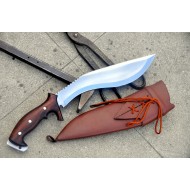
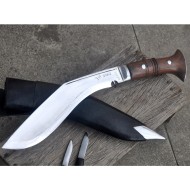
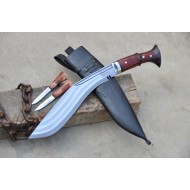
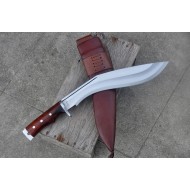
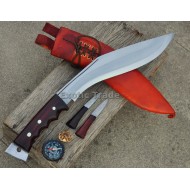
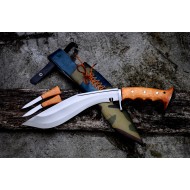
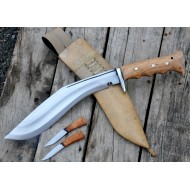
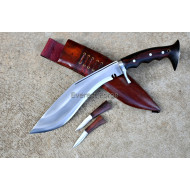
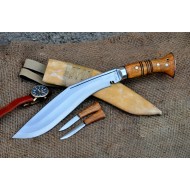
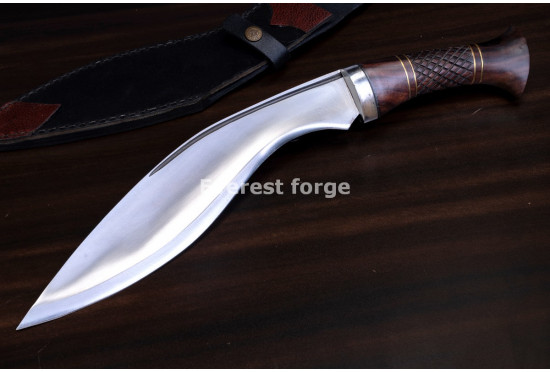
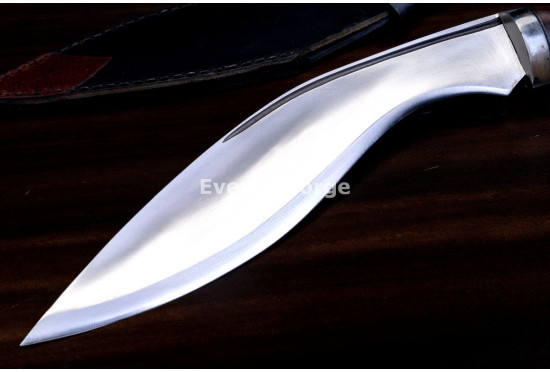
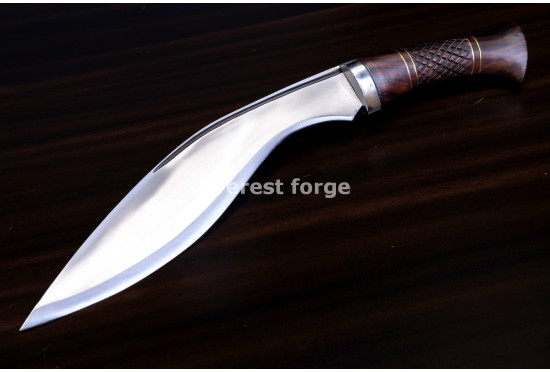
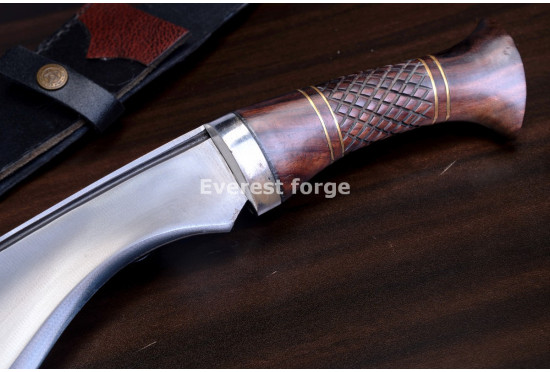
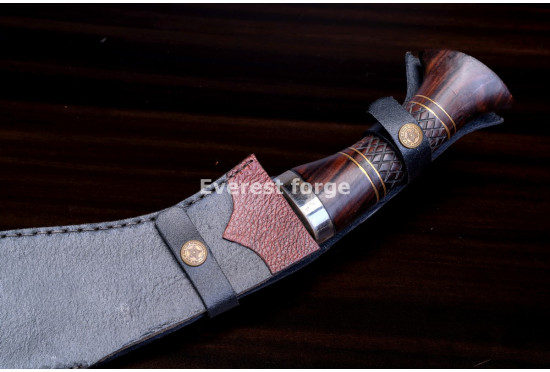
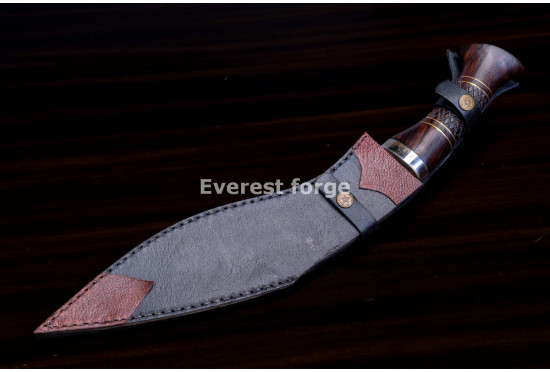
This is a 12 inch hand-forged kukri in presentation dress: the rosewood grip is cut with a diamond chequer across its rear half, banded with two inlaid brass rings and flared at the butt, and the blade is ground with a wide sweeping bevel and a narrow chirra inside the spine. Overall length is 18 inches and the kukri weighs approximately 610 grams, which is Nepali service size and light enough to wear all day. The cho notch is filed at the base of the edge. Forged from 5160 high-carbon steel by our own kami in Tokha-3, Kathmandu, and supplied in a black leather scabbard with hand-cut oxblood applique.

An honest note. The carving and the brass do nothing for how this kukri cuts. It is the same blade, the same steel and the same heat treatment as our plain service kukri, dressed differently — and dressed kukris are a real Nepali tradition rather than an export invention, made for gifts, for presentation and for people who simply want the better-looking one. But we are not going to imply that a decorated grip improves the tool, because it does not. What the chequer genuinely gives you is texture under a wet hand. What the brass gives you is brass. If you want the plain version, we make it and it costs less; if you want this one because you like looking at it, that is a perfectly good reason and you should not be sold a performance story to justify it.

Made to your specification

Have This Kukri Forged Your Way

Blade length, pattern, grind, grip carving and scabbard dress are all decided at the forge before your piece is made. Tell us what you want and our kami will quote it.

Start a Custom Forge Order →

Why This Kukri Is Built the Way It Is

Service Size, Dressed UpTwelve inches is what Nepalis actually carry, not the fifteen to seventeen that dominates export listings. This is that blade with the workshop's decorative work on it rather than a display piece that would be awkward to use.
The Chequer Is Cut, Not PressedEach line of the diamond pattern is cut into the rosewood by hand with a file. It is slower than moulding or rolling a texture on, and it is why the pattern runs slightly differently on every grip.
A Wide Bevel Behind the EdgeThe grind sweeps from high on the blade down to the edge rather than stopping at a shoulder partway. Less wedging in the cut, and it is why this kukri weighs less than our plain one at exactly the same dimensions.

Specifications

Blade Length12 inches
Handle Length6 inches
Overall Length18 inches
Blade Steel5160 high-carbon spring steel, oil-quenched and tempered
Blade ProfileForward-curved with a deep belly, edge on the inner curve
GrindWide sweeping bevel running from high on the blade to the edge
Blade DetailNarrow chirra inside the spine, cho notch at the base of the edge
GripRosewood, hand-cut diamond chequer over the rear half, flared butt
FittingsSteel bolster, two inlaid brass ring bands
Standard BuildPolished blade, carved rosewood grip — size, finish and grip material are selectable above
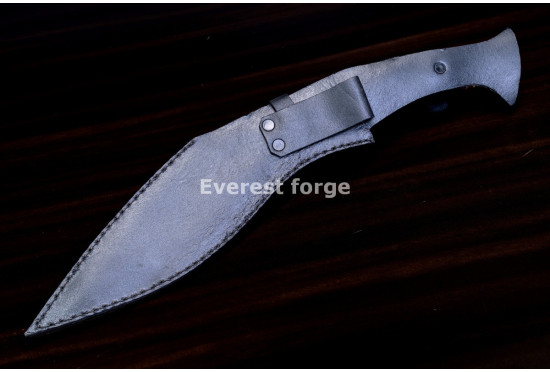
ScabbardBlack leather with hand-cut oxblood applique and brass stud
WeightApproximately 610 grams for the kukri, 830 grams with the scabbard
OriginHand-forged in Tokha-3, Kathmandu, Nepal

Build Options

Grip CarvingThe diamond chequer shown, a plain turned grip, a ringed grip, or Devanagari script and floral work cut into the wood. The chequer is the most practical of them.
Blade LengthTen to twelve inches for a service kukri you can wear all day, or fifteen to seventeen if you want a dedicated chopper. The hilt scales with the blade.
Karda and ChakmakThe two traditional companions in a dap scabbard with pockets behind the blade. This kukri ships without them; adding them makes it a complete set.
Grip MaterialRosewood as standard, which takes carving well. Water buffalo horn is the other traditional choice and carves differently, with a deeper polish and softer lines.
Scabbard DressThe black and oxblood applique shown, plain black or brown leather, or a full traditional dap with a wooden core.
EngravingNames, dates or regimental numbers cut by hand into the blade or the brass. Most presentation orders ask for something.

Is This the Right Kukri for You?

Buy This If You Want

  • A kukri at genuine Nepali service size that still looks like an occasion
  • Hand-cut chequering that gives real texture under a wet or gloved hand
  • A gift or presentation piece that is a working blade underneath the dress
  • A wide-bevel grind that cuts deeper for the same swing than a narrow-bevelled kukri
  • Something light enough at 610 grams to carry rather than hang on a wall

Look Elsewhere If You Want

  • The lowest price for the same cutting performance, which is the plain service kukri
  • The complete traditional arrangement, since the karda and chakmak are not included here
  • A heavy chopper for firewood and standing timber; order fifteen inches or more
  • The strongest hilt for hard daily use, which is panawal construction with riveted scales
  • A stainless blade needing no care, since 5160 is carbon steel and will rust if left wet
Our own craft, not someone else's

Presentation Pieces, Cut by Hand

Carving, brass inlay, engraving and scabbard work are all done in our workshop by the people who forged the blade. Tell us the occasion and we will tell you what is possible.

Talk to the Forge →

How to Order

Choose your blade length, finish and grip material from the options above the description.
Note any engraving, and whether you want the karda and chakmak added, in the order comments.
We confirm the build by email and start forging. Custom work takes four to six weeks.
Your kukri ships tracked by DHL or FedEx and arrives in seven to fourteen business days.

Who This Kukri Is For

  • Gift and presentation buyers who want the piece to look like an occasion without becoming ornamental
  • First-time kukri buyers who want service size and would rather have the decorated version
  • Collectors of Nepali arms looking for the workshop's carving and inlay work on a correctly proportioned blade
  • Anyone who will carry it — at 610 grams this is a wearing weight, not a wall weight

What Is Included

  • One hand-forged kukri knife, sharpened and ready to use
  • Fitted black leather scabbard with hand-cut oxblood applique
  • Certificate of hand-forging from the workshop
  • Everest Forge manufacturer warranty against defects in forging and heat treatment

Explore the Collection

Shipping, Returns and Care

Stock pieces are dispatched within two to three business days. Custom builds take four to six weeks at the forge before they ship. Everything travels tracked with DHL or FedEx and typically arrives in seven to fourteen business days. Every piece carries the Everest Forge manufacturer warranty against defects in forging and heat treatment.

Large fixed blades are restricted in some countries and in some states and provinces within them. It is your responsibility to check that this kukri may lawfully be imported and possessed where you live before ordering, because a parcel seized by customs cannot be returned to us and cannot be refunded. Ask us before you buy if you are unsure and we will tell you what we know about your destination.

5160 is a high-carbon steel and it will rust if left wet or stored damp. Wipe the blade dry after use and keep a light film of oil on it. Do not store the kukri in the scabbard for long periods. The rosewood takes an occasional coat of oil, worked into the chequering with a soft brush rather than a cloth, which will otherwise catch. The brass will dull to a warm tone over time and comes back with any metal polish if you would rather it stayed bright.

Frequently Asked Questions

Does the carving make it a better kukri?

No, and it is worth being blunt about that because a lot of listings imply otherwise. The blade, the steel, the heat treatment and the grind on this kukri are the same as on our plain service kukri of identical size. What changes is the dress: the grip is chequered and banded with brass, and the scabbard carries hand-cut applique. The one genuine functional gain is the chequering itself, which gives the palm something to bite into when your hand is wet, sappy or gloved — a smooth polished grip is noticeably slicker in those conditions. The brass rings are decoration. Dressed kukris are a real and old Nepali tradition, made for gifts, for presentation and for people who wanted the better-looking one, so there is nothing inauthentic about buying one. Just buy it for the reason it exists.

How is the grip carved?

By hand, with a file, one line at a time. The pattern is laid out on the rosewood and then cut as two sets of parallel grooves crossing each other, which raises the diamond pyramids between them. It takes a while and it is the reason no two grips come out identical: the spacing drifts slightly, the depth varies with the grain, and the pattern has to be adjusted around the taper and flare of the handle rather than simply wrapped around a cylinder. You can tell hand-cut work from moulded or machine-rolled texture by looking at where the pattern meets the brass bands and the butt flare — hand work runs out cleanly into those edges and adapts to them, while a rolled or moulded pattern is uniform and terminates abruptly. Rosewood is used for this because it is dense enough to hold a crisp edge on the pyramids without crumbling.

How is this different from your plain service kukri?

They are deliberately the same knife in two dresses, and choosing between them is straightforward. Our Ringed Hilt kukri is 12 inches with a plain turned rosewood grip, steel bands and a brown leather belt sheath. This one is 12 inches with a hand-cut chequered grip, inlaid brass rings and a black scabbard with oxblood applique. Blade, steel and heat treatment are identical. Buy the plain one if the kukri is going to be used hard and you would rather put the money into a second blade; buy this one if it is a gift, a presentation piece, or simply the one you would rather look at. The only performance difference between them is grip texture, which favours this one slightly, and weight, where this one is a little lighter because of the wide-bevel grind.

Why is it lighter than your plain kukri of the same size?

The grind. Both are 12 inch blades on 6 inch hilts, but this one carries a wide bevel that starts high on the blade and sweeps all the way to the edge, where the plain kukri has a narrower bevel and keeps more steel through the middle of the blade. A wide bevel removes noticeably more metal, so you end up around 610 grams instead of 650. That is not a large difference in the hand, but it does two things: it makes the blade a slightly better cutter, because there is less shoulder to wedge in the cut, and it makes it marginally less forgiving around nails, stone and frozen wood, because there is less metal behind the edge. Neither is a problem at this size. It is worth knowing which trade you are making.

What is the notch near the handle?

The cho, also called the kaudi, filed by hand into the edge just ahead of the bolster. It arrests cracks running back out of the edge into the tang and keeps sap and fluid off the grip, and in Nepal it carries symbolic readings as well, variously a trident, a cow's hoof or a mark of the divine depending on who you ask. Every kukri we make has one, cut individually. If you are looking at a kukri anywhere with no cho at all, or with a perfectly identical stamped cho across every example in the listing, it did not come from a Nepali forge.

What steel is it, and how is the edge hardened?

5160 high-carbon spring steel, the same alloy family as the vehicle leaf springs Nepali kamis have forged kukris from for generations. The edge is hardened differentially rather than the blade being through-hardened, so the cutting edge is hard while the spine and belly stay soft and springy and absorb the shock of chopping. It is not stainless, deliberately: the stainless grades that genuinely resist rust give up the toughness a chopping blade depends on.

Can I get the karda and chakmak with it?

Yes, and if you are buying this as a gift we would suggest it. The karda is a small utility knife for the fine work a 12 inch blade cannot do, and the chakmak is a blunt hardened burnisher used to push a rolled edge back true without grinding metal away. They ride in pockets behind the blade in a dap scabbard, so adding them means a different scabbard rather than a simple bolt-on. Ask in the order comments or order our complete set instead, which arrives with both. A dressed kukri with both companions is the arrangement that reads as a finished object rather than as a knife with a cover.

If it is going on a wall, how should I keep it?

Out of the scabbard, oiled, and not in a bathroom or a kitchen. The single most common thing that ruins a display kukri is being left sheathed for years: leather holds moisture and traps it against the steel, and a blade that goes in bright comes out spotted. Wipe the blade with a light mineral or camellia oil once or twice a year and more often in a humid climate. Mount it so the blade is supported rather than hanging on its edge, and keep it out of direct sunlight, which will fade the leather and the rosewood unevenly over a few years. If it is displayed with the scabbard, hang them side by side rather than assembled. None of this is demanding; it is just the difference between a piece that looks the same in twenty years and one that does not.

Will the brass tarnish?

Yes, and that is normal. Brass exposed to air dulls from bright yellow toward a warmer, darker tone over months, faster if it is handled often, because skin oils accelerate it. Nothing is wrong when it happens and it does not affect the wood or the steel around it. If you like the aged look, leave it. If you want it bright, any household metal polish on a cotton bud brings it back in a minute, though you should keep the polish off the rosewood because it will lift the finish and lodge in the chequering. We do not lacquer the brass, because lacquer eventually chips and then tarnishes unevenly underneath, which looks far worse than honest patina.

How sharp does it arrive?

Sharp and ready to work, finished on a stone by hand, with a working edge rather than a razor polish because a kukri meets wood, grit and bone and a fine edge does not survive that. If you would prefer it shipped blunt — for display, for a gift, or because of the rules where you live — say so in the order comments and we will send it unsharpened at no extra cost. That is a common request on presentation pieces and it costs nothing.

Is it big enough to be useful?

Yes, and it is closer to the right size than most kukris sold abroad. Twelve inches is roughly what a Nepali soldier or hill farmer carries, and it will split kindling, limb a branch, cut a stake and do camp work without being tiring on a belt. The fifteen to seventeen inch kukris in most export listings exist because a big blade photographs well; they chop harder and they are heavier to carry and clumsier in close work. Where this size genuinely runs out is sustained firewood processing and standing timber, which want a longer heavier blade or an axe. If you want one kukri and you are not felling anything, this size is the one to have.

Who makes these?

Our own kami, in our own workshop in Tokha-3 on the northern edge of Kathmandu. Kami is the Nepali word for smith, and most of ours came from families that have forged blades for generations. Everest Forge has operated since 2010, and we forge, grind, heat treat, carve the grips, inlay the brass and cut the leather in the same building. We say this more firmly on kukri pages than anywhere else on the site, because a great deal of what is sold internationally as a Nepali kukri has never been near Nepal, and because unlike the European swords we make, this is not a tradition we researched. It is the one we come from.

Specification
Blade: 12 inches. Hand forged from 5160 carbon steel
Total Length: 18 inches
Handle: 6 inches. Rosewood with hand-cut diamond chequer, two inlaid brass ring bands, steel bolster and flared butt
Weight: approx. 610g kukri, 830g with scabbard
Note: Some variation in weight, dimensions and finish may occur as each piece is hand forged. Keep the blade lightly oiled when not in use

Write a review

Note: HTML is not translated!
Bad Good
Captcha