Khukuri (Kukri) from Nepal vs Other Countries – Who Forges the Best Khukuri
The khukuri, also known as the kukri, is Nepal’s most iconic blade—a timeless symbol of courage, craftsmanship, and national pride. Forged by skilled Nepalese blacksmiths called Kamis, the khukuri from Nepal stands unmatched in balance, strength, and heritage. While other countries produce kukri-style knives, none can match the authenticity, functionality, and cultural value of a khukuri made in Nepal. This article compares Nepalese khukuris with foreign-made versions and explores who forges the best khukuri in the world.
The Origin of the Khukuri (Kukri) from Nepal
The khukuri was born in the hills of Nepal, where it served both as a weapon and a versatile tool. It became world-famous as the blade of the Gurkha soldiers—renowned for their bravery and discipline. Each region of Nepal developed distinct styles such as the Sirupate for agility, Bhojpure for power, and Angkhola for endurance. These hand-forged blades are deeply rooted in Nepalese culture and craftsmanship.
Outside Nepal, kukris made in India, Pakistan, or China are often mass-produced, decorative, or factory-made replicas. They may look similar in shape but lack the strength, balance, and spirit of authentic Himalayan khukuris.
Hand-Forged in Nepal vs Machine-Made Abroad
Comparison Between Khukuri Made in Nepal and Factory-Made Khukuri
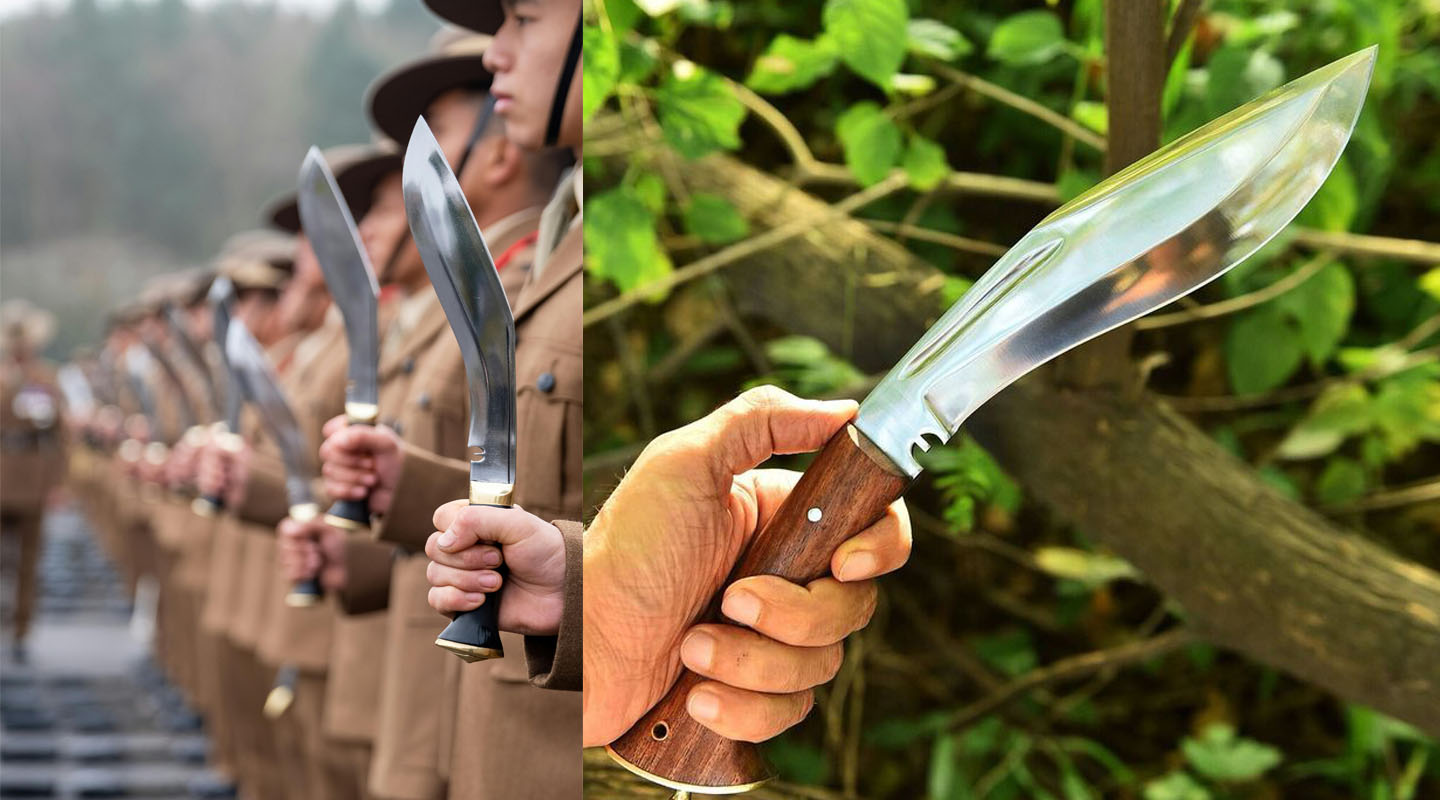
A side-by-side comparison between a hand-forged khukuri made in Nepal and a factory-made khukuri from abroad. The Nepali khukuri displays refined craftsmanship, balance, and durability—qualities that mass-produced kukris cannot match.
A genuine khukuri made in Nepal is hand-forged from 5160 spring steel, often recycled from truck leaf springs. It is heated, hammered, quenched, and oil-tempered to achieve perfect hardness and flexibility. Each blade is shaped, sharpened, and balanced by skilled Kamis who have mastered the craft through generations.
Foreign-made kukris are typically machine-stamped and mass-produced using inferior steel. These versions often lack proper tempering and may bend or chip easily. While they may appear polished, they rarely offer the same durability or cutting performance as a Nepali-forged khukuri.
Design and Functionality Differences
A true khukuri from Nepal features a forward-curved blade that channels striking power efficiently. The full tang handle ensures durability, and the distinctive notch at the base, known as the kaura, serves both spiritual and functional purposes. Traditional handles are made from rosewood, buffalo horn, or whitewood and are secured with brass or steel fittings.
Foreign kukris often exaggerate the curve, use stainless steel, or include ornamental engravings that weaken the blade. While they may look attractive, they lack the precision, balance, and real-world usability of Nepali khukuris.
Featured Authentic Khukuris from Nepal
Here are some of the most iconic and functional khukuris made in Nepal, each forged by skilled Kamis using traditional techniques, oil-tempered for strength, and balanced for real performance:
Service No. 1 Kukri – BSI Khukuri
The official issue Gurkha khukuri used by the British Army. Forged from 5160 carbon steel with a full tang construction and traditional rosewood handle. A perfect example of Nepal’s military forging heritage.
Historical Khukuri – WWI Kukri
A faithful recreation of the World War I issue khukuri carried by Gurkha soldiers. Features a 12-inch hand-forged blade with classic taper and traditional scabbard—true to its original combat design.
Bhojpure Shepherd Khukuri
A powerful working khukuri inspired by the rural Bhojpure region. Designed for cutting wood, clearing brush, and daily fieldwork. Functional, well-balanced, and built for hard use.
Survival Kukri/Khukuri
A modern survival khukuri with a 12-inch oil-tempered blade and full tang handle. Built for outdoor, tactical, and camping use—strong, sharp, and reliable in any condition.
Salyani Khukuri/Kukri
A beautifully curved khukuri with a forward-weighted blade for maximum chopping efficiency. Hand-forged and polished for perfect balance and power.
WWI Combat Balance Kukri/Khukuri
Inspired by battlefield designs, this khukuri combines a traditional Gurkha shape with a refined, combat-ready balance. A collector’s favorite for its performance and authenticity.
Kaal Viper Khukuri
A modern masterpiece with aggressive styling, forged from 5160 spring steel and oil-tempered for resilience. Features a bold curved blade and ergonomic full tang handle.
Angkhola Guardian Khukuri
A heavy-duty khukuri featuring the classic Angkhola fuller for strength and durability. Forged and tempered by hand, built for survival, chopping, and long-term use in the field.
Who Forges the Best Khukuri (Kukri)
When asked “who forges the best khukuri”, the answer is clear—Nepal. The master Kamis of Dharan, Bhojpur, and Chainpur are among the world’s most skilled traditional blacksmiths. They maintain time-honored techniques that blend craftsmanship, precision, and spiritual devotion.
These artisans forge each blade with care and patience, ensuring that every khukuri made in Nepal is perfectly tempered, balanced, and functional. From everyday tools to military blades, their work continues to define excellence in hand forging.
Why Khukuris Made in Nepal Are Superior
- Authentic Craftsmanship: Handmade by skilled Kamis using ancient Himalayan forging techniques.
- Durable Steel: Forged from 5160 spring steel, oil-tempered for lasting strength.
- Functional Design: Balanced curvature for cutting, chopping, and survival use.
- Proven Legacy: The trusted blade of Gurkha warriors for generations.
- Cultural Heritage: Each khukuri carries the spirit and tradition of Nepal’s forging culture.
Khukuri vs Kukri – Two Words, One Legacy
Both khukuri and kukri describe the same legendary blade. “Kukri” became the English term through British military use, while “Khukuri” remains true to its Nepali origin. Regardless of spelling, the real craftsmanship resides in Nepal—the land where every khukuri is still forged by hand.
Conclusion
The difference between a khukuri made in Nepal and a kukri made elsewhere lies in authenticity and craftsmanship. Nepalese Kamis forge with tradition, technique, and heart—producing blades that are not just tools but symbols of history. A khukuri from Nepal remains the benchmark of quality and the ultimate expression of hand-forged excellence.
Owning one means carrying a true piece of Himalayan heritage—tested by warriors, refined by artisans, and perfected through generations.
Frequently Asked Questions (FAQ)
1. What makes a khukuri from Nepal unique?
Khukuris made in Nepal are hand-forged by traditional Kamis using 5160 spring steel. Each blade is oil-tempered, balanced, and deeply rooted in Nepalese cultural heritage.
2. What is the difference between a khukuri and a kukri?
Both terms refer to the same blade. “Kukri” is the English adaptation, while “Khukuri” is the original Nepali word. Only khukuris forged in Nepal are considered authentic.
3. Who forges the best khukuri in the world?
The best khukuris are forged in Nepal by master Kamis—artisans who continue the Gurkha tradition using centuries-old hand-forging techniques.
4. Are khukuris made outside Nepal good quality?
Most foreign-made kukris are mass-produced and lack proper tempering. They are often decorative and do not perform like true Nepalese khukuris.
5. Can a khukuri be used for outdoor and survival tasks?
Yes. Authentic khukuris from Nepal are fully functional and built for real use—ideal for chopping wood, clearing brush, and outdoor survival applications.