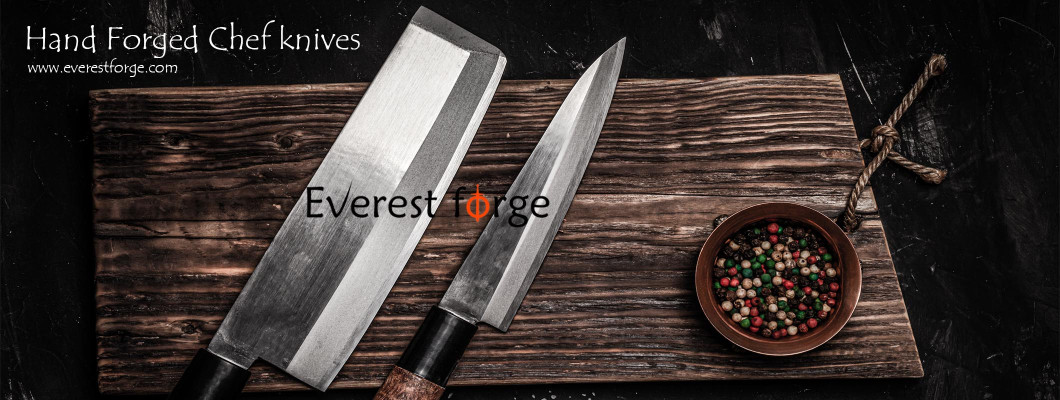
Looking for a hand-forged chef knife? Browse our full collection of 30+ hand-forged kitchen knives — chef knives, cleavers, kitchen hatchets, and the Pizza Axe — all made in Nepal from 5160 spring steel. Free personalisation on every order.
In a world of mass-produced kitchenware, hand-forged chef knives stand apart. Crafted by skilled blacksmiths using fire, hammer, and steel, these blades offer more than sharpness — they bring weight, character, and craftsmanship to your kitchen. Whether you're a professional chef or a passionate home cook, a hand-forged kitchen knife becomes an extension of your hand and a reflection of your respect for quality. This guide explains what hand-forging actually means, why forged blades outperform factory-stamped ones, and how to choose the right hand-forged cooking knife or custom kitchen knife for your needs.
What is a hand-forged chef knife?
A hand-forged chef knife is a blade that's been heated and hammered into shape by a blacksmith, rather than cut from sheet steel and ground into shape by machine. The forging process starts with a bar of high-carbon steel — at Everest Forge we use 5160 spring steel recycled from truck leaf springs sourced in Nepal — which is heated in a coal forge and shaped on the anvil through hundreds of precise hammer strikes. The blade is then oil-tempered, hand-ground to its final geometry, and fitted with a full-tang handle.
The difference matters. Factory-stamped chef knives are cut from rolled sheet steel — the grain of the metal runs across the blade, parallel to the spine. Hand-forged knives are shaped from solid bar stock, which aligns the grain along the length of the blade. The result is a tougher, more flexible blade that resists chipping under heavy use. For the full forging process from raw steel to finished knife, see how every Everest Forge blade is forged.
Why choose hand-forged over factory-made?
Hand-forging isn't just a heritage marketing claim — it produces a measurably different cutting tool. Five concrete advantages:
- Better edge retention. High-carbon hand-forged blades like 5160 hold a working edge longer than the soft stainless used in most factory knives. They're also easier to sharpen back to a fine edge with a whetstone or honing rod.
- Better balance and control. A hand-forged blade is shaped with weight distribution in mind — the smith adjusts the spine taper, blade thickness, and handle proportions for a balanced feel. Factory knives are cut to a single profile regardless of weight balance.
- Built to last decades. Forged blades resist wear, fatigue, and bending under heavy use. A well-cared-for hand-forged kitchen knife will outlast its owner.
- Visible character. Hand-hammer marks, slight asymmetry in the grind, and the natural patina that develops on carbon steel give each knife a distinct identity. No two are exactly alike.
- Customisation possible. Hand-forging means each knife is made one at a time — which means handle material, blade length, finish, and personalisation engraving can all be specified per order. Factory knives come in fixed configurations.
Hand-forged in Nepal — a working blacksmith tradition
Nepal has one of the most active hand-forging traditions in Asia, rooted in the centuries-old craft of forging Gurkha kukris. The same blacksmith families — known as Bishwakarmas or Kamis — that have forged kukris for the British Gurkha regiment for over a hundred years now also forge chef knives, cleavers, and kitchen tools using the same techniques and materials.
At Everest Forge, every chef knife is hand-forged in our Kathmandu workshop by smiths from this tradition. We use 5160 high-carbon spring steel sourced from recycled truck leaf springs in Nepal — a steel known for its toughness, edge retention, and ease of sharpening. Handles are fitted in rosewood, buffalo horn, or stacked leather. Each knife ships with free personalisation engraved into the blade or handle. The result is a working kitchen tool with the same heritage and craftsmanship that goes into a battle-ready kukri.
The Everest Forge chef knife range
Our chef and kitchen knives split into four working categories. Each is hand-forged from 5160 spring steel with full-tang construction and free personalisation:
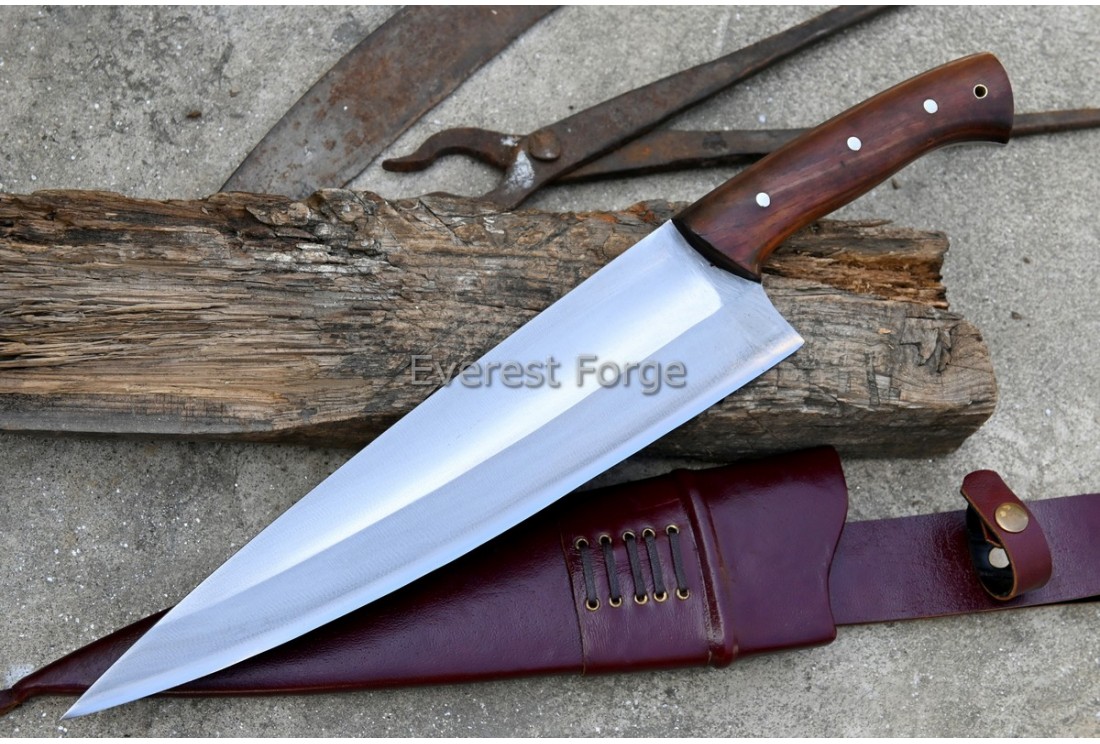
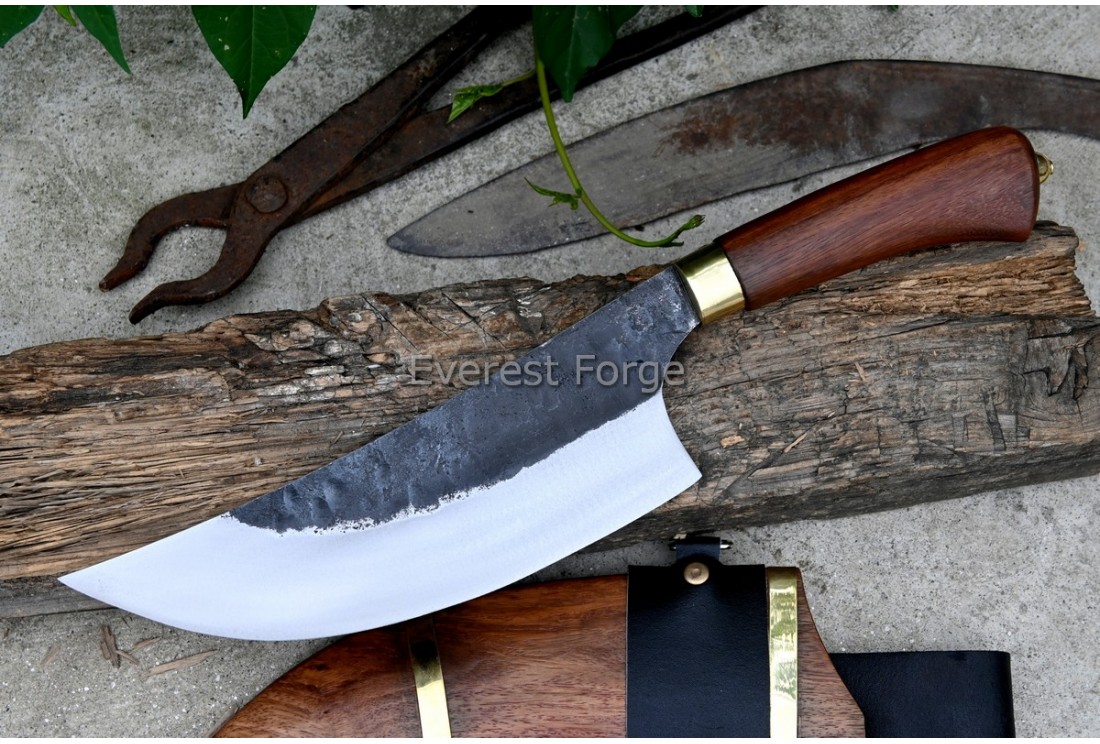
- Chef knives — Western chef knives at 9, 10, 12, and 13-inch blade lengths, plus Japanese-influenced profiles (santoku, gyuto, kiritsuke, sujihiki) and a tanto-style chef knife.
- Cleavers — butcher cleavers, kitchen cleavers, Serbian-style cleavers, the Chinese chef cleaver, and our heavy-duty bone cleavers including the dragon-engraved cleaver.
- Kitchen hatchets & the Pizza Axe — our signature segment. Compact butchering tools and the 12-inch Pizza Axe for slicing through pizza, bread, and showpiece kitchen prep.
- Boning & fillet knives — for precision meat and fish work.
Custom chef knives — forged to your spec
Many chefs have personal preferences for blade length, weight, handle shape, or finish that don't match the standard catalogue. At Everest Forge, our custom forge service lets you commission a kitchen knife built to your exact specification — sketch your own profile, request a non-standard blade length, specify exotic handle materials, or commission a one-of-a-kind chef's knife with custom engraving.
This is particularly valuable for professional chefs who rely on comfort and control during long prep sessions, and for gift buyers commissioning a one-off knife for a wedding, retirement, or major occasion. Custom builds are quoted individually and typically take 2–4 weeks. Visit the custom forge page to submit your request.
How to choose your first hand-forged kitchen knife
If you're buying your first hand-forged kitchen knife, three honest pieces of advice:
Pick the knife you'll use most often. For most home cooks, that's a 9 or 10-inch chef knife or a santoku. For BBQ enthusiasts and outdoor cooks, a kitchen hatchet or the Pizza Axe earns its keep. For serious meat work, a cleaver or boning knife.
Don't buy a knife set as your first hand-forged purchase. A single well-chosen hand-forged knife you'll actually use is worth more than a five-piece set where four knives sit in the block.
Be honest about maintenance. Hand-forged carbon steel knives need to be hand-washed, dried immediately, and lightly oiled before storage. They develop a patina that protects the steel — which most owners come to love, but it's a real change from stainless. If you can't commit to that care routine, a hand-forged knife isn't the right tool. If you can, you'll have a kitchen knife that lasts decades.
Frequently asked questions
What's the difference between hand-forged and handmade?
"Handmade" is a broader term that can include knives assembled by hand from machine-cut blanks. "Hand-forged" specifically means the blade itself was shaped by hammer on an anvil from raw steel — the most labour-intensive form of knife-making. All hand-forged knives are handmade; not all handmade knives are hand-forged.
Is 5160 spring steel a good steel for kitchen knives?
5160 is an excellent steel for working kitchen knives where toughness and durability matter more than ultra-fine edge retention. It sits around 58 HRC after oil tempering — slightly softer than premium Japanese carbon steels (Shirogami, Aogami, VG10 at 62–65 HRC) but much tougher and more forgiving of rough use. It's the ideal steel for chef knives, cleavers, and kitchen hatchets that see real cooking. For a precision sushi knife you'd want a harder Japanese steel; for a hand-forged kitchen workhorse, 5160 is the right choice.
How long does a hand-forged chef knife last?
With proper care — hand-washing, drying, and occasional oiling — a hand-forged 5160 chef knife will last decades. Many of our customers own knives that have been in regular kitchen use for 10–20 years and are still going strong. The blade can be re-sharpened indefinitely on a whetstone as it wears down.
Do hand-forged carbon steel knives rust?
5160 is a high-carbon steel, not stainless, so yes — it can rust if left wet or stored in humid conditions. Care is straightforward: hand-wash, dry immediately with a towel, and apply a thin coat of food-safe mineral oil before storing. The blade naturally develops a grey-blue patina with use, which actually protects the steel underneath from active rust. If small rust spots appear, rub gently with a cork dipped in baking soda and re-oil.
Are hand-forged kitchen knives worth the price?
For cooks who use their kitchen knives daily, yes. A hand-forged chef knife at $130 will last 20+ years with care, while a comparable factory knife typically gets replaced every 3–5 years. The cost-per-year is comparable. The difference is what you're using in the meantime: a tool with weight, balance, and character, or a stamped blade that does the same job without the experience.
Can I get a hand-forged chef knife personalised?
Yes — every chef knife at Everest Forge ships with free personalisation. You can engrave a name, initials, a date, or a short message on the blade or handle at no extra cost. Add your text in the personalisation field at checkout. This makes hand-forged knives one of the best gift options for weddings, retirements, or occasions where a meaningful one-of-a-kind item matters.
Where can I buy a hand-forged chef knife?
Browse our full collection of 30+ hand-forged kitchen knives at Everest Forge — Hand-Forged Chef & Kitchen Knives. We ship worldwide via DHL Express and FedEx International (free shipping) with 3–5 day forging plus 5–10 day delivery. 30-day returns and a 6-month craftsmanship warranty included.
Ready to choose your hand-forged chef knife?
Browse the full collection of 30+ hand-forged kitchen knives — or commission a fully custom build to your spec. Free personalisation on every order. Free worldwide shipping. 30-day returns. 6-month warranty.