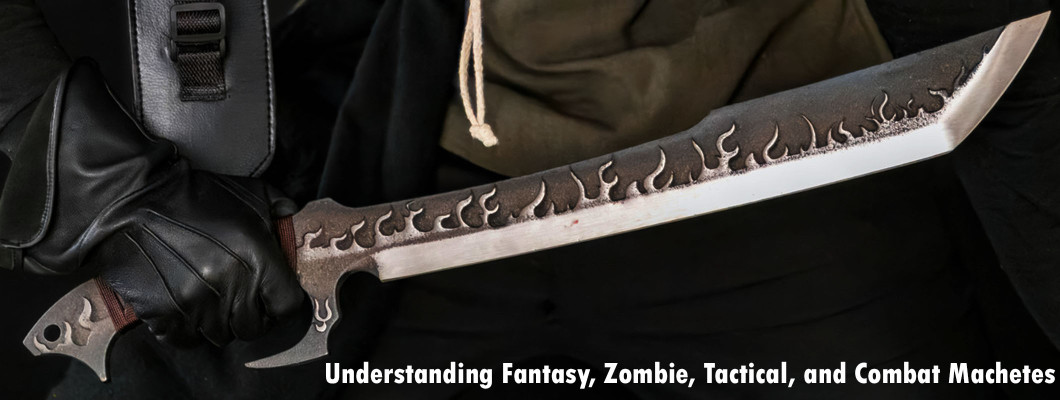
Understanding the purpose behind modern machete categories
Machetes were never meant to be complicated. For generations, they existed as straightforward tools shaped by real work—clearing vegetation, opening paths, and handling outdoor tasks where reliability mattered more than appearance. Over time, however, modern culture, entertainment, and evolving user needs introduced new machete categories that go far beyond traditional forms.
Today, terms like fantasy machete , zombie machete, tactical machete, and combat machete are used to describe blades that may look similar at first glance, yet serve very different purposes. Understanding why these categories exist—and what they are actually designed to do—is the key to choosing the right machete without being misled by style alone.
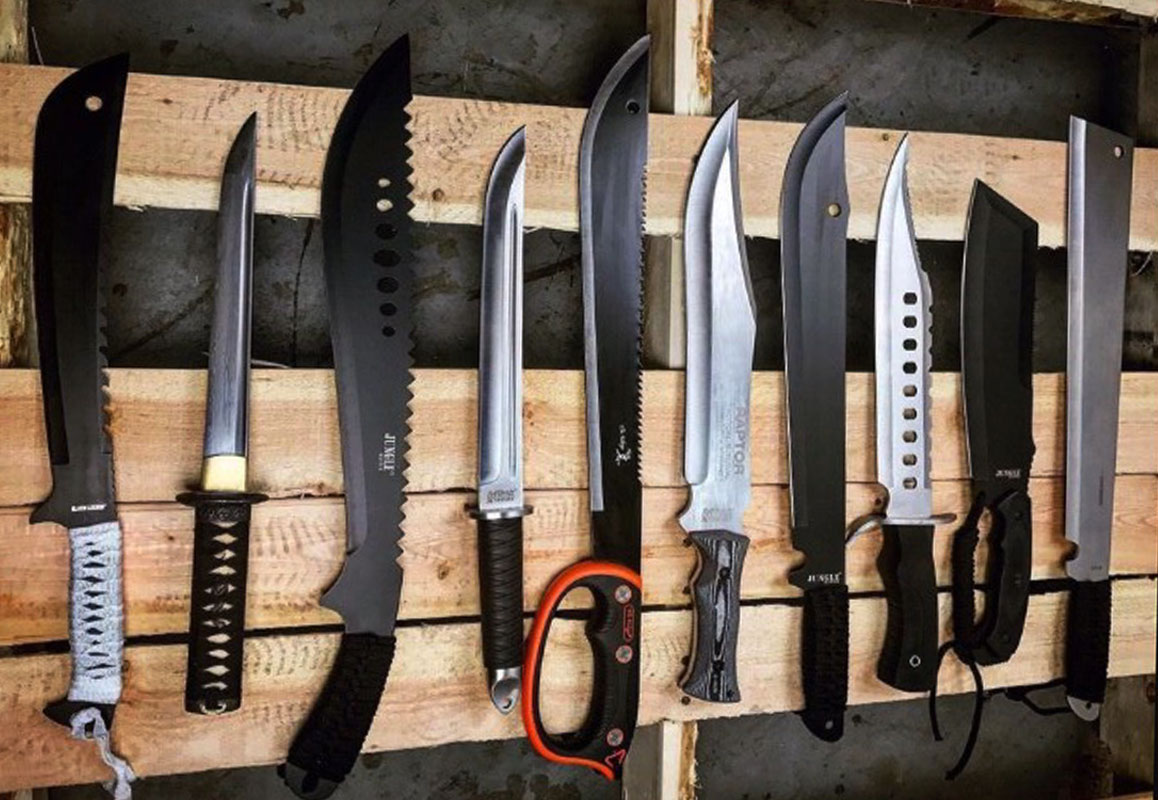
Fantasy machetes
Fantasy machetes are shaped by imagination rather than necessity. Inspired by movies, video games, comics, and fictional worlds, these blades are designed to stand out visually. Dramatic silhouettes, unusual curves, and bold proportions are common, often drawing attention before performance is even considered.
Design characteristics
- Exaggerated blade profiles and stylized curves
- Decorative cutouts or aggressive visual elements
- Non-traditional proportions focused on appearance
Intended purpose
Fantasy machetes are most often chosen for collection, display, cosplay, or creative inspiration. Some are built with functional steel and solid construction, but many prioritize visual storytelling over real-world cutting efficiency.
Real-world performance
In practical use, fantasy machetes can be unpredictable. Complex shapes may reduce cutting efficiency, affect balance, and increase maintenance difficulty. A fantasy machete can still perform well if its geometry is carefully designed, but appearance-driven features often work against sustained outdoor use.
Zombie machetes
Zombie machetes emerged from survival-themed culture and post-apocalyptic storytelling. While the theme itself is fictional, the designs often aim to look rugged, aggressive, and overbuilt—suggesting toughness and readiness for extreme conditions.
Design characteristics
- Forward-weighted blades designed to feel powerful
- Thick spines and reinforced tips
- Rugged finishes and aggressive styling
Intended purpose
Zombie machetes are marketed toward survival enthusiasts, collectors, and outdoor users drawn to bold aesthetics. Some designs are genuinely functional, while others lean heavily into visual impact.
Real-world performance
Performance varies widely. Well-balanced zombie machetes can handle chopping and clearing tasks effectively, but many designs become unnecessarily heavy. Extra features may look impressive but often add fatigue without improving cutting ability. The most usable zombie machetes are those that keep styling secondary to balance and edge geometry.
Tactical machetes
Tactical machetes are built around function-first design. Unlike fantasy or zombie machetes, tactical models focus on reliability, control, and efficiency in real working environments. The term “tactical” is often misused, but true tactical machetes follow practical design principles.
Design characteristics
- Clean blade geometry with efficient cutting lines
- Balanced weight distribution for controlled use
- Ergonomic handles designed for grip and safety
- Durable finishes suited for harsh conditions
Intended purpose
Tactical machetes are ideal for bushcraft, trail clearing, camping, and general outdoor utility. They are meant to work consistently, not impress visually.
Real-world performance
In real use, tactical machetes often outperform themed designs because they are predictable and efficient. They cut cleanly, cause less fatigue over time, and are easier to sharpen and maintain. Their effectiveness comes from restraint rather than exaggeration.
Combat machetes
Combat machetes represent a more specialized category. They are not general-purpose tools, nor are they simply tactical machetes with aggressive styling. Combat-oriented designs focus on handling, reach, and controlled movement rather than repetitive chopping.
Design characteristics
- Blade length and balance optimized for reach and control
- Neutral or slightly balanced weight distribution
- Secure handle design emphasizing retention
Intended purpose
Combat machetes are typically chosen for specialized training, historical or modern blade study, and controlled environments. They are not designed primarily for clearing vegetation or heavy outdoor work.
Real-world performance
Combat machetes can feel fast and responsive, but they often sacrifice chopping efficiency for handling characteristics. Choosing a combat machete for field work without understanding this trade-off is a common mistake.
Design differences that directly affect performance
Across all four machete categories, performance is shaped by a few key design factors:
Blade geometry
Simpler edge geometry usually cuts better. Complex shapes interrupt cutting flow and increase resistance during use.
Weight and balance
A blade that is too heavy becomes tiring, while a well-balanced machete feels controllable and efficient even during extended work.
Handle ergonomics
A secure, comfortable grip is essential. Poor handle design is one of the most common causes of unsafe and ineffective use.
Maintenance and durability
Clean blade profiles are easier to sharpen and maintain. Decorative features often increase upkeep without improving performance.
Choosing the right machete for your purpose
Before choosing a fantasy, zombie, tactical, or combat machete, it helps to ask a few honest questions:
- Will this machete be used regularly, or mostly displayed?
- Do I value cutting efficiency or visual design more?
- Am I prepared to maintain a complex blade shape?
- Is balance and handle security important for my use?
For practical outdoor tasks, tactical-style machetes are usually the most reliable choice. For collectors and themed designs, fantasy and zombie machetes can be satisfying when expectations are clear. Combat machetes should be chosen with full awareness of their specialized intent.
Custom forging: bring your vision to life
At Everest Forge, we understand that sometimes no existing machete truly matches what you have in mind. Maybe you were inspired by a movie machete, a video game blade, a fantasy design, or a unique concept you’ve imagined yourself.
If you have a machete idea—whether inspired by fiction, survival design, or something entirely original—we can help bring it to life through custom forging. Our focus is on translating your vision into a blade that not only looks right, but also respects balance, geometry, and real-world usability.
Have a specific machete design in mind from a movie, video game, or fantasy world? Or want a functional tactical or combat-style machete built to your specifications? You can request a custom forge directly through our workshop.
Design intent matters more than style
Fantasy, zombie, tactical, and combat machetes exist because people want different things from a blade. Some seek visual storytelling, others demand performance, and some want something that falls between the two.
The most important factor is not how aggressive or dramatic a machete looks, but whether its design supports its intended purpose. When function and expectation align, satisfaction follows. When style leads without structure, disappointment is common.
A well-designed machete does not need to be loud. It proves itself through balance, efficiency, and thoughtful construction—qualities that never go out of style.