
Are Machetes Legal? Laws by Country, State & Region (2026)
If you are reading this page you almost certainly want to own or use a machete — and you are doing the right thing by checking the law first. The good news: in the vast majority of countries, owning a machete at home is completely legal for adults. The restrictions that exist are mostly about carrying in public — not ownership itself.
A machete — also spelled machette in French — is a large, broad-bladed cutting tool used globally for agriculture, bushcraft, camping, and survival. Most legal systems treat it as a tool first and a weapon only when misused. This guide covers machete laws across 20+ countries and key US states — with links to official government sources so you can verify the rules for your region.
Last Updated:
Important: This guide is for general information only. Laws change and local regulations vary. Always verify with your local authority before purchasing or carrying a machete.
Quick Answer — Are Machetes Legal?
USA: ✅ Legal to own in all 50 states. Public carry varies by state.
Canada: ✅ Legal to own. Public carry without reason is prohibited.
UK: ✅ Legal to own at home. Carrying in public is a criminal offence.
Australia: ✅ Legal for agricultural use. State laws vary for public carry.
Germany: ✅ Legal to own. Carrying in public requires justified reason.
Ireland: ✅ Legal to own. Public carry without good reason is illegal.
France: ✅ Legal to own. Classified as a Category D weapon. Public carry restricted.
Philippines: ✅ Legal. Bolo and barong machetes are deeply cultural tools.
Mexico: ✅ Legal for agricultural use. Widely used tool.
Singapore: ⚠️ Restricted. Requires a licence for possession.
Already know it is legal where you are?
Browse our hand-forged machete collection — farming machetes, bushcraft machetes, parang, bolo, dao, tactical, and fully custom builds. Every blade is individually forged in Nepal and shipped worldwide.
What Is a Machete?
A machete is a large, single-edged cutting tool with a broad blade typically ranging from 10 to 28 inches in length. It is one of the most widely used tools in the world — indispensable for agriculture, jungle clearing, bushcraft, and survival across Latin America, Africa, Asia, and Southeast Asia.
The word machete comes from Spanish. In French it is spelled machette. Other regional names include panga (East Africa), bolo (Philippines), parang (Malaysia/Indonesia), dao (Southeast Asia), and golok (Indonesia). Despite different names, all refer to broadly the same category of large cutting tool — and most countries treat them under the same legal framework.
Legally, the machete sits in a grey area between tool and weapon. In agricultural or outdoor settings it is universally recognised as a tool. In urban environments without a clear purpose, it may be treated as a weapon. Understanding this distinction is the key to understanding machete laws in every country.
The 3 Factors That Determine Machete Legality Everywhere
1. Intent — Why are you carrying it? Agricultural, bushcraft, or camping use is generally accepted everywhere. Carrying for self-defence in public is where most legal systems draw the line.
2. Location — Private property vs. public spaces. Owning and using a machete on your own land is legal virtually everywhere. Carrying in public streets, parks, and urban areas is where restrictions apply.
3. Blade length — Some countries and states impose maximum blade length restrictions for bladed tools carried in public. Always check local rules before carrying.
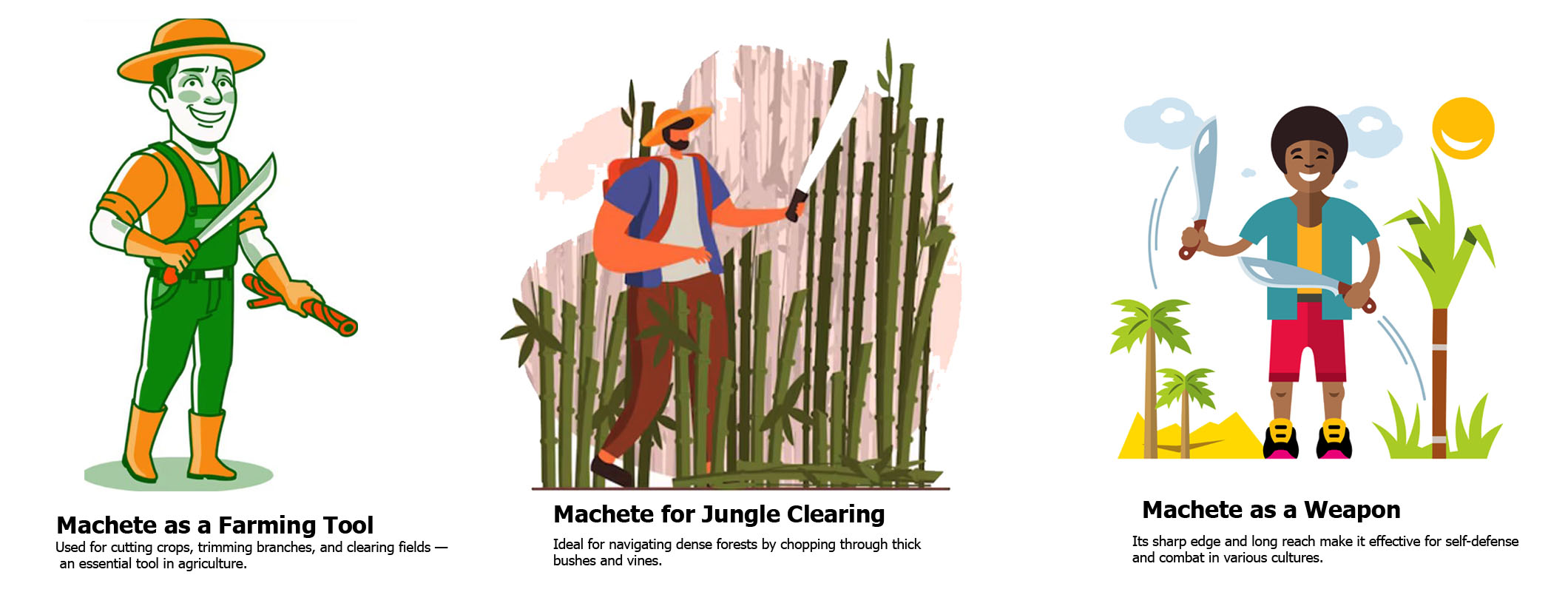
Machete used for farming, jungle survival, and bushcraft — the most widely accepted legal purposes worldwide
United States — Federal Law & State by State
Quick answer: Yes — machetes are legal to own in all 50 states. Public carry laws vary by state.
There is no federal law specifically restricting machetes in the USA. The ATF does not regulate machetes as firearms or prohibited weapons. In general, machetes are legal to own and use for tasks like clearing brush, camping, farming, and collection across the entire country. Carrying in public is where individual state laws vary.
California
Ownership: Legal. Public carry: Restricted. California law does not specifically prohibit machete ownership. However, carrying a machete in public in a threatening manner can be prosecuted under Penal Code § 12020. The key test is intent — carrying one to a job site or camping trip is generally acceptable. Carrying one in an urban area without clear purpose can attract police attention.
Texas
Ownership: Legal. Public carry: Generally permitted. Texas has some of the most permissive blade laws in the USA. Machetes are legal to own and generally legal to carry in public. The exception is carrying with intent to harm or in restricted locations such as schools, courts, and polling places. Texas defines restricted blades as those over 5.5 inches — however machetes carried for work or outdoor purposes are treated as tools, not weapons.
New York
Ownership: Legal. Public carry: Strictly restricted. New York has some of the strictest blade laws in the country. Machetes may fall under the definition of "dangerous knives" if carried in public without clear justification. Ownership at home is legal. Always carry with documentation of purpose if transporting a machete in New York.
Florida
Ownership: Legal. Public carry: Generally permitted with restrictions. Florida law is relatively lenient on machetes. Open carry is allowed unless intent is clearly malicious. Concealed carry of a machete without a clear work-related purpose may attract scrutiny. Carrying in a vehicle is generally legal when transported for legitimate purposes.
Illinois
Ownership: Legal. Public carry: Restricted. Illinois does not specifically ban machetes but restricts carrying bladed weapons in public. Chicago has additional local ordinances that may be stricter than state law. Always verify Chicago-specific rules if you are in the city.
Washington State
Ownership: Legal. Public carry: Context dependent. Washington state law allows machete ownership and does not specifically prohibit carrying for legitimate outdoor or agricultural use. Carrying in urban areas without clear purpose may be treated as possession of a dangerous weapon.
Other US States
In general, machete ownership is legal in all 50 states. States like Arizona, Montana, Wyoming, and most rural states are very permissive about blade carry. States with stricter urban environments — Massachusetts, New Jersey, Maryland — tend to apply more scrutiny to bladed tools carried in public. Always check your specific state's knife and blade laws before carrying a machete in public.
Reference: U.S. Federal Firearms Regulations
United States — Machete Laws by State
Since there is no federal machete law in the USA, every state sets its own rules. Here is a breakdown of the states that generate the most legal questions:
California
Quick answer: Legal to own. Carrying in public is heavily restricted.
California has some of the strictest blade laws in the USA. Owning a machete at home is perfectly legal. However carrying one in public — openly or concealed — without a legitimate work-related reason can be prosecuted under California Penal Code § 12020 and related statutes. Agricultural workers, landscapers, and forestry professionals can carry machetes legally with clear work justification. Urban carry without a clear purpose will attract serious police attention.
California also restricts blades that lock open — though this applies more to folding knives. For fixed-blade machetes, the key question is always intent and context of carry.
Texas
Quick answer: Legal to own and carry openly in most situations.
Texas is one of the most blade-friendly states in the USA. The state generally allows open carry of large blades including machetes. Texas House Bill 1935 (2017) removed many restrictions on carrying large knives in public. However certain locations remain off-limits — schools, polling places, courts, and businesses that post appropriate signage. Concealed carry of large blades in Texas is more restricted. For farming, outdoor work, and hunting use — Texas is highly permissive.
New York
Quick answer: Legal to own. Very strict on public carry.
New York has strict weapon laws. Machetes may fall under the definition of "dangerous knives" under New York Penal Law § 265.01 if carried with intent to use unlawfully. Owning a machete at home or using it for farm work is completely legal. Carrying one in New York City without a clear agricultural or work purpose is highly inadvisable and can result in arrest. Outside New York City, enforcement is more variable but the law remains restrictive.
Florida
Quick answer: Legal to own and generally permissive for carry with legitimate purpose.
Florida is relatively permissive with bladed tools. Machetes are legal to own and openly carry for work purposes including landscaping, farming, and camping. Concealed carry of machetes is regulated under Florida's concealed weapon laws and generally requires a permit. Florida Statute § 790.10 covers improper exhibition of a weapon — meaning carrying a machete in a threatening or aggressive manner is illegal regardless of ownership legality.
Illinois
Quick answer: Legal to own. Public carry is restricted in Chicago and many urban areas.
Illinois state law does not specifically prohibit machetes, but the state allows municipalities to set their own blade regulations. Chicago has particularly strict ordinances on carrying bladed weapons in public. Outside major urban areas, agricultural and outdoor use is broadly accepted. Always check local municipal ordinances if carrying in any Illinois city.
Washington State
Quick answer: Legal to own. Open carry allowed with legitimate purpose.
Washington State permits machete ownership and does not specifically restrict carry for agricultural or outdoor purposes. RCW 9.41.270 covers weapons being carried in a manner that causes alarm to others — meaning the manner and context of carry matters more than the blade itself. Farming, forestry, and outdoor recreation use are well-established legitimate purposes in Washington.
Other US States — Summary
In general across all 50 states: owning a machete is legal everywhere. The variation is in public carry laws. States with strong agricultural traditions (Montana, Wyoming, Idaho, the Dakotas, rural Southern states) tend to be more permissive. Urban states with high population density (Massachusetts, New Jersey, Hawaii) tend to have stricter carry regulations. Always check your specific state and city regulations before carrying a machete in public.
Canada
Quick answer: Yes — machetes are legal to own in Canada. Public carry requires legitimate purpose.
Machetes are legal to own in Canada and are not classified as prohibited weapons under the Criminal Code. Their use and public carry are subject to intent. Carrying a machete without a legitimate reason such as gardening or outdoor work can result in charges.
Ontario
Ontario follows federal law — machetes are legal to own and use for legitimate purposes. Public carry without clear justification is inadvisable. Transport in a vehicle for camping or farm use is generally accepted.
British Columbia & Other Provinces
All Canadian provinces follow the federal framework — ownership is legal, public carry requires legitimate purpose. Always transport in a sheath and have a clear reason for carrying if stopped by police.
Reference: Canadian Criminal Code — Prohibited Weapons
Canada — Machete Laws by Province
Canadian federal law does not specifically prohibit machetes, but provinces and territories set additional rules. Here is what you need to know by region:
Ontario: Machetes are legal to own. Public carry without a legitimate reason such as farming, camping, or trail clearing is prohibited under the Criminal Code. Ontario has no specific provincial machete law beyond federal guidelines.
British Columbia: Legal for agricultural and outdoor use. Carrying in public without clear purpose is inadvisable. BC's Offence Act covers weapons carried in a threatening manner.
Alberta: Generally permissive for agricultural and outdoor use. Rural Alberta has a long tradition of machete use for farming and forestry work.
Quebec: Legal to own. French-speaking communities in Quebec have a strong tradition of outdoor tool use. Public carry follows federal guidelines — legitimate purpose required.
United Kingdom
Quick answer: Yes — machetes are legal to own in the UK for legitimate purposes. Public carry is illegal without lawful excuse.
In the UK, machetes are classified as offensive weapons under the Criminal Justice Act 1988. It is legal to own a machete on private property, but carrying it in public without a lawful excuse is a criminal offence. Farming, gardening, or bushcraft purposes are acceptable with proof of intent.
The UK does not have a specific blade length restriction for machetes as it does for curved swords. A machete owned for agricultural or collecting purposes is legal. The law focuses on intent and public carry rather than ownership itself.
Can you have a machete in your house in the UK? Yes — owning a machete at home for gardening, collecting, or agricultural use is completely legal.
Can you buy a machete in the UK? Yes — machetes can be purchased legally in the UK for legitimate purposes.
Reference: UK Offensive Weapons Law
Ireland
Quick answer: Yes — machetes are legal to own in Ireland for legitimate purposes.
Ireland follows a similar framework to the UK. Machete ownership for agricultural, gardening, bushcraft, or collecting purposes is legal. Carrying in public without lawful excuse is an offence under the Firearms and Offensive Weapons Act 1990. Rural and farming use is generally treated with more leniency than urban carry. Always transport in a sheath and be prepared to explain your purpose if asked.
Australia
Quick answer: Yes — machetes are legal to own in Australia for agricultural use. Public carry without lawful reason is prohibited.
Australia has strict weapon laws, and machetes fall into a grey area. While legal to own for agricultural use, public carry without a legitimate reason is heavily penalised. Regulations differ by state:
Victoria
Machetes are considered controlled weapons under the Control of Weapons Act. You must have a lawful excuse for possession in public. Farming and bushcraft are acceptable reasons. Weapons Law — Victoria Police
New South Wales (NSW)
Possession is allowed with reasonable cause such as farming or outdoor work. Carrying without reason in public is an offence. NSW Weapons Permits
Queensland (QLD)
Queensland allows machete ownership for lawful purposes. Public carry requires reasonable excuse. Agricultural and bushcraft use is generally accepted.
Western Australia & Other States
All Australian states permit machete ownership for legitimate purposes. Always transport in a sheath and have documentation or equipment nearby to demonstrate farming or outdoor use.
New Zealand
Quick answer: Yes — machetes are legal to own in New Zealand for legitimate purposes.
New Zealand does not specifically restrict machete ownership for agricultural or outdoor use. The Crimes Act and Arms Act govern offensive weapons — machetes used for legitimate farming, gardening, or bushcraft purposes are generally not restricted. Public carry without clear purpose is inadvisable and may be treated as possession of an offensive weapon. New Zealand customs allows machete import when declared.
Germany
Quick answer: Yes — machetes are legal to own in Germany for adults. Public carry requires legitimate reason.
Germany permits the ownership of machetes but regulates their public use under the Weapons Act (Waffengesetz). Machetes can be carried only with a justified reason such as farming or camping. Possession in urban settings without cause is often interpreted as carrying a weapon. The German term for machete legality is covered under Waffengesetz knife regulations.
Reference: Waffengesetz — German Weapons Act
France
Quick answer: Yes — machetes are legal to own in France for legitimate purposes.
In France, a machete (spelled machette in French) is classified as a Category D weapon under French law — meaning it is legal to own and purchase but subject to restrictions on public carry. Carrying a machette in public without lawful justification such as professional or agricultural use is prohibited. Ownership at home for collecting, gardening, or bushcraft is legal. French customs allows machette import when declared.
Philippines
Quick answer: Yes — machetes are deeply embedded in Filipino culture and broadly legal to own.
The Philippines has a rich tradition of blade culture — the bolo, barong, and itak are all forms of traditional Filipino machetes used for agriculture, cultural ceremonies, and as symbols of national identity. Philippine law generally permits machete ownership for agricultural and cultural purposes. The Revised Penal Code covers use of bladed weapons in criminal acts, but agricultural and traditional machetes are widely accepted. Bolo knives — the Filipino equivalent of a machete — are not restricted for farming or cultural use.
Mexico
Quick answer: Yes — machetes are extremely common and broadly legal in Mexico for agricultural use.
Mexico has one of the strongest machete traditions in the world — the machete is a fundamental agricultural tool across rural Mexico and has deep cultural significance. Mexican law generally treats machetes as tools, not weapons, for agricultural and outdoor use. The Federal Firearms and Explosives Law covers weapons, but agricultural machetes are broadly exempt. Public carry in urban areas without clear agricultural purpose may attract attention from authorities, but rural carry is entirely normal and accepted.
Singapore
Quick answer: Restricted — Singapore has strict weapon laws and machetes require special consideration.
Singapore has some of the strictest weapon laws in the world under the Arms Offences Act and Corrosive and Explosive Substances and Offensive Weapons Act. Machetes fall into a restricted category — ownership may require justification and public carry is strictly prohibited. Anyone considering importing or purchasing a machete in Singapore should verify current regulations with the Singapore Police Force before proceeding.
India
Quick answer: Yes — machetes are legal in India for agricultural use. Carry regulations vary by state.
India permits machete ownership for agricultural use across all states. Carrying in public, especially in cities, may require a permit depending on the state. The Arms Act of 1959 governs bladed weapons in India — agricultural tools are generally exempt. Rural use is widely accepted and common. Urban carry without clear agricultural purpose may be scrutinised by local police.
Japan
Quick answer: Restricted — Japan has strict weapon laws. Machetes require careful legal consideration.
Japan treats machetes as restricted weapons under the Act on Firearms and Swords. Possession is allowed under strict conditions for legitimate agricultural or professional purposes, but the process requires justification. Public carry is banned. Importing a machete into Japan requires prior approval. Anyone considering a machete purchase for use in Japan should consult with local authorities first.
Brazil
Quick answer: Yes — machetes are extremely common and broadly legal in Brazil for agricultural use.
Brazil has a deep agricultural tradition where the machete is an essential tool across farming communities. It is not classified as a weapon for agricultural purposes under Brazilian law. Public carry for work purposes is common and accepted. Urban carry without clear purpose is subject to policing. Brazil is one of the world's largest machete markets.
South Africa
Quick answer: Yes — machetes are widely used and broadly legal for agricultural purposes in South Africa.
South Africa permits machete ownership for farming and outdoor use. The panga — South Africa's equivalent of a machete — is widely used across rural communities for agricultural work. The Dangerous Weapons Act covers use of bladed weapons in threatening or violent contexts, but agricultural and collecting ownership is legal. Urban carry without clear purpose may attract police attention.
Kenya & East Africa
Quick answer: Yes — machetes (panga) are legal and widely used for agriculture across East Africa.
In Kenya, Tanzania, Uganda, and neighbouring East African countries, the panga is one of the most common agricultural tools. It is broadly legal for farming and domestic use across the region. Local regulations on public carry vary by country and context, but agricultural use is universally accepted.
Key Legal Situations — Answered Directly
Is it legal to have a machete in your car?
In most countries, transporting a machete in your vehicle for legitimate purposes is legal. The key factors are: is it sheathed, is there a clear reason for having it (farming equipment, camping gear, travelling to a job site), and is it not accessible in a threatening way? In the UK, Canada, and Australia, having a machete in your car without clear justification can lead to police questions. In the USA, most states permit vehicle transport for legitimate purposes. Always sheath the blade and keep it with relevant equipment such as camping or farming gear.
Is it legal to have a machete in your house?
Yes — in virtually every country in the world, owning and storing a machete at home is completely legal. There are almost no restrictions on private property machete ownership for adults. The legal issues arise when machetes are carried in public without clear purpose.
What age do you have to be to buy a machete?
Age restrictions vary by country. In the UK, you must be 18 or older to purchase a bladed weapon including machetes. In the USA there is no federal age restriction, though many retailers apply an 18+ policy. In Australia and Canada, most retailers require buyers to be 18+. In practice, most online retailers including Everest Forge require buyers to be adults. Always check your local laws regarding age restrictions on bladed tool purchases.
Can you use a machete for self-defense?
Legally, this is risky territory in most countries. While home defence with a machete may be defensible in some jurisdictions, actively carrying a machete in public for the purpose of self-defence is treated as possession of an offensive weapon in most countries. The intent to use for self-defence often transforms a legal tool into an illegal weapon under most legal frameworks. For home security, a machete kept at home is generally not a legal issue — but carrying one in public for self-defence purposes is inadvisable in most jurisdictions.
Can a felon own a machete?
In most countries, machetes are not specifically covered by felon weapons restrictions the way firearms are. In the USA, federal law restricts felons from owning firearms but does not specifically prohibit bladed tools like machetes. However some states may have broader restrictions. Always consult a legal professional if you have a criminal record and are unsure about bladed tool ownership in your jurisdiction.
Can you travel internationally with a machete?
Yes — but machetes must always be packed in checked baggage when flying. Carrying a machete in hand luggage is strictly prohibited on all airlines worldwide. Always check the destination country's import regulations before travelling with a machete. Declare the blade at customs on arrival. Some countries such as Japan and Singapore have restrictions on importing bladed tools that require prior approval.
Machete Use by Purpose
Agriculture & Bushcraft
In most parts of the world, machetes are accepted for agricultural and bushcraft purposes. Their effectiveness in clearing dense brush and performing farm work makes them indispensable. In rural areas, laws tend to be more relaxed as the machete is clearly recognised as a farming tool.

Machete used as a farming tool in the field
If you are looking for a machete specifically for farming or bush clearing, our Raw Farmer's Machete is hand-forged for exactly this purpose — heavy duty, practical, and built for real outdoor work.
Collecting & Cultural Use
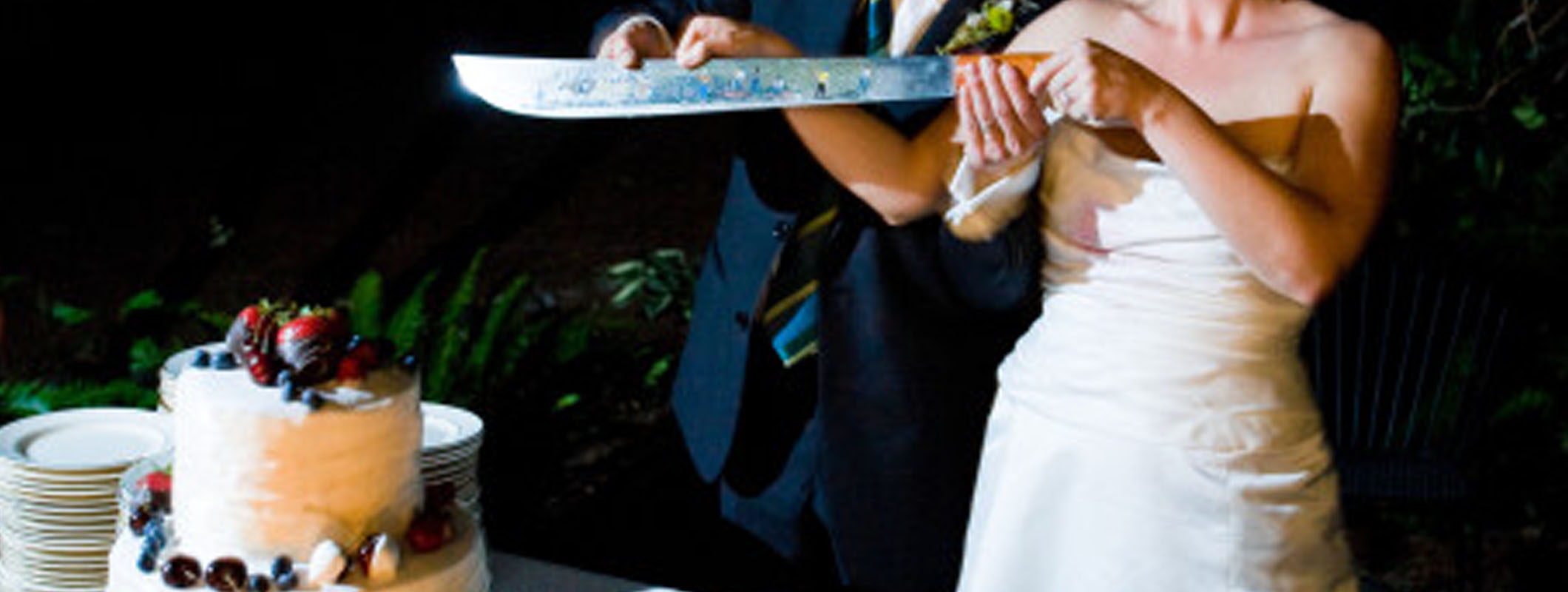
Cultural use — machete used to cut cake in a marriage ceremony
In many cultures, machetes carry ceremonial or historical value. Collectors often own them as part of a cultural heritage. Laws rarely restrict collecting, but display and transport laws still apply. In Nepal and parts of Africa and South America, machetes also feature in traditional rites and celebrations.
Where to Buy a Legal Machete That Ships Worldwide
If you are searching for where to buy a machete — Everest Forge hand-forges machetes in Nepal and ships worldwide. Every blade is individually forged from 5160 high-carbon steel by skilled blacksmiths. We offer farming machetes, bushcraft machetes, tactical machetes, parang, bolo, dao styles, and fully custom builds.
Ready to Own a Hand-Forged Machete? We Ship Worldwide.
At Everest Forge, every machete is individually hand-forged in Nepal by skilled blacksmiths using 5160 high-carbon steel. Built for farming, bushcraft, survival, and collection — each blade is a tool you can rely on.
Shop by type:
- Full machete collection — farming, bushcraft, parang, bolo, dao, tactical and more
- Farmer's Machete — heavy duty, practical, built for real outdoor and agricultural work
- Custom machete — any size, any style, built to your exact specification
Is It Legal to Have a Machete in Your Car?
This is one of the most searched machete legal questions — and the answer varies by country and state.
USA: In most US states, transporting a machete in your vehicle is legal if it is stored securely — sheathed, not within immediate reach, and not being used to threaten anyone. States like Texas allow vehicle transport broadly. California and New York have stricter rules — if the machete is within reach and you have no work-related justification, it could be treated as carrying a concealed weapon.
UK: Transporting a machete in a vehicle without a lawful excuse is an offence under UK law. If you are a gardener, farmer, or similar professional transporting tools, carry documentation showing your professional use. Store the machete securely in a locked toolbox or the boot of the vehicle.
Australia: Similar to the UK — having a machete in your vehicle requires a lawful excuse. Agricultural workers and outdoor professionals should carry evidence of their work purpose. Storing it securely out of immediate reach is essential.
Canada: Transporting a machete in a vehicle for agricultural, camping, or outdoor purposes is legal. It should be stored securely and not be readily accessible in a threatening manner.
The general rule across most jurisdictions: transport your machete sheathed, secured, and out of immediate reach — and be prepared to explain your legitimate purpose if stopped.
What Age Do You Need to Be to Buy a Machete?
Age restrictions for purchasing machetes vary by country and retailer.
USA: There is no federal minimum age for purchasing a machete. Most retailers apply an 18+ policy as a precaution, though this is not legally mandated in most states. Some states have specific age restrictions on knife purchases that may apply.
UK: You must be 18 or older to purchase any bladed article in the UK under the Criminal Justice Act 1988 (amended). Selling a bladed article to anyone under 18 is a criminal offence for the retailer.
Australia: Most states apply an 18+ requirement for purchasing bladed weapons and tools classified as controlled weapons.
Germany: Must be 18 or older to purchase under the Waffengesetz.
Everest Forge only sells to adults. All orders require confirmation that the buyer is 18 or older.
Can a Machete Be Used for Self-Defense?
Legally, using a machete for self-defense is a complex area that varies significantly by jurisdiction. Here is the honest picture:
Home defense: In most countries, using any available tool to defend yourself in your own home against an intruder is treated more favourably by courts than public use. If someone breaks into your home and you defend yourself with a machete, most legal systems will consider the context of self-defense. However you must use proportionate force — legal systems do not generally support using lethal force against a non-lethal threat.
Public self-defense: This is where it becomes legally very risky. Carrying a machete specifically for self-defense in public, and using it in a confrontation, will be heavily scrutinised by law enforcement and prosecutors in virtually every country. In the UK, carrying any weapon for self-defense — including a machete — is specifically illegal even if you genuinely fear attack.
The bottom line: A machete is a tool. Own it as a tool, use it as a tool. If you are concerned about personal security, consult local law enforcement about legal options in your specific jurisdiction.
Where to Buy a Legal Machete — Shipped Worldwide
If you have confirmed that machetes are legal in your country and are ready to buy — the safest and most authentic source is a direct forge in Nepal where machetes are hand-forged by traditional blacksmiths.
At Everest Forge, every machete is individually hand-forged from 5160 high-carbon steel by skilled Kami blacksmiths in Nepal. We ship worldwide to all countries where machetes can be legally imported. Our machetes are agricultural tools and collector's blades — not weapons — and are packed and shipped accordingly with full customs documentation.
Our machete range includes:
- Farmer's machetes — heavy duty, practical, built for real outdoor work
- Parang, bolo, and dao machetes — traditional Southeast Asian and Pacific blade styles
- Tactical and bushcraft machetes — built for survival, camping, and heavy outdoor use
- Custom machetes — any size, any style, built to your exact specification
Shop All Machetes → Request a Custom Machete →
Key Takeaways
- Machete ownership is legal in the vast majority of countries for adults.
- Public carry restrictions exist in most countries — always have a clear legitimate reason.
- Vehicle transport is generally legal when machetes are sheathed and accompanying relevant equipment.
- Home ownership is legal virtually everywhere in the world.
- Age restrictions typically require buyers to be 18+ in most countries.
- International travel requires machetes to be in checked baggage and declared at customs.
- Always check your local and national laws before purchasing or carrying a machete.
Global Machete Laws — Quick Reference Table
| Country | Ownership Legal? | Public Carry | Notes |
|---|---|---|---|
| USA | ✅ Legal — all 50 states | Varies by state | No federal restrictions. State laws vary widely. |
| Canada | ✅ Legal | Requires legitimate reason | Intent determines legality of carry. |
| United Kingdom | ✅ Legal at home | Illegal without lawful excuse | Classified as offensive weapon in public. |
| Australia | ✅ Legal for agriculture | Restricted — state by state | NSW, VIC, QLD each have specific rules. |
| Germany | ✅ Legal — 18+ | Requires justified reason | Waffengesetz applies. Urban carry restricted. |
| Ireland | ✅ Legal | Illegal without good reason | 2023 Act tightened public carry rules. |
| France | ✅ Legal — Category D | Restricted | Called "machette" in French. Work use accepted. |
| New Zealand | ✅ Legal | Restricted in public | Agricultural and outdoor use accepted. |
| Philippines | ✅ Legal | Cultural tool — broadly accepted | Bolo and barong are traditional national tools. |
| Mexico | ✅ Legal | Common agricultural tool | Widely used. Rural carry normal. |
| Brazil | ✅ Legal | Agricultural use normal | Not classified as a weapon for farm use. |
| India | ✅ Legal | Permit may be required in cities | Agricultural use broadly accepted. |
| South Africa | ✅ Legal | Agricultural use accepted | Self-defense use is scrutinised. |
| Kenya | ✅ Legal | Agricultural tool — common | Widely used for farming across East Africa. |
| Japan | ⚠️ Restricted | Banned in public | Strict conditions for possession. |
| Singapore | ⚠️ Licence required | Restricted | Arms licence required from Singapore Police. |
| Netherlands | ✅ Legal | Restricted in public | Carries classification as dangerous object if used as weapon. |
| Sweden | ✅ Legal | Restricted in public | Outdoor and bushcraft use accepted. |
| Norway | ✅ Legal | Requires legitimate purpose | Outdoor recreation and agricultural use accepted. |
| Italy | ✅ Legal | Permit may be required | Considered offensive weapon if carried publicly. |
| Spain | ✅ Legal | Restricted in public | Agricultural and display use permitted. |
| Poland | ✅ Legal | Restricted in public | Agricultural and outdoor use accepted. |
| Indonesia | ✅ Legal | Cultural tool — broadly accepted | Parang is a traditional Indonesian blade. |
| Malaysia | ✅ Legal | Cultural tool — broadly accepted | Parang widely used for agricultural work. |
| Thailand | ✅ Legal | Agricultural use accepted | Common farming tool. Urban carry restricted. |
Frequently Asked Questions
Are machetes legal to carry in public?
It depends on the country and local laws. In many places, carrying a machete in public without a legitimate reason such as farming or bushcraft is restricted or illegal. Always check your region's specific regulations.
Can I use a machete for self-defense?
While some jurisdictions may allow self-defense with a machete on private property, using it in public or without clear justification can lead to legal consequences. Self-defense claims involving machetes are often closely examined by law enforcement.
Is it legal to own a machete?
In most countries, yes. Machetes are considered tools and are legal to own especially for agricultural, outdoor, or collection purposes. However the legality may change if carried or used as a weapon in public.
Are there blade length restrictions for machetes?
Some regions impose blade length limits on knives and bladed tools carried in public. Machetes with very long blades might fall under restricted categories depending on local law. Always check before carrying in public.
Do I need a permit to own or carry a machete?
Typically you do not need a permit to own a machete for farm work or bushcraft. However carrying one in public may require a valid reason or even a permit in certain regions like the UK or Australia.
Can I travel with a machete?
Yes, but machetes must be packed in checked baggage when flying. Carrying in hand luggage is strictly prohibited. Always check airline and destination country regulations before travelling.
Is a machete considered a weapon or a tool?
It depends on how and where it is used. In agricultural and outdoor settings it is considered a tool. If carried in public or used in a threatening manner it can legally be classified as a weapon.
Are machetes banned in any country?
No country outright bans machete ownership for legitimate purposes. Some countries like Japan and Singapore have strict import and possession regulations. Most countries restrict public carry without lawful excuse but permit home ownership.
Can I carry a machete for camping or bushcraft?
In most regions yes — as long as you can justify its use. Carrying a machete for bushcraft or wilderness survival is typically accepted especially when far from urban areas. Transport it in a sheath and keep it with your camping gear to clearly show intent.
Are machetes legal in urban areas?
Machetes are usually allowed on private property even in urban areas. Carrying them in public without a valid reason in cities can lead to police attention or legal action in most countries.
Can I use a machete on my own property?
Yes — using a machete on your own property for gardening, landscaping, or bush clearing is legal in most countries. Issues arise when it is used in a threatening way or taken off the property without justification.
What is the legal blade length for a machete?
This varies significantly by country and jurisdiction. Most countries do not impose a specific blade length limit for machetes used for agricultural or outdoor purposes. Some jurisdictions apply blade length restrictions when blades are carried in public — always check local knife laws for your specific region.
Are machetes legal in the UK?
Yes — machete ownership for legitimate purposes such as gardening, farming, and collecting is legal in the UK. Public carry without lawful excuse is illegal. You can legally buy and own a machete in the UK as long as you are 18 or older.
Where can I buy a hand-forged machete that ships worldwide?
Everest Forge hand-forges machetes in Nepal and ships worldwide. Every blade is individually forged from 5160 high-carbon steel. Browse our full machete collection here or request a custom machete.
Features of a Quality Machete

Explore More from Everest Forge

Read: Global Overview of Sword Laws
Discover how different countries regulate sword ownership, carrying, and import laws — from the USA and UK to Australia, Japan, and Nepal.


Leave a Comment