An In-Depth Look at the Original Kukri Birthplaces and the Modern Journey of Nepal’s Bladesmithing Tradition
The kukri is one of Nepal’s strongest cultural symbols – a tool, a weapon, and a piece of living identity. Long before it became famous through the Gurkhas, it was shaped in the hills and villages of Nepal by local blacksmiths who created blades for farming, hunting, survival, and ceremony.
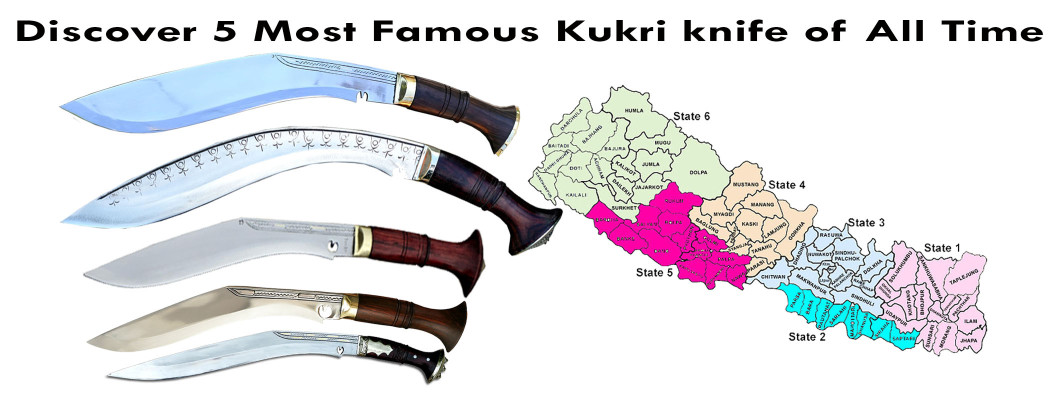
Among Nepal’s many regions, five places stand out as the true birthplaces of traditional kukri styles: Bhojpur, Chitlang, Chainpur, Dhankuta, and Salyan. These regions did not just produce blades – they created kukri identities. Each village gave the kukri its own distinctive shape, balance, and cultural character.
Traditionally, all of these village kukris include the classic cho at the base of the blade, the small companion tools karda and chakmak in their scabbards, and the traditional rat-tail tang construction that runs through the handle. These are the hallmarks of old Nepali village forging.
While these five places shaped the origin of kukri culture, the story continues to evolve. In the modern era, Dharan became the hub for kukri production — a gathering place for skilled smiths and workshops serving the Nepali Army, collectors, and international buyers. Today, many of these forges are transitioning toward Kathmandu, drawn by better access to materials, tourism, and global shipping networks.
1. Bhojpure Kukri – The Heavy Workhorse of the East
Origin: Bhojpur District, Eastern Nepal
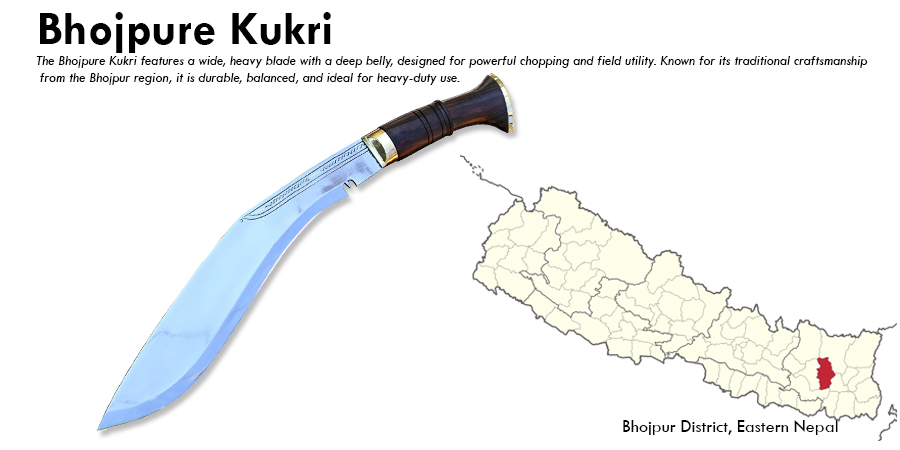
Bhojpur is one of Nepal’s oldest hill districts, home to Rai and Kirati communities who lived close to the land. They relied on strong tools for daily life: clearing jungle, chopping wood, building homes, and harvesting bamboo. Out of this rugged lifestyle came the Bhojpure Kukri , perhaps the most powerful working kukri of all traditional styles.
The Bhojpure is known for its weight. The leaf-shaped blade, thick spine, and forward balance create tremendous chopping power. When swung, the blade does much of the work on its own. The design is practical, honest, and built for hard labour.
- Blade Profile: Wide, heavy leaf-shaped blade with deep belly
- Construction: Rat-tail tang with standard karda and chakmak
- Use: Wood chopping, land clearing, bamboo cutting
- Character: Strong, purposeful, built for demanding tasks
2. Chitlange Kukri – Elegance Shaped by an Ancient Trade Route
Origin: Chitlang, Makwanpur District
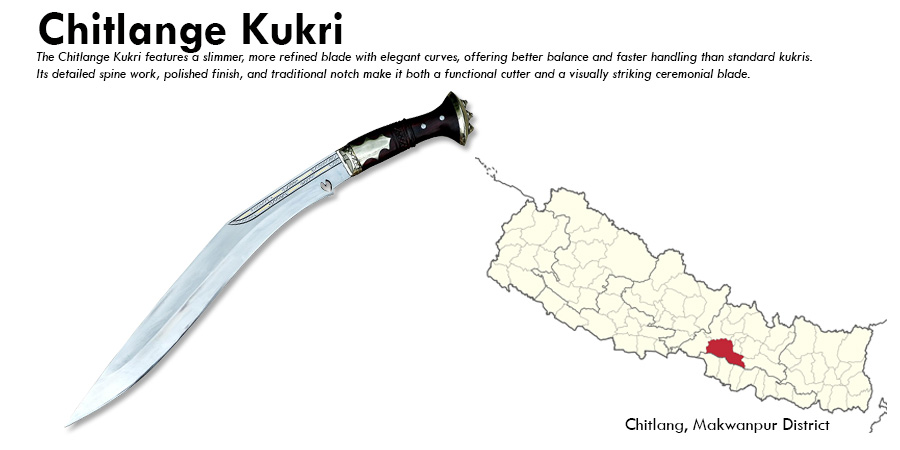
Chitlang is an ancient settlement south of Kathmandu, once a major passage for travellers entering the valley. Over centuries, artists, traders, and craftsmen passed through this path, influencing the local forging culture. The result was the refined and elegant Chitlange Kukri.
The Chitlange kukri is slimmer, more balanced, and often more decorative than the Bhojpure. Many versions feature carved fullers running along the blade, reducing weight and adding beauty. It remains functional but also carries a touch of artistry.
- Blade Profile: Slim, elongated blade with multiple fullers
- Use: Combat, ceremonial wear, precise cutting
- Character: Graceful, balanced, visually refined
3. Chainpure Kukri – A Practical Blade with a Closed Cho
Origin: Chainpur, Sankhuwasabha District
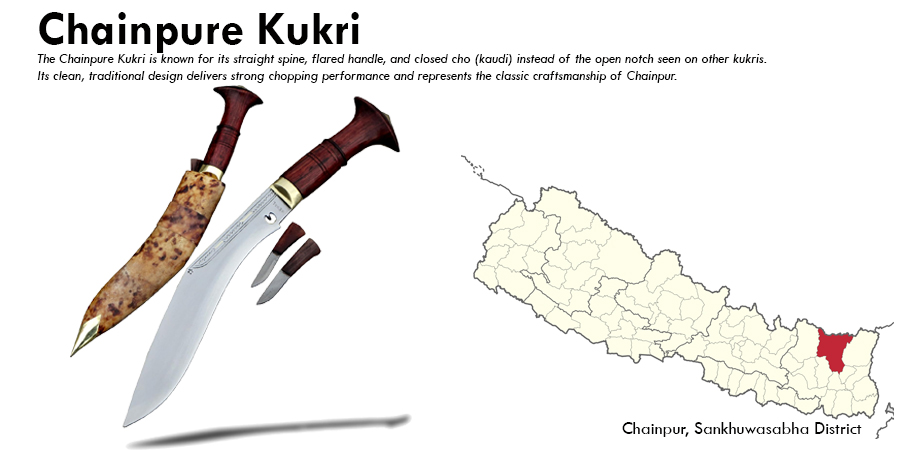
Chainpur lies in the eastern hills near rivers and terraced fields. It once served as a lively trading town, and its blacksmiths earned a reputation for producing simple but reliable kukris that families used daily. These blades reflect the modest, hardworking lifestyle of the region.
The Chainpure Kukri typically has a straighter spine and a soft curve along the edge. Its signature detail is the closed cho — a more rounded, enclosed version of the notch near the base of the blade.
- Blade Profile: Straight spine, modest belly, rounded closed cho
- Use: Household tasks, trekking, light farm work
- Character: Practical, simple, built for everyday life
4. Dhankute Kukri – Tradition and Art from the Eastern Hills
Origin: Dhankuta District, Eastern Nepal
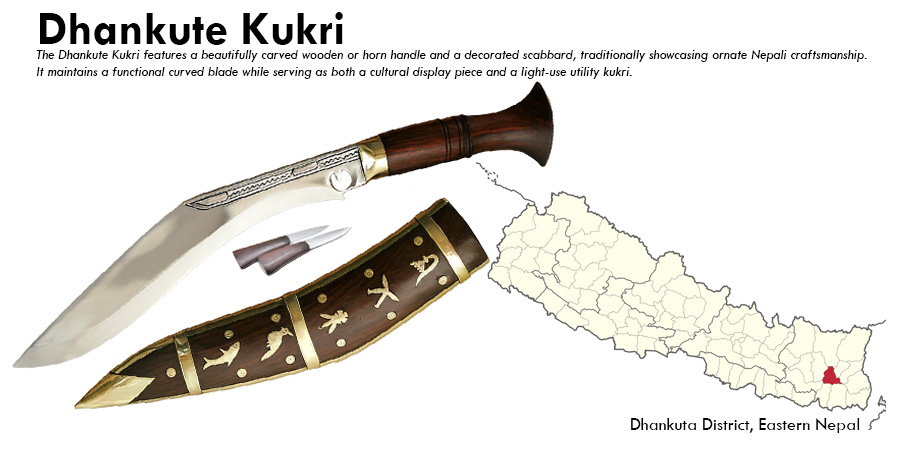
Dhankuta is known for its rich artistic background, home to Limbu and Rai communities skilled in decorative craftsmanship. The Dhankute Kukri became the most visually artistic among traditional styles, with carved wooden or brass-inlaid scabbards.
While beautiful, the blade itself is still functional, shaped for light to moderate work and carrying all traditional kukri features.
- Blade Profile: Medium curve, balanced weight
- Use: Ceremonies, gifting, cultural representation
- Character: Artistic, symbolic, culturally expressive
5. Salyani Kukri – The Long, Agile Blade of the Mid-West
Origin: Salyan District, Mid-Western Nepal
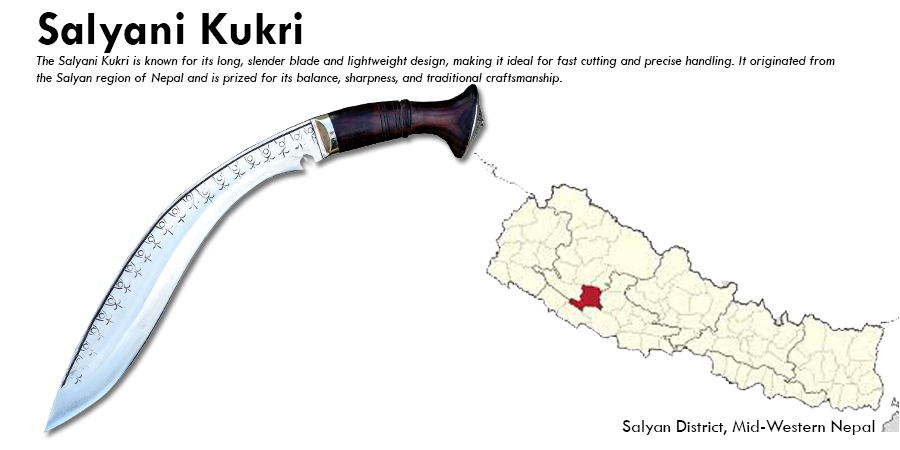
Salyan is a rugged district with steep hills, forests, and a long tradition of hunting and self-reliance. The Salyani Kukri reflects these conditions with its long, narrow, fast-moving blade.
It is built for agility rather than brute force, ideal for both field work and self-defense.
- Blade Profile: Long, narrow blade with smooth forward curve
- Use: Hunting, self-defense, trail cutting
- Character: Fast, responsive, built for reach
What Unites These Kukris
Although each village shaped its kukri in a unique way, they all grew from the same traditional foundation. Every one of these blades carries the unmistakable cho at the base, the supporting tools karda and chakmak in the scabbard, and the time-tested rat-tail tang hidden inside the handle. These shared features remind us that no matter how different their profiles look, they belong to the same deep Nepali forging tradition.
Dharan: The Modern Hub of Kukri Production
While the five districts shaped the origin of kukri culture, Dharan rose to fame as Nepal’s production powerhouse. For decades, it was the place where most army, police, and export kukris were forged. Bladesmiths from different villages moved there, transforming it into a center of skilled craftsmanship.
But modern Nepal is changing. Today, many workshops from Dharan are relocating to Kathmandu, where access to materials, tourism, transportation, and international buyers is stronger. The tradition continues — just in a new home.