
The Ultimate Sword Guide – 6 Major Types of Swords
Since the dawn of civilization, human hands have shaped metal into tools of survival, artistry, and honor. Among them, the sword stands apart — a weapon that carries not only the strength of its wielder but also the soul of its maker. From the bronze workshops of ancient Egypt to the mountain forges of Japan, the story of the sword is the story of humanity itself.
In this complete guide, we explore the six major sword types that defined world history. Each type reveals how culture, belief, and craftsmanship gave rise to some of the most iconic weapons ever forged. From the curved sickle blades of Egypt to the refined steel of samurai Japan, these swords shaped empires, traditions, and legends that endure to this day.
The Dawn of the Sword – Ancient & Classical Blades
The earliest swords emerged from the Bronze and Iron Ages, when metalworking first became an art of power. These early blades were short, heavy, and brutally effective, designed for close combat where strength and discipline ruled. Each ancient civilization gave the sword its own identity, combining warfare with artistry.

Khopesh – The Sickle Sword of Egypt: The Khopesh was one of the earliest curved swords, used by Egyptian warriors and pharaohs. Its unique sickle-like shape allowed both cutting and hooking actions, while symbolizing divine protection and authority. Forged from bronze and later iron, it represented both military might and spiritual command.
Xiphos & Kopis – Blades of Greece: The Xiphos , with its double-edged leaf-shaped blade, served Greek hoplites in close formations, embodying discipline and precision. The Kopis, meanwhile, featured a forward-curved blade designed for cavalry — powerful, efficient, and symbolic of command. Together, these swords reflected Greece’s balance of function and philosophy.
Falcata – The Warrior’s Sword of Iberia: The Falcata of ancient Spain carried fearsome reputation. Its inward-curving blade concentrated power into each strike, capable of splitting shields and armor. Iberian warriors revered it as both weapon and spiritual guardian, often buried with it for protection in the afterlife.
Gladius – The Sword that Built Rome: The Gladius , short and double-edged, became the tool that built an empire. Roman legionaries mastered tight formations and thrusting tactics that made this sword legendary. It was not only a weapon but a symbol of Roman discipline, conquest, and engineering mastery.
Legacy of the Ancient Sword: From the Khopesh to the Gladius, ancient swords reveal how metal became a reflection of civilization itself — both in war and in spirit. Each one told the story of gods, kings, and empires forged in fire, shaping the foundations of every blade that followed.
The Age of Chivalry – European & Medieval Swords
As Europe entered the Middle Ages, swordmaking evolved from practical craft to sacred tradition. Knights, crusaders, and kings carried swords not only as weapons but as symbols of duty and divine will. Forged from high-carbon steel and tempered with skill, these blades defined the honor and hierarchy of the medieval world.

Arming Sword – The Knight’s Companion: The Arming Sword was the everyday weapon of European knights, light enough for one hand and ideal for both cutting and thrusting. It represented faith, loyalty, and the chivalric code, often blessed before battle or knighthood ceremonies.
Longsword – The Two-Handed Power Blade: Longer and heavier, the Longsword became the hallmark of the late medieval knight. Its double-edged blade and cruciform hilt symbolized both weapon and cross. Balanced for versatility, it was equally effective in armored combat or duels of skill and honor.
Claymore – Pride of the Highlands: In Scotland, the massive two-handed Claymore symbolized freedom and defiance. Wielded by Highland warriors, it carried unmatched reach and striking power. Every swing was a declaration of strength, courage, and the unyielding spirit of the clans.
Rapier – The Blade of the Renaissance: By the 16th century, the sword had transformed into a symbol of refinement. The Rapier, slender and elegant, was designed for speed and precision rather than brute force. It marked a new era — one of dueling, artistry, and honor among the noble elite.
Legacy of European Swords: Medieval Europe gave the world its most romantic image of the sword — a weapon of courage and virtue. From the battlefield to the ballroom, it stood for both justice and beauty, carried by those who lived and died by its edge.
Curves of the Crescent – Middle Eastern, Indian & Himalayan Swords
In the East, the sword became an extension of faith and artistry. Curved blades emerged as emblems of grace, speed, and spiritual harmony. Forged under desert suns and mountain winds, these swords were not just weapons — they were symbols of balance between strength and beauty.

Shamshir – The Persian Lion’s Tail: The Shamshir of Persia was elegant and deadly, with a deeply curved blade built for slashing from horseback. Its name, meaning “lion’s tail,” captured the flow of its motion. Carved with calligraphy and inlaid with silver, it symbolized both artistry and divine strength.
Talwar & Khanda – Blades of India: The Talwar, with its broad curve and disc-shaped pommel, was the pride of Mughal and Rajput warriors. The older Khanda, straight and double-edged, symbolized courage and sacrifice, later becoming sacred in Sikh tradition. Both swords reflected India’s fusion of craftsmanship and spirituality.
Kukri & Kora – Swords of the Himalayas: From Nepal came the inward-curved Kukri , the national blade of the Gurkhas. It was both a soldier’s tool and a warrior’s pride — used for everything from survival to battle. The heavier Kora , often used in ritual and warfare, reflected Nepal’s ancient forging tradition and devotion to the gods.
Legacy of the Crescent Blades: The swords of the East remind us that the curve of steel could express both elegance and dominance. From Persia’s deserts to Nepal’s mountains, these blades carried spirit and symmetry, proving that power and beauty could coexist in a single stroke.
Blades of the East – Chinese & Japanese Mastery
In East Asia, swordmaking became a sacred science. Here, every blade was a reflection of its maker’s soul — a balance between discipline, harmony, and strength. From China’s philosophical swords to Japan’s spiritual forges, the East turned steel into legend.

Jian – The Gentleman’s Sword of China: The Jian, straight and double-edged, symbolized intellect and moral virtue. Used by scholars and generals, it represented harmony and wisdom in motion. Practiced in martial arts and meditation, it became both weapon and philosophy.
Dao – The General’s Saber: The Dao, with its single-edged curved blade, was the sword of soldiers and heroes. It embodied power, movement, and adaptability — a blade for sweeping strikes in the chaos of war.
Katana – The Soul of the Samurai: Japan’s Katana stands as the pinnacle of swordmaking art. With its perfect curvature, folded steel, and razor-sharp edge, it symbolized purity of form and spirit. Every Katana carried the soul of its samurai, forged in discipline and devotion.
Wakizashi & Nodachi – Companions of the Katana: The Wakizashi was the samurai’s sidearm, carried as a symbol of identity even in peace. The Nodachi, longer and heavier, was used on the battlefield to break enemy lines. Together, they reflected the duality of strength and honor.
Legacy of East Asian Swords: The Chinese and Japanese blades transcended warfare to become symbols of culture and philosophy. They taught that mastery over the sword begins with mastery over oneself — a truth that continues to define martial arts today.
Island Warriors – Southeast Asian & African Swords
Across the tropics and savannas, far from imperial capitals, island and tribal cultures forged swords that expressed heritage and survival. Each was unique to its environment — shaped by ritual, craftsmanship, and community identity.
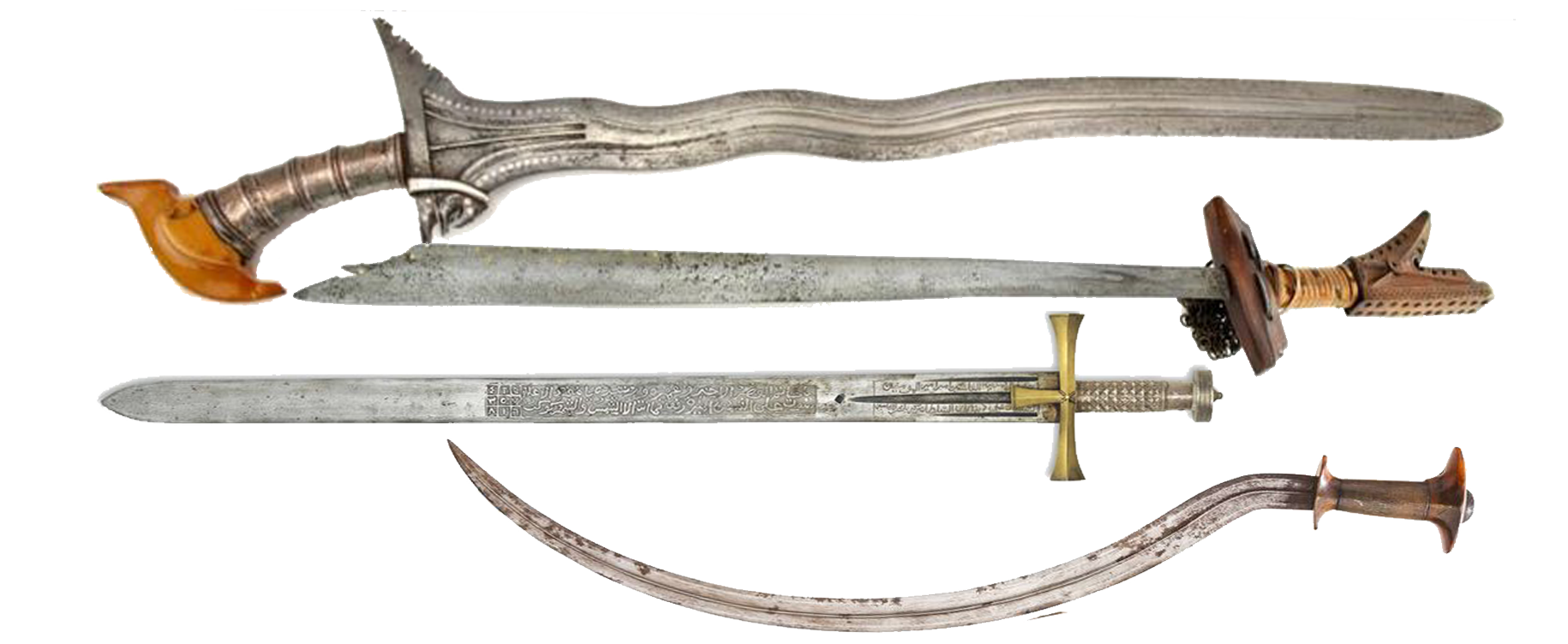
Kris – The Spirit Blade of Indonesia: The Kris , or Keris, featured a wavy blade believed to carry spiritual energy. Each was made through sacred rituals, blessed by priests, and passed down as heirlooms. Its design symbolized balance between man and spirit.
Kampilan & Barong – Swords of the Philippines: The long-handled Kampilan and broad-bladed Barong served as both weapons and symbols of tribal pride. They were used in defense, ceremony, and legend — linking warrior traditions to ancestry and freedom.
Kaskara, Takoba & Konda – Blades of Africa: In Africa, the sword became a sign of status and spirituality. The Sudanese Kaskara and Tuareg Takoba reflected noble heritage, while the ornate Konda of the Congo served both ritual and battle. Each forged blade told stories of lineage and leadership.
Legacy of Tribal Blades: The swords of Southeast Asia and Africa prove that craftsmanship thrives wherever courage and tradition meet. Their artistry, symbolism, and function remind us that every culture forged steel to reflect its own soul.
The Legacy of the Blade – How Swords Shaped Civilization
Through five millennia, the sword has remained humanity’s most enduring creation — a bridge between art and survival. Every civilization that forged steel also forged meaning: of courage, justice, protection, and spirit. The sword became not just a weapon, but a reflection of humanity’s endless quest for perfection.
Legacy and Inspiration: Though the age of gunpowder ended the sword’s rule on the battlefield, its legend endures. Collectors, craftsmen, and martial artists continue to preserve the traditions that shaped entire cultures. At Everest Forge, we honor that legacy through every hand-forged blade — carrying forward the spirit of those who turned fire and metal into timeless art.