
The Dawn of the Sword – Ancient & Classical Blades
Before knights, samurai, or crusaders, there were warriors who wielded the very first true swords — short, heavy weapons forged from bronze and iron. These early blades were not just tools of war; they were emblems of power, status, and craftsmanship. From the deserts of Egypt to the battlefields of Greece and Rome, each ancient sword tells a story of human innovation and survival.
This era marks the birth of swordmaking — when smiths discovered how to shape metal into an extension of the human will. Let’s explore the nine most significant swords from the ancient and classical world.
1. Khopesh Sword (Egypt)
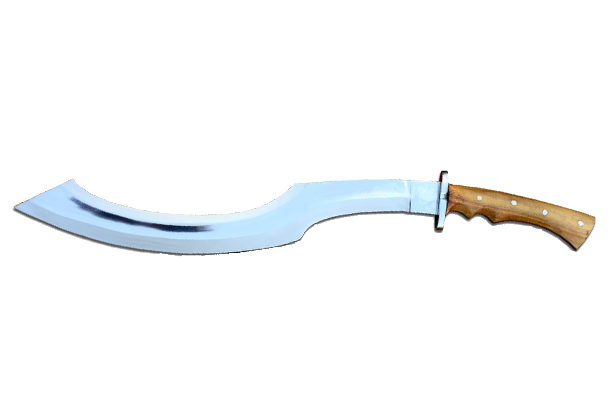
The Khopesh is one of humanity’s earliest and most distinctive swords. Developed around 2500 BCE in Ancient Egypt, its crescent-shaped blade evolved from battle axes. The forward-curved edge was designed to hook, slice, or pull shields aside — an advantage in chariot warfare.
Made from bronze and later iron, the Khopesh symbolized authority as much as might. Pharaohs carried ornate versions as royal insignia, often engraved with hieroglyphs invoking divine protection from the gods. More than a weapon, it represented Egypt’s power and order.
2. Xiphos Sword (Greece)

The Xiphos was the iconic sword of Greek hoplites — citizen-soldiers who fought in tight formations known as phalanxes. Its double-edged, leaf-shaped blade was ideal for both thrusting and cutting, making it deadly in close combat after the spear line broke.
Typically around 50 cm long, the Xiphos was a secondary weapon but a symbol of heroism. Greek myths and pottery often depict warriors like Achilles and Theseus carrying Xiphos swords, representing valor, discipline, and honor.
3. Kopis Sword (Greece)

The Kopis introduced a revolutionary forward-curved design that concentrated force at the tip for devastating chops. It served as both a battlefield weapon and a utilitarian tool — powerful enough to cut through armor, limbs, or even horse legs during cavalry charges.
Greek historian Xenophon recommended the Kopis for mounted troops, praising its cutting ability over straight swords. This distinctive shape would influence future weapons like the Iberian Falcata and even the Nepalese Kukri thousands of years later.
4. Falcata Sword (Iberia)
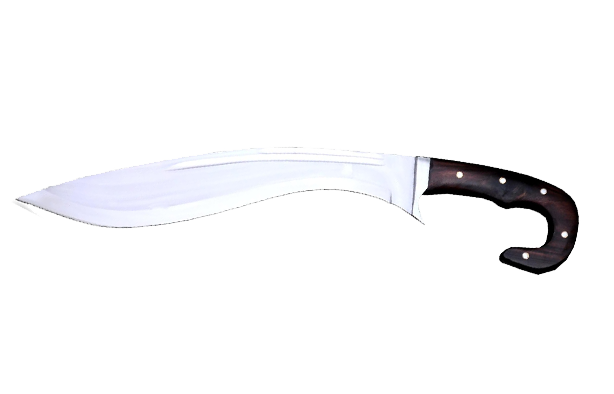
The Falcata was the pride of ancient Iberia (modern Spain). Resembling the Kopis but heavier, it featured an inward-curving single edge that delivered crushing blows capable of splitting shields. Its forward-weighted design gave it incredible momentum in each swing.
To Iberian warriors, the Falcata was a sacred symbol of protection. Many were buried with their swords, which were decorated with intricate carvings or animal motifs. When Rome invaded, they feared these blades for their power and precision — later adopting aspects of their design into Roman swords.
5. Gladius Sword (Rome)

The Gladius is perhaps the most famous sword in history — the weapon that built an empire. Short, double-edged, and razor-sharp, it was perfect for close-quarters combat behind the Roman shield (scutum). Its lethal thrusting power made the Roman legions unstoppable on the battlefield.
Variants like the Gladius Hispaniensis were influenced by Spanish designs and optimized for stabbing through armor. Discipline and training turned the Gladius into a weapon of conquest, precision, and empire-building — the embodiment of Roman order and efficiency.
6. Spatha Sword (Late Roman Empire)
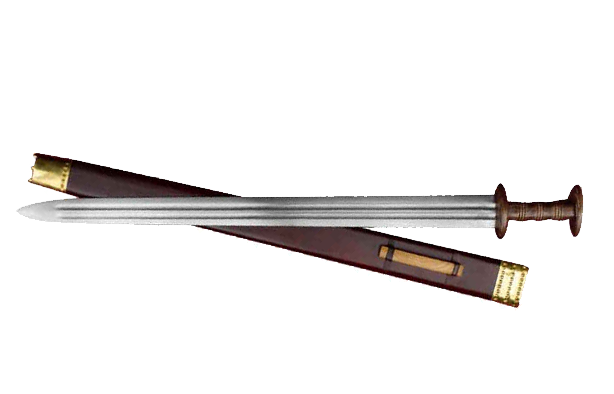
As Rome’s warfare evolved, so did its blades. The Spatha replaced the shorter Gladius, featuring a longer reach ideal for cavalry and open formations. Measuring around 90 cm, it provided more flexibility and cutting range.
The Spatha bridged the ancient and medieval worlds — its design influencing early European swords of the Dark Ages. In many ways, it represents the transition from disciplined Roman precision to the broader strokes of the coming knightly era.
7. Falx Sword (Dacia / Thrace)
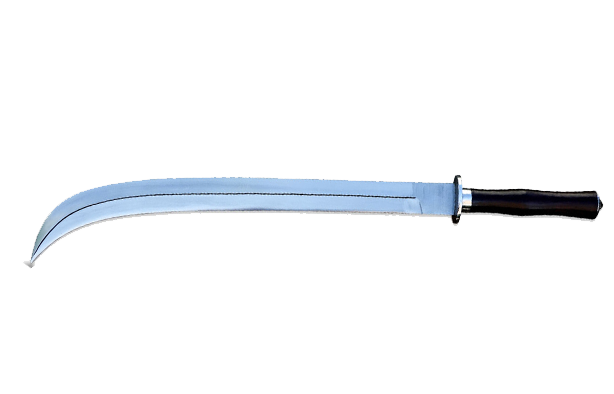
The Falx was a terrifying weapon used by Dacian warriors (modern-day Romania). Its long, inwardly curved blade was designed for powerful hooking strikes that could bypass shields and helmets. So effective was the Falx that the Romans reinforced their armor after facing it in battle.
With its distinctive curve and reach, the Falx stood as one of antiquity’s most feared weapons — a symbol of rebellion and raw power against imperial dominance.
8. Celtic Leaf Blade Sword (Europe)

The Celtic Leaf Blade was both artistic and lethal. Forged by Iron Age Celts, its wide, leaf-like profile provided balance and cutting strength. The design mirrored the natural shapes found in Celtic art, blending beauty and function.
Many surviving examples are richly decorated, with inlaid bronze or coral pommels. To the Celts, the sword was more than a weapon — it was a spiritual companion, believed to hold the warrior’s essence even after death.
9. Seax Sword (Anglo-Saxon / Germanic Tribes)
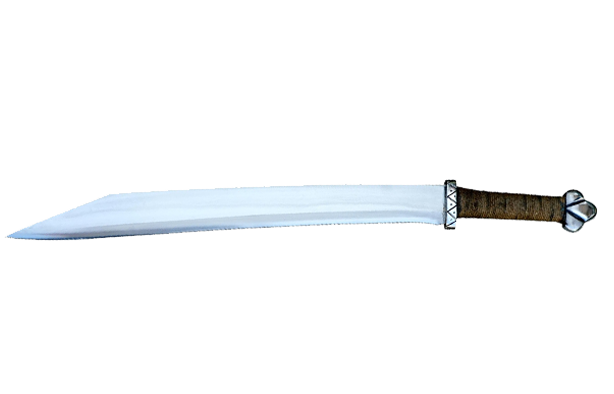
The Seax — sometimes called the “Saxon knife” — was a hybrid between a knife and a sword. Single-edged and practical, it served as both a fighting blade and a daily utility tool. Warriors often carried smaller seaxes for work and longer versions, called langseax, for battle.
The Seax gave its name to the Saxons themselves, symbolizing identity and independence. It was a blade of simplicity and survival — the perfect weapon for a people who thrived on endurance and skill.
Legacy of the Ancient Blades
From the Khopesh of the Nile to the Gladius of Rome, the ancient sword was more than a military invention — it was the birth of human craftsmanship. Every cut, every curve, and every engraving marked an evolution in how civilizations expressed strength, discipline, and art through metal.
At Everest Forge, we carry that spirit forward. Each blade we forge honors the legacy of these early masters — combining traditional techniques with modern precision to create swords that are as functional as they are timeless.