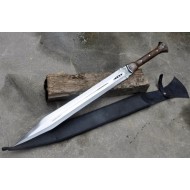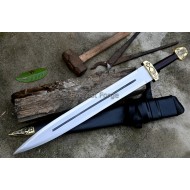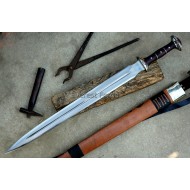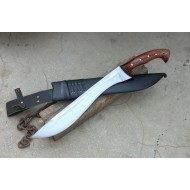
Menu
Your Cart

Roman Pompeii Gladius Sword — Hand-Forged Straight-Blade Legionary Short Sword

Roman Pompeii Gladius Sword — Hand-Forged Straight-Blade Legionary Short Sword
$244.99
Ex Tax: $244.99
  • Model: Roman Gladius Sword
  • Product Code: GLADIU0026
  • Location: Kathmandu, Nepal

Available Options

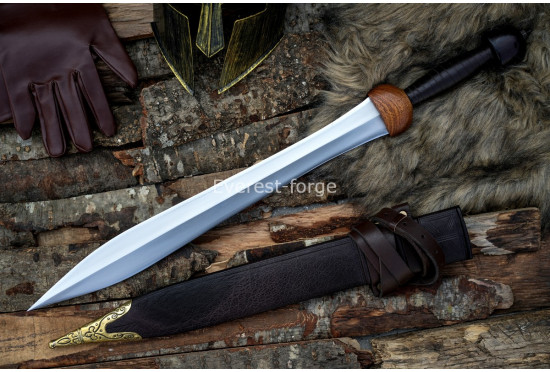
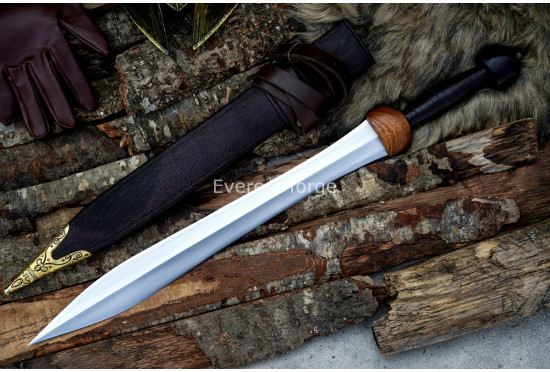
Pompeii-Type Roman Gladius with Straight Parallel-Edged Blade and Short Triangular Point

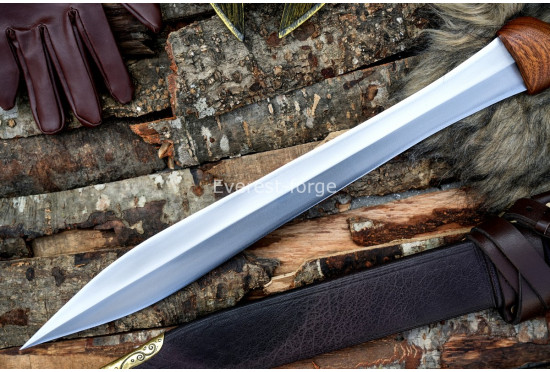
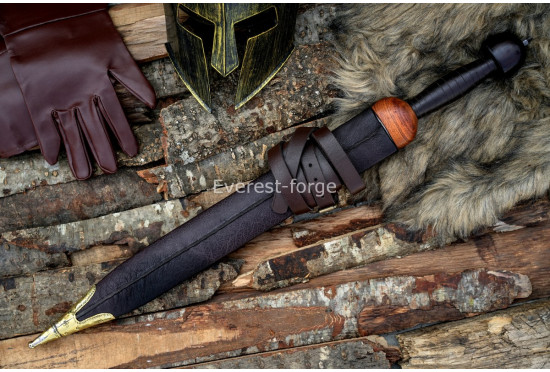
The Roman Pompeii Gladius from Everest Forge reproduces the most standardised and most recognisable form of the Roman short sword. Its signature is the straight, parallel-edged blade drawing into a short triangular point — the clean, uniform profile that replaced the earlier waisted patterns as Roman production became consistent across the empire. If the Mainz is defined by its long point, the Pompeii is defined by its straightness.

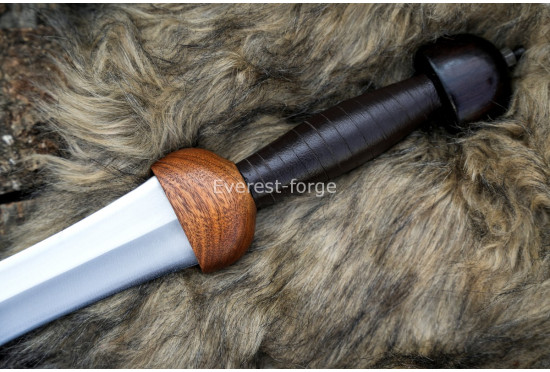
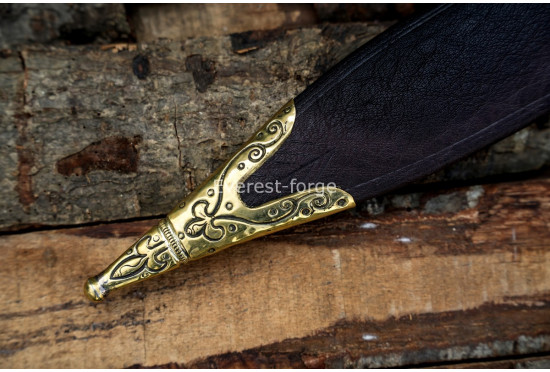
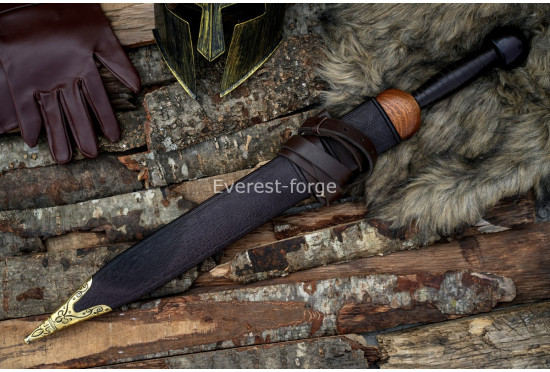
Each blade is hand forged in Kathmandu, Nepal from 5160 high carbon spring steel, oil-tempered to working hardness, with a full tang. It is fitted with a rosewood handle wrapped in leather for grip, whitewood guard and pommel shaped in the traditional Roman style, and a Roman-style scabbard built to historical proportions. This is a piece for historical collection, living-history reenactment, HEMA study, and controlled cutting practice where permitted by local law.

An honest note. This is a hand-forged collector and reenactment sword. We describe how the Pompeii pattern was used historically — the disciplined Roman thrust from behind the shield wall — because that history is what the design expresses. We do not sell our blades as weapons. Because every gladius is forged individually, small variations in wood grain, weight, finish, and leatherwork are natural marks of handwork, not flaws.
Everest Forge — Hand-Forged in Nepal
Make This Pompeii Gladius Yours
Choose your length, handle material, edge, and engraving — or commission a fully bespoke Pompeii to your own archaeological reference. Personalised engraving is included at no extra charge.
Customise This Gladius → Commission a Bespoke Gladius →

The Pompeii Gladius — A Brief History

The Pompeii type takes its modern name from examples preserved in the ruins of Pompeii. It was the final and most standardised version of the Roman gladius, replacing the earlier, broader designs as the army's equipment became increasingly uniform. The pattern is generally dated from the mid-1st century AD onward and remained in service through much of the Imperial period before the longer spatha gradually took its place.

Unlike the leaf-shaped Hispaniensis and the waisted Mainz, the Pompeii has straight, parallel edges and a short triangular point. That geometry suited the disciplined Roman thrust delivered from behind the scutum, the large rectangular shield, letting legionaries strike from within a tight formation. Simpler to forge and easier to standardise, the Pompeii became the definitive Roman short sword and one of the most reproduced blade forms in history.

Why This Pompeii Gladius Stands Apart

Straight parallel-edged blade

The defining Pompeii geometry — clean, uniform edges running parallel down the blade, forged by eye and hammer rather than stock-removed.

Short triangular point

The compact triangular tip that distinguishes the Pompeii from the long-pointed Mainz — true to the archaeological examples it is based on.

5160 spring steel, oil-tempered

The same high carbon spring steel used in vehicle leaf springs, chosen for toughness and resilience. Oil-tempered to a working hardness — not a stainless display blade.

Full-tang construction

The tang runs the length of the grip for structural integrity — the foundation of a sword built to be handled, not just displayed.

Traditional Roman fittings

A rosewood handle wrapped in leather, with a whitewood guard and pommel shaped in the traditional Roman style, and a Roman-style scabbard built to historical proportions.

Hand-forged in Nepal

Forged on hammer and anvil by our blacksmiths in Kathmandu. See the process on The Making and meet the team on Meet the Maker.

Specifications

Pattern
Pompeii-type Roman gladius — straight parallel edges, short triangular point
Overall length
29 inches
Blade length
20 inches
Handle length
9 inches
Weight (with scabbard)
1.01 kg
Weight (without scabbard)
0.65 kg
Steel
5160 high carbon spring steel
Heat treatment
Oil-tempered to working hardness
Tang
Full tang
Handle
Rosewood wrapped in leather (standard)
Guard & pommel
Whitewood, traditional Roman style
Scabbard
Traditional Roman-style scabbard, included
Edge
Sharpened working edge — blunt training edge available

Customise Your Pompeii Gladius

Most details on this gladius can be specified to your preference before forging begins. Use the options on this page to build your blade, or contact us for anything outside the standard list.

Length

Standard 20-inch blade, or specify any length from 14 to 30 inches. Forged to your dimension at no extra charge.

Handle Material

Rosewood with a leather wrap as standard. Whitewood, buffalo horn, and exotic timbers are available on request to suit display or handling preference.

Edge

Sharpened working edge by default, or a blunt training edge for HEMA sparring and stage rehearsal — included at no extra charge.

Engraving

Names, dates, Roman mottos such as SPQR, or a family or regimental crest — engraved on the blade or handle, included at no extra charge.

Build My Pompeii Gladius →

Hand-Forged, Not a Wall-Hanger

An Everest Forge Pompeii

  • 5160 high carbon spring steel
  • Oil-tempered to working hardness
  • Full-tang construction
  • Forged and shaped by hand
  • Stands up to controlled cutting practice and reenactment use

A typical decorative replica

  • Stainless or unknown steel
  • Little or no heat treatment
  • Rat-tail or partial tang
  • Cast or stock-removed in a factory
  • Built for display only — not for handling

The Complete Gladius Collection

Who This Pompeii Gladius Is For

  • Roman history collectors — building a collection around the iconic short sword of the legions, with the most standardised and recognisable gladius pattern.
  • Reenactors and living history — Roman legion groups and historical event participants who need period-accurate geometry in real, hand-forged steel.
  • HEMA and martial-arts students — those studying Roman thrust-and-cut footwork with a real-weight short sword. A blunt training version is available for sparring.
  • Cutting-practice users — buyers who work tatami, bottles, and bamboo and want correct weight distribution and edge geometry.
  • Gift buyers — a serious, lasting gift for a history enthusiast, with optional engraving for names, dates, or a crest.
  • Film, theatre, and production — full-weight authentic steel for historical productions, with blunt versions for choreography.

How It Is Made

01

Steel selection

We start with 5160 high carbon spring steel, the same material used in heavy-duty vehicle leaf springs, chosen for toughness and shock resistance.

02

Forging and shaping

The bar is heated and hammered by hand into the straight parallel-edged Pompeii profile, finishing in the short triangular point that defines the pattern.

03

Heat treatment

The blade is hardened and oil-tempered to a working hardness, balancing a durable edge against a resilient spine.

04

Finishing and fitting

The leather-wrapped rosewood grip and whitewood fittings are shaped and fitted, the edge is brought up, and the Roman-style scabbard is finished to match.

What Is Included

  • One hand-forged Pompeii-type Roman gladius in 5160 spring steel
  • Traditional Roman-style scabbard built to historical proportions
  • Personalised engraving where requested, at no extra charge
  • Care guidance for the blade, handle, and leather

Shipping, Returns, and Warranty

Every gladius ships from Kathmandu, Nepal via DHL Express or FedEx International on a Delivered Duty Paid (DDP) basis — duties and taxes are handled so there is nothing to pay on arrival. Typical delivery is 8 to 15 business days from order, including forging and processing time. Some countries restrict the import of swords above certain lengths; it is the buyer's responsibility to check local law before ordering.

Standard gladii carry a 30-day satisfaction guarantee in unused condition and a 6-month warranty against manufacturing defects. Custom and personalised pieces are forged to your specification and are non-returnable. Full details are on our Shipping and Returns and Warranty and Returns Policy pages.

Caring for Your Gladius

Wipe the blade clean after handling and apply a light film of mineral or blade oil to protect the high carbon steel from moisture. Store the sword out of the scabbard in dry conditions for long-term keeping, since trapped humidity can mark a carbon blade. Treat the leather occasionally with a leather conditioner, and keep the rosewood grip away from prolonged damp or direct heat.

Everest Forge — Hand-Forged Roman Gladius
Order Your Pompeii Gladius
Choose your length, handle, edge, and engraving — or commission a fully bespoke Pompeii. Every blade is forged in 5160 spring steel and shipped worldwide with tracking, duties paid.
Customise This Gladius → Ask a Question →

Frequently Asked Questions

What is a Pompeii-type gladius?

The Pompeii is the most standardised and most recognisable form of the Roman gladius, named after examples preserved in the ruins of Pompeii. It is identified by its straight, parallel-edged blade and a short triangular point, and it was the definitive Roman short sword of the Imperial period, used from roughly the mid-1st century AD onward.

How is the Pompeii different from the Mainz gladius?

The Pompeii has straight parallel edges and a short triangular point, while the earlier Mainz has a waisted blade and a long, pronounced point. The Pompeii was simpler to forge and standardise, and it gradually replaced the Mainz pattern across the Roman army.

What steel is the blade made from?

The blade is forged from 5160 high carbon spring steel, the same material used in heavy-duty vehicle leaf springs, valued for toughness, shock resistance, and edge retention. It is oil-tempered to a working hardness. Other steels such as 1095 and 1075 are available on custom request.

Is the blade sharp, or can I get it blunt?

The standard edge is a sharpened working edge. A blunt training edge is available at no extra charge for HEMA sparring, stage rehearsal, or where a blunt blade is preferred — just note it in your order or contact us before forging.

What are the dimensions of this Pompeii gladius?

The standard piece measures 29 inches overall, with a 20-inch blade and a 9-inch handle. It weighs about 1.01 kg with the scabbard and 0.65 kg without. You can also specify a custom blade length from 14 to 30 inches before forging.

Can I choose a different handle material?

Yes. The standard grip is rosewood wrapped in leather, with whitewood guard and pommel. Whitewood, buffalo horn, and exotic timbers are available on request to suit your display or handling preference. Mention your choice when ordering.

Can I have the gladius engraved?

Yes. Standard engraving — names, dates, Roman mottos such as SPQR, or a family or regimental crest — is included at no extra charge on the blade or handle. Bespoke ceremonial engraving with metal inlay is available as a premium service. See our Personalized Blades page.

Does it come with a scabbard?

Yes. Every standard Pompeii gladius includes a traditional Roman-style scabbard built to historical proportions, designed for secure carry.

Who is this gladius for?

It suits Roman history collectors, living-history reenactors, HEMA and martial-arts students, cutting-practice users, gift buyers, and film or theatre productions. It is a hand-forged collector and reenactment piece, not marketed as a weapon.

How is it shipped, and how long does delivery take?

We ship from Kathmandu via DHL Express or FedEx International on a Delivered Duty Paid basis, so duties and taxes are handled with nothing to pay on arrival. Typical delivery is 8 to 15 business days from order, including forging and processing. Custom and personalised orders may take longer.

What is your return and warranty policy?

Standard gladii carry a 30-day satisfaction guarantee in unused condition and a 6-month warranty against manufacturing defects. Custom and personalised gladii are forged to your specification and are non-returnable. Full details are on our Warranty and Returns Policy page.

Can I order a custom length or a fully bespoke Pompeii?

Yes. Specify any blade length from 14 to 30 inches, a custom handle and fittings, and personalised engraving — or commission a fully bespoke Pompeii from your own archaeological reference through our Custom Forge service. We confirm every detail before forging begins.

Specification
Blade: 20 inches Long Blade made from carbon steel 5160
Total Length: 29 inches Long in total
Handle: 9 inches Long Full tang Handle
Weight: 700 Grams
Note: Please note: As each sword is individually hand-forged, slight variations in measurements, weight, and appearance are natural and add to the uniqueness of each piece.

Write a review

Note: HTML is not translated!
Bad Good
Captcha

All Video