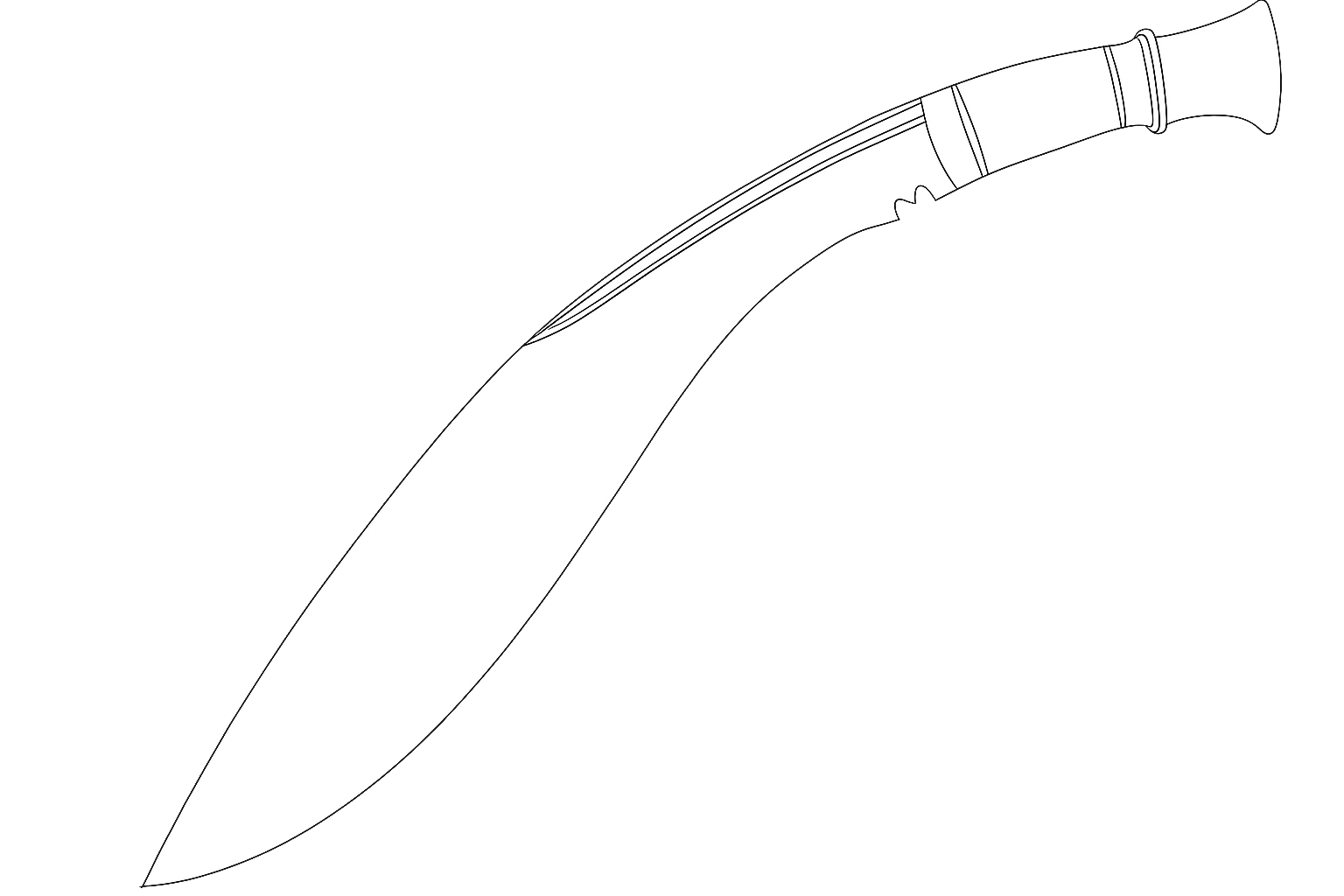
 A kukri (spelled khukuri in Nepali) is the forward-curved national knife of Nepal — instantly recognised by its inward-sloping blade and weighted belly. It is the working tool of Nepal's hill farmers, the field-issued weapon of the Gurkha soldier, and one of the most efficient cutting blades ever designed. A kukri chops like an axe, slices like a knife, and clears brush like a machete, all from a single 10–15 inch hand-forged blade.
Whether you call it a kukri or a khukuri, you're describing the same blade. Khukuri (pronounced khoo-koo-ree) is the original Nepali spelling; kukri is the international variation popularised through British military use during the Anglo-Nepalese War of 1814–1816. Today both spellings are correct and interchangeable.
This page is the buyer's reference for understanding the kukri — what it is, what it's used for, the regional blade shapes you'll encounter, how tang construction affects performance, and how to tell an authentic hand-forged kukri from a factory copy. Everest Forge has hand-forged kukris in Kathmandu since 2008, supplying the British Gurkha Army (BSI Service No. 1, 2008), the Nepal Army, and the Nepal Police. Every blade on this page links to the right category for your needs.
What Is a Kukri Used For?
The kukri's forward-curved geometry concentrates weight toward the blade's belly, which means the cutting edge arrives at the target with the most mass and the most speed at the same moment. That single design choice is why a kukri can do the work of three separate tools. In Nepal, one kukri replaces an axe, a machete, and a utility knife in a household — and the same is true today for bushcrafters, homesteaders, and outdoor professionals worldwide.
Specific working uses of the kukri include:
- Chopping firewood and kindling — The forward weight delivers axe-like splitting force from a 10–13 inch blade.
- Clearing brush, vines, and undergrowth — The inward curve catches and slices vegetation on the draw.
- Bushcraft and camp work — Notching, batoning, shelter building, and feather-sticking.
- Butchering and field-dressing — The belly chops through joint and bone; the tip handles fine work.
- Harvesting crops — Corn, sugarcane, millet, and bamboo are still harvested with a kukri across rural Nepal.
- Carving and shaping — Bamboo tool-making, fencing, household repairs.
- Ceremonial offerings — Used in Dashain and Hindu/Buddhist rituals across Nepal.
- Military service — Carried by Gurkha regiments in every major British and Indian conflict from 1816 to the present day.

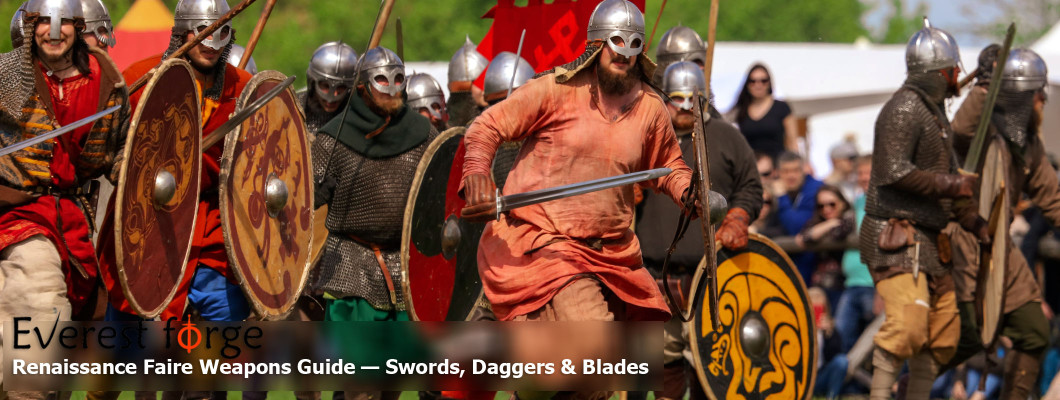
From battlefield to forest to household — the kukri's versatility across centuries.
For practical guidance on grip, safe drawing, and chopping technique, see our kukri handling and safe-use guide. For long-term blade care, oiling, and edge maintenance, see our kukri maintenance and storage guide.
Choose the right kukri for the job
If you're buying a kukri for bushcraft and serious field work, you want a full-tang blade in 10–13 inches — see our heavy-duty working kukris. For camp use and everyday tasks, traditional patterns in 9–11 inches are ideal — see our traditional Nepali kukris. For belt-carry and light utility, look at our small EDC kukris.
The Kukri in Gurkha Military History

Gurkha soldiers with their issued kukris — the standard-issue close-combat blade since 1816.
The kukri's international reputation was built on the battlefield. During the Anglo-Nepalese War of 1814–1816, British East India Company forces faced Gorkhali soldiers carrying short, heavy, inward-curved blades that proved devastating in close combat. The British were so impressed by Gorkhali courage and the effectiveness of the kukri that, after the war, they began recruiting Gurkha soldiers into British service — a tradition that continues today through the Brigade of Gurkhas.
From the trenches of the Western Front in World War I, to Burma and North Africa in World War II, to the Falklands in 1982, to Iraq and Afghanistan in the 21st century, the kukri has been carried by Gurkha regiments as the standard-issue service knife. The current British Gurkha service kukri — known as the Service No. 1 — was specified by the British Ministry of Defence in 2008, and Everest Forge was one of the workshops contracted to supply it. See our current-issue military kukris for the authentic BSI 2008 specification.
The kukri is more than a weapon to the Gurkha — it is a symbol of identity, oath, and lineage. For the full story of the kukri's place in Gurkha tradition, oath-taking, and modern military service, see our Honor of the Kukri page.
Authentic Gurkha service kukris
If you want a kukri built to the same specification as the blade issued to serving Gurkha soldiers — same 10.5-inch blade, same 5160 spring steel, same water temper, same horn handle — browse our current-issue military khukuri collection. For ceremonial and presentation pieces with silver scabbards, see our Kothimora ceremonial kukris.
Origins of the Kukri Knife
The kukri's origins are debated, but the leading theory traces it to the ancient Greek kopis and machaira — heavy, single-edged, forward-curving swords used by Greek cavalry and infantry from the 6th century BCE onward. After Alexander the Great's campaign into the Indian subcontinent in 326 BCE, kopis-style blades are believed to have spread eastward, where they evolved over centuries into the shorter, single-handed kukri carried in the Himalayan foothills.
Archaeological evidence places kukri-like blades in Nepal from at least the 7th century CE. The blade rose to national status in the late 18th century under King Prithvi Narayan Shah, who unified the small kingdoms of the Himalayan region into the modern Nepali state. His soldiers carried the kukri as their standard sidearm, and from that period onward the kukri was inseparable from Nepali identity.
For the full archaeological and historical record — including theories that connect the kukri to early Hindu sacrificial blades and Iron Age curved knives of the Indian subcontinent — see our dedicated origin of the kukri page.

From the ancient Greek kopis to the modern Nepali khukuri — a 2,500-year lineage of forward-curved blades.
Kukri Blade Shapes and Regional Patterns
The kukri is not a single blade — it is a family of regional patterns, each evolved for the geography, work, and traditions of its origin. Understanding the patterns is essential before buying, because the wrong pattern for your intended use will leave you with a beautiful blade that does not perform.

The principal traditional kukri blade patterns of Nepal.
- Sirupate — Slender, long, lightweight. Named after the siru grass leaf. Favoured by eastern hill kukri martial artists and field carriers who need speed over chopping mass.
- Bhojpure — Broad-bellied, heavy, deeply curved. Originating from the Bhojpur region. The classic working and ceremonial Nepali kukri.
- Budhune — Short, compact, household-sized. The kitchen and small-task kukri of rural Nepal.
- Baspate — Balanced, smooth-curved, leaf-shaped (after bas — bamboo). The general-purpose farmer's kukri.
- Angkhola — Features one fuller (groove) along the spine, which reduces weight without sacrificing rigidity. A working kukri pattern.
- Chirra (Chirrawala) — A heavy-duty fullered pattern, typically with two or three fullers. Built for sustained chopping where the smith needs to reduce weight without losing structural strength. See our Chirra fullered kukri collection.
- Salyani — Deeply curved, almost sickle-like. Unique to the Salyan region of western Nepal. Used for sweeping cuts on vegetation. See our traditional regional patterns.
- Dragon kukri — Engraved with dragon and floral motifs along blade and scabbard. A presentation and ceremonial pattern. See our etched and engraved kukris.
- Kothimora — A ceremonial Bhojpure-style blade housed in a silver-mounted scabbard, traditionally given as a presentation piece to officers and dignitaries. See our Kothimora ceremonial kukri collection.
Each name in the list above is a full glossary entry in our complete kukri terminology guide, which also covers every named part of the blade (cho, bhojh, kaudi, chakmak, karda, bhura) and every regional spelling variant.
Kukri Tang Construction: Why It Matters Before You Buy
The single most important specification on a kukri — more than blade length, more than steel type, more than handle material — is the tang. The tang is the section of steel that extends from the blade into the handle, and it determines whether the blade will survive heavy work or break at the hilt under stress.

The three principal tang constructions used in traditional Nepali kukri-making.
- Rat-tail tang (Parowala handle) — A narrow steel rod extends from the blade into a hollow handle and is sealed with traditional Himalayan pine resin (Laha). Lightweight, well-balanced, and traditional. Ideal for ceremonial, decorative, household, and lighter working kukris. The construction used on most authentic traditional Nepali kukris for centuries.
- Semi-rat tail tang — The tang extends part-way through the handle. A middle-ground option offering more strength than rat-tail with less weight than full tang. Common on mid-tier working kukris.
- Full tang (Panawal handle) — The tang runs the full length of the handle, with grip scales (wood, horn, micarta) riveted to either side. The strongest possible construction. Required for tactical, combat, survival, and heavy-duty bushcraft kukris where sustained impact and prying load are expected.
Buyer's rule of thumb: if you are buying for ceremonial display, traditional household use, or light field carry, rat-tail tang is correct and historically authentic. If you are buying for combat training, tactical use, or heavy bushcraft, insist on full tang. If you are unsure, full tang is the safer choice and we can build any pattern in full tang on request through our Custom Forge service.
Kukris built for hard use
Our hybrid combat, utility and survival kukris are built on full-tang construction with modern handle materials. For oversized chopping blades, see our 15-inch and larger kukri collection.
Kukri-Making Regions of Nepal

The principal kukri-forging centres of Nepal — each with its own blade lineage.
Different regions of Nepal developed distinct kukri traditions based on local need, available steel, and the demands of the soldiers, farmers, and households the smiths served. These regional differences are still visible in modern hand-forged kukris today.
- Bhojpur (eastern hills) — Origin of the broad, heavy Bhojpure pattern. Historically the most prolific kukri-making centre in Nepal.
- Dharan (eastern plains) — Major modern centre for military and tactical kukris; historically supplied blades to the British Gurkha recruitment depots.
- Chainpur (far east) — Simple, efficient, agricultural and field-use kukris.
- Salyan (western Nepal) — Home of the deeply curved Salyani pattern, distinct from any other regional style.
- Kathmandu Valley (central) — Specialises in presentation, export, and ceremonial pieces, including silver-mounted Kothimora kukris. This is where the Everest Forge workshop is based.
Cultural and Spiritual Role of the Kukri in Nepal

The kukri in Nepalese ritual — Dashain blessings, household altars, ceremonial gifts.
In Nepal, the kukri is not only a tool — it is a sacred object that appears in religious ceremonies, life rituals, and the spiritual fabric of the home.
- Dashain festival — The kukri is central to Dashain, the largest Hindu festival in Nepal. The blade is worshipped with prayer, tika, and offerings before being used in ritual animal sacrifices that honour the goddess Durga and symbolise the victory of good over evil.
- Puja ceremonies — Kukris are placed on household altars, anointed with red tika, marigold flowers, and incense, and worshipped during family religious observances.
- Household protection — Many Nepali homes keep a kukri near the entrance, above the doorway, or in the master bedroom as a spiritual guardian believed to repel negative energy.
- Ceremonial gifting — A kukri is a respected gift for weddings, promotions, retirements, and military commissions. It signifies honour, responsibility, and lineage.
For the cultural and ethical weight the kukri carries in Gurkha and Nepali tradition — including its role in oath-taking and the unbreakable bond between soldier and blade — see our Honor of the Kukri page.
Traditional, Modern, and Custom Kukris: Which One Do You Need?

The three buying categories the modern kukri market has evolved into.
Today's kukri buyer is choosing between three broad categories. Understanding the difference saves money and prevents disappointment.
- Traditional kukris — Forged to historic regional patterns. Natural materials throughout: water-buffalo horn or hardwood handles, wood-and-water-buffalo-leather scabbards, traditional rat-tail tang construction. Best for cultural authenticity, ceremonial use, traditional household carry, and collectors who want a blade as it was made for centuries. See our traditional kukri collection and our historical replica kukris.
- Modern working kukris — Built for the modern bushcrafter, soldier, and outdoorsman. Typically full-tang construction with ergonomic micarta, G10, or polished rosewood scales; modified blade geometries; and durable Kydex or modern leather sheaths. Best for serious field use. See our heavy-duty working kukris and hybrid combat/utility/survival kukris.
- Custom kukris — Forged to your exact specification: blade length, thickness, profile, fuller count, handle material, scabbard type, engraving, and personalisation. The right choice when no production model matches your needs, when you want a presentation piece for a specific occasion, or when you are commissioning a regimental or family blade. Start the conversation through our Custom Forge service.
How to Identify an Authentic Hand-Forged Kukri
The international kukri market is full of factory-stamped lookalikes built from mystery steel and assembled in workshops that have never produced a Gurkha service blade. A genuine hand-forged Nepali kukri shows specific signs:
- Forge marks and slight asymmetry — Hammer-forged blades show small variation. Machine-stamped blades are eerily perfect. Perfection is the warning sign, not the proof of quality.
- Single-piece blade with visible heat-treat colour — A traditional water-tempered blade often shows a faint temper line where the smith cooled only the cutting edge.
- 5160 high-carbon spring steel — Authentic Nepali kukris are forged from 5160 high-carbon spring steel (or its traditional equivalent — leaf-spring stock). This is the steel specified for British Gurkha service blades. Avoid stainless-steel "kukris" — they cannot hold a Gurkha-grade edge and are decorative only.
- Water-buffalo horn or hardwood handle — Set in traditional Himalayan pine resin (Laha) on rat-tail tang blades, or riveted on full-tang blades.
- Hand-stitched water-buffalo leather scabbard — Usually paired with a small companion knife (karda) and a sharpening steel (chakmak) tucked into the scabbard.
- Forge attribution — A genuine kukri has a known forge behind it. If the seller cannot tell you who forged the blade, where, and from what steel, walk away.
Everest Forge blades are hand-forged in our Kathmandu workshop by 10 Kami-caste smiths — the hereditary blade-making caste of Nepal. Every blade is photographed and sent to you for approval before shipping. See how every Everest Forge blade is made and read about the Everest Forge battle-ready standard.
The Legacy of the Kukri

The kukri across generations — farmer, soldier, royalty, statesman.
The kukri is more than a cutting tool. It is a 2,500-year-old design that survives unchanged because it works — and a national emblem that survives unchanged because it carries the identity of a people who have never been colonised. The same blade that splits firewood for a hill farmer is the blade that swears in a serving Gurkha. The same pattern that hangs above a doorway as a household guardian is the pattern presented to retiring officers as a final mark of honour.
From the foothills of the Himalayas to the trenches of Flanders, from royal courts to Hindu temples, from the Falklands to Helmand, the kukri has been carried, sharpened, oiled, and passed down across generations. At Everest Forge, we are part of that continuation — forging by hand in Kathmandu, by Kami smiths who learned the work from their fathers, for buyers around the world who want the real thing.
Continue Learning About the Kukri
This page is the buyer's reference. For depth on specific topics, the following sibling pages cover each in full:
- Origin of the Kukri — Archaeological and historical record of the kukri's earliest ancestors.
- How a Kukri Is Forged — Inside the Kathmandu workshop: from 5160 spring steel to finished blade.
- Kukri Terminology Guide — Every part, pattern, and term explained.
- Kukri Handling Guide — Grip, draw, chop, and safe-use technique.
- Kukri Maintenance Guide — Oiling, sharpening, scabbard care, long-term storage.
- Honor of the Kukri — The kukri's place in Gurkha tradition, oath, and culture.
- Kukri FAQ — Quick answers to the most common kukri questions.
- Complete Kukri Buying Guide — Long-form buyer's walkthrough across every category.
Frequently Asked Questions
What is a kukri (khukuri)?
A kukri (spelled khukuri in Nepali) is a forward-curved knife from Nepal with an inward-sloping blade and a weighted belly. It is the national knife of Nepal and the standard-issue blade of the Gurkha soldier. A kukri performs the work of an axe, a machete, and a knife in a single 10–15 inch hand-forged blade.
Is kukri the same as khukuri?
Yes — kukri and khukuri are the same blade. Khukuri is the original Nepali spelling (pronounced khoo-koo-ree). Kukri is the international variation popularised by British military use after the Anglo-Nepalese War of 1814–1816. You will also see the spellings khukri, khookri, and kookri — all refer to the same Nepali curved knife.
What is a kukri used for?
A kukri is a multi-purpose blade used for chopping firewood, clearing brush, butchering, food preparation, bushcraft, harvesting crops, carving bamboo, and ceremonial offerings. It has also been the standard-issue close-combat knife of Gurkha soldiers in every major British and Indian military conflict since 1816. The forward-weighted curve allows a kukri to chop like an axe, slice like a knife, and clear vegetation like a machete.
What is the kukri's curved blade for?
The forward curve shifts the blade's mass toward the belly, so the cutting edge arrives at the target with the most weight and the most speed at the same moment. This concentrates chopping force and allows a relatively short blade to deliver axe-like cutting power. The inward curve also catches and slices vegetation efficiently on the draw stroke.
What is the notch near the handle of a kukri?
The notch is called the cho or kaudi. It has three explanations: practically, it serves as a stress-relief point that prevents cracks from propagating up the blade; functionally, it stops blood and fluids from running back onto the handle; and spiritually, the shape symbolises a trident or cow's hoof, both sacred in Hindu tradition. Every authentic Nepali kukri has a cho.
What steel are kukris made from?
Authentic hand-forged Nepali kukris are made from 5160 high-carbon spring steel, the same steel specified for British Gurkha service blades. Some traditional smiths still forge from reclaimed leaf-spring stock (which is also typically 5160 or its close equivalent). Avoid stainless-steel kukris — stainless cannot hold a Gurkha-grade edge or absorb impact and is suitable for decorative use only.
How is a traditional kukri made?
A traditional kukri is hand-forged from 5160 high-carbon steel using hammer and anvil. The blade is shaped hot, then water-tempered — only the cutting edge is quenched, leaving the spine softer and shock-absorbent. The handle is fitted to either rat-tail or full-tang construction and sealed with traditional Himalayan pine resin (Laha) or rivets. The scabbard is hand-stitched from water-buffalo leather over a wooden core. See how Everest Forge kukris are forged for the full process.
Is a kukri a sword?
A kukri is not a sword — it is a large knife. Standard kukris have blade lengths between 8 and 15 inches and are single-handed. However, there is a long-bladed variant called the kukri sword or kora-influenced kukri with blade lengths of 18–24 inches, used historically for ceremonial and battlefield purposes. See our kukri sword collection for examples.
What is the difference between a kukri and a Gurkha knife?
The kukri is the blade itself. "Gurkha knife" is an informal English term for the kukri used as a service weapon by Gurkha regiments. All Gurkha service knives are kukris, but not all kukris are issued to Gurkha soldiers — most authentic Nepali kukris are working, traditional, or ceremonial blades made for civilian use. See our current-issue military kukri collection for the specific service-issue blade.
What is the national weapon of Nepal?
The kukri (khukuri) is the national weapon of Nepal. It appears on military insignia, government emblems, and ceremonial gifts of state. The blade has been formally associated with Nepali national identity since the unification of Nepal by King Prithvi Narayan Shah in the late 18th century.
Are kukris legal to own?
In most countries, kukris are legal to own as collectibles, household tools, or working blades. Some jurisdictions restrict carry in public or treat long-bladed kukris as swords for legal purposes. The United Kingdom restricts public sale of swords with curved blades over 50 cm; Australian states have varying knife and sword permit requirements; some US states regulate fixed-blade carry. Always check your local knife laws before buying. We ship worldwide via DDP (Delivered Duties Paid) and handle customs documentation.
What is the difference between traditional and modern kukris?
Traditional kukris follow historic regional Nepali patterns (Bhojpure, Sirupate, Salyani, etc.) with natural-material handles (horn, hardwood) and traditional rat-tail tang construction. Modern kukris use full-tang construction, modern handle materials (micarta, G10, polished rosewood), and may include guards or modified blade geometries for tactical, survival, or bushcraft use. Both are authentic — the difference is purpose, not quality.
What is a Chirra kukri?
A Chirra (or Chirrawala) kukri is a kukri with multiple fullers (grooves) along the blade — typically two or three. Fullering removes weight from the centre of the blade without sacrificing structural rigidity, producing a lighter blade that retains chopping geometry. Used for sustained heavy work. See our Chirra fullered kukri collection.
What is a Kothimora kukri?
A Kothimora is a ceremonial kukri housed in a silver-mounted scabbard — typically presented as a gift of honour to military officers, dignitaries, and on retirement. The blade is normally a full-quality Bhojpure or service-pattern kukri; what distinguishes the Kothimora is the silver scabbard, often decorated with traditional Nepali motifs. See our Kothimora ceremonial kukri collection.
Can a kukri be used for everyday carry (EDC)?
Compact kukris in the 6–9 inch blade range can serve as EDC blades for utility and bushcraft tasks, subject to local knife-carry law. Most jurisdictions have restrictions on fixed-blade public carry, so EDC kukris are most commonly used for camping, bushcraft trips, garden and farm work, and home use. See our small EDC kukri collection.
How do I care for a carbon-steel kukri?
A 5160 high-carbon kukri needs to be kept dry and lightly oiled. After every use, wipe the blade clean, dry it completely, and apply a thin film of mineral oil, camellia oil, or 3-in-1. Store the kukri outside its leather scabbard for long periods — leather holds moisture and can pit the blade. Sharpen with the supplied chakmak steel for touch-ups, or a fine whetstone for full re-edging. See our complete kukri maintenance guide.
Ready to choose your kukri?
Now that you understand what a kukri is, the blade patterns, and the construction options — see the right collection for your needs. Every Everest Forge kukri is hand-forged in Kathmandu, photographed before shipping, and backed by a 30-day refund guarantee. Free text personalisation on every blade.
Browse all hand-forged kukris → Complete buying guide → Commission a custom kukri →