The Complete Guide to Polearms: History, Types & Battlefield Evolution
Polearms are among the oldest, most widespread, and most adaptable weapons ever created. Long before complex armour systems and steel swords dominated the battlefield, warriors across every civilisation discovered the same fundamental truth — a sharp blade on a long shaft gives you reach, leverage, and power that no hand-held weapon can match.
From the massed pike formations of Macedonian armies to the elegant naginata of Japanese samurai, from Swiss halberdiers stopping armoured cavalry to Flemish farmers defeating French knights with simple wooden shafts and iron spikes — polearms shaped the outcome of battles, wars, and the rise and fall of empires for thousands of years.
This guide covers every major polearm type in history — what it was, how it worked, who used it, and why it was effective. At Everest Forge we hand-forge functional spears in Nepal and build fully custom polearms to order. If you want to own one, you will find the links throughout this guide.

What Is a Polearm?
A polearm is any weapon mounted on a long shaft — typically wood or metal — that gives the user a significant reach advantage over opponents with shorter weapons. The shaft acts as a lever, multiplying the force of a strike and allowing the weapon head to travel at greater speed than any hand-held blade.
Spears are the simplest and oldest form — a pointed tip on a long shaft, designed for thrusting and throwing. But the polearm family extends far beyond spears. Halberds add axe blades and rear hooks. Glaives mount curved sword blades on poles. Poleaxes combine hammers, spikes, and axe heads. Naginatas bring the cutting geometry of a Japanese sword to a 2-metre shaft. Each variation solved specific problems in its cultural and tactical context.
What makes polearms remarkable is how independently they were developed. Japanese smiths and Swiss infantrymen and Chinese warriors and Egyptian soldiers — none of them coordinated, none of them aware of each other — all arrived at similar weapons because the physics and the tactical problems were universal. Reach beats range. Leverage beats raw strength. A cheap shaft and a forged head beats expensive armour if you know how to use them.
Hand-Forged Spears — Ready to Ship from Nepal
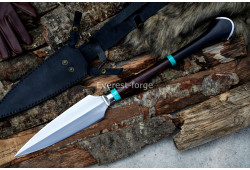
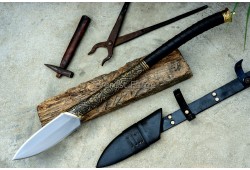
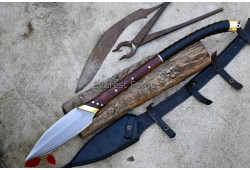
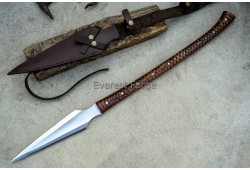
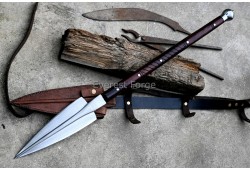
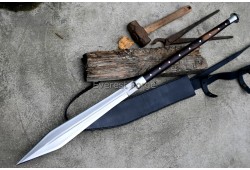
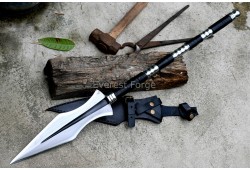
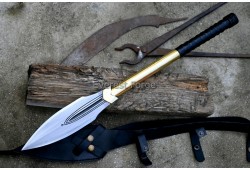
At Everest Forge, we hand-forge functional spears using 5160 high-carbon steel and traditional Nepali blacksmithing techniques. Every spear is full tang, water-tempered, sharpened, and shipped worldwide with a leather scabbard.
European Polearms
Ranseur

The ranseur is defined by its central spear tip and two curved side prongs, forming a trident-like head that gave guards and infantry exceptional control over opponents. The prongs trapped sword blades, redirected strikes, unbalanced enemies, and could push back advancing foes without necessarily killing them — making the ranseur particularly popular among palace guards and city watch units who needed authority and defensive capability without unnecessary lethality. On the battlefield, it excelled at disrupting formations and neutralising charging enemies through entanglement.
Halberd

The halberd is widely regarded as the most versatile polearm ever developed — combining an axe blade, a top spike, and a powerful rear hook into a single multipurpose weapon. Infantry wielding halberds could chop through armour, deliver deep thrusts, pull mounted opponents from horseback, and tear down shields. The Swiss perfected halberd warfare, forming deadly defensive squares capable of overwhelming armoured cavalry through precision and discipline. Over centuries, the halberd evolved into both a battlefield icon and a ceremonial weapon carried by royal guards across Europe.
Glaive

The glaive features a long, curved blade mounted on a pole, giving infantry the reach of a spear combined with the slicing power of a sword. Soldiers used the glaive to deliver wide sweeping cuts, intercept charging enemies, and maintain distance while controlling the pace of combat. Its design allowed for both fluid circular motions and precise angled strikes, making it effective for breaking formations, disabling limbs, and guarding narrow positions. The glaive's aesthetic appearance and functional balance made it a favourite among ceremonial units and noble household guards.
Poleaxe

The poleaxe was specifically engineered for armoured combat — used by knights in duels, tournaments, and battlefield engagements where plate armour dominated. Featuring a hammer or axe head, a sharp back spike, and a long thrusting spike on top, the poleaxe allowed warriors to target weak points in armour, crush helmets, hook shields, and deliver disabling joint strikes. Its weight distribution was carefully balanced to generate explosive power while maintaining precision, making it one of the most technically sophisticated medieval weapons ever forged.
Guisarme

The guisarme was developed as a foot soldier's countermeasure against cavalry, featuring a long curved hook designed to pull riders from horseback or drag away shields. Its sharp cutting edge allowed infantry to slash when needed, but its true strength lay in grappling techniques that disrupted mounted attacks. Affordable and easy to produce, the guisarme spread throughout medieval Europe as a reliable anti-cavalry tool for militias and standing armies alike.
Spetum

The spetum features a central spear tip flanked by two forward-angled side blades, giving the user multiple striking angles and excellent weapon control. The side blades allowed slashing cuts and sweeping motions while the central point delivered deep accurate thrusts. Designed for both formation warfare and fast-paced duelling, the spetum balanced reach with agility, making it a favourite among troops trained for spear-fighting styles.
Partisan

The partisan is known for its broad spearhead with sturdy side flanges that helped parry weapons, control enemy blades, and create stable defensive lines. As a versatile formation weapon, it allowed infantry to stop cavalry charges, protect narrow passages, and maintain tight phalanx-like fronts against advancing opponents. Its distinctive shape made it ideal for both ceremonial display and battlefield use, securing its place in European arsenals for centuries.
Voulge
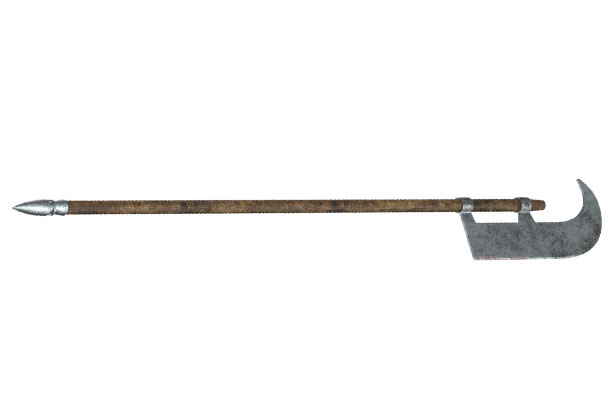
The voulge features a large cleaver-like blade that transforms the polearm into a devastating chopping weapon capable of smashing through shields, breaking bones, and cutting down lightly armoured soldiers with overwhelming force. Originally designed as a simple and affordable infantry weapon, the voulge proved extremely effective in close-quarters combat due to its raw power and straightforward mechanics. Its broad cutting surface allowed for brutal downward strikes that could break formation lines.
Bardiche

The bardiche is a long-bladed poleaxe used extensively in Eastern Europe, known for its sweeping strikes and impressive reach. The blade is attached along much of the shaft, creating a rigid powerful cutting surface ideal for delivering momentum-heavy blows. Soldiers often used the bardiche as a resting support for early firearms, making it multifunctional on the battlefield. Despite its size, trained warriors could manoeuvre it with surprising agility, executing large arcs and precision chops.
Lucerne Hammer

The Lucerne hammer was created specifically for defeating armoured opponents, featuring a multi-spiked hammer head designed to crush, puncture, and deform plate armour. Its long top spike could thrust into visor gaps or between armour plates, while the hammer face delivered concussive force capable of knocking opponents off balance. Swiss infantry wielded the Lucerne hammer with remarkable coordination, using it to dominate close-quarters engagements against heavily armoured knights.
Bec de Corbin

The bec de corbin — French for "raven's beak" — is a polehammer specialised for precise armour penetration. Its curved narrow spike focused tremendous pressure on small points, making it ideal for puncturing helmets, visors, and joints where armour was weakest. The hammer face counterbalanced the spike, enabling crushing blows when penetration was not required. This weapon was favoured by elite soldiers during the late medieval era when armour technology reached its peak.
Military Fork

The military fork evolved from the agricultural pitchfork but became a surprisingly effective battlefield weapon once reinforced with metal. Its sharp rigid tines could intercept charges, catch weapon blades, push opponents back, and hold defensive lines with minimal training. Because peasants were already familiar with the tool, local militias adopted it widely, transforming a simple farm implement into a cost-efficient capable polearm for national defence.
Boar Spear

The boar spear features strong side lugs that prevent the weapon from penetrating too deeply into a charging animal or opponent, allowing the wielder to maintain control and brace against impact. This design made it extremely effective against fast-moving targets in both hunting and battlefield contexts. Infantry units used boar spears to halt cavalry charges and resist sudden breakthroughs, leveraging the weapon's stopping power and reinforced shaft to maintain defensive formations under pressure.
Lochaber Axe

The Lochaber axe is a traditional Scottish polearm noted for its heavy chopping blade and backward-facing hook. Highland warriors used the hook to pull riders from horses, secure shields, and manipulate enemies at mid-range, while the blade delivered crushing blows capable of penetrating armour and bone. Its rugged construction suited Scotland's mountainous terrain, and its straightforward mechanics made it a reliable tool for clan warfare and defensive musters.
Billhook (English Bill)

The billhook, originally a farming and forestry tool, evolved into a highly effective infantry weapon in England and Western Europe. Its hooked blade allowed soldiers to cut through pike formations, drag opponents, pull down shields, and deliver slashing cuts during chaotic melee combat. The bill's agricultural origins made it cheap to produce and easy to repair, ensuring its widespread adoption among levies and professional troops alike for centuries.
Goedendag
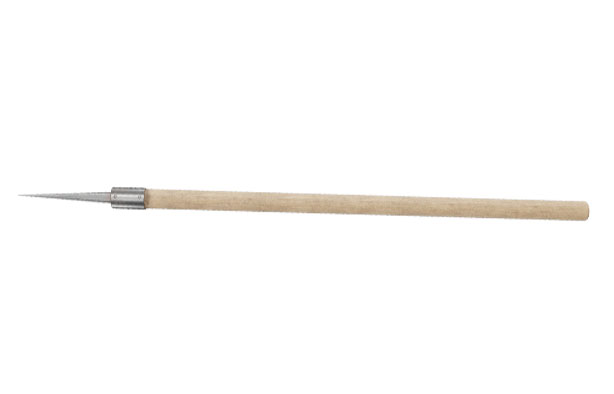
The goedendag is a deceptively simple Flemish weapon — a thick wooden shaft topped with a steel spike — that became legendary after citizen-soldiers used it to defeat French knights at the Battle of the Golden Spurs in 1302. The weapon excelled in disciplined formation combat where the heavy shaft braced against cavalry impact while the spike delivered lethal thrusts. Its success proved that well-coordinated infantry could overcome heavily armoured mounted forces with straightforward tools and proper tactics.
Fisherman's Trident

Originally designed for spearfishing, the trident became a symbolically rich and practically effective weapon across cultures. Its three prongs improved thrust accuracy and weapon trapping while giving the wielder greater control over an opponent's limbs or weapon hand. Used in naval combat, coastal defence, and gladiatorial arenas, the trident excelled in environments where precision and multi-point engagement mattered. Its enduring symbolism — carried by Poseidon, Neptune, and Shiva — ensured its survival through mythology and martial practice alike.
Asian Polearms
Naginata — Japan
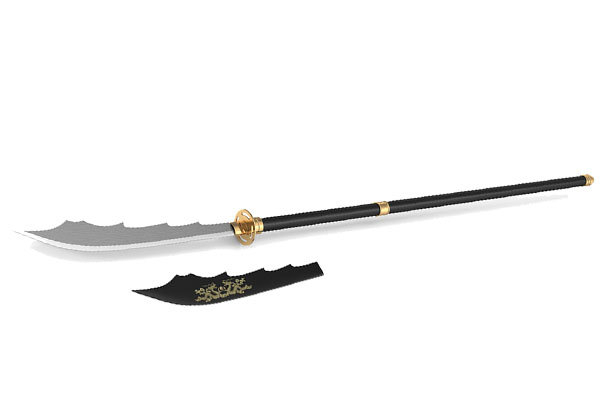
The naginata is among Japan's most iconic polearms, featuring a long curved blade that produces wide fluid slashing motions. Samurai used the naginata for both mounted and foot combat, while warrior monks favoured it for holding defensive positions. Notably, the naginata was also the weapon of the onna-bugeisha — female warriors trained to defend their homes and clans. Its combination of reach, cutting power, and elegant technique has preserved its legacy in Japanese martial arts to this day.
Yari — Japan

The yari is the Japanese spear, available in countless blade shapes ranging from straight, cruciform, and hooked designs to forked and barbed variants. It became the most widely used polearm in Japan due to its simplicity, effectiveness, and high adaptability. Ashigaru infantry wielded yari in massed formations to stop cavalry charges and maintain battlefield spacing, while samurai used them for precise thrusting and fast footwork. The yari's influence shaped Japanese warfare for centuries.
Qiang — China
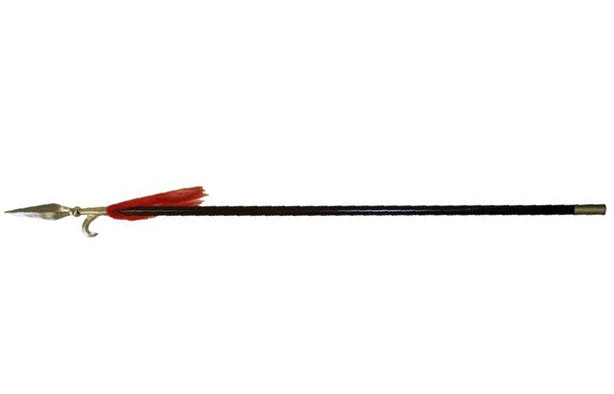
The qiang, often called the "king of weapons," is China's most versatile and widely practised polearm. Its lightweight construction and leaf-shaped blade allowed for precise thrusts and controlled sweeping cuts, while the red tassel beneath the head distracted opponents and prevented blood from running down the shaft. The qiang was central to Chinese battlefield tactics and martial arts, emphasising fluid movement, rapid transitions, and deceptive feints.
Guandao — China
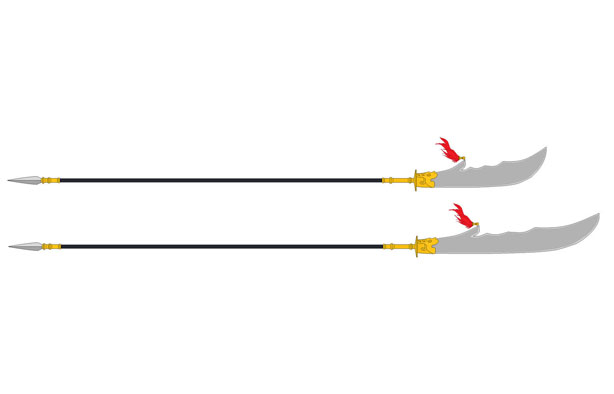
The guandao is a heavy chopping polearm traditionally attributed to the legendary general Guan Yu. Its large curved blade generates powerful momentum during sweeping strikes, allowing skilled warriors to cut through armour, limbs, and shields with devastating force. Some versions feature a counterweight or spike on the rear, adding balance and secondary attack options. Today the guandao remains a staple in Chinese martial arts demonstrations, prized for its dramatic power and historical prestige.
Ji — Chinese Halberd

The ji is one of the world's oldest hybrid polearms, combining a spear's thrusting capability with a crescent-shaped side blade for hooking, slashing, and controlling opponents. Used by infantry, charioteers, and early armies for centuries, the ji allowed ancient Chinese soldiers to target multiple enemies and attack from various angles without changing weapons. Its influence shaped later halberd-style weapons across Asia.
Tiger Fork — China
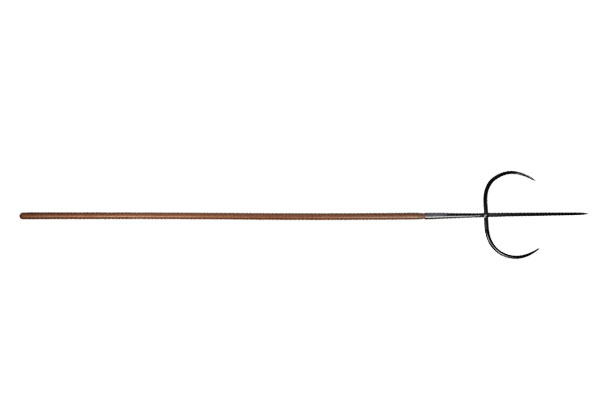
The tiger fork was originally created to subdue large dangerous animals, with three extremely sturdy prongs capable of pinning or restraining powerful creatures. Over time it evolved into a training and combat weapon within Chinese martial arts, used to develop strength, precision, and weapon control. Its long reach and rigid construction made it effective for thrusting, trapping, and countering other polearms in close-quarters engagements.
Ancient and World Polearms
Dory — Greek Spear

The dory was the primary weapon of Greek hoplites, who fought in tightly packed phalanx formations. Featuring a leaf-shaped spearhead and a pointed iron butt spike called the sauroter, the dory allowed for coordinated thrusting over and around shields. Its balanced design made it durable, effective, and essential for maintaining the cohesion and discipline that defined classical Greek warfare. Every hoplite carried one — it was the backbone of the most effective infantry system of the ancient world.
Sarissa — Macedonian Pike
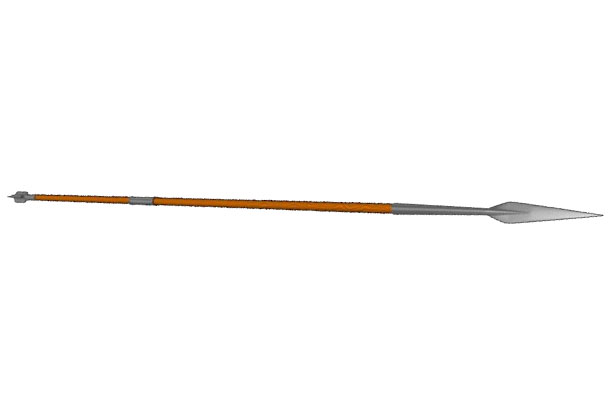
The sarissa was an exceptionally long pike — often reaching up to six metres — used by Macedonian phalanx soldiers under Philip II and Alexander the Great. When massed together, sarissa-wielding infantry created an impenetrable forest of spearpoints that dominated open battlefield engagements. The weapon transformed ancient warfare, allowing Macedonian armies to out-reach, out-control, and overwhelm their enemies with coordinated momentum and disciplined formation tactics. It was the weapon that helped conquer Persia, Egypt, and much of the known world.
Hasta — Roman Spear

Before the pilum became standard, Roman legionaries used the hasta — a strong rigid thrusting spear ideal for line combat. This spear emphasised durability and precision thrusting, allowing soldiers to maintain tightly packed formations and repel advancing enemies with controlled force. Unlike the pilum, which was designed to bend on impact and disable enemy shields, the hasta was intended for repeated use in prolonged engagements.
Lancea — Roman Auxiliary Spear

The lancea was a versatile Roman spear used by auxiliary troops and cavalry, valued for its light weight and multipurpose design. Capable of both thrusting and throwing, it supported rapid mobility, skirmishing tactics, and fast-paced battlefield manoeuvres. The lancea's adaptability made it a common weapon outside the heavy formations of the legions, helping Rome manage diverse theatres of war across its vast empire.
Bhyangro — Nepali Khukuri Spear
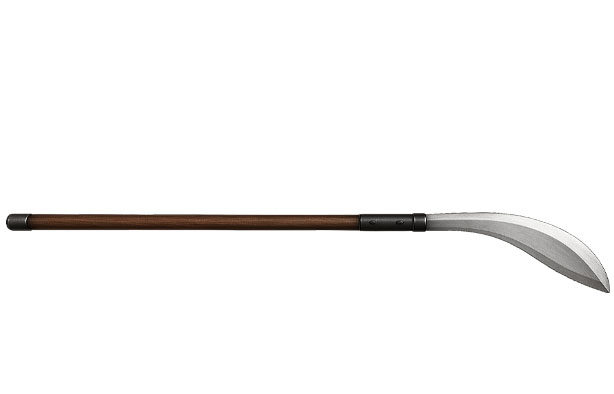
The bhyangro, or Khukuri spear, is a distinctive Nepalese polearm that merges the stabbing ability of a spear with the chopping power of a kukri blade. This hybrid allowed soldiers and hunters to switch seamlessly between slashing arcs and straight-line thrusts, giving them a versatile tool for both defence and offence in rugged Himalayan terrain. It served in hunting, community protection, and ceremonial traditions, representing Nepal's long-standing blade culture — the same culture that shapes every blade we forge at Everest Forge today.
Own a Hand-Forged Spear — Made in Nepal, Shipped Worldwide
At Everest Forge, every spear is individually hand-forged in Nepal by blacksmiths using 5160 high-carbon steel and traditional forging techniques passed down through generations. Every blade is full tang, water-tempered, sharpened, and shipped with a leather scabbard.
Shop our hand-forged spear collection:
- Hunting Spear — 8" Blade — rosewood and brass handle, full tang, built for throwing and hunting.
- Viking Spear — 12" Blade — Norse-inspired, 5160 steel, rosewood handle, battle-ready.
- Achilles Spear — 12" Blade — Greek combat spear, leather-wrapped metal handle, full tang.
- Gladius Spear — 17" Blade — Roman-inspired, leaf spring steel, rosewood handle.
- Leaf Spear — 8" Blade — classic leaf-shaped head, leather-wrapped handle, 990 grams.
- Prince Nuada's Spear Replica — fantasy-inspired, hand-forged, leather-wrapped rosewood handle.
Not sure which spear suits you? Browse the full spear collection → to compare all sizes and styles.
Want a polearm type not listed — a halberd, glaive, naginata, or your own custom design? We build fully custom polearms to order. Choose blade design, shaft length, material, and finish.
Frequently Asked Questions About Polearms
What is a polearm?
A polearm is any weapon mounted on a long shaft or pole, designed to give the user a reach advantage over opponents. Polearms include spears, halberds, glaives, naginatas, poleaxes, and many other designs used across every major civilisation in history.
What is the most versatile polearm in history?
The halberd is widely considered the most versatile polearm ever developed. Its combination of axe blade, thrusting spike, and rear hook allowed infantry to chop through armour, deliver deep thrusts, and pull mounted opponents from horseback — three combat roles in a single weapon.
What is the difference between a spear and a polearm?
A spear is a type of polearm — specifically one with a pointed tip designed primarily for thrusting and throwing. Polearm is the broader category that includes spears plus weapons with more complex heads such as halberds, glaives, poleaxes, and guisarmes, which add chopping, hooking, or slashing capabilities.
Why did so many cultures independently develop polearms?
Polearms solved a universal problem: how to give infantry a reach advantage over cavalry and armoured opponents using affordable, easy-to-produce weapons. Every culture that faced these combat challenges arrived at similar solutions because the physics and tactical problems were universal.
Which polearm was most effective against cavalry?
The pike and the halberd were the most effective anti-cavalry polearms. The Swiss perfected halberd formations capable of stopping armoured cavalry charges. The sarissa pike, used by Macedonian armies, created an impenetrable wall of spearpoints that no cavalry force could break through in a frontal charge.
Are polearms still made today?
Yes. Traditional smiths and specialist forges continue making functional polearms for collectors, martial artists, historical reenactors, and enthusiasts. At Everest Forge, we hand-forge spears in Nepal using 5160 high-carbon steel and traditional techniques, and accept custom orders for any polearm type.
Can I buy a hand-forged spear from Everest Forge?
Yes. Everest Forge offers a full range of hand-forged spears — including Hunting Spears, Viking Spears, Achilles Spears, Gladius Spears, Leaf Spears, and more — all forged in Nepal and shipped worldwide. Browse the full collection here.
Can I commission a custom polearm?
Yes. Everest Forge accepts custom commissions for any polearm type — historical replica, fantasy design, or tactical build. You can specify blade design, shaft length, material, and finish. Submit your custom forge request here.
Conclusion
Polearms are not just ancient weapons. They are one of the most consistent and universal solutions to a fundamental problem — how to give a human being the reach, leverage, and force to overcome an opponent who is bigger, faster, better armoured, or mounted on horseback. Every culture that solved that problem independently arrived at a long shaft with a lethal head. That convergence across millennia and across continents is a testament to how well the basic concept works.
Whether you are a collector, a martial artist, a historical reenactor, or simply someone who appreciates the engineering genius behind these weapons — polearms represent some of the finest functional craft in human history.