What Is a Seax Sword?
A seax is a single-edged knife-sword carried by the Saxons, Vikings and Germanic peoples of early medieval Europe. The name comes from the Old English word for knife, and it gave the Saxons their name — the people of the seax. Sizes ran from short utility knives to the sword-length langseax, all sharing one thick edge, a strong spine and a simple, hard-working design. This guide covers what a seax is, what the word means and how to say it, how the blade was designed, sized, worn and used, the main types and regional variations, how it compares to a Viking sword and a bowie, and how it is hand-forged today.
Few weapons capture the soul of early medieval Europe quite like the seax. Balanced between knife and sword, it was the blade of the common man — carried by farmers, warriors and kings alike. It was simple, functional and brutally effective, and its form reflected the people who made it: practical, enduring and proud. At Everest Forge our hand-forged seax sword collection keeps that tradition alive, forging each blade with modern precision while preserving the spirit of its ancient origins.
Hand-forged seax swords, langseaxes, daggers and machetes
Browse the full collection of functional, oil-tempered seax blades — or commission your own.
Shop seax swords → Request a custom seaxSeax Meaning, Pronunciation & Origin
The word seax (also written sax, saex or scramasax) is Old English for knife, and it is pronounced like the English word "sax" — roughly "saks." It is the root of the people-name Saxon, usually read as the people of the seax. To own one was to mark yourself as free, self-reliant and capable of both work and warfare.
The same root appears across the Germanic languages, which is why you will see spellings like sax, saex and the Latinised scramasax used by early writers for the larger fighting blades. However it is spelled, the meaning is the same: a single-edged cutting blade. The word's cultural weight outlived the people who carried it — the county arms of Essex and Middlesex in England still display three seaxes, a direct link to the Saxon past that we return to below.

Antique-style seax sword — a custom-forged Everest Forge example.
The Saxon Seax: A Blade That Defined a People
For the Anglo-Saxons the seax became an identity — the weapon that gave their tribe its name. Archaeological discoveries across Britain and northern Europe have revealed countless variations. Some were short utility knives; others, like the langseax, were long, sword-like weapons capable of devastating blows. These larger seaxes, often with blades exceeding 20 inches, became the signature arm of Saxon warriors and early medieval settlers — the bridge between the short knife and the full-length sword.
The seax was an everyman's weapon. A noble might wear a richly decorated seax with silver inlays and carved bone, while a farmer carried a simpler version forged by a village smith. Both served the same purpose — to cut, carve and protect. Our Anglo-Saxon long seax is modelled on those 7th-century warrior-grave finds, broad and historically faithful.
Types of Seax: From Utility Knife to Langseax
"Seax" covers a whole family of blades rather than one fixed weapon. The main historical types are:
- Utility / working seax — a short single-edged knife for everyday tasks, the most common form. Echoed today in our bushcraft seax.
- Broad seax — a wider, heavier blade with more cutting mass for harder work and fighting.
- Broken-back seax — defined by a distinctive angled spine that drops sharply to the point, one of the most recognisable early medieval profiles.
- Langseax (long seax) — the sword-length form, a true single-edged short sword. See our Saxon langseax and the heavy 20-inch langseax sword.
- Scramasax — a term often used for the larger fighting seaxes of the Frankish and Germanic world.
If you want the longest reach, the long seax sword stretches the profile out further still, while the medieval seax sword shows the transition toward later knightly blades.
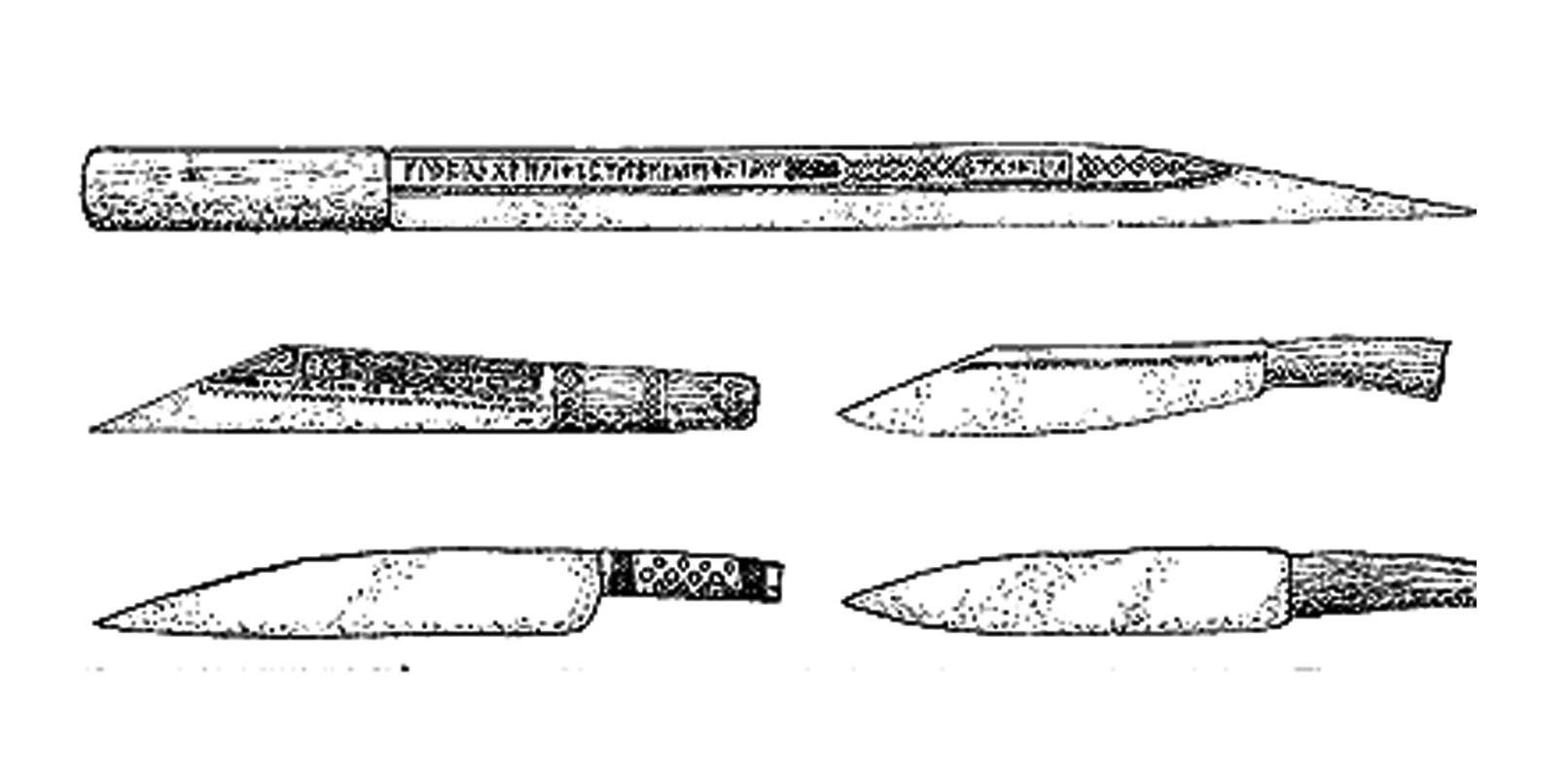
The evolution of the seax — from short utility knife to sword-length langseax.
Seax Design & Construction: What Makes a Seax a Seax
Strip away the regional differences and every seax shares the same core design, and that design is the reason the blade was so effective and so widespread. Understanding it explains both the historical weapon and what to look for in a modern one.
- A single edge and a thick spine. Unlike the double-edged Viking sword, the seax is sharpened on one side only, with a heavy unsharpened spine opposite. That spine carries mass and rigidity straight down behind the edge, giving the blade tremendous chopping and cutting power for its size and making it far easier to forge and maintain.
- The blade shape and point. Profiles ranged from a near-straight back to the famous broken-back shape, where the spine angles down sharply to meet the tip. This gives the seax its characteristic look and a strong, capable point for thrusting as well as cutting.
- Full-tang strength. The best seaxes ran the tang the full length of the handle, the same construction we use today, so the grip could take the shock of heavy cutting without failing.
- No crossguard. Most seaxes had little or no guard. This kept the design direct and knife-like, prioritising utility and close work over the fencing role of a guarded sword.
- Simple, honest handles. Grips were made from wood, horn or bone, shaped for a secure hold. The symmetry and balance of a good seax come from the smith matching the handle to the blade, not from ornament.
That combination — one edge, a strong spine, a full tang and a simple grip — is what makes a seax a seax, whether it is an 8-inch knife or a 20-inch langseax. Every blade in our seax collection is built on those same principles in 5160 high-carbon steel.
How Big Is a Seax? Dimensions & Size Guide
One of the most common questions about the seax is simply how big it was, and the honest answer is that it varied enormously. That range is exactly why the seax suited so many roles. As a rough guide:
| Type | Typical blade | Role |
|---|---|---|
| Small / utility seax | 3 to 7 inches | Everyday knife, eating, crafting |
| Broad seax | 8 to 14 inches | Heavy utility and fighting |
| Long seax / langseax | 16 to 24 inches plus | Single-edged short sword, sidearm |
For a modern buyer the size you choose comes down to use. A shorter blade handles like a heavy knife or camp tool; a langseax in the 18 to 20-inch range gives you genuine sword reach while keeping the seax's cutting authority. Most of our seaxes can be ordered in a range of lengths, so you can match the blade to your hand and intended use — from the compact seax dagger up to the heavy 20-inch langseax.
From Knife to Sword: The Evolution of the Seax
Early seaxes were short blades suited to daily tasks, but the constant demands of warfare transformed the design. By the 7th century the langseax had emerged — a single-edged sword used across Anglo-Saxon England, Frisia and Scandinavia, and one of the most recognisable weapons of the Dark Ages.
What made the seax unique was its simplicity. The single thick edge and strong spine gave it immense cutting power and made it easier to produce and maintain than a layered, double-edged sword. In expert hands, its weight and edge geometry could deliver cleaving strikes through leather, wood and even shield rims. It could also serve as a camp tool, reflecting the duality of Saxon life — the blade that defended your home might also help build it.
How the Seax Was Worn and Carried
The seax was carried in a way that sets it apart from most other historical blades. Rather than hanging vertically at the hip like a sword, it was typically worn horizontally across the front of the belt, often edge-up, in a leather scabbard suspended from a series of small fittings. This kept a long single-edged blade out of the way while walking and working, yet instantly available with a single cross-draw.
Scabbards were usually leather, sometimes over a wooden or rawhide core, and on finer examples were decorated with tooling or metal fittings. The horizontal, edge-up carry is one of the small details that marks a genuinely seax-inspired design. Every Everest Forge seax ships with a handcrafted leather scabbard built in that tradition.
How Seaxes Were Used: Combat and Everyday Life
The seax was a true dual-purpose blade, and its uses are part of why it stayed in service for so long. In daily life it was the all-round tool of the household: cutting food, working wood and leather, butchering, and the hundred small jobs of a farming and seafaring people. For many Norsemen aboard ship it was the single most useful object they owned.
In a fight, the seax was a fast, hard-hitting sidearm. The single edge and forward weight made it devastating in the cut, while the stout point could thrust. A long seax gave a warrior real reach without the cost or fragility of a full sword, and because almost everyone carried some form of seax, it was the weapon most likely to be at hand when trouble came. That blend of everyday utility and serious fighting capability is exactly what our modern working seaxes, like the seax machete, are built to recreate.
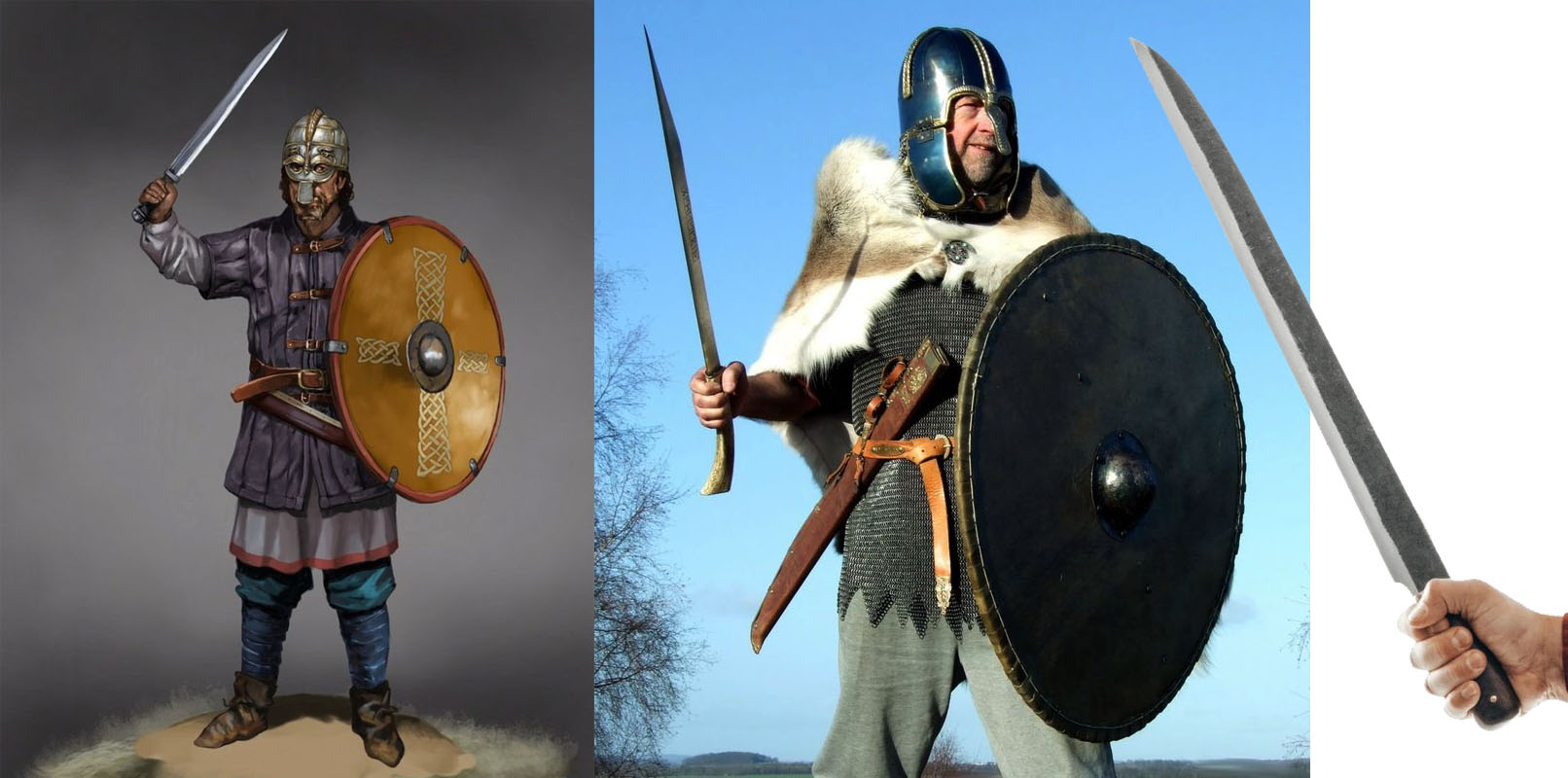
The seax in Saxon and Viking society — weapon, tool and symbol.
Regional Variations of the Seax
The seax was used across a huge area for several centuries, so it naturally developed regional and chronological variations. The main ones a collector will encounter are:
- Anglo-Saxon seax — the English forms, from small utility knives to the broad seaxes and langseaxes found in warrior graves across England.
- Frankish scramasax — the larger continental fighting seaxes of the Frankish world, from which the term scramasax is often drawn.
- Frisian and continental seaxes — closely related forms used along the North Sea coast and trade routes.
- Norse / Viking seax — the Scandinavian blades, frequently decorated and carried as both tool and weapon on land and sea.
Despite the differences, all share the single edge, strong spine and direct design that define the family. The Celtic seax sword and the floral-etched langseax show how that shared form can carry very different decorative traditions.
Seax vs Viking Sword vs Bowie Knife
People often ask how a seax compares to a Viking sword, or how it differs from a modern bowie. The short version: the seax is single-edged and built for cutting power and utility, the Viking sword is double-edged and built for versatile swordsmanship, and the bowie is the seax's spiritual descendant.
| Feature | Seax | Viking Sword | Bowie Knife |
|---|---|---|---|
| Edge | Single-edged | Double-edged | Single-edged, clip point |
| Guard | Usually none | Full crossguard | Small guard |
| Primary role | Cutting, utility, sidearm | Battlefield swordsmanship | Frontier utility and fighting |
| Length | Knife to short-sword | Full sword | Large knife |
| Era | Early medieval | Viking Age | 19th century onward |
The seax's straight edge and angled point are clearly the ancestors of the bowie and of modern survival knives. You can see that lineage carried into our seax machete and the tactical fantasy seax cleaver — modern working blades built on the old profile.
The Seax of Beagnoth: The Most Famous Seax
If one blade sums up the seax, it is the Seax of Beagnoth, also called the Thames scramasax. Discovered in the River Thames and dating to the 10th century, it is a long seax inscribed with the only known complete inventory of the Anglo-Saxon runic alphabet, the futhorc, along with the name "Beagnoth" — most likely its owner or maker.
The Seax of Beagnoth shows two things at once: that these were prized, personal objects worth inscribing, and that runes carried real meaning to the people who carried the blade. That tradition of the rune-marked seax lives on in our runic long seax, engraved in the same spirit. Decorated and engraved seaxes were common across the Norse and Saxon world, from simple maker's marks to full bands of knotwork and symbols.
The Three Seaxes: The Blade in Heraldry
The seax left a mark that is still flown today. The historic counties of Essex and Middlesex in England both carry arms showing three seaxes — three curved single-edged blades — a heraldic memory of the Saxon kingdoms that gave the region its name. It is the reason people searching for the "ancient blade on the Essex emblem" are pointed straight back to the seax.
That a working knife became a symbol on a county's coat of arms says everything about the seax's place in early English identity. It was not just a tool or a weapon; it was a badge of a people.
The Seax in Saxon and Viking Society
Among the Anglo-Saxons, carrying a seax showed that you were free and bound by no master. In the Viking world it served as both weapon and practical blade aboard ship — used for hunting, crafting and fighting, often the only constant companion a Norseman had on land and sea. Viking seaxes were frequently adorned with engraved runes symbolising protection, courage or faith in the gods. Being buried with a seax meant honour — it accompanied its owner into the afterlife as a trusted blade.
Forging a Seax the Traditional Way

Hand-forging a seax at Everest Forge.
At Everest Forge each seax is brought to life by hand, much as it was more than a thousand years ago. Our smiths heat, hammer and shape 5160 high-carbon steel, and each blade is oil-tempered for resilience and flexibility — strengthening the edge while keeping a springy spine that absorbs shock. The result looks, feels and performs like the blades carried by Saxon and Viking warriors.
We do not mass-produce. Every seax is an individual creation, and the temper lines, grip shapes and finishes vary slightly — the signs of genuine handmade work. Browse the full seax sword collection, or for something unique to you, our smiths build from scratch.
Seax Swords at Everest Forge

Medieval Seax Sword
The transition from tribal to medieval warfare — longer and narrower, keeping the seax's toughness and versatility.
View blade →
Saxon Langseax Sword
The pinnacle of seax development — a full-size battle langseax with full-tang construction and an oil-tempered blade.
View blade →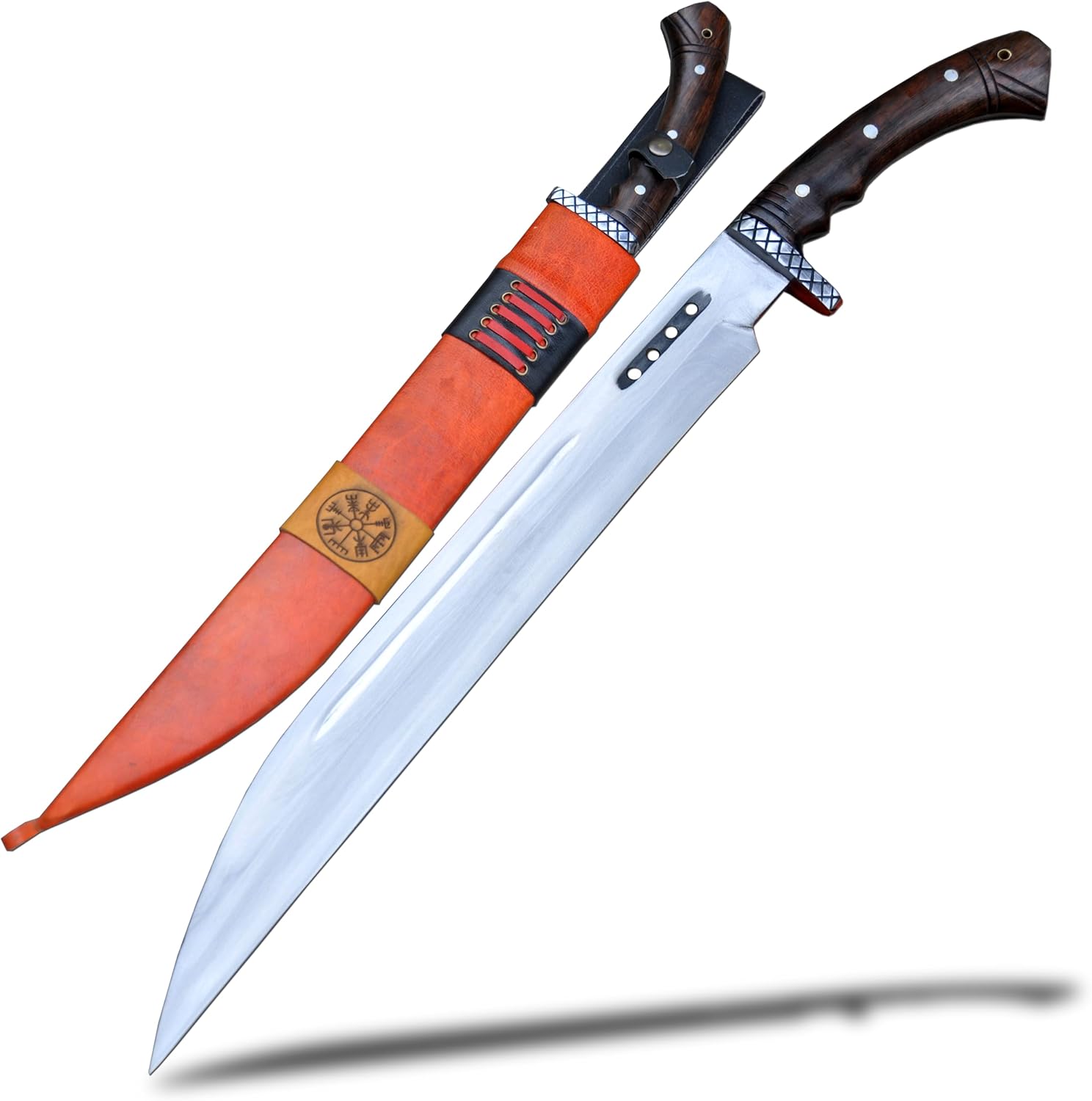
Runic Long Seax
A rune-engraved long seax in the tradition of the Seax of Beagnoth — history and symbolism in functional steel.
View blade →Looking for something more specialised? There is the broad seax dagger, the ornate floral-etched langseax, the knuckle-guarded D-guard seax, and the engraved Celtic seax cleaver — the full family of the blade, reborn.
Choosing a Seax Today: A Quick Buyer's Guide
If you are buying a seax rather than studying one, a few simple choices shape what you end up with:
- Length and role. Decide whether you want a compact working blade, a broad chopper, or a full langseax for reach and presence. Most of our seaxes can be ordered across a range of lengths.
- Finish. A satin or polished finish suits display and shows etching best; a raw or blacked finish suits a rugged working look. Engraved blades are offered in the brighter finishes so the artwork reads.
- Handle. Rosewood, white-wood, horn and bone combinations change both the look and the feel in the hand.
- Decoration. Choose plain historical lines, or rune and knotwork engraving in the tradition of the Seax of Beagnoth. Personalisation is included on standard builds.
- Use. Be honest about whether it is for display, reenactment, collection or hard cutting, and choose the blade to match.
Start with the full seax sword collection, and if nothing is exactly right, our smiths will forge a custom seax to your specification.
The Seax and Its Lasting Influence
The seax's design influenced European blade-making for centuries. Its shape inspired the later falchions and messers of medieval Germany, as well as hunting swords and frontier knives. Even today, modern bushcraft and survival knives carry echoes of the seax — its straight edge, angled point and ergonomic simplicity remain timeless. While knightly swords symbolised wealth and nobility, the seax represented the working man's skill and independence: a democratic blade in an age defined by class and hierarchy.
Symbolism and Meaning Behind the Seax
To the Saxons the seax symbolised personal freedom and courage; owning one marked a person as free-born, not a servant. It carried a spiritual dimension too, with many blades inscribed with runes invoking the gods or asking protection. For Viking warriors it was a link to fate — a blade to carry them from life into legend. The seax has endured not just for its form but for what it represents: resilience, craftsmanship and authenticity.
Commission your own hand-forged seax
Choose the type, length, etching and fittings — our smiths forge it to order from 5160 steel.
Request your custom seax → View all seax swordsCaring for a High-Carbon Seax
A traditional seax is made from high-carbon steel, which will surface-rust if neglected. Keep the blade dry, wipe it down after handling, and apply a thin coat of protective oil before storage. For long-term storage, keep the blade out of its scabbard so the edge stays dry, and re-oil now and then. Cared for simply, a hand-forged seax will outlast its owner — exactly as the originals did.
Seax Swords — Frequently Asked Questions
What is a seax?
A seax is a single-edged knife-sword used by the Saxons, Vikings and Germanic peoples of early medieval Europe. The name is Old English for knife, and the blade ranged from short utility knives to the sword-length langseax, all with one thick edge and a strong spine.
What does the word seax mean, and how is it pronounced?
Seax is the Old English word for knife. It is pronounced like "sax" (roughly "saks"), and it is also written sax, saex or scramasax. The people-name Saxon is usually read as the people of the seax.
Is a seax a knife or a sword?
Both, depending on size. Short seaxes are knives; the long seax, or langseax, is sword-length and handles as a single-edged short sword. The family bridges knife and sword by design.
How big is a seax?
It varies widely. Small utility seaxes have blades of roughly 3 to 7 inches, broad seaxes around 8 to 14 inches, and long seaxes or langseaxes 16 to 24 inches or more. The size you choose today depends on whether you want a working knife, a chopper or a short sword.
How was a seax worn?
Usually horizontally across the front of the belt, often edge-up, in a leather scabbard suspended from small fittings. This kept a long single-edged blade out of the way yet ready for a quick cross-draw.
What is a broken-back seax?
A broken-back seax has a spine that runs straight and then angles down sharply to meet the point, giving a distinctive stepped profile. It is one of the most recognisable seax shapes of the early medieval period.
What is a scramasax?
Scramasax is a term, drawn from early Latin sources, often used for the larger fighting seaxes of the Frankish and Germanic world. In practice it refers to a big seax used as a weapon rather than a small utility knife.
How is a seax different from a Viking sword?
The seax is single-edged and usually has no crossguard, built for cutting power and utility. The Viking sword is double-edged with a full crossguard, built for versatile swordsmanship. The seax was simpler, tougher and easier to make.
What is the difference between a seax and a bowie knife?
The bowie is effectively a descendant of the seax. Both are single-edged with an angled or clip point, but the bowie is a 19th-century large knife with a small guard, while the seax is an early medieval blade that ranged up to short-sword length.
What is a langseax?
A langseax, or long seax, is the sword-length form of the seax — a single-edged short sword carried by Saxon and Viking warriors. Everest Forge offers several, including a heavy 20-inch langseax.
What is the Seax of Beagnoth?
The Seax of Beagnoth is a famous 10th-century Anglo-Saxon seax found in the Thames, inscribed with the complete runic alphabet and a maker's name. It is the best-known example of a rune-engraved seax.
Why do the Essex and Middlesex emblems show seaxes?
Both historic counties carry arms displaying three seaxes, a heraldic memory of the Saxon kingdoms of the region. It is why the "ancient blade on the Essex emblem" is the seax.
Were seax swords actually used in battle?
Yes. Historical and archaeological evidence shows seaxes were carried by warriors across early medieval Europe. The long seax in particular was feared in close combat for its cutting power.
Can I buy a functional seax sword today?
Yes. Everest Forge offers fully functional, hand-forged seax swords, langseaxes, daggers and machetes for collectors, reenactors and enthusiasts. Each is balanced, oil-tempered and built for real performance, with custom etching available on request.