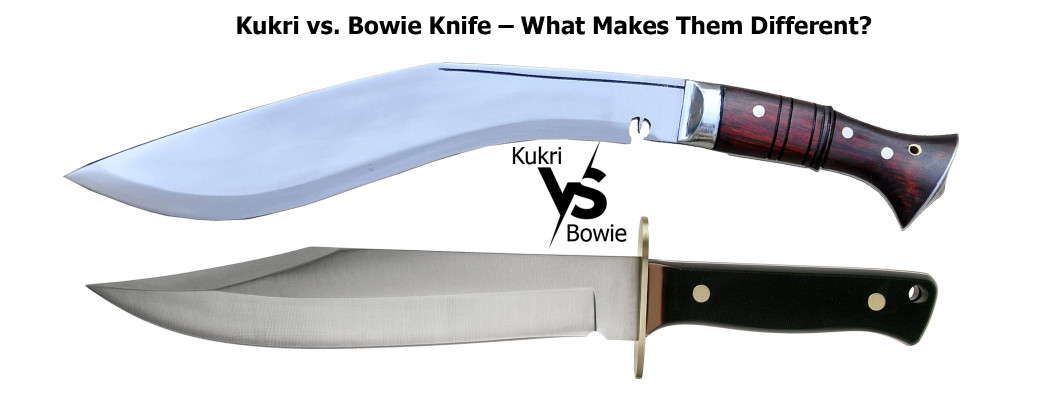
Kukri vs. Bowie Knife – What Makes Them Different?
The Kukri (also spelled Khukuri) and the Bowie knife are two legendary blades that have shaped history across continents. Both are symbols of bravery, craftsmanship, and survival — yet their origins, balance, and forging philosophies set them apart. This article explores these differences through history, design, and performance, revealing how each blade became an icon of its own culture.
Historical Origins
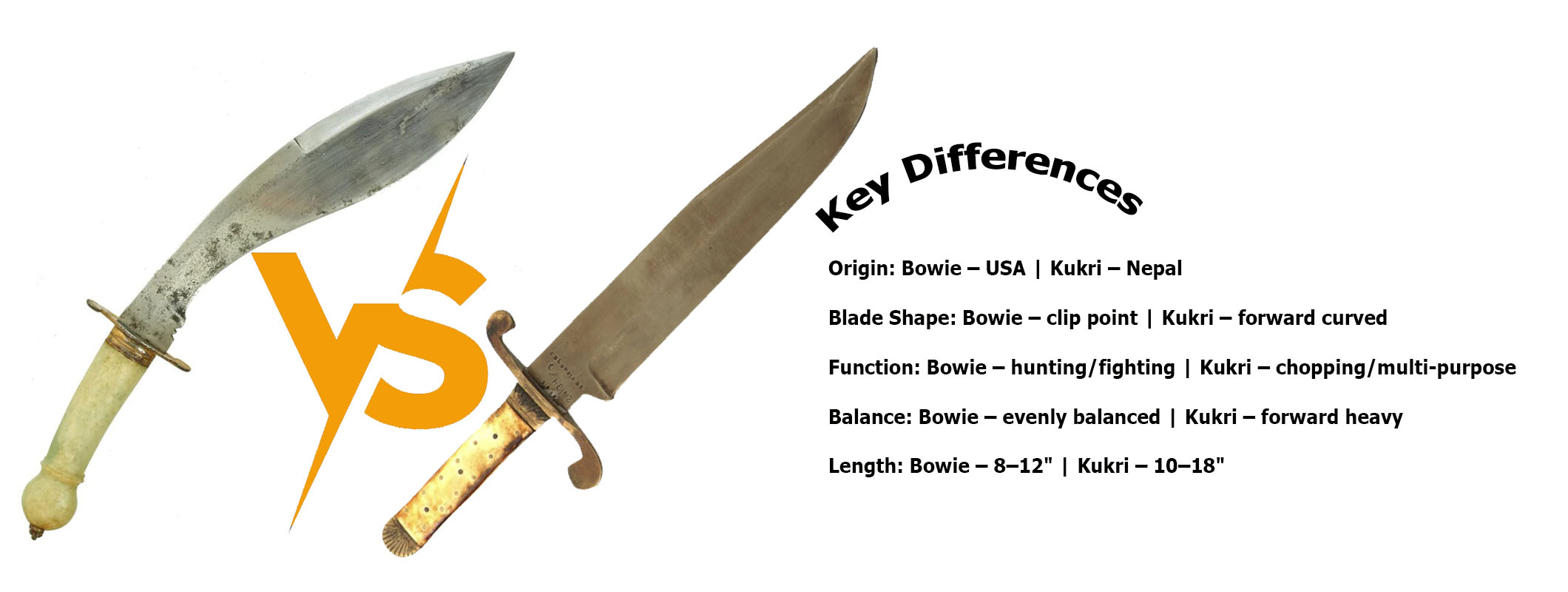
The Kukri originated in Nepal and became the signature weapon of the Gurkha warriors. With a history tracing back over a thousand years, it was both a daily tool and a symbol of courage. Its curved edge and powerful build made it indispensable in war and work alike. Explore our authentic range of hand-forged Kukris crafted by traditional Nepali smiths.
The Bowie knife emerged in early 19th-century America, made famous by frontiersman Jim Bowie. Built for hunting, self-defense, and survival, it represented independence and resilience in the wilderness. Its clip-point design soon became a hallmark of American blade-making. Browse our collection of forged Bowie knives that honor this enduring tradition.
Design Philosophy
The Kukri embodies raw power. Its inward-curved blade shifts the center of mass forward, producing immense chopping force. This design allows deep, efficient cuts with minimal effort — ideal for woodcraft, combat, or daily utility. The Kukri’s curvature reflects centuries of adaptation to both mountain terrain and battlefield tactics.
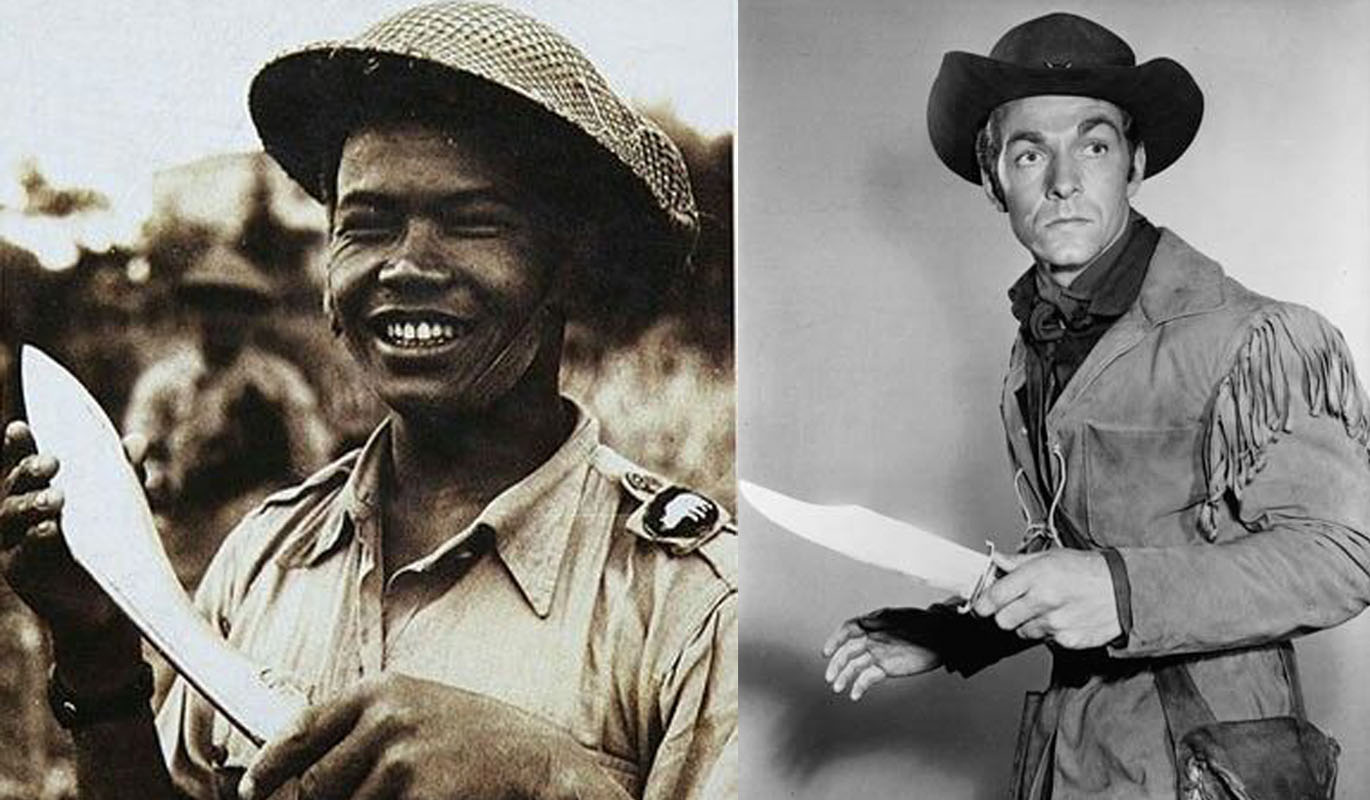
The Bowie knife reflects versatility and precision. Its long, straight blade with a clipped point provides a perfect balance between slicing control and stabbing capability. It was made to perform many roles — a hunter’s knife, a soldier’s sidearm, and a survivalist’s best friend.
Forging and Craftsmanship
Traditional Kukris are hand-forged from 5160 spring steel using differential tempering. The edge is hardened for sharpness while the spine remains softer for flexibility. This gives the Kukri resilience and impact absorption unmatched by most blades.
Bowie knives are forged from high-carbon or stainless steel, featuring a full tang for strength and balanced handling. They often display polished finishes and stylized guards, representing the American fusion of form and function.
Comparison Summary Table
| Feature | Kukri (Khukuri) | Bowie Knife |
|---|---|---|
| Origin | Nepal – Traditional blade of the Gurkha warriors | USA – Popularized by Jim Bowie in the 1800s |
| Blade Shape | Curved inward with a wide belly for chopping power | Straight with a clipped point for slicing and thrusting |
| Balance | Forward-heavy for impact force | Neutral, offering control and precision |
| Primary Function | Chopping, clearing, and combat | Hunting, survival, and self-defense |
| Forging Technique | Hand-forged with differential tempering | Full tang, forged from carbon or stainless steel |
| Combat Style | Heavy striking and chopping blows | Controlled slashing and thrusting |
| Cultural Symbolism | Honor, courage, and national pride of Nepal | Independence, resilience, and American frontier spirit |
Real-World Applications
The Kukri remains both a practical tool and a weapon. In rural Nepal, it is used for everything from agriculture to butchering. In the military, it remains part of Gurkha identity — a blade that embodies strength and loyalty.
The Bowie knife is the archetype of the all-purpose field knife. Hunters use it to skin game, campers use it for bushcraft, and collectors admire its balance and historical design. Its versatility continues to inspire modern survival knife designs worldwide.
Cultural Significance
For Nepali blacksmiths , forging a Kukri is an act of cultural preservation — a way to honor their ancestors and serve their nation’s warriors. For Americans, the Bowie represents the frontier’s independent spirit — a blade born from a culture of exploration and resilience. Both knives, in their own way, reflect the pride of their people and the mastery of the forge.
Kukri vs Bowie – Comparison Video
Conclusion
The Kukri and the Bowie knife are more than just tools — they are historical artifacts of human adaptation. The Kukri embodies brute efficiency and centuries of craftsmanship, while the Bowie champions balance and versatility. One dominates through power, the other through precision — yet both remain timeless symbols of survival and courage. Whether your preference lies in the Nepali curve or the American clip, each blade tells a story of honor, skill, and identity.
Request a Custom Forge
Looking for a Kukri or Bowie knife built to your specifications? Everest Forge creates fully functional, hand-forged blades that combine traditional craftsmanship with modern performance. Design your perfect blade today.
Submit Your Request
FAQs
Which is stronger, the Kukri or the Bowie knife?
Both are strong in their own right. The Kukri delivers more chopping force, while the Bowie offers balanced strength and control. Their performance depends on intended use.
Can a Kukri replace a machete?
Yes, the Kukri can easily replace a machete for chopping and clearing. Its forward-curved blade provides better impact with less swing effort.
Why is the Bowie knife still popular today?
Because of its adaptability — it’s ideal for hunting, bushcraft, and personal defense. The Bowie’s design remains one of the most practical in knife-making history.
Are modern Kukris and Bowies still hand-forged?
Yes. At Everest Forge, each blade is crafted by skilled smiths using traditional hand-forging methods, ensuring durability, authenticity, and character in every piece.