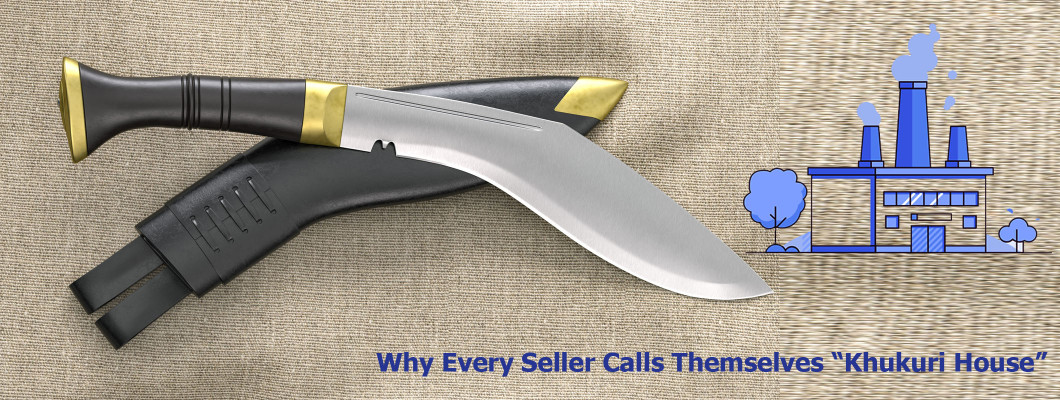
Why Every Seller Calls Themselves “Khukuri House” – The Story Behind Nepal’s Blade Tradition
If you’ve ever searched online for a Nepali kukri, you’ve probably noticed dozens of brands with names like Khukuri House, Nepal Khukuri House, Khukuri House Online, and even Authentic Khukuri House. It can be confusing for buyers trying to find the real makers of Nepal’s legendary blades. So, why do so many sellers use the same name? The answer lies in history, culture, and the evolution of Nepal’s traditional weapon into a global icon.
The Origins of “Khukuri House”
The phrase “Khukuri House” first gained prominence in the early 1990s, when Khukuri House Handicraft Industry (KHHI) opened in Kathmandu. It was one of the first organized companies to export hand-forged kukris internationally, supplying blades to collectors, museums, and even Gurkha regiments. Their reputation for quality craftsmanship made “Khukuri House” synonymous with authenticity. Soon, customers around the world began associating the term with genuine Nepali blades.
When One Name Became Many

As Nepal’s kukri industry expanded, many workshops adopted variations of the name to associate themselves with that trusted legacy. This gave rise to several well-known businesses such as Nepal Khukuri House, Ex-Gurkha Khukuri House, Authentic Khukuri House, Khukuri House Online, and others. Each operates independently and contributes to the global presence of Nepal’s iconic blade. Over time, the term “Khukuri House” became a recognizable category — symbolizing traditional blade craftsmanship from Nepal.
What “House” Means in Nepali Culture
In South Asian culture, the word “House” often represents a place of craft, family trade, or artistry — such as Tea House or Spice House. In the same way, “Khukuri House” conveys the idea of a workshop or home of craftsmen who forge blades by hand. It embodies the tradition and skill of generations of blacksmiths. However, not every business using the name maintains its own forge — some act as traders rather than makers — which has led to confusion among buyers over time.
The Modern Reality: Confusion for Buyers
Today, the abundance of “Khukuri House” names can make it challenging for international buyers to distinguish between resellers and true forges. Many assume these brands are connected, when in reality, each operates independently. Some businesses import factory-made blades, while others preserve the authentic hand-forging tradition passed down through generations of Nepali artisans.
At Everest Forge, we believe authenticity goes beyond the name. Every blade we create is hand-forged by our own blacksmiths in Nepal using time-honored techniques like oil tempering, full tang construction, and 5160 spring steel. Our mission is to keep the spirit of real forging alive — not just through branding, but through honest craftsmanship.
A New Generation of Forging Brands
Modern forges like Everest Forge represent a new era in Nepal’s blade-making tradition — one built on transparency, innovation, and respect for history. Rather than following the common naming trend, we focus on sharing real forging stories, showcasing our craftsmen, and producing blades that are as functional as they are historical. It’s about preserving legacy while forging the future.
How to Identify a Genuine Maker
- Look for real photos and videos from the workshop or forge.
- Check whether the brand mentions its blacksmiths and forging methods.
- Be cautious if multiple sites use the same photos or product descriptions.
- Ensure they describe actual forging processes such as oil tempering and full tang construction.
- Ask if they offer custom forging genuine makers always do.
The Legacy Lives On
The term “Khukuri House” will always remain a proud part of Nepal’s knife-making heritage. It reminds the world of the artistry and resilience of Nepali blacksmiths. While many brands share that name, what truly matters is the craftsmanship behind each blade. At Everest Forge, we continue that legacy with our own distinct identity — committed to quality, authenticity, and respect for the masters who came before us.
Note of Respect
We acknowledge and deeply respect all the pioneering workshops that have carried Nepal’s khukuri tradition to the global stage — including Khukuri House Handicraft Industry, Nepal Khukuri House, Ex-Gurkha Khukuri House, and others. Each of these brands has played a vital role in introducing Nepali craftsmanship to the world. This article is written to inform and honor the evolution of the term “Khukuri House,” not to criticize or diminish any brand. Our intention is to celebrate Nepal’s shared forging heritage and encourage transparency for future generations of makers.
Discover the next generation of authentic blades at EverestForge.com — where tradition meets modern craftsmanship.
What Makes Everest Forge Different from Traditional “Khukuri House” Workshops
Traditional Khukuri House workshops are primarily dedicated to forging the Nepali kukri or khukuri, preserving a blade form that has deep cultural, military, and historical significance. Their focus is centered on kukri patterns, variations, and traditional production methods that have been passed down through generations of blacksmith families.
Everest Forge, while deeply respecting this kukri tradition, operates as a broader custom forging workshop. In addition to kukri and khukuri blades, Everest Forge forges replica swords, historical swords, machetes, large utility blades, knives, and custom-designed pieces. The workshop specializes in custom forge work, including bespoke blade geometry, balance adjustments, and detailed custom etching and engraving for historical replicas, ceremonial blades, and collector pieces.
This expanded scope allows Everest Forge to serve not only kukri enthusiasts, but also collectors, reenactors, filmmakers, martial artists, and customers seeking one-of-a-kind forged blades. Rather than being defined by a single blade type or naming convention, Everest Forge is defined by its ability to adapt traditional forging skills to a wide range of functional and historical designs, while maintaining transparency in materials, heat treatment, and craftsmanship.