The Versatility Behind Hand-and-a-Half Swords (Bastard Swords)
Hand-and-a-half swords , also known as bastard swords, are among the most adaptable and respected weapons of the medieval era. Designed to bridge the gap between speed and power, these swords offered fighters the rare ability to switch instantly between one-handed and two-handed combat. Their balanced proportions and hybrid nature made them a reliable choice for knights, infantrymen, and even cavalry across Europe.
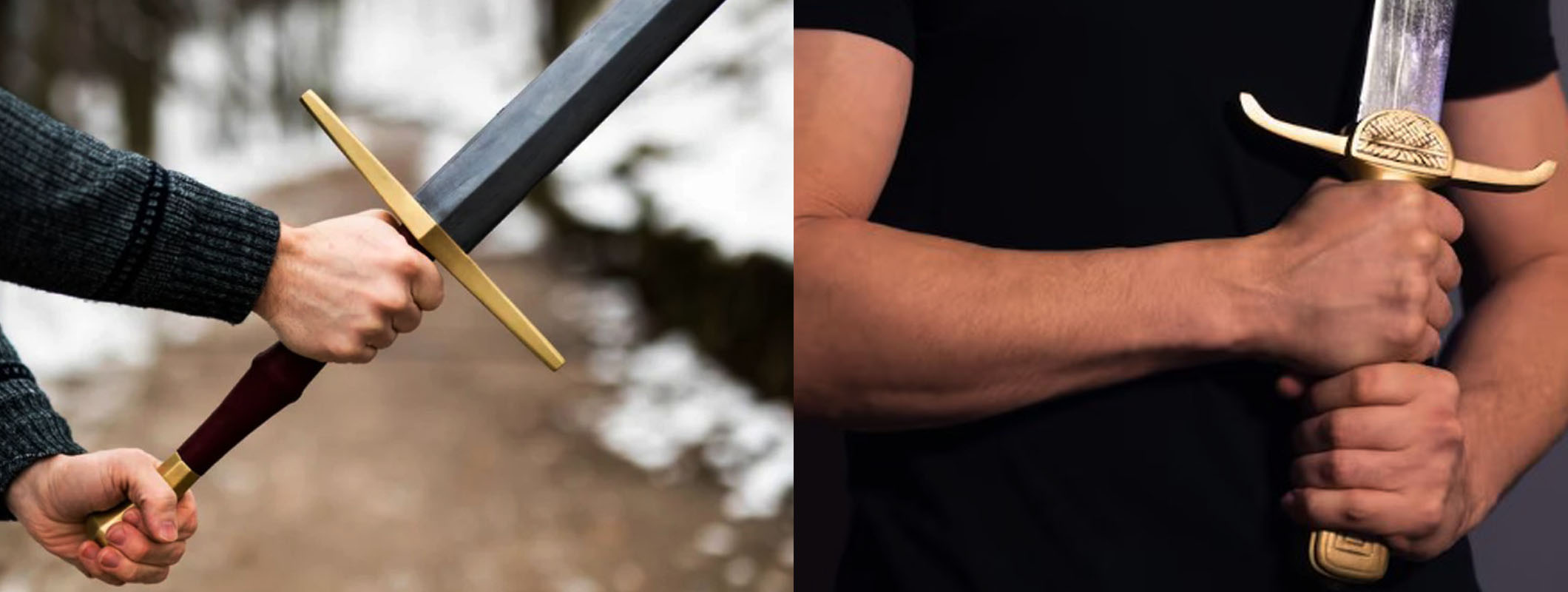
The true strength of the hand-and-a-half sword lies in its ability to deliver both quick, agile attacks and powerful, controlled strikes—all with the same weapon.
Whether in open battlefield engagements or tight castle corridors, this hybrid sword allowed medieval warriors to adapt their
fighting style without changing weapons. Its grip length, blade structure, and handling characteristics made it one of the most
versatile European sword designs ever created.
Are All Bastard Swords Hand-and-a-Half Swords?
Yes — all bastard swords are considered hand-and-a-half swords, but not every hand-and-a-half sword is historically categorized as a bastard sword.
A bastard sword fits perfectly into the hand-and-a-half classification because it features a grip long enough for one or two hands. However, the broader category includes many medieval swords with similar functional grips that were never specifically labeled as “bastard swords” in historical records.
This means that “hand-and-a-half” describes the sword’s function, while “bastard sword” refers to a particular style within that functional category. The bastard sword is simply the most iconic and recognized version.
In simple terms: all bastard swords are hand-and-a-half swords, but only some hand-and-a-half swords are true bastard swords.
The Design Behind Hand-and-a-Half Swords
Hand-and-a-half swords were engineered to maintain an ideal balance between reach, agility, and cutting force. The blade was long enough to offer extended striking distance, yet narrow and tapered enough for powerful thrusts. The hilt, slightly longer than an arming sword, provided extra leverage when two hands were applied.
This balanced construction allowed medieval fighters to control the sword with surprising speed without losing cutting power.
The crossguard and pommel were also strategically shaped to enable advanced techniques such as winding, binding, and half-swording—
methods essential for both armored and unarmored combat.
Are All Longswords Bastard Swords?
No — not all longswords are bastard swords. However, all bastard swords can be considered part of the broader longsword family.
A longsword generally refers to any medieval European sword designed primarily for two-handed use, featuring a long grip and a blade suited for both cutting and thrusting. The term is broad and includes many different styles of two-handed swords used across centuries.
A bastard sword, on the other hand, is a specific type of longsword known for its hybrid grip length — long enough for two hands, but compact enough to be used with one hand when needed. This feature places the bastard sword between a one-handed arming sword and a full two-handed greatsword.
In simple terms: all bastard swords belong to the longsword family, but most longswords were never classified as bastard swords.
Longswords vary widely in size, weight, proportion, and intended use. Some have grips far too long or too short to be considered
“bastard swords.” Others were designed strictly for two-handed combat, without the versatility that defines a true hand-and-a-half
sword.
Why the Hand-and-a-Half Sword Became a Medieval Favorite
Medieval warriors valued the ability to adapt instantly during combat. A weapon that worked well both on horseback and on foot, both in large battles and one-on-one duels, offered massive tactical advantage. The hand-and-a-half sword excelled in these roles.
Its versatility allowed fighters to face multiple threats without changing weapons—one of its greatest strengths.
Knights could strike quickly with one hand while holding a shield or reins, then shift into a two-handed grip for increased force.
This flexibility made it one of the most practical weapons of the late medieval era.
Combat Advantages of Hand-and-a-Half Swords
Hand-and-a-half swords provided several key combat advantages. Their balanced weight made them responsive and easy to maneuver, while the longer grip offered stronger control over cutting and thrusting motions. This allowed fighters to engage opponents at varying ranges, from extended reach to close-quarter grappling.
Using both hands increased striking power dramatically, enabling blows strong enough to penetrate armor or shields.
In tight spaces or armored combat, warriors often used half-swording—gripping the blade to guide thrusts into weak points. This
technique worked especially well with the narrow, tapered design common to many hand-and-a-half swords.
The Legacy of Bastard Swords in Modern Times
Today, hand-and-a-half swords and bastard swords remain popular among collectors, historians, reenactors, and martial artists. Their timeless appeal comes from their balanced handling, practical design, and deep historical significance.
For modern sword enthusiasts, the bastard sword represents one of the most iconic and intelligently engineered weapons ever forged.
Its legacy continues through high-quality replicas, training versions, and historical studies that honor its place in medieval
warfare and craftsmanship.
Frequently Asked Questions About Hand-and-a-Half Swords (Bastard Swords)
Are all bastard swords hand-and-a-half swords?
Yes, all bastard swords belong to the hand-and-a-half category because they are designed for both one-handed and two-handed use. However, not every hand-and-a-half sword is specifically classified as a bastard sword.
What is the difference between a hand-and-a-half sword and a longsword?
A hand-and-a-half sword is built for flexible use, while a longsword is usually optimized for two-handed combat with a longer grip.
Is half-swording related to bastard swords?
Half-swording is a combat technique where the fighter grips the blade to guide thrusts. It can be used with bastard swords and other longswords.
Were bastard swords actually used in medieval battles?
Yes, bastard swords were used by knights and professional soldiers due to their effectiveness in both mounted and infantry combat.
Are bastard swords good for modern HEMA training?
Absolutely. Their balanced design and hybrid handling make them excellent for Historical European Martial Arts practice.
Commission Your Own Hand-and-a-Half Sword
Inspired by the versatility and legacy of the hand-and-a-half sword? At Everest Forge, we specialize in custom-forged medieval swords crafted to your exact specifications.
From blade length and profile to grip style, pommel design, balance, and finish — every custom sword is forged by skilled craftsmen using traditional methods and functional heat treatment.
Whether you are a collector, martial artist, reenactor, or historian, a custom commission allows you to own a sword built specifically for your purpose.
Request a Custom Forge