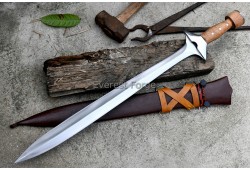
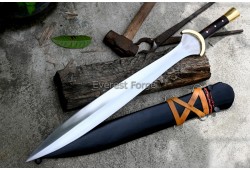
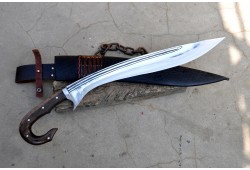
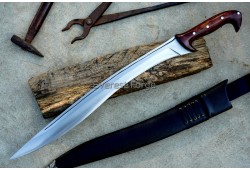
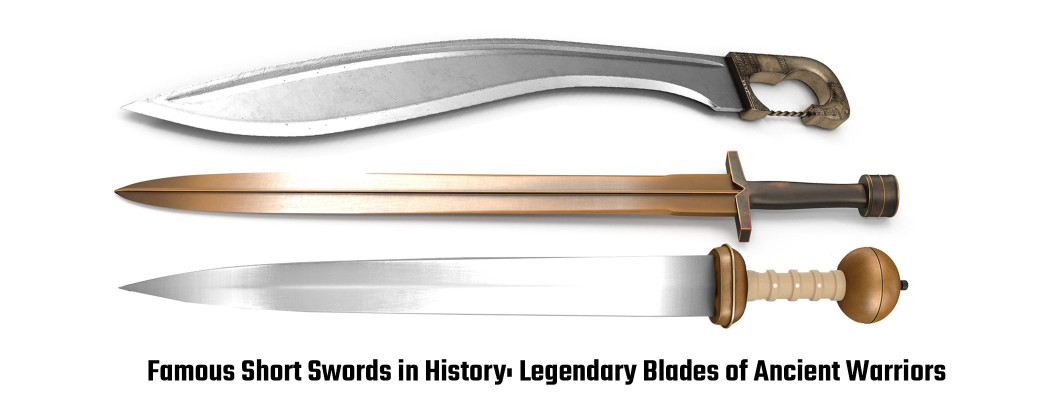
Introduction to Short Swords in History
Throughout history, swords have symbolized power, honor, and warfare. While massive two-handed swords often dominate legends and popular imagination, many of the most effective battlefield weapons were actually short swords. These compact blades were designed for speed, control, and efficiency in close combat.
Short swords were ideal for crowded battlefields where longer weapons became difficult to use. Soldiers fighting in tight shield formations relied on blades that could be drawn quickly and used with precision. Because of their versatility, short swords became essential weapons in many ancient and medieval armies.
From Roman legionaries and Greek hoplites to Viking warriors and Japanese samurai, short swords helped shape military history across civilizations. These blades were not only tools of war but also symbols of craftsmanship, cultural identity, and warrior tradition.
Forge Your Own Custom Sword
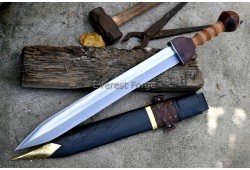
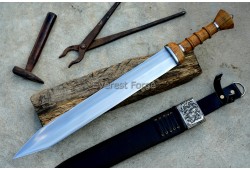
Throughout history, warriors carried blades crafted specifically for their fighting style and culture. Today you can bring your own design to life. If these historic weapons inspire you, our craftsmen can create a custom forged sword or knife tailored to your vision.
Whether you want a Roman-style gladius, a Viking inspired seax, or a completely original blade, our team works with traditional forging methods to craft functional blades built for collectors, enthusiasts, and historical weapon lovers.
Roman Gladius
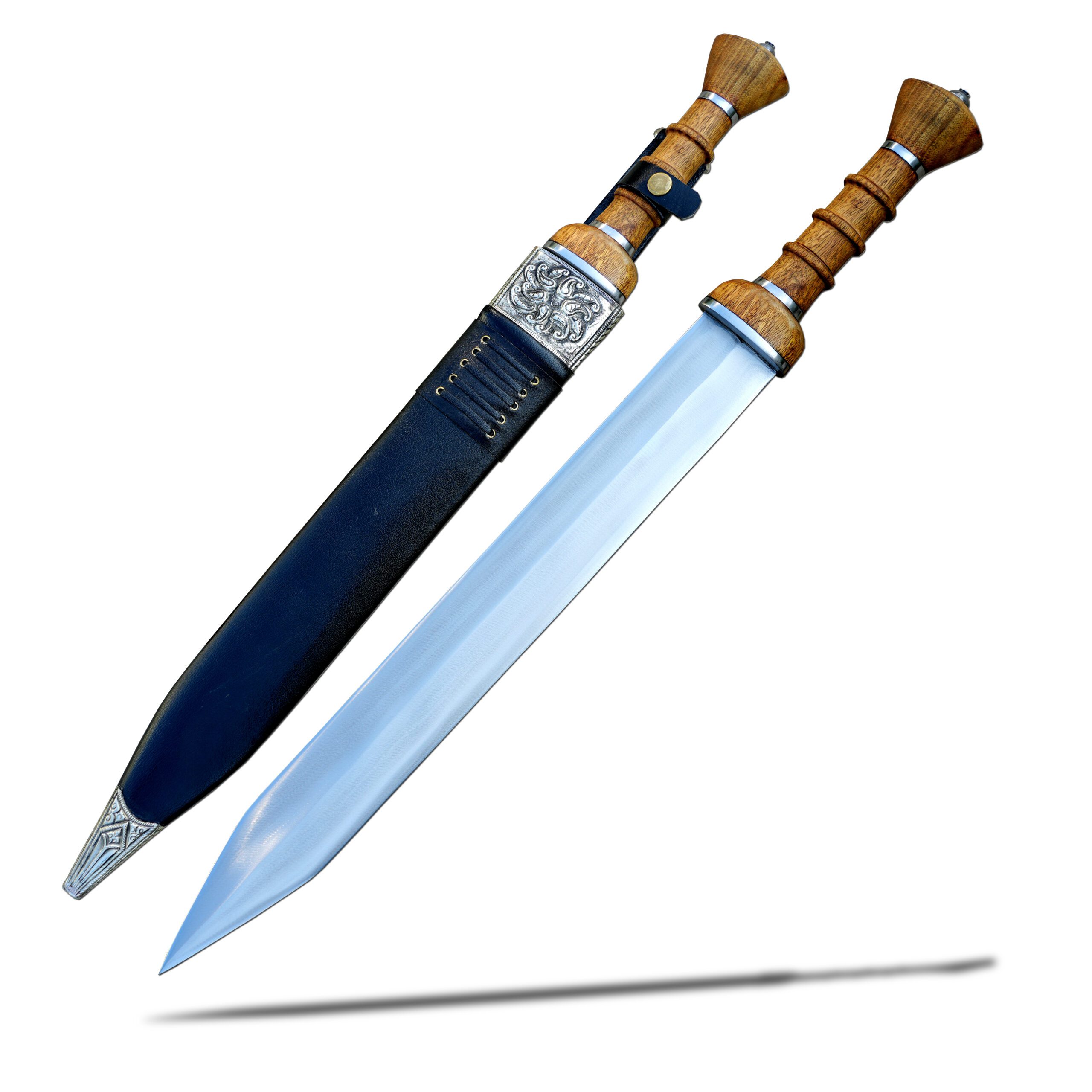
The Roman Gladius is widely considered the most famous short sword ever used in battle. It served as the primary weapon of Roman legionaries during the expansion of the Roman Empire.
The gladius typically measured between 18 and 24 inches in blade length and featured a double-edged blade with a sharp tapered point. Roman soldiers were trained to use it mainly for thrusting attacks rather than wide slashing movements.
This weapon was especially effective in Roman shield formations where soldiers fought closely together. The compact design allowed legionaries to strike enemies through small openings without exposing themselves.
Greek Xiphos
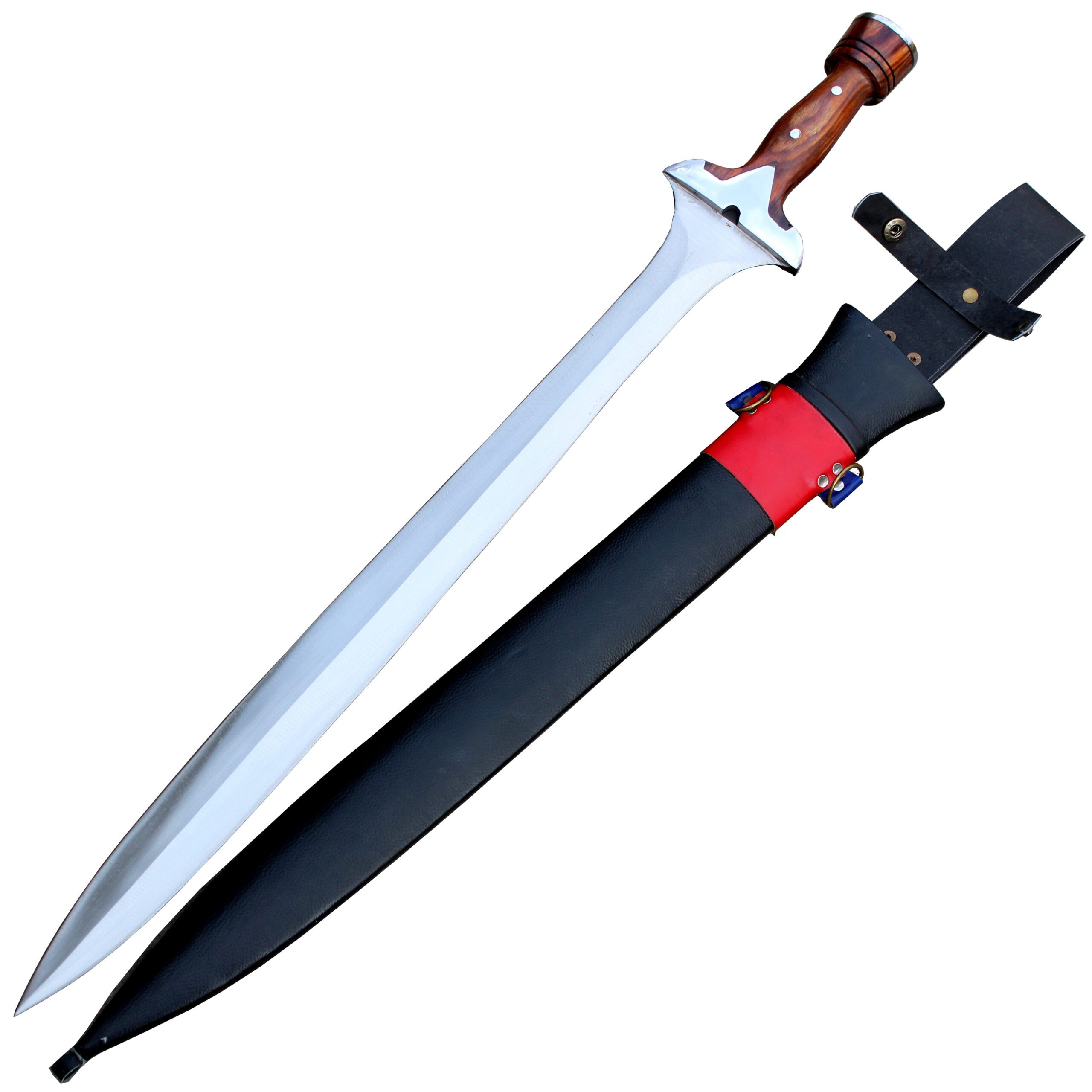
The Xiphos was a short sword carried by ancient Greek hoplites as a secondary weapon. When a warrior’s spear broke in battle, the xiphos became the weapon used for close combat.
The blade had a distinctive leaf shape which allowed powerful cutting strikes while still maintaining a sharp thrusting point. Most examples measured between 16 and 24 inches in length.
This elegant weapon became one of the most recognizable swords of classical Greek warfare.
Viking Seax
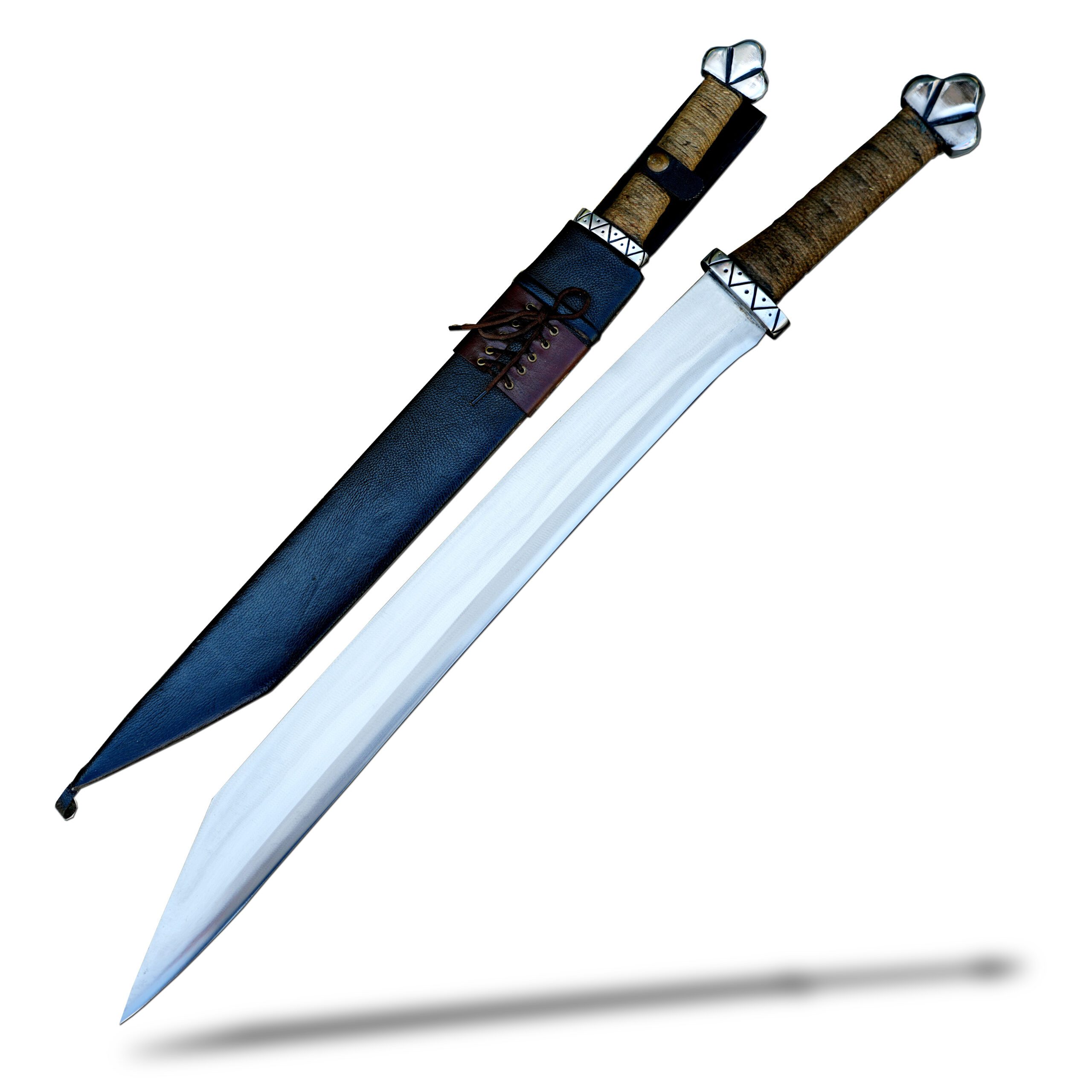
The Seax was a single-edged blade carried by Germanic tribes and Viking warriors. Although it sometimes resembled a large knife, longer versions functioned as short swords suitable for combat.
Many Anglo-Saxon seaxes featured a distinctive broken-back blade shape with an angled tip. The weapon served both practical and symbolic roles within Viking society.
Historians even believe the name “Saxon” may be derived from this famous weapon.
Egyptian Khopesh
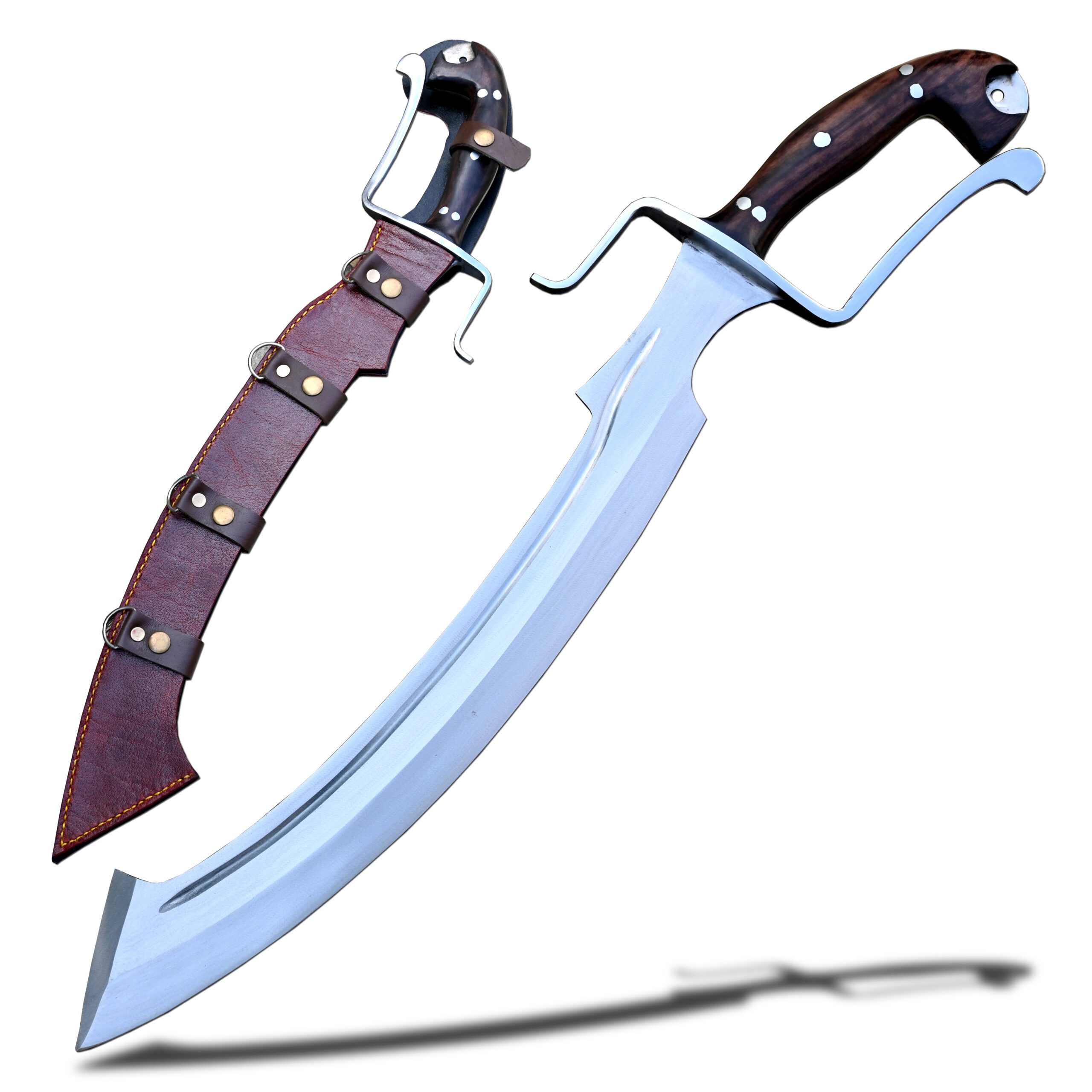
The Khopesh was a curved sword used in ancient Egypt and the Near East. Its sickle-like shape made it one of the most visually distinctive weapons of the ancient world.
The outer edge of the blade was sharpened, allowing warriors to deliver powerful chopping blows while also hooking shields or pulling enemies off balance.
This sword often appears in Egyptian artwork where pharaohs and elite soldiers are depicted carrying it.
Greek Kopis
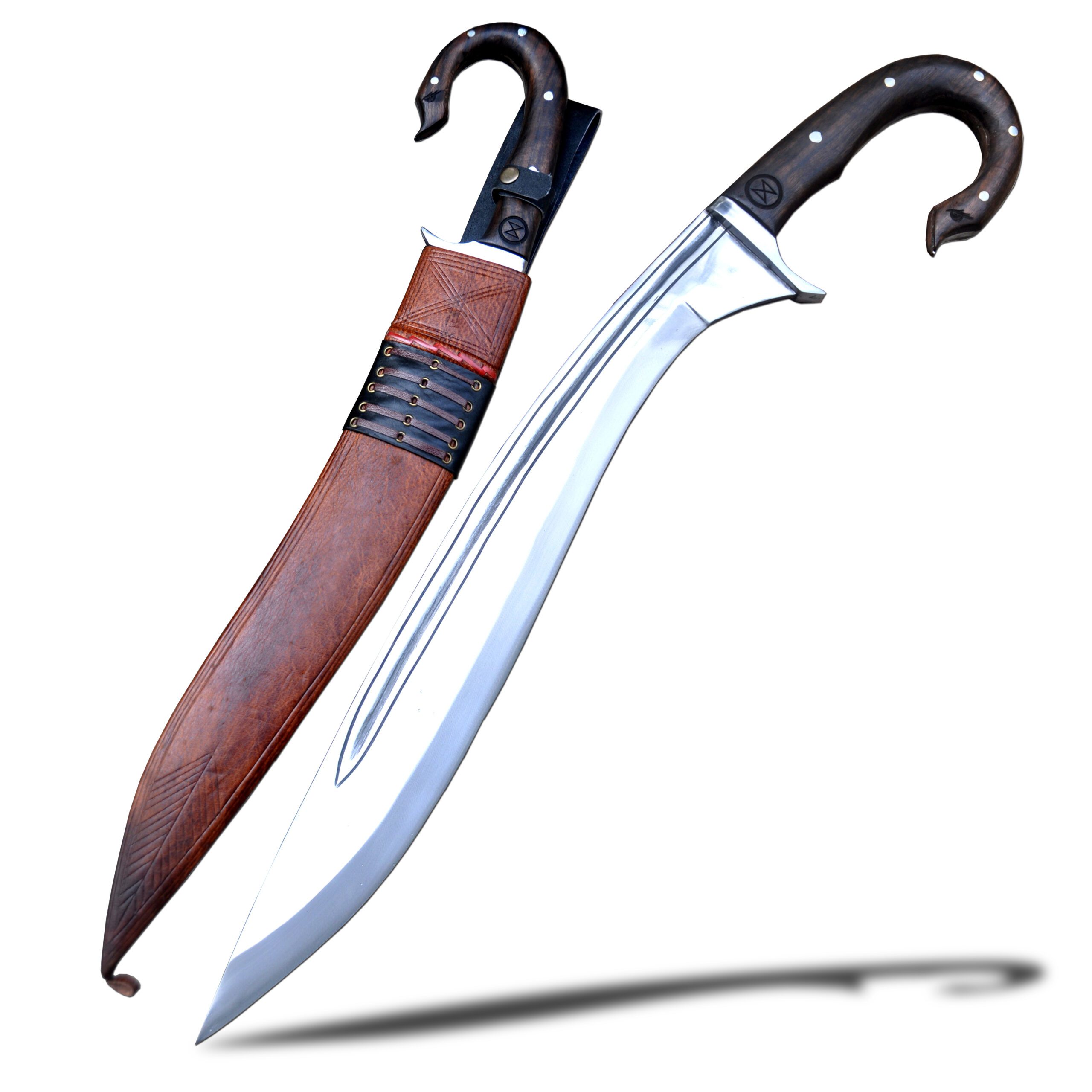
The Kopis was a forward-curving Greek sword known for its powerful cutting ability. The blade widened toward the tip, placing more weight at the end of the weapon.
This design allowed warriors to deliver devastating chopping strikes. The kopis was especially popular among cavalry soldiers.
Its influence can be seen in several later curved sword designs across different cultures.
Roman Pugio
The Roman Pugio was technically a dagger but often functioned like a very short sword during combat. Roman soldiers carried it as a backup weapon alongside their gladius.
The blade usually measured between 7 and 11 inches and had a wide triangular shape. Despite its small size, it was extremely lethal in close combat.
Many examples were richly decorated with ornate metalwork.
Katzbalger
The Katzbalger was a short sword carried by German Landsknecht mercenaries during the 16th century.
These professional soldiers were famous for their colorful uniforms and aggressive combat style. The katzbalger featured a blade around 27 inches long and a distinctive S-shaped guard.
When long pikes became impractical in close combat, Landsknecht soldiers relied on this weapon for brutal hand-to-hand fighting.
Cinquedea
The Cinquedea was a Renaissance short sword popular in Italy during the 15th and 16th centuries.
The blade was wide near the guard and tapered toward the tip, offering strong cutting ability. Many examples featured elaborate engravings and decorative designs.
This sword reflects the artistic craftsmanship of Renaissance weapon makers.
Baselard
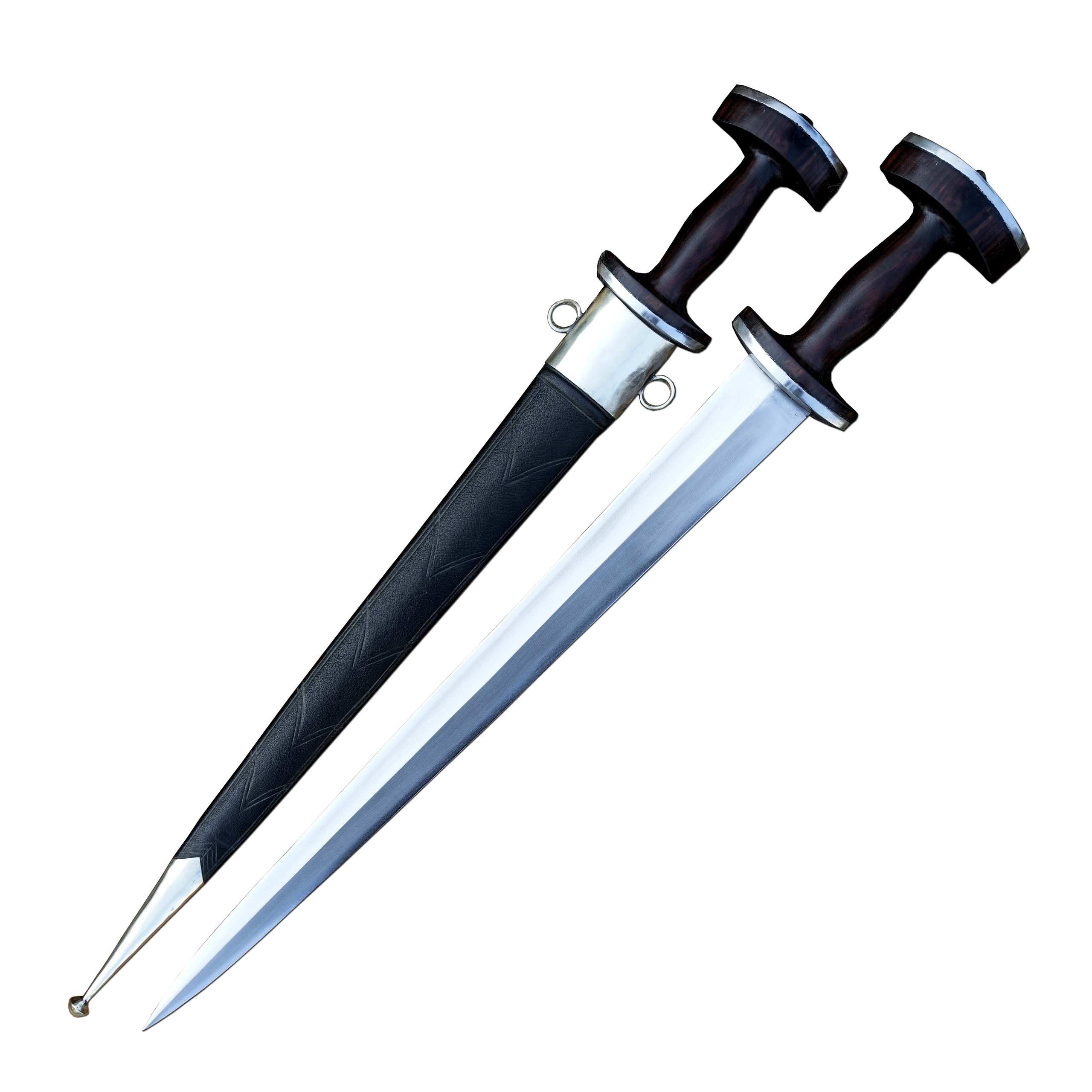
The Baselard was a dagger-sword hybrid widely used in medieval Europe. Its distinctive hilt resembled the shape of the letter “H”.
Some baselards were short daggers while others were long enough to function as short swords. They were carried by knights, soldiers, and civilians alike.
The weapon represents an important transition between medieval daggers and later sword designs.
Japanese Wakizashi
The Wakizashi was a traditional Japanese short sword carried by samurai alongside the katana.
The blade usually measured between 12 and 24 inches and shared the same curved design and razor-sharp edge characteristic of Japanese swordsmithing.
Beyond combat, the wakizashi also held deep cultural significance within samurai society.
Short Blades That Shaped a Long History
Although smaller than many famous battlefield weapons, short swords played a major role in the history of warfare. Their compact size made them ideal for close combat and confined spaces where longer blades were impractical.
From Roman legionaries carrying the gladius to samurai honoring the wakizashi, these blades became trusted companions of warriors across civilizations.
The legacy of short swords continues today through collectors, historians, and modern bladesmiths who study and recreate these legendary weapons.