Dagger vs Short Sword vs Long Sword: Understanding the Real Differences
Throughout history, bladed weapons evolved to serve different purposes in warfare, hunting, and personal defense. Among the most commonly compared blades are the dagger, the short sword, and the long sword. While they all belong to the broader family of edged weapons, each was designed for a very different role.
From the compact dagger carried as a backup weapon to the powerful long sword used on medieval battlefields, these blades represent centuries of weapon development and craftsmanship. Understanding their differences helps collectors, historians, and enthusiasts appreciate how each weapon was designed to perform in specific situations.
The Dagger: A Compact Blade for Close Combat
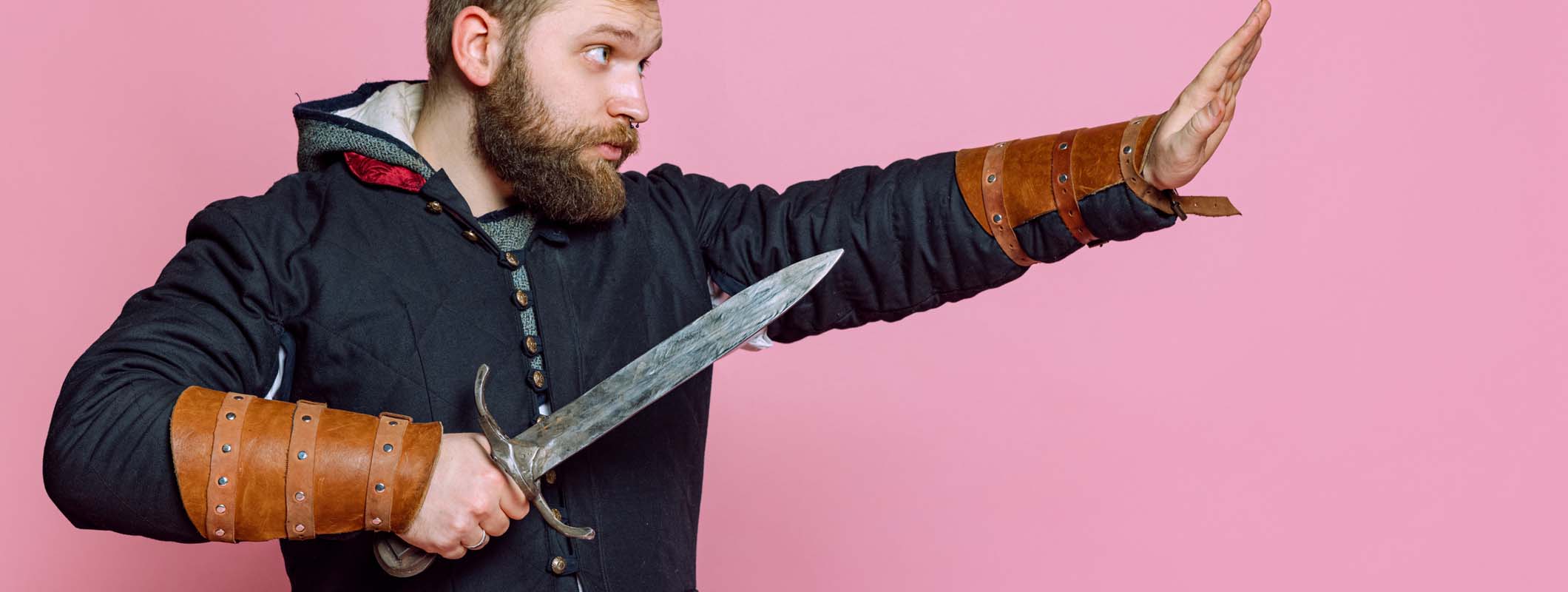
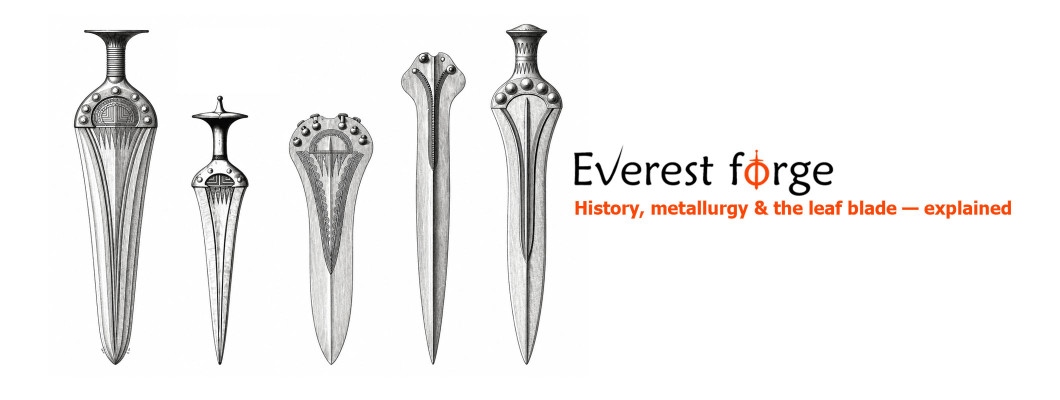
The dagger is the smallest of the three weapons. Designed primarily for thrusting attacks, daggers were often carried as personal sidearms by soldiers, nobles, and travelers. Because of their compact size, they were easy to conceal and quick to deploy in close quarters.
Daggers have existed for thousands of years and appear in nearly every culture. Famous examples include the Roman pugio, the Scottish dirk, and the medieval rondel dagger. Many of these blades were not only functional weapons but also works of art, often decorated with engraved blades and ornate handles.
Unlike longer swords, daggers excel in situations where speed and precision matter more than reach.
Typical Features of a Dagger
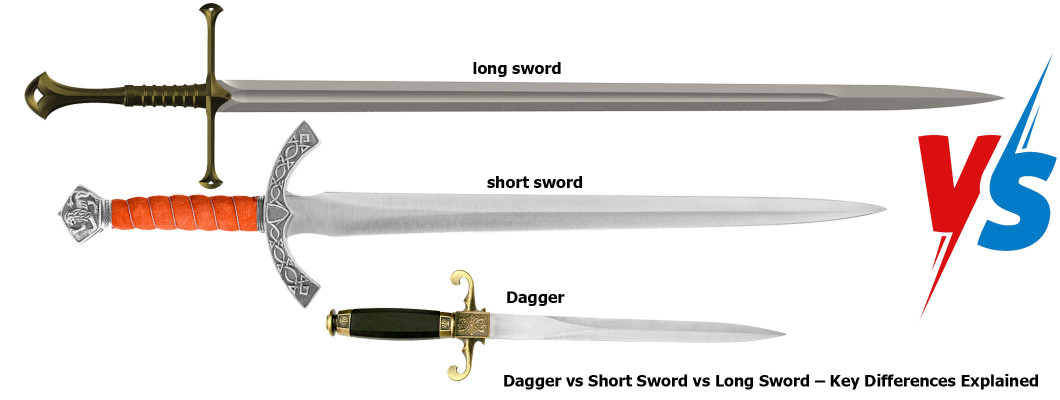
- Blade length usually between 6 and 12 inches
- Compact and lightweight design
- Often double-edged for thrusting attacks
- Easy to carry as a backup weapon
- Effective in very close combat situations
Because of their practicality, daggers were among the most widely carried blades throughout history.
Explore Hand Forged Daggers
Daggers have been carried by warriors and travelers for centuries. Their compact size and precision make them both practical tools and fascinating historical pieces.
Everest Forge offers a variety of hand forged daggers inspired by historical designs from different cultures. Each dagger is crafted using traditional forging techniques and built to be fully functional.
The Short Sword: A Balance of Reach and Speed
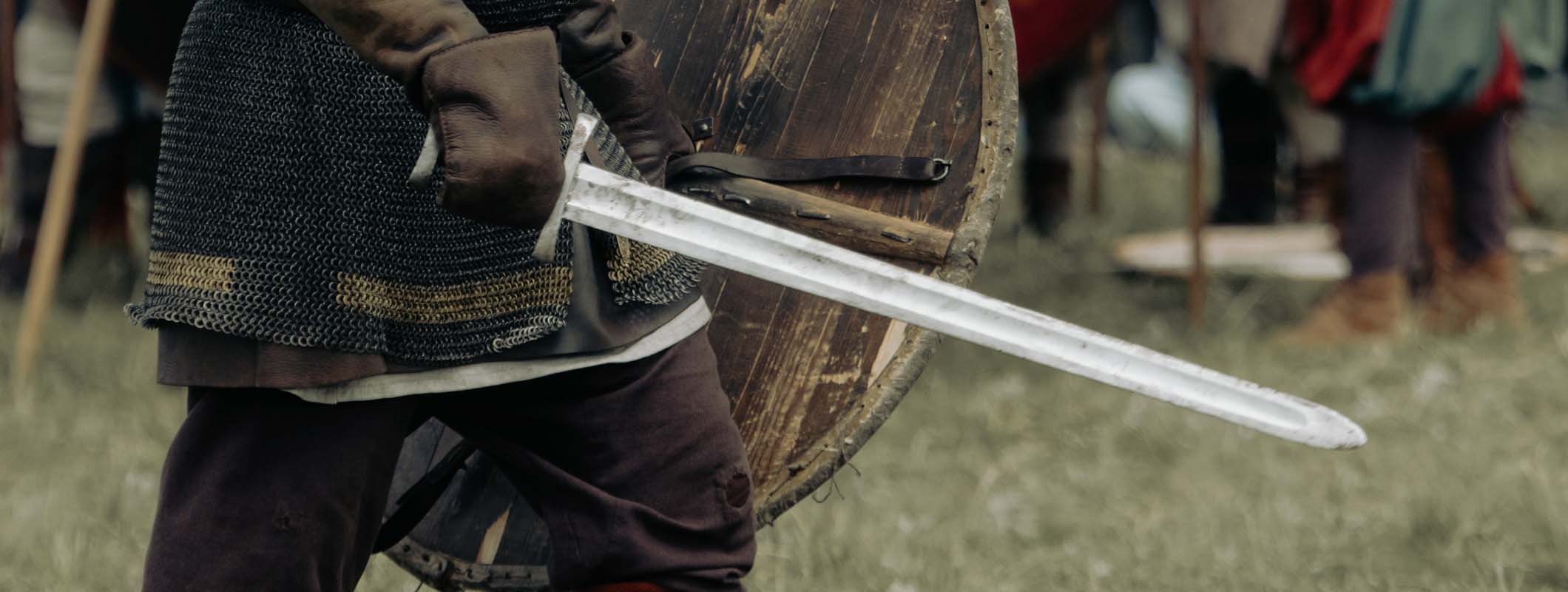
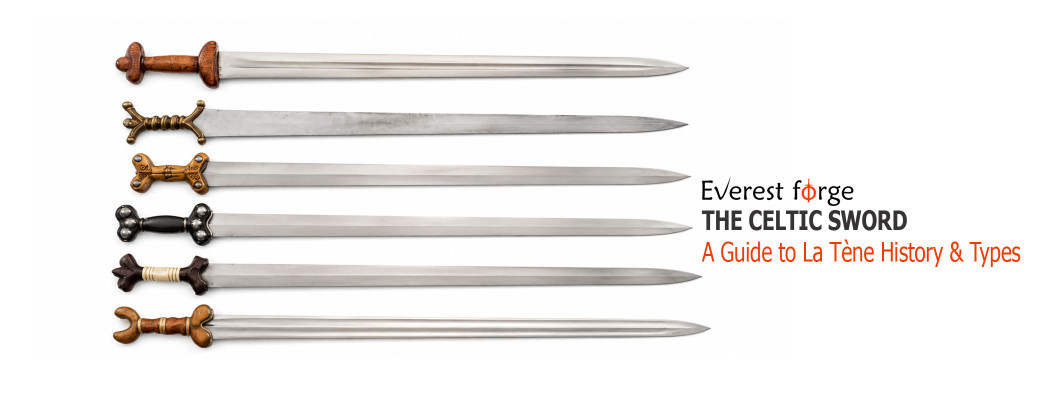
The short sword sits between a dagger and a full-length sword. It offers more reach than a dagger while still being agile and easy to control during close combat.
Short swords became particularly popular among infantry soldiers who fought in tight formations. One of the most famous examples is the Roman gladius, which helped the Roman legions dominate ancient battlefields. Its relatively short blade allowed soldiers to thrust effectively while standing shoulder to shoulder.
Unlike daggers, short swords are designed for both cutting and thrusting attacks. Their balanced length allows them to perform quick strikes while still delivering powerful blows.
Typical Features of a Short Sword
- Blade length usually between 12 and 24 inches
- Designed for both cutting and thrusting
- Easy to maneuver in close combat
- Often used by infantry soldiers
- Balanced for speed and control
Short swords were widely used across ancient and medieval cultures including Greek, Roman, Persian, and early European armies.
The Long Sword: A Weapon of the Battlefield
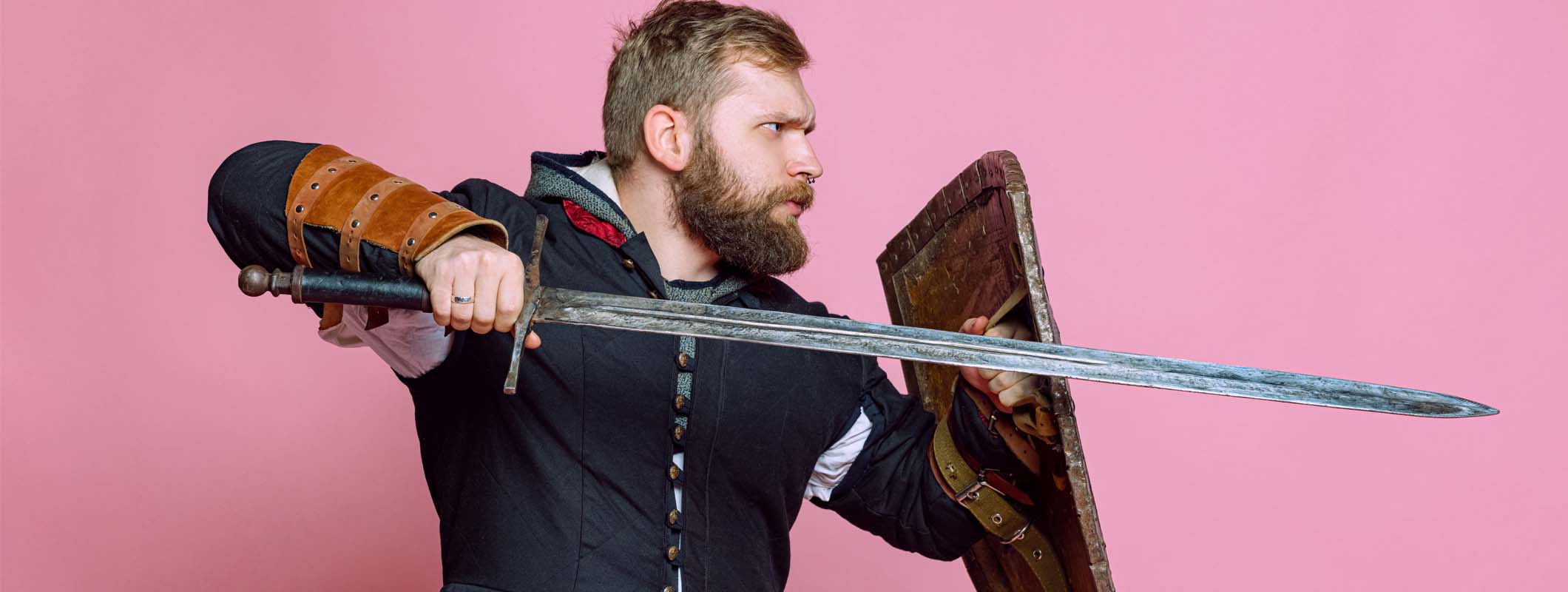
The long sword represents the largest blade in this comparison and is most closely associated with medieval Europe. These swords were commonly used by knights and trained warriors who required reach, power, and versatility during combat.
Unlike daggers and short swords, long swords typically feature a longer grip that allows them to be used with two hands. This design provides greater leverage, improved control, and the ability to deliver stronger strikes.
Long swords were capable of powerful cutting attacks as well as precise thrusts. Skilled fighters could also use advanced techniques such as half-swording when fighting armored opponents.
Typical Features of a Long Sword
- Blade length usually between 30 and 40 inches
- Overall length often between 40 and 50 inches
- Grip designed for one or two hands
- Effective for powerful cutting attacks
- Widely used in medieval warfare
Because of their reach and power, long swords became iconic weapons of knights and professional warriors.
Discover Hand Forged Swords
Swords have been symbols of power, craftsmanship, and warrior culture for centuries. From medieval European blades to historical replicas, each sword style reflects the traditions of its time.
At Everest Forge, our smiths craft functional hand forged swords inspired by historical designs including medieval swords, Viking blades, and other traditional weapons.
Main Differences Between Daggers, Short Swords, and Long Swords
| Feature | Dagger | Short Sword | Long Sword |
|---|---|---|---|
| Typical Blade Length | 6–12 inches | 12–24 inches | 30–40 inches |
| Primary Purpose | Close combat and thrusting | Versatile infantry weapon | Battlefield combat |
| Grip Style | One-handed | One-handed | One or two-handed |
| Reach | Short | Medium | Long |
| Typical Users | Soldiers, travelers, nobles | Infantry soldiers | Knights and trained warriors |
| Best For | Precision, fast deployment, close quarters | Balanced handling, tight formations, versatility | Reach, power, battlefield technique |
Which Blade Is Better?
Each of these blades was designed for a different purpose. Daggers were ideal for close combat and personal carry. Short swords offered a balance between reach and maneuverability, making them perfect for infantry soldiers. Long swords provided the reach and power needed for battlefield fighting.
Rather than one blade being better than another, each weapon reflects the needs and fighting styles of the cultures that created them.
Custom Hand Forged Swords and Daggers
Historical blades were often crafted for specific warriors and purposes. At Everest Forge, this tradition continues through custom forging. Our smiths can create unique daggers and swords based on historical inspiration or your own design ideas.