Best African Swords Every Collector Should Know — A Hand-Forged Central African Guide
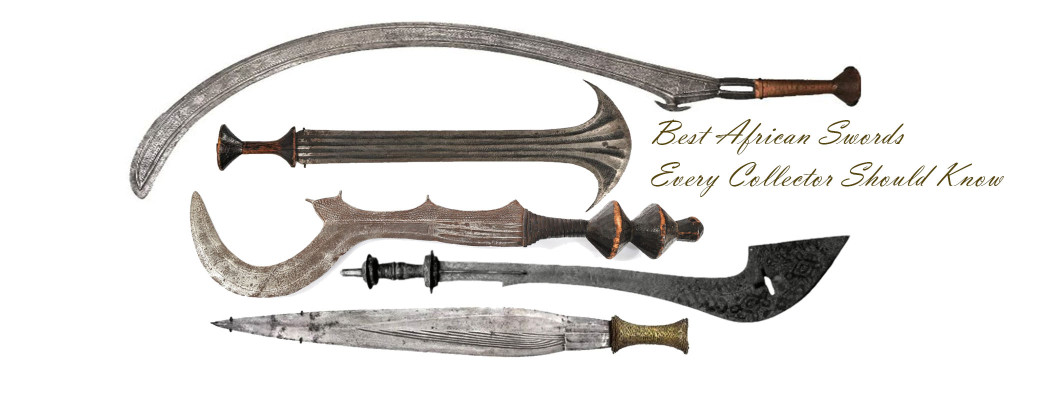
African swords are one of the most distinctive blade traditions in the world. Across the continent — and most strikingly across Central Africa, in what is today the Democratic Republic of Congo, South Sudan and the surrounding region — generations of African smiths produced edged weapons that were as much markers of standing and ceremonial authority as they were functional blades. The leaf-shaped Boa Zande, the fenestrated Boa-African, the prestige Ngombe Ngulu, the compound-silhouette Double Ngulu and the twin-fullered Konda swords are all part of the same broad regional tradition — and all are still hand-forged today by master blacksmiths at Everest Forge in Kathmandu, Nepal, in 5160 high carbon spring steel.
This guide is the cluster pillar for the seven Central African swords in the Everest Forge collection. It walks through what each blade is, who used it historically, what distinguishes one from the next, and how to identify a genuine hand-forged Central African sword from a mass-produced display piece. Every product mentioned can be browsed in the full African Swords collection, or fully customised to your specification through our Custom Forge service.
Why Central African Swords Stand Apart
Most Western sword traditions developed around an idea of the blade as a battlefield tool — built primarily for combat. The Central African tradition developed differently. The blades that came out of the Congo basin and South Sudan over centuries of regional production were edged weapons, yes, but they were also markers of rank and status, ceremonial objects exchanged between communities, and visual expressions of identity in the same vocabulary as the colour-block leather scabbards, brass and copper tack decoration, and hand-tooled geometric patterns that defined the broader material culture.
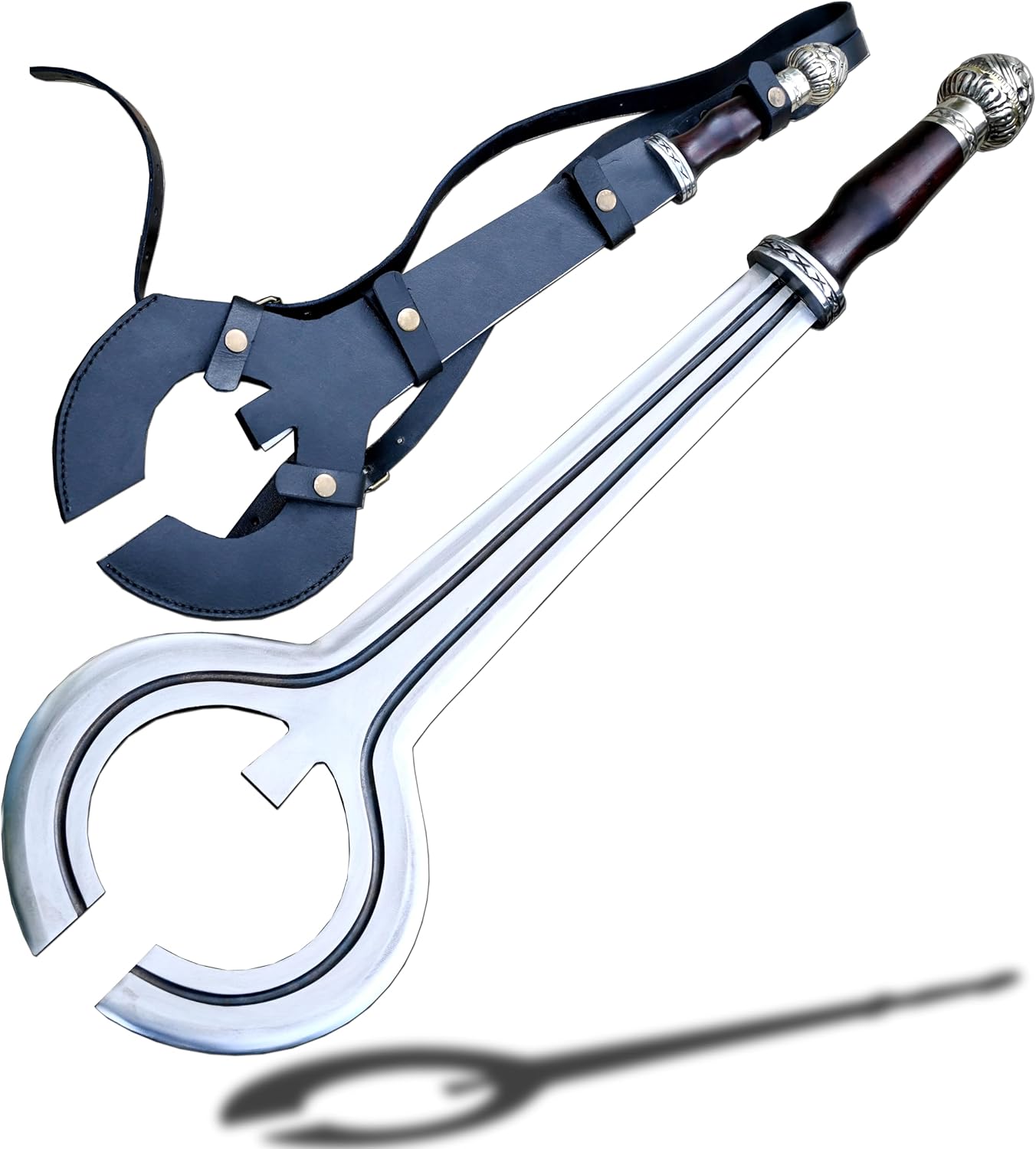
This combination of function and prestige produced some of the most visually distinctive sword forms anywhere in the world. The leaf-shaped Boa and Zande blades are immediately recognisable in any African arms collection. The compound twin-sickle silhouette of the Double Ngulu — a fullered straight upper blade combined with a circular ring opening and a forward-curving sickle hook, all from one piece of steel — is unlike any other sword form on the continent. The Ngombe Ngulu's multi-pointed upper edge and forward-curving cutting blade make it one of the most striking ceremonial sword forms in any tradition.
The smithing tradition that produced these blades is part of the deep history of Iron Age African metallurgy. Central African smiths were working sophisticated edged weapons from locally smelted iron centuries before European contact, in a craft tradition recognised today in collector and museum literature as one of the great regional metalworking heritages on the continent. The Everest Forge interpretations carry that tradition forward in modern 5160 spring steel — the alloy used in vehicle leaf springs, chosen for the same toughness and shock resistance that the historical smiths sought in their iron.
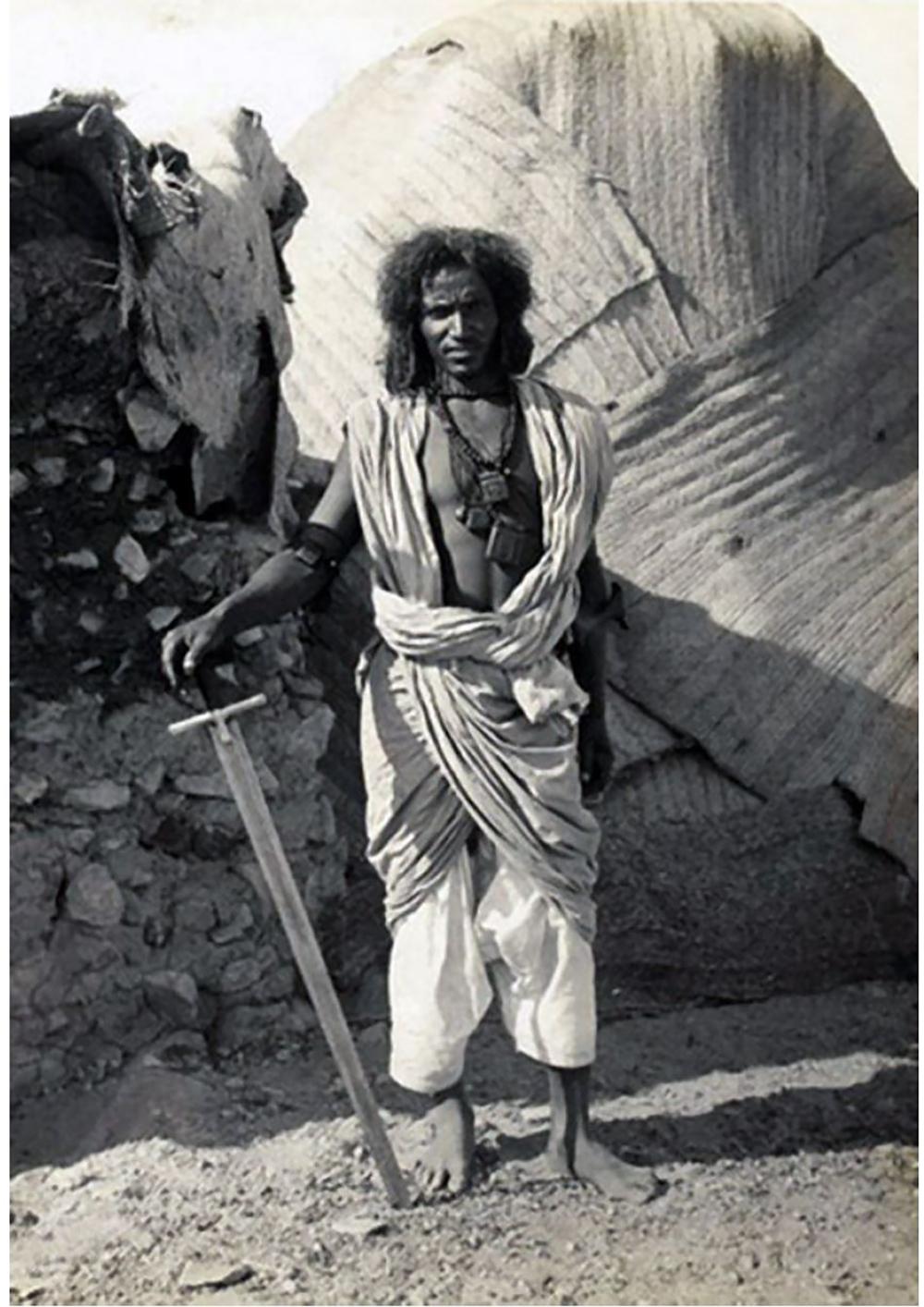
Historically, the swords on this page were carried by chiefs, elders and warriors across what is today the northern Democratic Republic of Congo, South Sudan and the wider Central African region. They appeared in rites of passage and dances. They were exchanged as objects of high value between communities. They were passed down in families as marks of standing. Today they are collected and displayed by serious students of African material culture, by collectors building a Congo-basin or wider Central-African arms collection, and by collectors of Iron Age weaponry who want one of the great pre-industrial blade traditions represented in their display.
The Seven Central African Swords in the Everest Forge Collection
The Everest Forge African Swords range covers the canonical Central African blade forms in tightly cluster-disciplined cluster-positioned products. Each sword has its own cultural anchor, its own visual identity, and its own place in the cluster — many collectors want all seven as a complete Central African set.
1. Konda Machete — Hand-Forged Central African Congo Cutting Blade
The Konda Machete is the 18-inch entry point into the Konda family — a broad, heavy chopping blade with a carved hardwood handle, classified by Central African collectors as a working blade rather than a ceremonial piece. The blade geometry is what generations of Congo basin smiths developed for the most demanding cutting work: a heavy belly, an aggressive curve, a wide forward weight bias. Hand-forged in 5160 spring steel and oil-tempered to working hardness, the Konda Machete is the cluster's commercial-utility piece — well-priced, well-built, and the natural first piece for many collectors entering the Central African range.
2. Konda Sword — 25-Inch Twin-Fullered Central African Short Sword (Ikakalaka)
The 25-inch Konda Sword — also known by the alternate name Ikakalaka in the Central African collector literature — is the cluster's flagship Konda piece. The twin-fullered blade carries two parallel grooves down the length, lightening the blade without weakening the structure. The carved hardwood handle and engraved blade decoration mark this out as a presentation piece as well as a working sword. Where the 18-inch Konda Machete is the utility blade, the 25-inch Konda Sword is the recognised regional presentation form.

3. Konda Machete-Sword — 30-Inch Triple-Fullered Central African Greatsword
The 30-inch Konda Machete-Sword is the full-length two-handed version of the Konda form. Three parallel fullers run down the blade, doing the same job the twin fullers do on the 25-inch Konda Sword but on a larger scale — lightening the blade without sacrificing structural rigidity. This is the cluster's greatsword piece, with the reach and presence of a true two-handed blade and the cultural anchor of the Konda tradition.
4. Ngombe Ngulu Prestige Sword — Central African Ceremonial Blade
The Ngombe Ngulu Prestige Sword is the canonical single-blade Ngulu of the Ngombe people of the Congo basin. The forward-curving cutting blade with a multi-pointed upper-edge profile is fitted with a leather-wrapped grip, brass guard and brass pommel — the prestige fittings that mark this out as a ceremonial piece rather than a working tool. The Ngombe Ngulu was not, as it is sometimes mischaracterised in popular sources, an "executioner's sword". The serious ethnographic record — including the work of researchers Gosseau and Elsen, widely cited in collector and museum literature — is clear that this was a marker of rank, prestige and ceremonial authority. The decoration on historical Ngombe Ngulus is the work that goes into status objects, not weapons of pragmatic use.

5. Double Ngulu Sickle Blade — Hand-Forged Twin-Sickle Central African Ceremonial Sword
The Double Ngulu Sickle Blade — also called the Ngolo, Ngwolo or Mbeli na Banzi in the languages of the peoples who carried it — is the compound-silhouette variant of the Ngulu. A fullered straight upper blade flows into a circular ring opening at the mid-point, and a forward-curving sickle hook below — all forged from one continuous piece of steel. The Double Ngulu's compound geometry is closely related to the Bango blades of the neighbouring Lobala people, reinforcing the broad reach of this design vocabulary across Central Africa. Like the Ngombe Ngulu, the Double Ngulu was a marker of rank, prestige and ceremonial authority, not a tool of violence.
6. Boa Zande Warrior Sword — Central African Leaf-Shaped Warrior Blade
The Boa Zande Warrior Sword is the hand-forged leaf-shaped Central African warrior blade of the Boa and Azande (Zande) peoples of the Congo basin and South Sudan. The leaf-shaped silhouette — a broad cutting belly tapering symmetrically to a long thrusting point — was the iconic blade form of these peoples for centuries, carried by warriors and chiefs alike as both a functional sword and a marker of standing. The Everest Forge version is built with a rosewood grip, brass collars at the top and bottom of the handle, and a hand-stitched brown leather scabbard with geometric tooling. Of all seven African swords in the range, the Boa Zande is the closest to the regional warrior tradition.

7. Boa-African Sword — Hand-Forged Central African Leaf Blade of the Boa People
The Boa-African Sword is the companion piece to the Boa Zande, focused on the broader Boa-people leaf-blade heritage rather than the Azande warrior tradition specifically. It shares the iconic Central African leaf-shaped profile, but is visually distinct: the Boa-African is identified by its open-slot (fenestrated) blade near the hilt — a structural and decorative feature unique to this pattern — its whitewood handle with brass pommel cap, and its tan leather scabbard with red leather throat panel and black leather baldric. Many collectors want both the Boa Zande and the Boa-African together as a Central African leaf-blade pairing — different cultural anchors within the same regional tradition, very different visual identities side by side.
The Iron Age African Metallurgy Tradition
To understand why Central African swords look the way they do, it helps to understand the smithing tradition behind them. Iron Age African metallurgy is one of the great pre-industrial metalworking traditions on the continent, with skilled iron smelting and forging practised across what is today the DRC, South Sudan and surrounding regions for many centuries before European contact. The historical smiths worked from locally smelted iron rather than imported steel, and they developed regional forms — the leaf shape, the fullered Konda, the compound Ngulu silhouette — that solved practical problems of cutting and reach while also expressing identity, rank and ceremony.
The decoration on historical Central African swords reflects this same craft tradition. Brass and copper tack work was applied to scabbard mouths and handle fittings. Engraved geometric patterns were applied to the blades while they were both hot and cold. Leather scabbards were tooled with geometric designs in the same regional vocabulary as the textiles, beadwork and architectural decoration of the broader material culture. The work that went into a finished sword was the work of status objects, not utilitarian weapons — and the Everest Forge interpretations carry that decorative discipline through into modern hand-forged steel.
Everest Forge swords use 5160 high carbon spring steel — specifically reclaimed truck leaf spring — as the modern equivalent of the locally smelted iron the historical smiths worked with. 5160 is engineered to flex and recover under heavy shock load. Every African sword in the range is oil-tempered to a working hardness, balancing a durable edge against a resilient spine, and finished with the brass, leather and wood fittings that the regional tradition demands.
Identifying an Authentic Hand-Forged Central African Sword
For a serious collector, distinguishing a real hand-forged Central African sword from a mass-produced display piece is essential. There are five things to look for.
The steel. A real hand-forged blade will show small surface irregularities — slight tool marks, faint hammer texture, occasional asymmetries — that are the natural fingerprints of hand work. A stamped, machine-polished, perfectly symmetric blade with no surface character is a mass-produced piece. Everest Forge blades are forged on hammer and anvil in Kathmandu, and the small variations from blade to blade are part of how you know they are real.
The construction. A genuine hand-forged sword runs a full-length tang through the handle, secured with brass collars, pommels or pins to handle the shock load of an edged steel blade. A rat-tail or partial tang — a thin strip of metal embedded in glue inside the handle — is the signature of a decorative piece, not a real sword. Every Everest Forge African blade is full-tang construction.
The decoration. Real Central African blades carry decorative work in the regional vocabulary — geometric tooling on the leather scabbard, brass or copper fittings, carved or engraved blade decoration. Mass-produced pieces will substitute generic ornament that does not match any specific regional tradition. The colour-block leather work on the Boa-African scabbard, the brass collars on the Boa Zande grip, and the geometric tooling on the Konda scabbard are all reproduced from regional sources.
The cultural anchor. A real Central African sword is identified with a specific people and region — the Boa, the Azande, the Ngombe, the Lobala. A blade sold as a generic "African sword" with no cultural anchor is a sign the seller does not know what they are selling. Every Everest Forge African sword names the people and region it represents on its product page and in its spec grid.
The forge. A real hand-forged sword has a known forge behind it. Everest Forge's blades are hand-forged in Tokha-3, Kathmandu, Nepal, by Kami-caste blacksmiths — the same forge behind our military-issue kukris for the British Gurkha Army (BSI Service No. 1), the Nepal Army and the Nepal Police. A blade with no known forge, no smith name and no production location is a piece to avoid.
Caring for Your Central African Sword Collection
A hand-forged Central African sword is built to last generations if cared for. The basic routine is simple. Wipe the blade clean after handling, and apply a light film of mineral or blade oil to protect the high carbon steel from moisture. Pay particular attention to detail areas — the inside of a Double Ngulu's ring opening, the slot in a Boa-African's fenestrated blade, the inside of any fullers on a Konda — since these areas can collect dust and humidity if not wiped down.
The brass fittings — collars, pommels, guards — will develop a patina over time. Wipe them clean with a soft cloth, and polish lightly with a brass polish only if you prefer the bright finish. Many serious collectors prefer the aged patina over polished brass, as it reads as authentic and matches the historical references.
Leather scabbards, throat panels and baldrics need occasional treatment with a leather conditioner to preserve colour and prevent cracking. Store the blade out of the scabbard in dry conditions for long-term keeping — a leather scabbard can trap humidity against the blade and cause spot rust if the blade is stored sheathed in damp conditions.
For display, a wooden blade stand keeps the blade safe and accessible. Avoid direct sunlight on the handle wood and the leather scabbard, since prolonged UV exposure will fade colour and dry leather. Avoid hot, humid storage. A cool, dry display cabinet is the standard collector practice.
Where to Buy Hand-Forged Central African Swords
Everest Forge specialises in hand-forged Central African swords as part of our broader range of historical and ceremonial blades. The full range can be browsed in the African Swords collection, and every blade is fully customisable in length, finish, handle material and scabbard colour before forging begins. Personalised engraving — names, initials, custom logos or photographs — is included with every order.
For collectors who want something outside the standard seven — a different blade length, a bespoke handle, a one-off design from a museum reference or a family heirloom — our Custom Forge service builds Central African blades to your specification. We confirm every detail of the design, dimensions, materials and fittings before forging begins, and we send progress photos through the build. Custom forge pieces are non-returnable but are guaranteed to match the specification confirmed at order.
Every Everest Forge African sword ships worldwide from Kathmandu via DHL Express or FedEx International on a Delivered Duty Paid (DDP) basis — duties and taxes are handled so there is nothing to pay on arrival. Some countries restrict the import of swords above certain lengths; it is the buyer's responsibility to check local law before ordering.
Frequently Asked Questions
What are African swords called?
African swords are named by the peoples who made them or by the form of the blade. Across Central Africa specifically, the main named forms are the Konda (twin- and triple-fullered swords and machetes of the Konda people), the Ngulu family (including the Ngombe Ngulu prestige sword and the compound Double Ngulu sickle blade, also known as Ngolo, Ngwolo or Mbeli na Banzi), and the leaf-shaped Boa and Boa Zande / Azande blades. Beyond Central Africa, named forms include the North African Takouba, the Ethiopian Shotel, and many regional patterns across West Africa.
What is an ikakalaka?
The Ikakalaka is the alternate name in Central African collector literature for the twin-fullered 25-inch Konda Sword — the cluster's flagship Konda piece, with two parallel fullers running down the blade. It was carried as a presentation and prestige weapon across the Konda region of what is today the DRC, with a carved hardwood handle and engraved blade decoration marking it out as a higher-status piece than the working 18-inch Konda Machete.
What is the oldest African sword tradition?
Edged weapons have been produced in Africa for thousands of years. The ancient Egyptian Khopesh, with its distinctive forward-curving sickle-like blade, dates to the Bronze Age (roughly 1500 BCE) and is one of the earliest documented sword forms anywhere in the world. Iron Age African metallurgy across Sub-Saharan Africa developed independently and produced sophisticated edged weapons in regional traditions that long pre-date European contact. The Central African sword tradition specifically — Boa, Azande, Ngombe, Konda — is a long-established part of this broader Iron Age African heritage.
Is the Ngombe Ngulu an executioner's sword?
No. The Ngombe Ngulu and Double Ngulu have sometimes been mischaracterised in popular sources as "executioner's swords". The serious ethnographic record — including the work of researchers Gosseau and Elsen, widely cited in collector and museum literature — is clear that these were markers of rank, prestige and ceremonial authority rather than tools of violence. The decoration on historical Ngulus (brass and copper tack work, engraved detail applied while the blade was both hot and cold) is the work that goes into status objects worn or carried by the powerful as public signs of standing, not the work of weapons of pragmatic use.
What is the difference between the Boa Zande and the Boa-African swords?
The Boa Zande Warrior Sword and the Boa-African Sword are companion pieces in the same Central African leaf-blade family, but they are visually distinct and rooted in different cultural anchors. The Boa Zande highlights the Azande (Zande) warrior tradition specifically — distinguished by its solid leaf blade, rosewood handle with brass collars at top and bottom, and brown tooled leather scabbard. The Boa-African focuses on the broader Boa-people leaf-blade heritage — distinguished by its open-slot fenestrated blade, whitewood handle with brass pommel cap, and tan leather scabbard with red leather throat panel and black baldric. Both share the iconic Central African leaf-shaped profile. Many collectors want both pieces as a Central African leaf-blade pairing.
What is the difference between the Ngombe Ngulu and the Double Ngulu?
The Ngombe Ngulu Prestige Sword is the canonical single-blade Ngulu — a forward-curving cutting blade with a multi-pointed upper-edge profile, fitted with a leather-wrapped grip, brass guard and brass pommel. The Double Ngulu Sickle Blade is the compound variant — a fullered straight upper blade combined with a twin-sickle lower section (a circular ring opening and a forward-curving sickle hook), all forged from one continuous piece of steel, fitted with a rosewood grip and an ornate ceremonial pommel. The two pieces are complementary, not alternatives — many collectors want both as a Ngulu-family pairing.
Why are so many Central African swords leaf-shaped?
The leaf shape — a broad cutting belly tapering to a long thrusting point — was the dominant blade form across Central African sword traditions including the Boa, Azande and related peoples. It is a functional geometry: the broad belly gives weight and presence in the cut, the long taper gives reach and a thrusting point, and the symmetric double-edge construction means both sides of the blade can be brought to bear. Iron Age African smiths developed this profile independently in regional traditions across the continent, and the Central African leaf-blade family represents one of the most consistent and visually striking expressions of the form.
What steel are Everest Forge African swords made from?
Every Everest Forge African sword is forged from 5160 high carbon spring steel — specifically reclaimed truck leaf spring, the same alloy used in our battle-ready historical swords. 5160 is engineered to flex and recover under heavy shock load. After forging, every blade is oil-tempered to a working hardness, balancing a durable edge against a resilient spine. The choice of 5160 carbon steel is a modern echo of the locally smelted iron used by the historical Iron Age African smiths who originated these blade traditions.
Where are Everest Forge African swords forged?
All Everest Forge African swords are hand-forged in our own workshop in Tokha-3, Kathmandu, Nepal, by Kami-caste blacksmiths — the same forge behind our military-issue kukris for the British Gurkha Army (BSI Service No. 1), the Nepal Army and the Nepal Police. Browse the full African Swords collection or commission a fully bespoke piece through our Custom Forge service.
Can I order a fully bespoke African sword?
Yes. Every sword in the range can be customised on the product page — length, finish, handle material, scabbard colour, personalised engraving. For anything outside the standard options — a different blade length, a bespoke handle, a one-off design from a museum reference or family heirloom — our Custom Forge service builds Central African blades to your full specification. We confirm every detail of the design and dimensions before forging begins, and we send progress photos through the build.