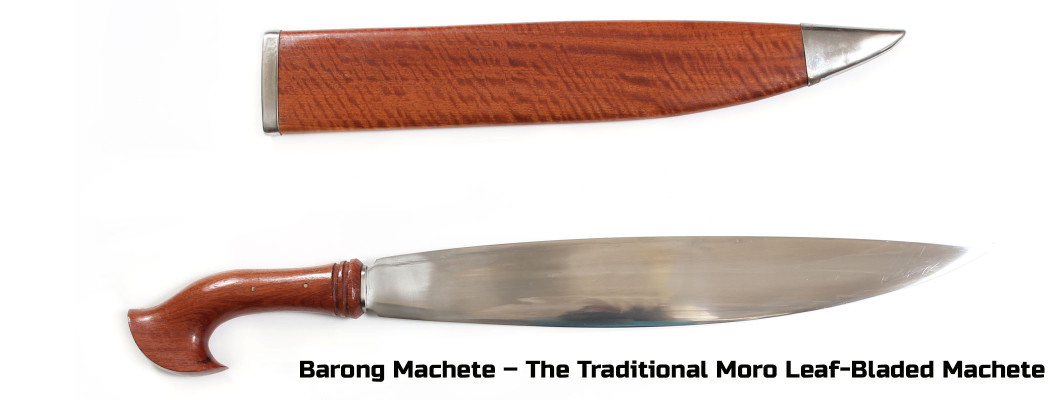
Barong Machete – The Traditional Moro Leaf-Bladed Machete
The Barong Machete is one of the most recognizable blades of the southern Philippines. Thick, forward-heavy, and built around a distinct leaf-shaped profile, it reflects the practical blade culture of the Moro people of Mindanao and the Sulu Archipelago.
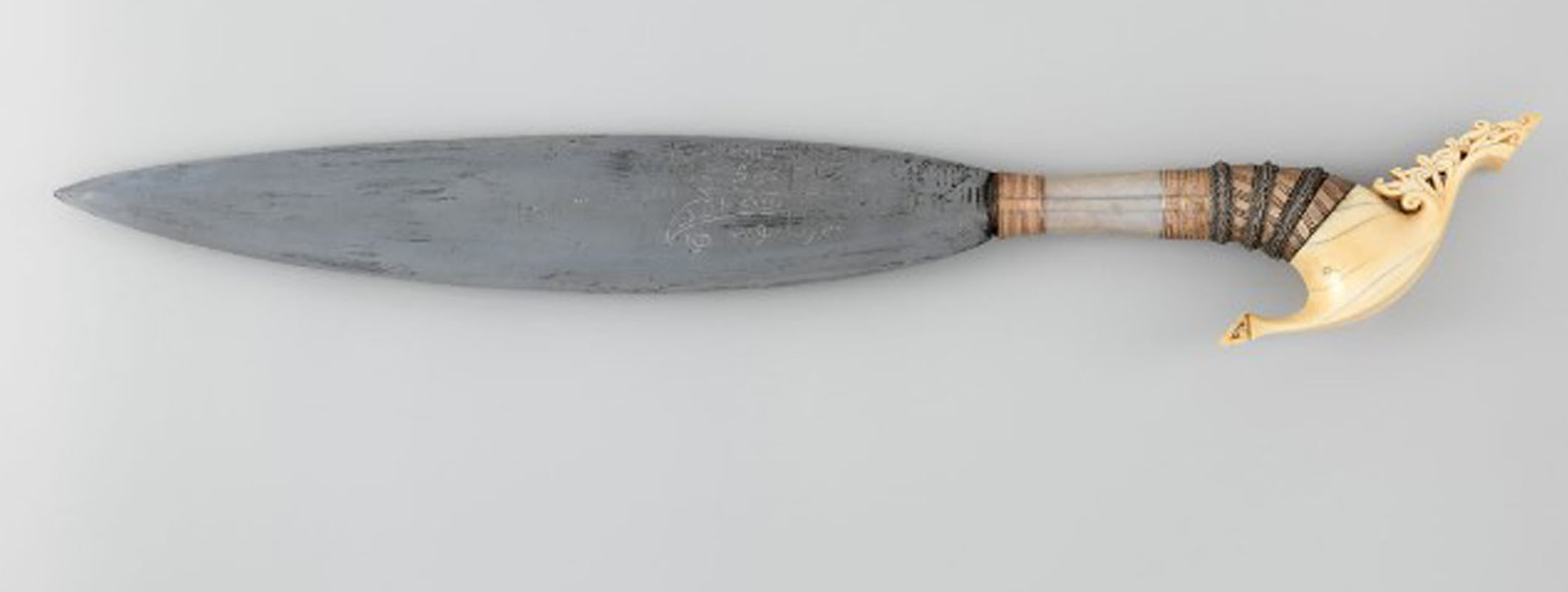
Unlike decorative replicas or modern fantasy interpretations, the traditional Barong was a working blade. It served in close combat, daily carry, and jungle use. Its shape was not exaggerated for appearance. It evolved from function.
At Everest Forge, we study blades like the Barong not because they look impressive, but because their geometry makes sense.
Historical Background of the Barong
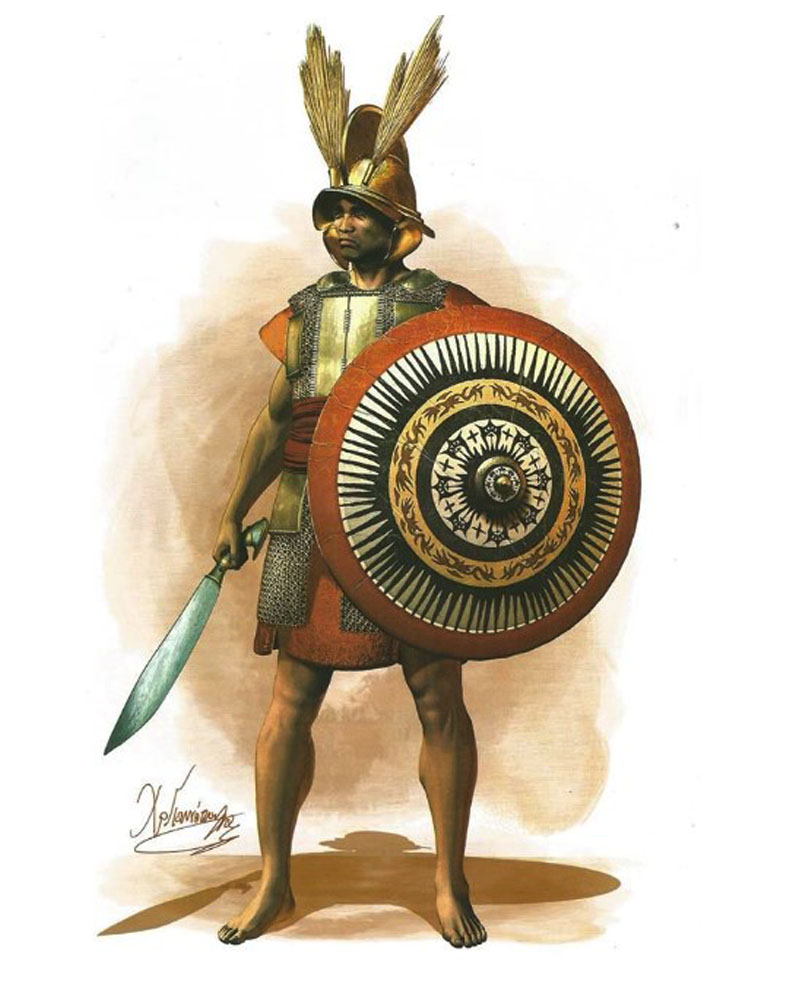
The Barong comes from the Muslim Moro communities of the southern Philippines, particularly among the Tausug, Maranao, and Maguindanao peoples. It developed within a regional blade tradition that also includes blades such as the Kris and the Kampilan.
The Barong is compact and built for committed cutting force. Historically, it was carried as a sidearm. It was practical enough for daily tasks, yet powerful enough for combat in close quarters. That dual purpose shaped its structure.
The Leaf-Shaped Blade Geometry
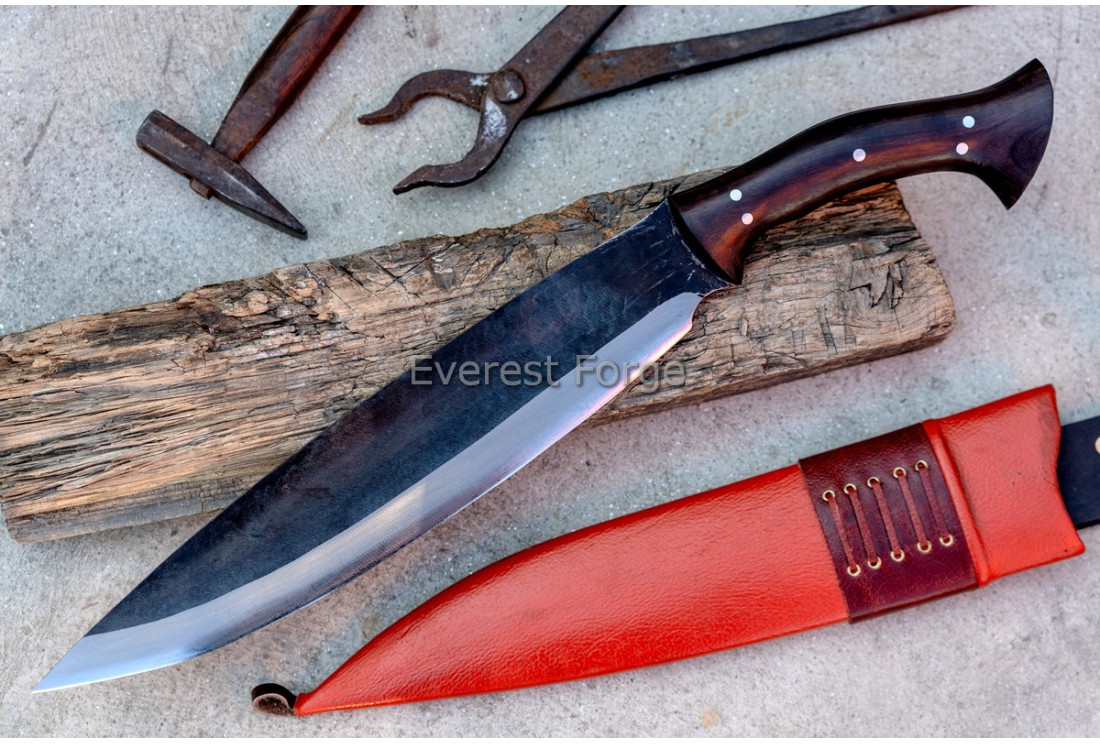
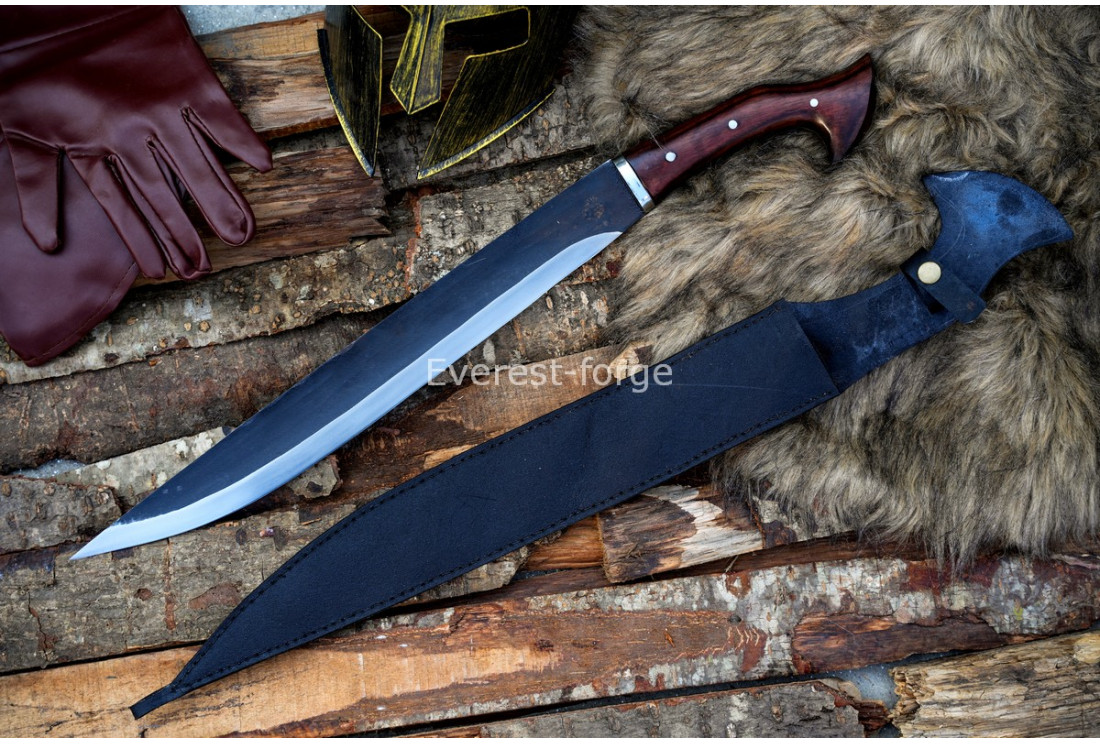
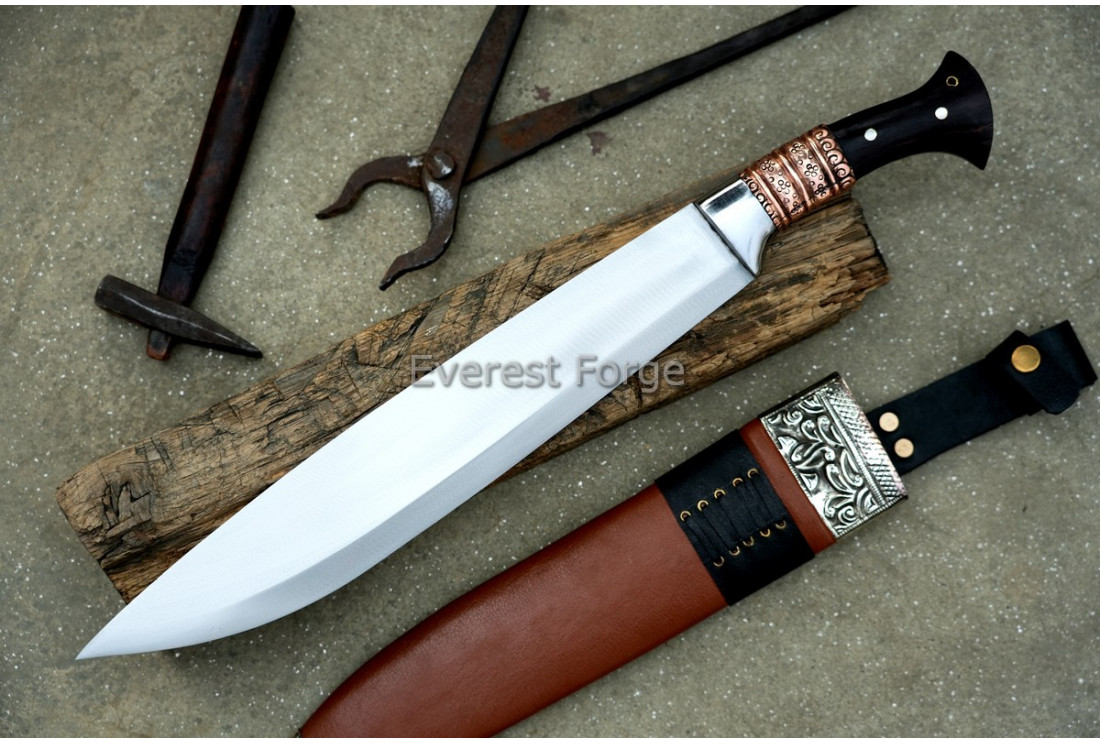
The defining feature of the Barong is its leaf-shaped blade. From the base, the blade gradually widens toward the tip before narrowing again near the point. This forward expansion shifts the center of mass toward the front of the blade.
- Increased chopping momentum
- Deep cutting penetration
- Strong downward strike performance
- Efficient weight transfer during impact
The geometry is deliberate. By concentrating steel near the tip, the blade gains cutting authority without excessive length. A properly forged Barong feels forward-balanced but controlled.
Blade Thickness and Structural Strength
Traditional Barongs are noticeably thick along the spine. This thickness provides structural stability and resistance during impact.
- Greater durability under stress
- Reduced flex during heavy chopping
- Stronger overall blade integrity
The grind is typically convex or slightly rounded, reinforcing chopping efficiency and edge durability.
Dimensions and Balance
- Blade length: 12 to 22 inches
- Overall length: 18 to 30 inches
The defining characteristic is balance. The forward-weighted design allows even a moderate-length blade to deliver significant cutting power.
Handle Construction
The handle of a traditional Barong is usually crafted from hardwood or horn. It is shaped to secure the hand during heavy use.
- Slight curvature for ergonomic grip
- Flaring pommel to reduce slipping
- Minimal or no crossguard
Rather than relying on a large guard, the handle geometry itself provides control.
Traditional Scabbard
Barong scabbards are typically carved from wood and reinforced with rattan bindings. This construction provides durability while keeping the overall weight manageable.
Why the Barong Endures
The Barong Machete endures because it was shaped by necessity. Its curves are not decorative. Its weight distribution is not accidental. Its proportions were refined through real-world use.
It remains a powerful example of how blade geometry, balance, and cultural tradition combine to create a lasting design.