Famous Australian Sword Types: Indigenous Hardwood Weapons and Australian Military Swords
When people search for famous Australian sword types, they often expect to find a long list of traditional steel swords. Australia’s blade history is different. Instead of one continuous steel sword tradition, Australian swords fall into two very different groups: Indigenous Australian hardwood fighting weapons and modern Australian military ceremonial swords.
That contrast is exactly what makes this topic interesting. On one side, there are traditional wooden sword-like weapons shaped by the landscape, the available materials, and real combat needs. On the other, there are Australian military swords based on British patterns that survive today as part of ceremonial dress and military identity. Together, they form a unique chapter in world sword history.
Indigenous Australian Swords: Blade Weapons Without Steel
Long before imported metal blades became common, Indigenous Australians developed highly effective weapons from dense hardwood. These were not decorative objects. They were practical fighting tools designed for striking power, speed, durability, and control.
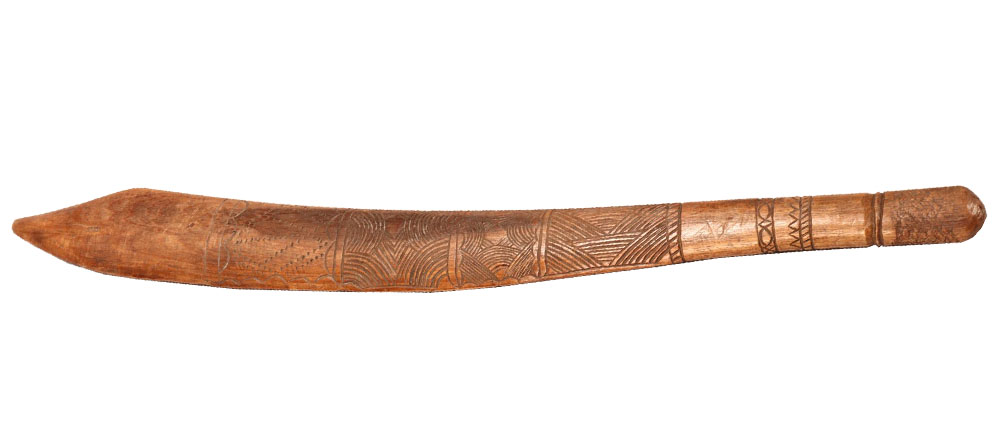
In many cases, these weapons sit somewhere between a sword, a club, and a machete-like chopper. They may not fit the classic European definition of a sword, but functionally they served the same role: close combat, defense, and survival.
Rainforest Wooden Swords of North Queensland
One of the most important Australian sword traditions comes from the Aboriginal peoples of the North Queensland rainforest. Large hardwood swords from this region are especially significant because they are among the clearest examples of true sword-like weapons in Indigenous Australia.
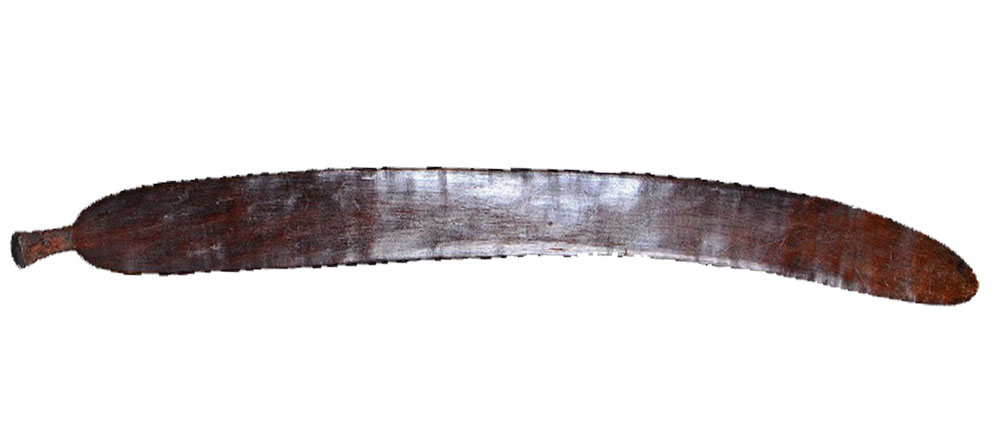
These rainforest swords were made from solid hardwood and built for heavy, sweeping strikes. They did not depend on a razor edge like a steel saber or long sword. Instead, they relied on balance, momentum, and impact. That made them brutally practical in close combat.
For anyone interested in functional blade design, this is an important reminder: a weapon does not need polished steel to be effective. It needs the right shape, the right weight, and the right purpose.
Barrgaru and Other Australian Hardwood Sword Forms
Among the best-known names associated with Australian hardwood swords is Barrgaru, a term linked to large sword-like weapons from North Queensland. These blades are often described as some of the closest Indigenous Australian equivalents to a true sword.
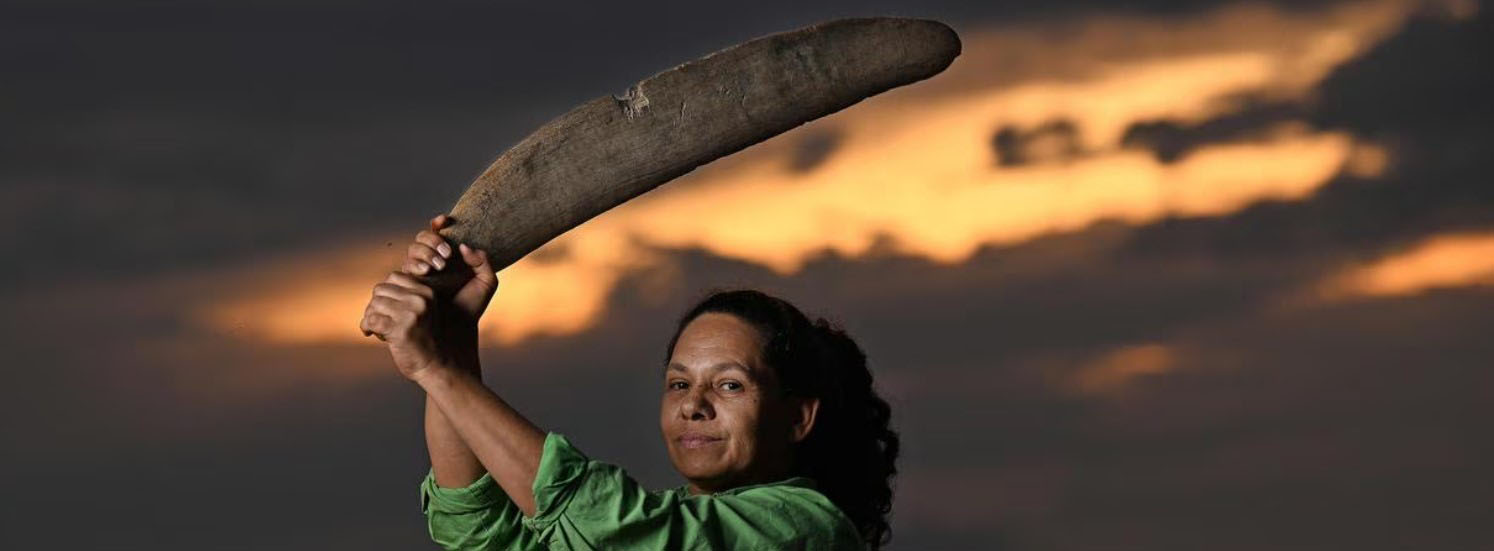
They were long, powerful, and direct in purpose. A well-made hardwood sword of this type could deliver disabling blows through force alone. That makes them especially relevant when discussing famous Australian sword types, because they show that sword design in Australia developed around function rather than imported ideas of blade style.
Leangle: The Hooked Sword-Club of Southeastern Australia
Another famous Australian weapon often discussed in relation to swords is the Leangle. This weapon comes from southeastern Australia and is often described as a hooked club or sword-club. It is different from the large rainforest swords, but it belongs in the same broader conversation about Australian sword types because of how it combines striking power with control.
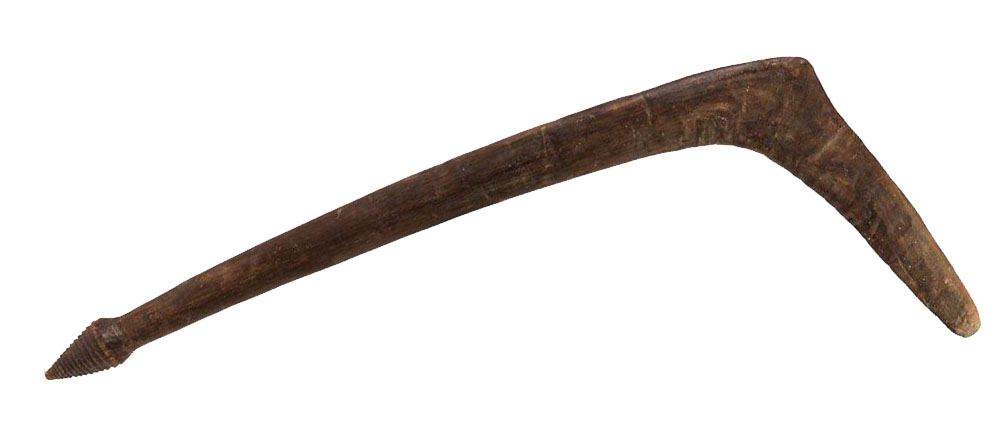
The hooked design allowed the Leangle to do more than hit. It could catch, trap, and manipulate an opponent’s movement, especially when paired with a shield. In modern blade terms, that makes it closer to a tactical weapon than a simple club.
For readers who love unusual historical weapons, the Leangle shows just how diverse Australian blade and impact weapon design really was.
Sydney Region Wooden Swords
Wooden swords from the Sydney region add another layer to the story. These weapons are often slightly curved and can feature carved surface patterns, showing that Australian sword-like weapons were not limited to the far north.
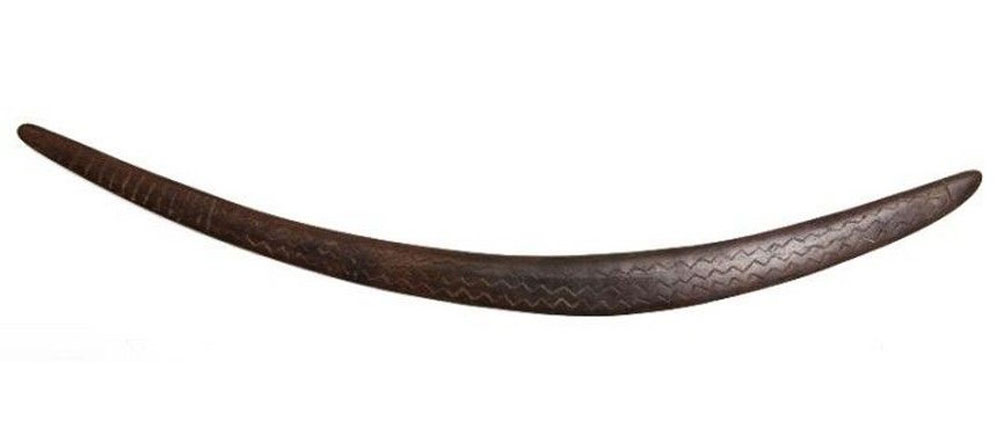
Compared with the large rainforest hardwood swords, Sydney examples were generally more compact, but they still reflect a clear understanding of shape, handling, and combat purpose. They also remind us that Australian sword history is regional, not uniform. Different communities developed different forms depending on local needs and traditions.
Inspired by Rare Sword Traditions?
If you appreciate unusual sword history, regional blade design, and weapons built with real purpose, you may want something made specifically for your own vision. At Everest Forge, we create custom forged swords, machetes, and historical blades based on your design, preferred size, blade style, and engraving ideas.
Australian Military Swords: Ceremonial Blades Still Carried Today
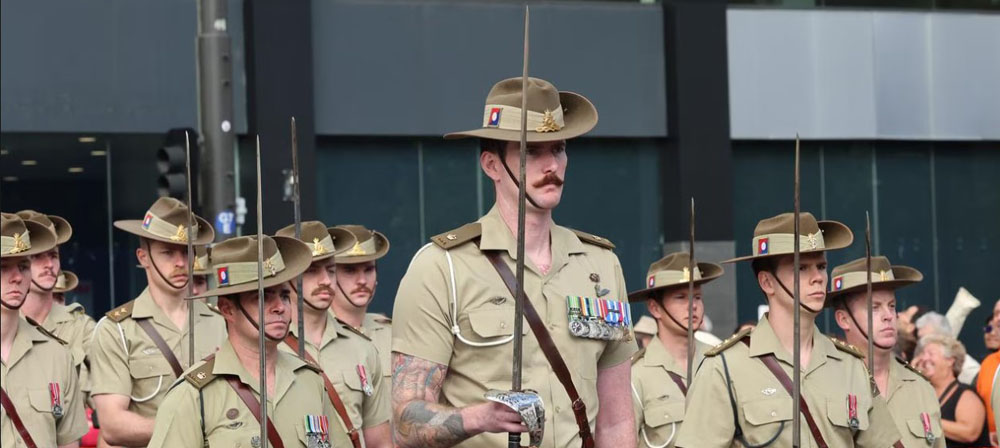
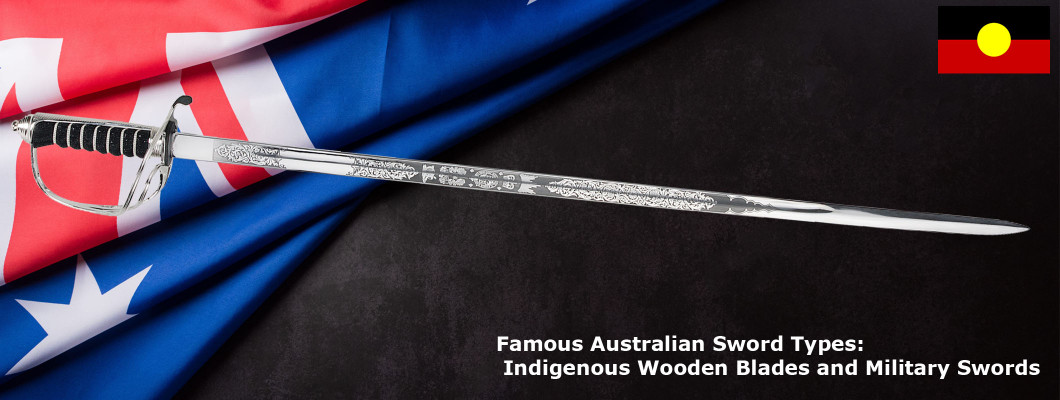
While Indigenous Australian swords were made for direct use, modern Australian military swords belong to a different tradition. These are ceremonial steel swords based on British military patterns. They are not battlefield weapons today, but they remain important symbols of rank, service, and military heritage.
For many readers, these are the most recognizable Australian swords because they are still worn within the Australian Army.
Infantry Sword Pattern 1897
The Infantry Sword Pattern 1897 is one of the best-known ceremonial swords in Australia. It has a straight blade and a distinctive guard, and it remains closely associated with infantry officers and formal military dress.
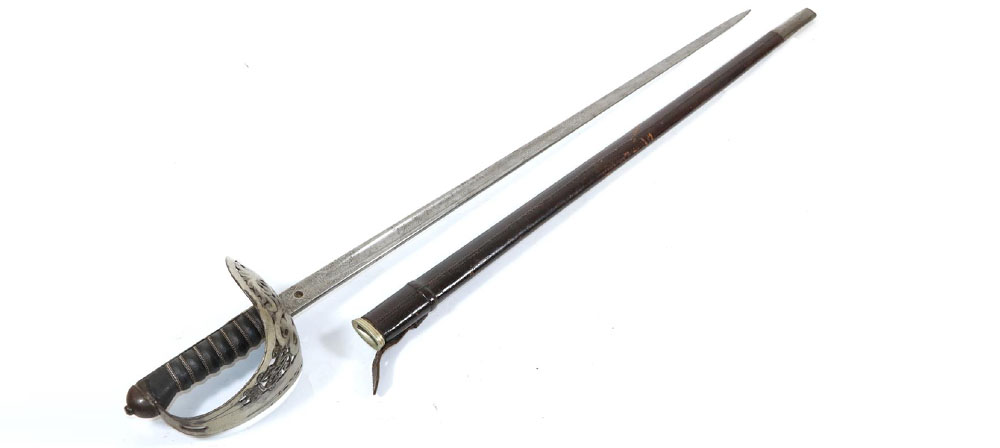
Among famous Australian military swords, this is probably the most familiar pattern because it represents the standard officer’s sword tradition carried into modern ceremonial use.
Cavalry Sword Pattern 1912
The Pattern 1912 Cavalry Sword reflects a more martial look, with its long straight blade and bowl guard. Originally designed for mounted service, it carries the visual character of a true fighting sword even though it is now ceremonial.
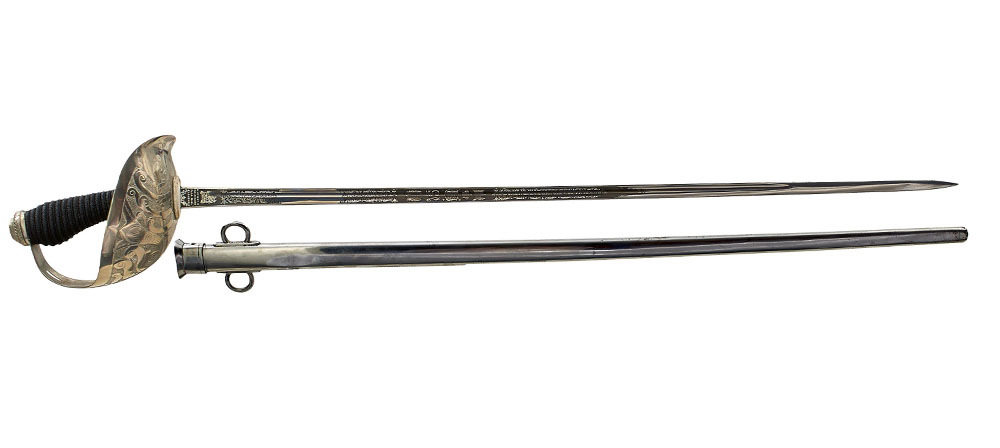
For collectors and enthusiasts, this is one of the most appealing Australian military sword types because it preserves the look of a practical combat weapon.
Artillery Sword Pattern 1822
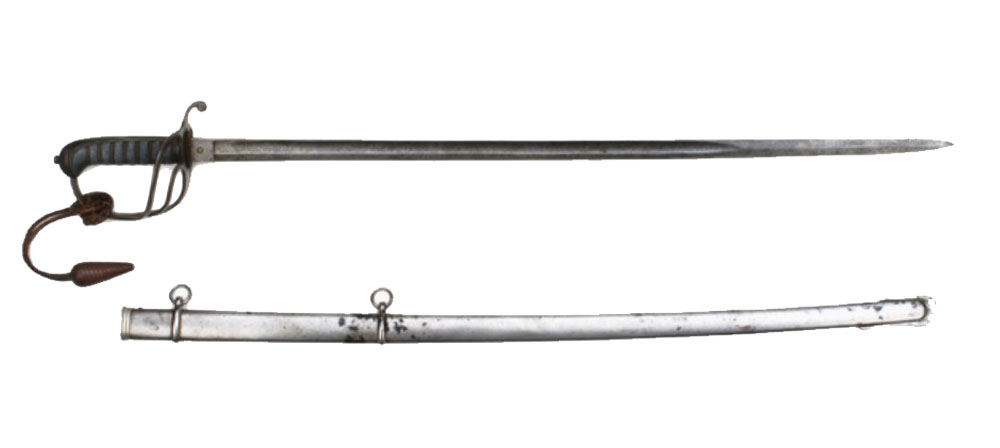
The Pattern 1822 Artillery Sword adds another important type to the Australian military sword tradition. With its slightly curved blade and three-bar hilt, it stands apart from the infantry and cavalry patterns and gives the article a fuller view of ceremonial swords in Australian service.
Mameluke Sword and Scottish Claymore
Australia’s ceremonial sword tradition also includes the Mameluke sword, carried by senior officers, and the Scottish basket-hilted claymore, worn in Scottish regimental dress. These swords are visually distinctive and add a strong historical dimension to Australian military pageantry.
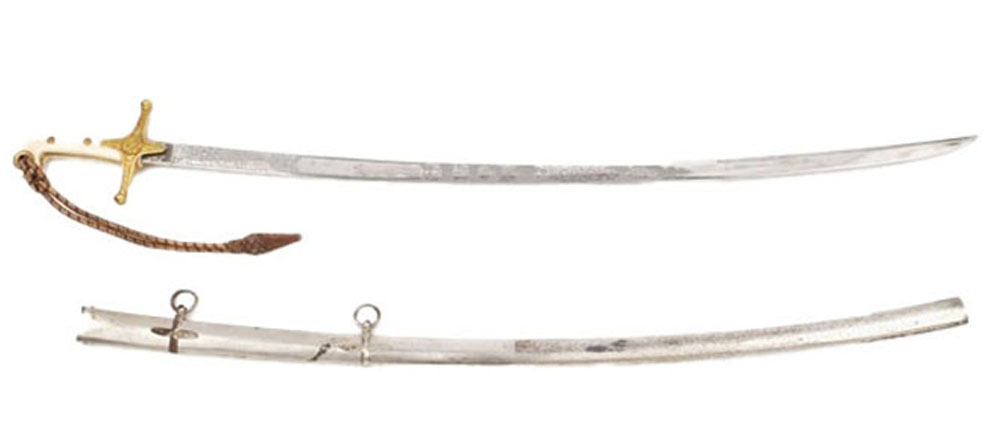
Although these are not uniquely Australian in origin, they are still part of the Australian military sword tradition and belong in any serious discussion of famous Australian sword types.
What Makes Australian Sword Types Different
What makes Australian swords so different is the contrast between material, purpose, and tradition.
Indigenous Australian swords and sword-like weapons were built from hardwood for real use. They were direct, practical, and shaped by environment. Australian military swords, by contrast, are steel ceremonial blades shaped by European military heritage and preserved through official dress traditions.
That means Australia does not offer one single sword type. It offers two very different blade worlds: one grounded in survival and one grounded in symbolism.
Explore Hand Forged Swords
If this article has sparked your interest in sword design, historical blades, and functional craftsmanship, explore Everest Forge’s sword collection. You’ll find hand forged swords, battle-ready blades, custom designs, and collectible pieces inspired by global sword traditions.
Why Australian Swords Matter to Modern Blade Enthusiasts
For modern collectors, sword enthusiasts, and custom blade buyers, Australian sword history offers something valuable: perspective. It shows that a sword is not defined by polished steel alone. It is defined by purpose, handling, and the job it was made to do.
That idea still matters today. Whether you are looking at a traditional hardwood striking weapon, a military ceremonial saber, or a hand forged custom sword, the principles are the same: balance, durability, intention, and usability.
Understanding Australian Sword Types and Their Purpose
Australian sword types do not fit neatly into the same categories as Viking swords, medieval arming swords, or Japanese katana. That is exactly why they deserve attention.
From North Queensland rainforest hardwood swords to the Infantry Sword Pattern 1897, the Australian story is one of contrast. Some blades were made for combat. Some were made for ceremony. Some were shaped from wood. Some were forged in steel. Each one reflects a different need, a different culture, and a different idea of what a sword can be.
For Everest Forge readers, that makes this more than just a history topic. It is a reminder that real blade design always begins with purpose.