Kopis: The Ancient Greek Sword That Shaped the Future of Blades
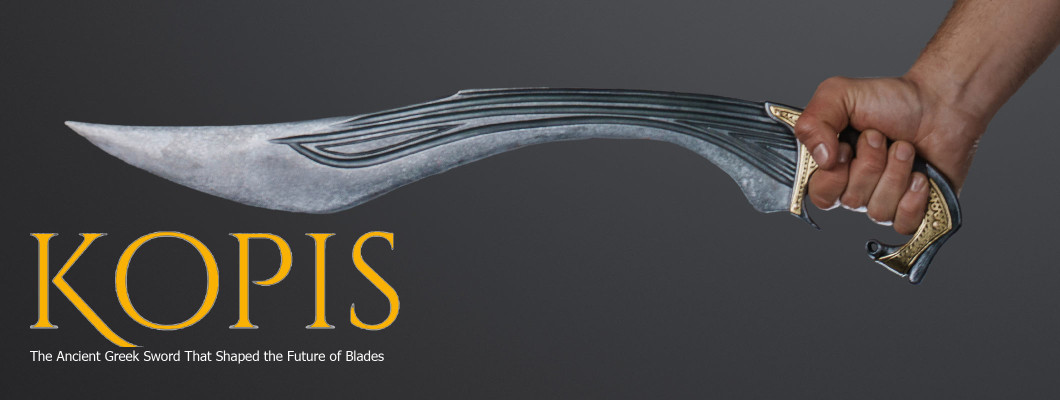
The Kopis is one of the most iconic curved swords of the ancient world. Recognized for its forward-leaning blade and powerful cutting action, it symbolized strength, innovation, and artistic precision. More than just a weapon, the Kopis represented a perfect harmony between engineering and artistry — a design that shaped generations of swords to come.
The Birth of the Kopis
The word Kopis (Greek: κοπίς) translates to “to cut” or “to strike,” and it perfectly defines this sword’s purpose. Emerging around the 5th century BCE, during the height of Greek civilization, the Kopis marked a shift from straight double-edged swords like the Xiphos to a more practical curved form. Its single-edged, forward-weighted blade concentrated mass near the tip, creating devastating cutting momentum.

Antique Kopis Sword: A historical example showing the origin and evolution of the ancient Greek curved blade design.
Greek cavalry warriors quickly adopted the Kopis, using its curved design to deliver powerful downward strikes while charging on horseback. This made it one of the earliest purpose-built cavalry swords in history. Yet, it was equally effective for infantry soldiers in close formations, offering a deadly combination of reach, balance, and control.
Design and Function

Every aspect of the Kopis was meticulously crafted for performance. Its geometry and proportions were based on practical battlefield needs rather than ornamentation.
Blade: The blade curved forward near the tip, usually between 20 and 25 inches (50–65 cm) long. This curvature enhanced cutting efficiency and added momentum to each strike.
Edge and Spine: The thick spine absorbed impact while the fine edge delivered precise, deep cuts. The Kopis could both slash and thrust effectively.
Handle: The handle was crafted from wood, horn, or bone, designed to fit naturally in the hand. The downward curve followed the natural motion of the wrist, allowing more controlled swings.
Tang: Most historical Kopis swords were built with a full tang — a solid piece of metal extending through the handle — ensuring strength and reliability during battle.
The Kopis in Warfare
The Kopis became a defining feature of Greek cavalry combat. Its forward-curved design allowed riders to slice down upon enemies with devastating power while maintaining mobility and precision. Even at lower speeds, its weight-forward balance made it a fearsome cutting tool.
Greek historian and general Xenophon specifically praised the Kopis as a superior cavalry weapon, noting that its shape was ideal for slashing strikes from horseback — more effective than the traditional straight Xiphos. This praise helped solidify its reputation as one of the most functional and elegant weapons of the Greek world.
Symbolism and Cultural Significance

In ancient Greece, the Kopis was more than a weapon — it was a symbol of power, honor, and mastery. Warriors and heroes carried it as a mark of status and skill. Many depictions in pottery and sculpture show gods and champions wielding the Kopis, emphasizing its cultural importance.
It represented controlled aggression — strength guided by discipline. Its form inspired countless later designs and became a symbol of how artistry and warfare could coexist within one creation.
The Kopis Legacy Across Civilizations
The influence of the Kopis spread far beyond Greece. As trade and conquest carried Greek culture across the Mediterranean and Asia, the design of the Kopis inspired new generations of blades:
Falcata (Iberia): The Spanish Falcata was nearly identical in form, becoming famous for its ability to cut through Roman armor.
Kukri (Nepal): The legendary Gurkha Kukri shares the same forward-weighted curve and chopping efficiency, a design perfected thousands of years later in the Himalayas.
Khopesh (Egypt): A much earlier weapon that shares similar design principles — a fusion of sword and axe meant for powerful slashing strikes.
Scimitars and Sabres: Later curved blades of the Middle East and Asia continued the Kopis legacy, emphasizing graceful curves and lethal efficiency.
The Kopis’s design philosophy — weight-forward for maximum force — remains one of the most enduring principles in blade engineering.
The Kopis Sword from Everest Forge
At Everest Forge, the legacy of the Kopis lives on. Our smiths honor the ancient Greek tradition by forging each sword using time-tested Himalayan techniques that emphasize both strength and artistry. Each Kopis Sword from Everest Forge is hand-forged from oil-tempered 5160 spring steel, ensuring exceptional durability, edge retention, and cutting power.


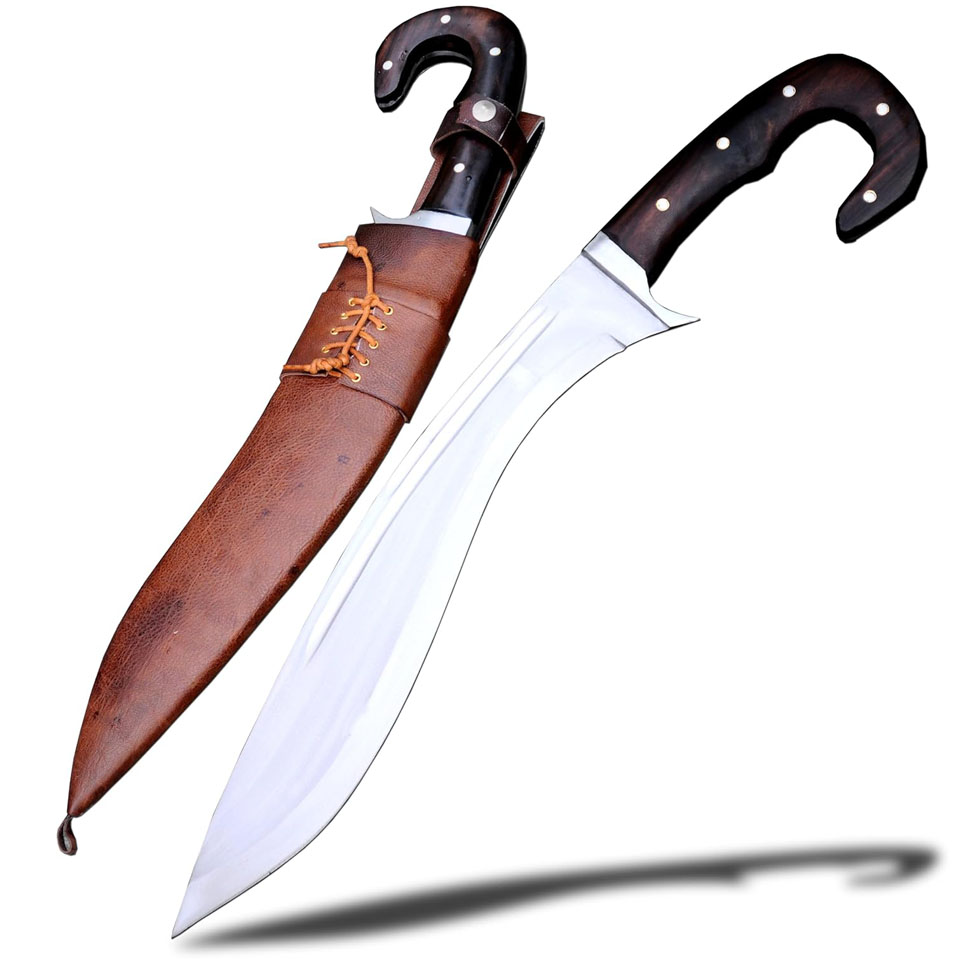
Every Kopis is individually crafted and balanced to achieve the same feel and functionality that made the original weapon legendary. With elegant curves, precise geometry, and traditional craftsmanship, these swords are designed for collectors, martial artists, and history enthusiasts who appreciate authentic hand-forged quality.
Everest Forge offers a complete collection of Kopis swords, featuring various interpretations of the ancient Greek design — from traditional replicas to modern functional adaptations. (A product grid of our Kopis collection will be added here soon.)
Want a Custom Kopis Forged for You?
Design your own unique Kopis with personalized blade length, handle materials, or engravings. Our artisans at Everest Forge can bring your vision to life through traditional hand forging.
Request Now
Why the Kopis Still Matters
The Kopis remains a timeless example of functional design. It bridges ancient warfare and modern craftsmanship, reminding us that the best tools are born from necessity and perfected by artistry. Whether displayed as a collector’s piece or wielded as a working sword, the Kopis continues to embody the balance of form and function that defines true mastery.
At Everest Forge, we take pride in reviving this legendary weapon — preserving its ancient spirit while reimagining it for today’s generation of enthusiasts and collectors.
FAQ
What is a Kopis sword?
The Kopis is an ancient Greek single-edged sword with a curved blade that widens toward the tip. It was designed for powerful slashing and chopping strikes, used by both cavalry and infantry.
How is the Kopis different from the Xiphos?
The Xiphos is straight and double-edged, suited for thrusting. The Kopis has a curved, single-edged blade optimized for cutting, especially in mounted combat.
Was the Kopis mainly used by cavalry?
Yes, Greek cavalry preferred the Kopis for its natural downward cutting motion, making it ideal for slashing enemies from horseback.
What inspired the Kopis design?
The Kopis may have evolved from earlier Near Eastern sickle-shaped weapons, blending Greek innovation with influences from Egypt and Persia.
What is the connection between the Kopis and the Kukri?
The Kopis inspired similar forward-curved blades like the Nepalese Kukri. Both share a weight-forward balance that enhances chopping power.
Does Everest Forge make functional Kopis swords?
Yes. Everest Forge hand-forges fully functional Kopis swords from 5160 spring steel, oil-tempered for toughness and cutting ability.
Can I order a custom Kopis from Everest Forge?
Yes, Everest Forge accepts custom orders for blade length, handle design, and finish. You can contact [email protected] or use the Custom Forge Request Page.
Is the Kopis suitable for collectors?
Absolutely. Each Everest Forge Kopis is handmade, unique, and ideal for collectors who appreciate authentic craftsmanship and historical accuracy.
How do I maintain a Kopis sword?
Keep the blade clean and lightly oiled, avoid moisture, and store it in a dry place. Do not keep it in the leather sheath for extended periods.
Is it legal to own a Kopis?
Ownership laws vary by country and region. Always check local regulations before purchasing or displaying any sword.