- Model: Roman Gladius Sword
- Product Code: MainzGladius24
- Location: Kathmandu,Nepal
Available Options
Mainz-Type Roman Gladius with Reinforced Thrusting Point
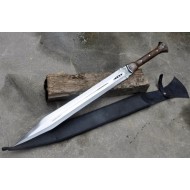
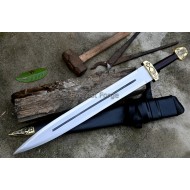
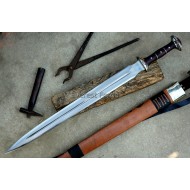
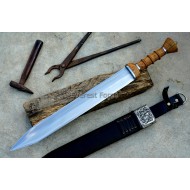
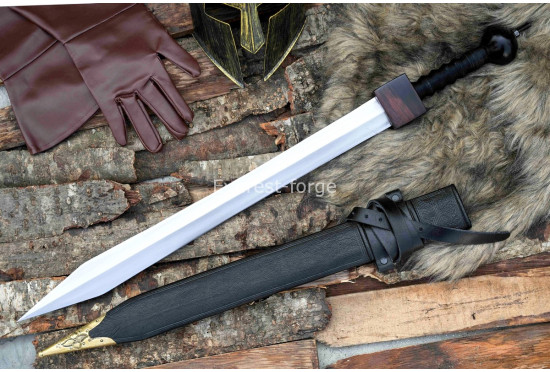
The Roman Mainz Gladius Sword is inspired by one of the earliest standardized gladius patterns carried by Roman legionaries during the late Roman Republic and early Imperial era. Built for disciplined close-quarters fighting, this sword reflects the Roman battlefield doctrine of tight formations, shield protection, and decisive thrusting attacks rather than wide slashing swings.
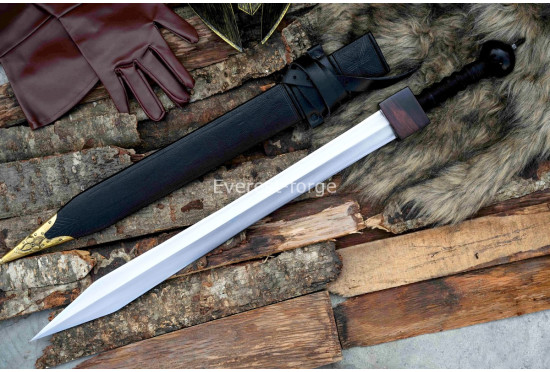
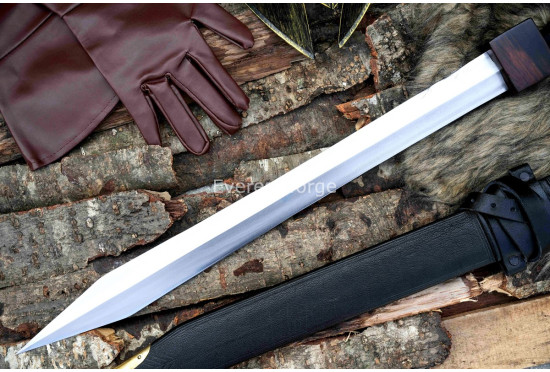
Hand forged by skilled craftsmen at Everest Forge, this gladius features the hallmark Mainz profile—a subtly waisted blade with a long, sharply tapering point. This geometry was favored for powerful penetration from behind the scutum (Roman shield), delivering controlled, armor-seeking thrusts while still allowing short cutting strikes at close range. The blade is forged from high carbon steel and is oil tempered for strength, resilience, and dependable edge stability.
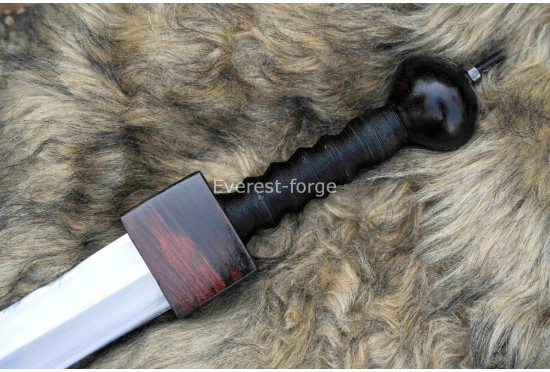
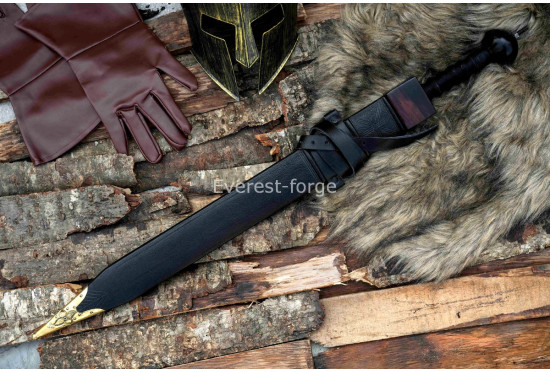
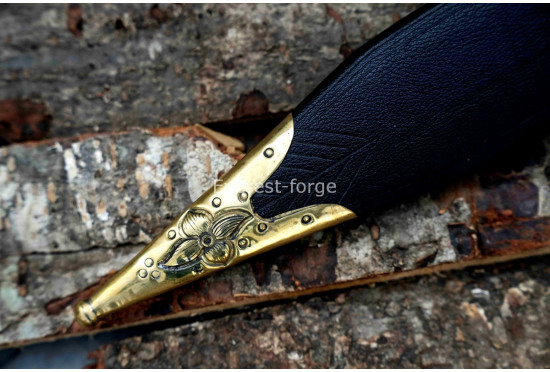
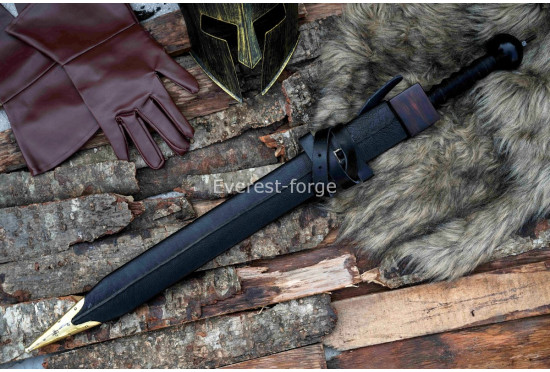
The sword is fitted with a rosewood handle shaped for secure grip and confident control. A wooden scabbard covered in leather is included, finished with a decorated chappe at the tip—an authentic historical detail often seen on Roman scabbards for durability and visual distinction.
Historical Background
The Mainz Gladius takes its modern name from discoveries near Mainz, Germany—ancient Mogontiacum, a major Roman military stronghold along the Rhine frontier. Widely used from the 1st century BC into the early 1st century AD, the Mainz pattern represents an iconic Roman infantry sword form during the transition from Republic-era warfare to the height of early Imperial power.
Unlike later Pompeii-type gladii with straighter edges and shorter points, the Mainz retained a more aggressive profile with a strong taper and reinforced tip. This design complemented Roman formation tactics, allowing legionaries to strike efficiently in the press of combat, targeting gaps in armor and maintaining formation integrity. Over time, the Mainz style gradually evolved into the Pompeii type, but it remains one of the most battle-focused and recognizable gladius designs of ancient Rome.
- Hand forged Roman Mainz-type gladius sword
- Waisted blade geometry with long reinforced thrusting point
- High carbon steel blade, oil tempered for durability
- Rosewood handle for secure grip and balance
- Leather-covered wooden scabbard with decorated chappe
- Historically inspired proportions for collectors and reenactors
Specifications
- Total Length: 33 inches
- Blade Length: 24 inches
- Handle Length: 11 inches
- Blade Width: 1.7 inches
- Total Weight (with scabbard/dap): 1.190 kg
- Weight (without scabbard): 0.810 kg
- Handle Material: Rosewood
- Tempering: Oil tempered
- Scabbard: Wooden scabbard covered in leather with decorated chappe
Usage
This sword is suitable for historical collection, display, reenactment, and controlled functional practice where permitted by local laws. Designed as a real forged sword, it should be owned and handled responsibly.
Note
Each sword is individually hand forged using traditional methods. Minor variations in finish, weight, wood grain, and leather details are natural characteristics of handcrafted swords and reflect genuine craftsmanship.
| Specification | |
| Blade: | 24 inches long Blade made from 5160 ,Carbon steel |
| Total Length: | 33 inches long in total |
| Handle: | 11 inches long handle Made from Rosewood |
| Weight: | 1100 Grams approx. |
| Note: | Each sword is individually hand forged using traditional methods. Minor variations in finish, weight, wood grain, and leather details are natural characteristics of handcrafted swords and reflect genuine craftsmanship. |