
Types of Swords – Exploring the Blades of Medieval Europe
The world of medieval European swords is rich with diversity — from elegant knightly blades to massive two-handed weapons of war. Each of these types of swords carries a legacy of artistry, combat skill, and cultural identity. Forged by blacksmiths who mixed fire, steel, and devotion, they symbolized power, faith, and honor throughout the Middle Ages.
Below, we explore the most legendary types of European swords — each representing a different era, purpose, and evolution of craftsmanship during the Age of Chivalry.
Arming Sword

The Arming Sword was the quintessential knight’s weapon during the High Middle Ages, used between the 11th and 14th centuries. It was light, single-handed, and paired with a shield, making it one of the most balanced types of swords ever created. Typically measuring 70–80 cm, its design emphasized speed and precision rather than brute force. Knights often carried it as a symbol of knighthood, receiving it during their dubbing ceremony. The blade represented divine justice — a knight’s sacred promise to protect the innocent and uphold chivalric honor.
Despite its simplicity, the arming sword’s geometry made it highly effective in both thrusting and cutting, suitable against mail and lightly armored opponents. It was the foundation from which nearly all later types of European swords evolved.
Longsword

The Longsword emerged as a response to the rise of heavier armor. Known for its double-edged blade and extended grip, it could be wielded with one or two hands. Among all types of medieval swords, the longsword became a masterpiece of versatility — capable of powerful cleaving strikes and precise thrusts. Used from the late 13th through the 16th century, it was the primary weapon in the art of European martial combat, documented in the German Fechtbuch (fighting manuals).
The longsword symbolized discipline and technique. Masters like Johannes Liechtenauer described it as a weapon of measure and control, not aggression. Its perfect balance between offense and defense made it a knight’s ideal battlefield and dueling sword.
Claymore Sword

The Scottish Claymore was a two-handed sword that embodied Highland valor and freedom. Meaning “great sword” in Gaelic, it was among the largest types of swords used in medieval Europe. Stretching over 140 cm long, it featured a distinctive downward-sloped crossguard and broad blade. Highland warriors wielded the Claymore in battles for Scotland’s independence, often as a symbol of defiance against English rule.
Its size demanded both strength and skill. The Claymore was capable of sweeping cuts that could disarm multiple foes in a single motion. Beyond battle, it came to represent the fierce heart of the Scottish clans — a weapon of heritage as much as war.
Broadsword
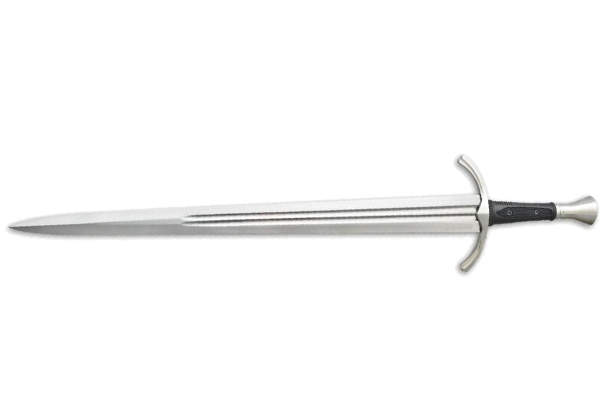
The Broadsword is one of the most misunderstood types of European swords. Historically, it referred to a wide, double-edged cutting sword, later evolving into the basket-hilted forms of the Renaissance and early modern period. The medieval version excelled at slashing through lightly armored enemies, while the later broadsword protected the hand with an ornate guard.
It represented the transition between medieval battlefields and the age of dueling. Balanced and elegant, the broadsword combined power with protection — a weapon designed for both offense and defense. Its wide blade and defensive hilt made it a favorite among cavalry and officers well into the 18th century.
Falchion Sword
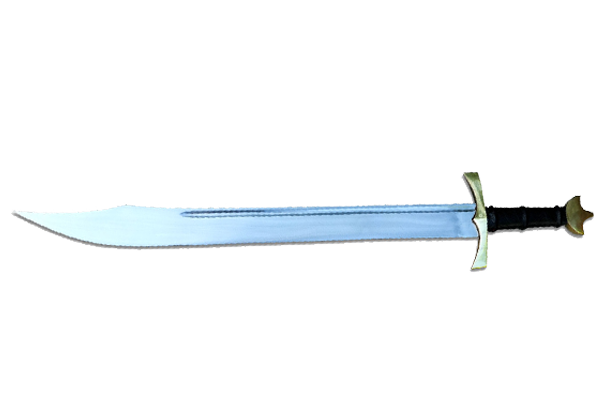
The Falchion was Europe’s answer to curved Eastern blades like the scimitar. As one of the few single-edged types of swords in Europe, it combined the weight and chopping power of an axe with the precision of a sword. The blade broadened near the tip, giving it immense cutting force ideal for cleaving armor and bone. Favored by soldiers and knights alike, it became a weapon of practicality rather than prestige.
Some Falchions were plain tools of war, while others were ornate and inscribed for noble use. This diversity made it one of the most versatile types of medieval swords, bridging the gap between utility and craftsmanship.
Estoc Sword
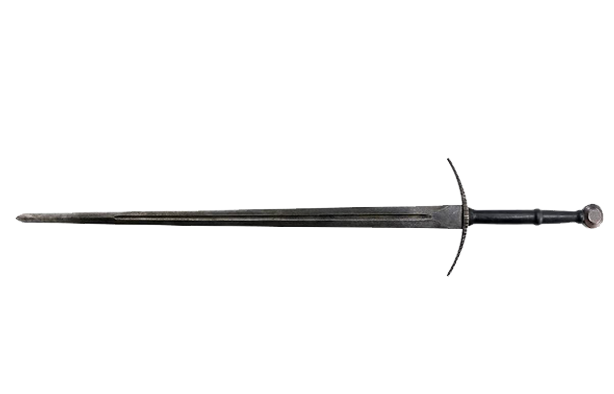
The Estoc was born in an era of full plate armor, when slashing became ineffective. It was one of the few types of swords without a sharpened edge — instead, it featured a long, stiff, triangular or square-section blade made purely for thrusting. Knights used it to target weak points in an opponent’s armor, such as under the armpit or through the visor.
The Estoc required great control and precision, often used with two hands or on horseback. It symbolized the scientific evolution of combat — where precision, leverage, and armor penetration replaced brute strength.
Executioner’s Sword
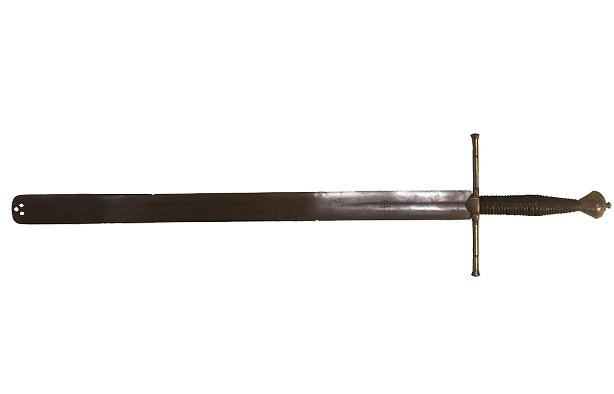
The Executioner’s Sword stands apart from all other types of medieval swords for its ceremonial use. It was not a weapon of war but of judgment. Broad, double-edged, and blunt-tipped, it was designed for beheadings rather than battle. Executioners often carried these blades with reverence, inscribed with prayers such as “Lord, have mercy upon my soul.”
Despite its grim purpose, the Executioner’s Sword was often beautifully crafted — polished, balanced, and engraved. In a sense, it symbolized the sacred duty of justice in a world ruled by divine law and moral consequence.
Flamberge Sword

The Flamberge, or “flame-bladed sword,” was one of the most visually striking types of swords ever made. Its wavy, flame-like blade wasn’t merely decorative — it caused vibrations upon impact that made parrying difficult. It could also tear through armor padding more efficiently than straight blades.
Used primarily by Renaissance knights and elite soldiers, the Flamberge was a symbol of prestige. Its unusual blade design represented both power and artistic mastery, earning it a place among the great showpieces of European armories.
Zweihander Sword
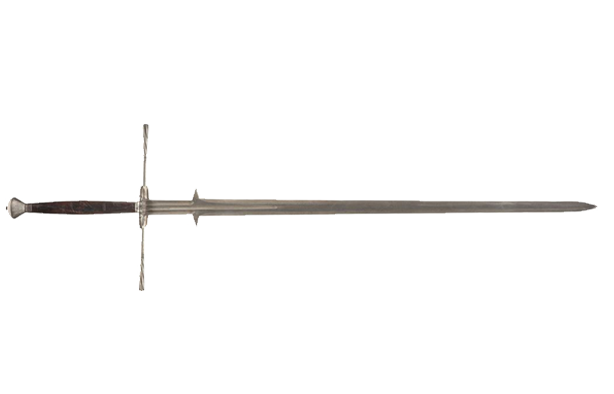
The Zweihander (“two-hander”) was the mightiest of all types of European swords. Wielded by the German and Swiss mercenaries known as the Landsknechts, it could exceed 180 cm in length. Designed to break enemy pike formations, it demanded immense strength and skill. Only the most experienced warriors were trusted to wield it — often earning double pay for their valor.
The Zweihander’s massive reach allowed it to dominate in open combat. Despite its size, it was surprisingly balanced and could sweep through multiple opponents in a single swing. It became a weapon of reputation, strength, and fearlessness.
Rapier Sword
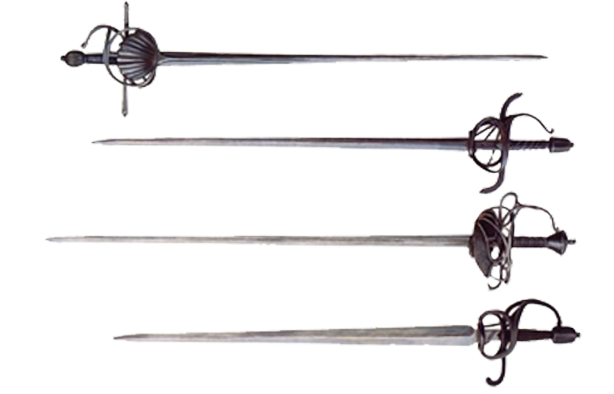
The Rapier marked a new era in sword design. Unlike the heavy knightly weapons before it, the rapier was slender, elegant, and built for precision thrusting. Among all types of swords, it best represented the shift from battlefield combat to dueling. Nobles and gentlemen of the Renaissance wore rapiers as a sign of education, culture, and status.
Its intricate hilt provided protection and style, while its long, narrow blade rewarded accuracy over brute strength. Fencing schools across Europe turned the rapier into a science of motion and timing — transforming swordsmanship into art.
Greatsword
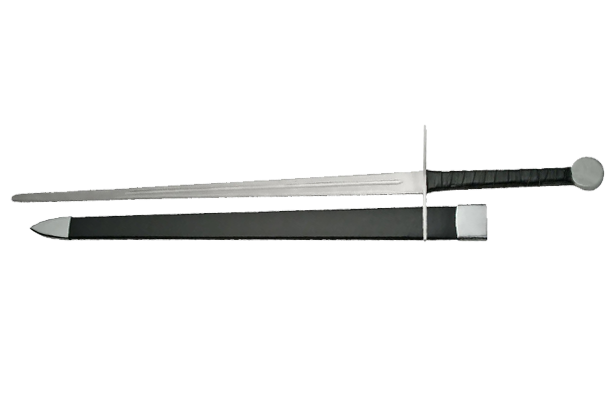
The Greatsword was a large two-handed weapon that balanced the reach of the Zweihander with the agility of the longsword. As one of the grandest types of medieval swords, it could deliver wide, powerful cuts and counter cavalry attacks. Knights and guards used it to hold formations and defend against mounted assaults.
Its broad, long blade and extended handle allowed for impressive leverage, making it both intimidating and practical. The Greatsword symbolized strength and control — a weapon that dominated the late-medieval battlefield.
Bastard Sword (Hand-and-a-Half Sword)
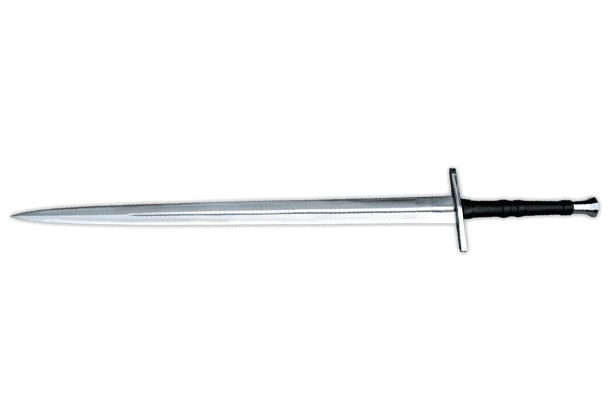
The Bastard Sword, also known as the “hand-and-a-half sword,” was one of the most flexible types of swords. It bridged the gap between the arming sword and the longsword, designed for both one- and two-handed use. This adaptability made it popular among knights who needed both speed and striking power.
Its name “bastard” came from its mixed characteristics — neither fully one type nor the other. With a long grip and versatile blade, it became the perfect knight’s companion during the 15th century, equally effective in mounted and ground combat.
Spatha

The Spatha was the Roman precursor to nearly all later types of European swords. Used by Roman cavalry, it featured a long, straight double-edged blade ideal for thrusting and slashing. After the fall of Rome, its design spread throughout Europe, influencing early medieval swords such as the Viking and Carolingian blades.
The Spatha represents the bridge between ancient and medieval warfare — a legacy of Rome’s military innovation that laid the foundation for the swords of knights and kings.
Viking Sword
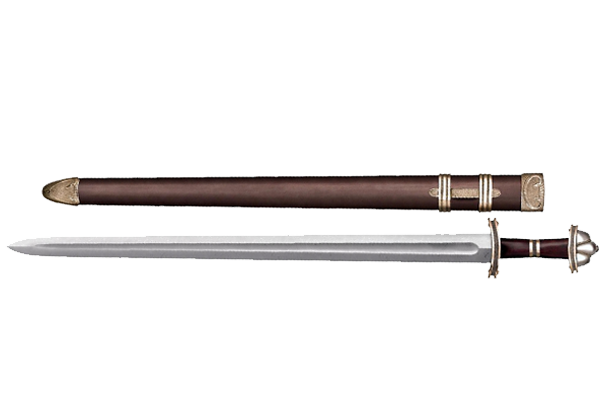
The Viking Sword evolved from the Spatha and became one of the earliest types of medieval swords. Used from the 8th to the 11th centuries, it was a broad, double-edged blade optimized for cutting. Its short guard, long fuller, and distinctive lobed pommel made it both practical and elegant.
Many Viking swords were named and believed to be blessed with spiritual power. Passed down through generations, they symbolized honor, lineage, and warrior pride — a tradition that inspired later European chivalry.
Gladius (Ancient Rome)
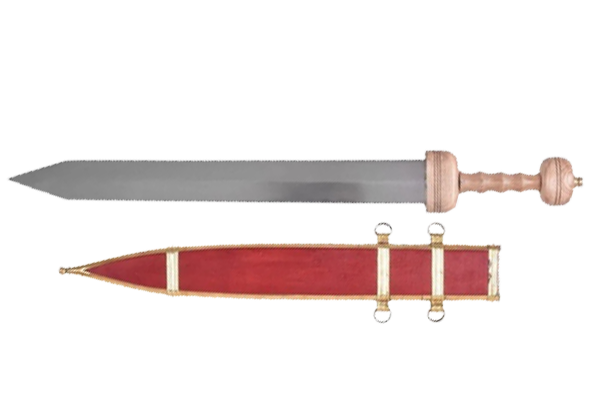
The Gladius is the iconic short sword of Roman legionaries and a direct ancestor of many medieval blades. Its compact, double-edged design (about 60 cm) excelled at thrusts from behind a shield wall, enabling tight-formation combat and disciplined advances.
As Rome’s battlefield standard, the Gladius established core European sword principles: strong midrib, agile point, and reliable balance — foundations later refined in medieval arming swords and early knightly types.
Carolingian Sword
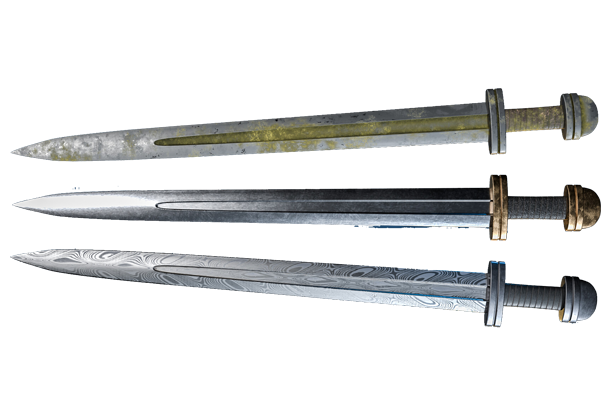
The Carolingian Sword (8th–10th c.) bridges late antiquity and the true medieval form. Broad, double-edged, with a long fuller and short crossguard, it delivered powerful cuts while retaining a capable thrust. Elite examples bore inlaid inscriptions such as “+ULFBERHT+.”
This pattern set the template for early medieval European swords, spreading through trade and gift-exchange and influencing Viking and Romanesque-era weapons across the continent.
Oakeshott Type XII Sword
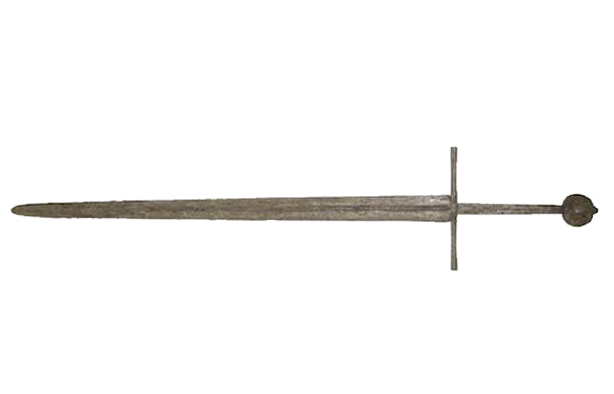
Among knightly blades, the Oakeshott Type XII (13th c.) is a hallmark of balance. A gently tapering, double-edged blade with a pronounced fuller optimized both cut and thrust, ideal against mail and emerging plate components.
Its cruciform hilt and measured proportions epitomize the “classic” knight’s sword — versatile in the lists and on campaign, and a cornerstone in the taxonomy of medieval European swords.
Cut-and-Thrust Sword (Renaissance)
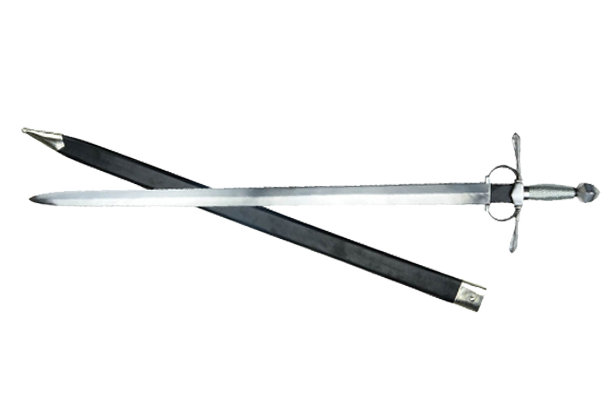
The Cut-and-Thrust Sword spans the shift from armored warfare to civilian combat. Slightly narrower than high-medieval cutters yet broader than rapiers, it paired a protective hilt with a blade capable of decisive cuts and accurate thrusts.
Favored by soldiers and townsmen, it reflects evolving fencing doctrines where timing, measure, and point control joined traditional hewing power.
Messers (Grosses Messer & Langes Messer)
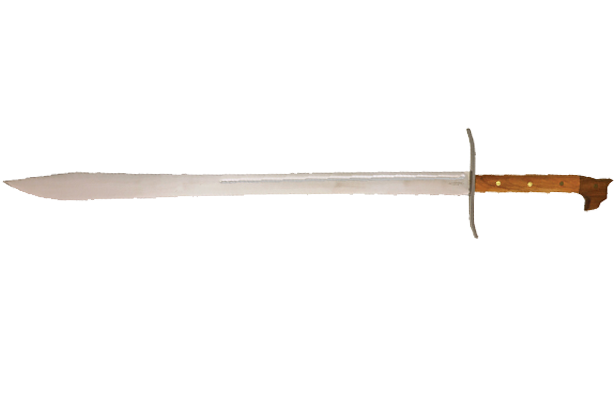
Messers are single-edged sword-knives of 15th-century Central Europe, built with slab grips and a side hand-guard (nagel). The Grosses Messer and Langes Messer offered formidable cutting with accessible construction.
Celebrated in German fight books, their clipped points and rigid spines made them lethal yet economical — a citizen’s answer to noble sidearms.
Side Sword
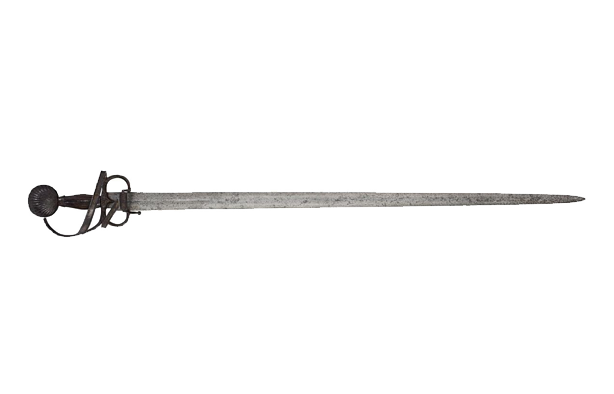
The Side Sword (16th c.) was a daily-wear military and civilian weapon that prefigured the rapier. Its complex hilt improved hand protection while the blade retained credible cutting ability alongside a keen thrust.
Appearing throughout Italian and Iberian schools, it anchors the transition from battlefield blades to refined, school-taught fencing.
Schiavona (Venetian Basket-Hilt)
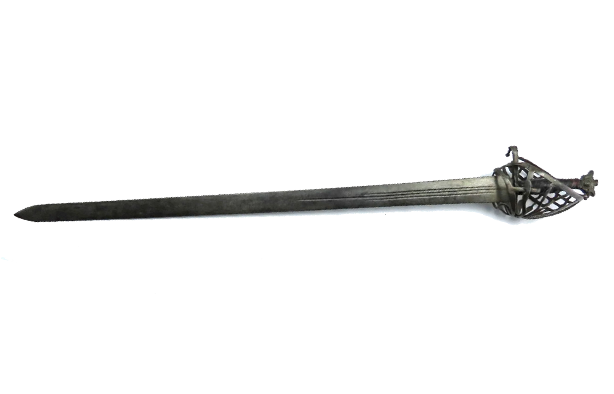
The Schiavona is a late-medieval to early-modern basket-hilt sword associated with Venetian mercenaries. Its lattice guard and cat-head pommel provide excellent hand defense and lively handling.
Equally suited to cavalry and guard duty, it blends robust military practicality with the elegance of North Italian craftsmanship.
Messer–Falchion Hybrids (Central Europe)
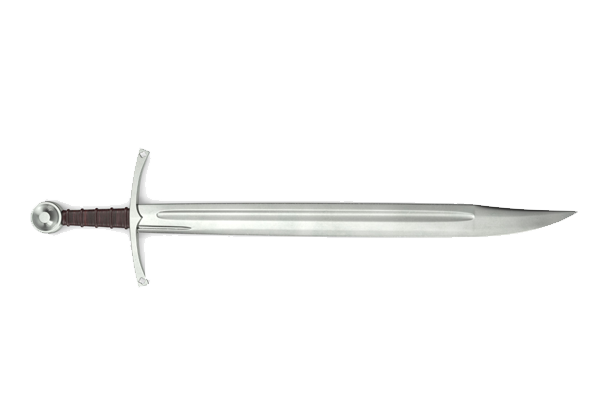
Messer–Falchion hybrids combine single-edge profiles, forward mass, and knife-style hilts to maximize cutting against unarmored targets while keeping costs down. Many exhibit clipped or broadened tips for enhanced draw-cuts.
These regional solutions show smiths adapting to changing armor and urban self-defense needs — pragmatic swords tuned for real conditions.
Baselard (Swiss/Upper Rhine)
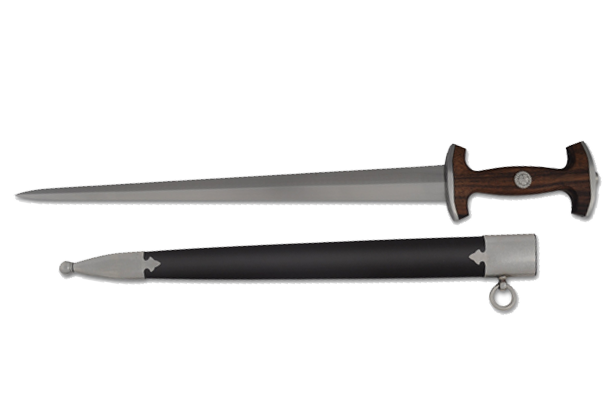
The Baselard is a large dagger-sword with an I-shaped hilt, carried by burghers and soldiers from the 14th century. Long examples blur into short swords, offering quick draws in crowded streets and tight ranks.
Its popularity across guilds and militias made it a ubiquitous sidearm — compact, sturdy, and feared at close range.
Cinquedea (Italian City-States)
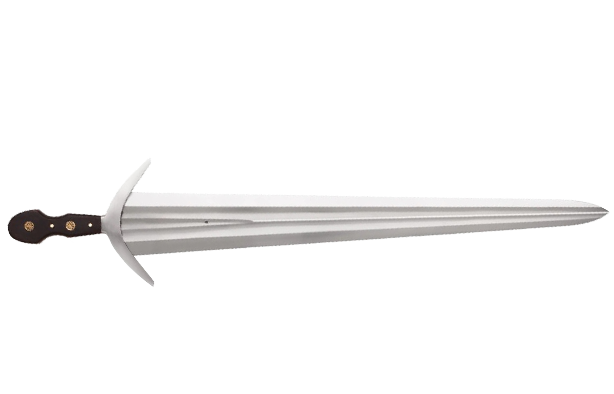
The Cinquedea (“five fingers,” for its blade width at the guard) is a Renaissance short sword prized in Italian cities. Broad and fluted, it specialized in powerful close cuts and authoritative thrusts.
Often richly decorated, it signaled status while remaining a practical last-ditch defender in narrow lanes and palace halls.
Katzbalger (Landsknecht Short Sword)
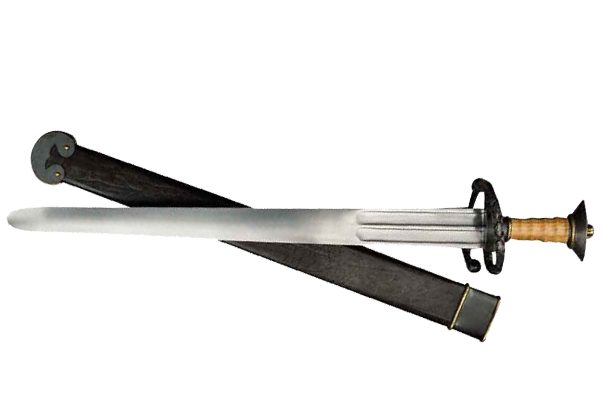
The Katzbalger is the stout, short sidearm of Landsknecht mercenaries. With an S-shaped or figure-eight guard and a broad, resilient blade, it excelled in melee once pike lines collapsed.
Compact, quick, and rugged, it embodied the swagger and battlefield realism of early-modern German infantry.
The Spirit of Medieval Swordmaking
The diverse types of swords that shaped Europe reveal more than changes in warfare — they show the evolution of craftsmanship, culture, and courage. From the short and practical arming sword to the grand Zweihander, each weapon carried the spirit of its maker and its master.
At Everest Forge, we continue this tradition. Every hand-forged blade we create pays homage to centuries of European swordmaking. The sword remains eternal — a union of strength, skill, and the human spirit.
Request a Custom Medieval or European Sword
If you admire iconic medieval weapons such as the Longsword, Arming Sword, Claymore, or Rapier, our smiths at Everest Forge can create a custom-forged blade inspired by Europe’s Age of Chivalry. Whether you want a historically accurate knight’s sword or a personalized interpretation of a European classic, we hand-forge each piece with the same dedication to balance, strength, and craftsmanship that defined medieval swordmaking.