Xiphos vs Gladius: Understanding Historical Swords
The history of metallic blades first emerged in 3300 BCE. The development and transformation of these blades would occur and gradually unfold over time. With the changing of civilizations, various sharpened tools were now used for wars and battles. Different weapons have captured the passes of time, like Xiphos and Gladius. These two short swords have now stood as the symbol of civilizations and warriors around the globe.
The Xiphos has been the legacy of the Greeks. With the evolution from the Iron Age, the Xiphos has been one of the most effective tools during war. The Gladius, on the other hand, has evolved from Rome. It is one of the first primitive swords used during the earliest period.
Xiphos is known to be the companion of Greek hoplites. It is a leaf-shaped blade that has been trusted for years. It is known for its cutting and thrusting power. During a battlefield, the xiphos gives the soldiers versatility. The gladius has been the hallmark of Roman military dominance. It has perfected the art of war. With its short, double-edged blade, it is known for its efficiency. It has a long, straight blade with a tapered point. The Gladius has contributed to Rome's rise as a superpower. It has earned its place in history as one of the most influential battlefield tools.

Both Xiphos and Gladius differ in design and in their use. However, what makes them similar is their legacy, which has shaped military history. Both weapons have evolved and changed to suit the needs of culture and tactics. As of today, both of the weapons have stayed a part of the favorites of sword collectors, martial artists, and lovers of historical swords. Xiphos and Gladius remain a timeless connection to an era of ancient courage and strategy. At Everest Forge, this legacy has been preserved and respected. They are also known for their functional blades and expertly designed replicas. Its Xiphos sword and Gladius sword are hand-forged with historical accuracy. It is given both an ancient and modern durability. This ensures collectors and enthusiasts experience the use of this legendary weapon.
The Xiphos Sword
The xiphos sword is one of the most esteemed and historical swords. It is an Ancient Greek legacy thanks to its efficiency and capabilities. In the combat fields of Ancient Greece, soldiers relied on the leaf-structured structure of the Xiphos sword to fight their enemies. It was generally used as a secondary weapon.
History: origin and evolution
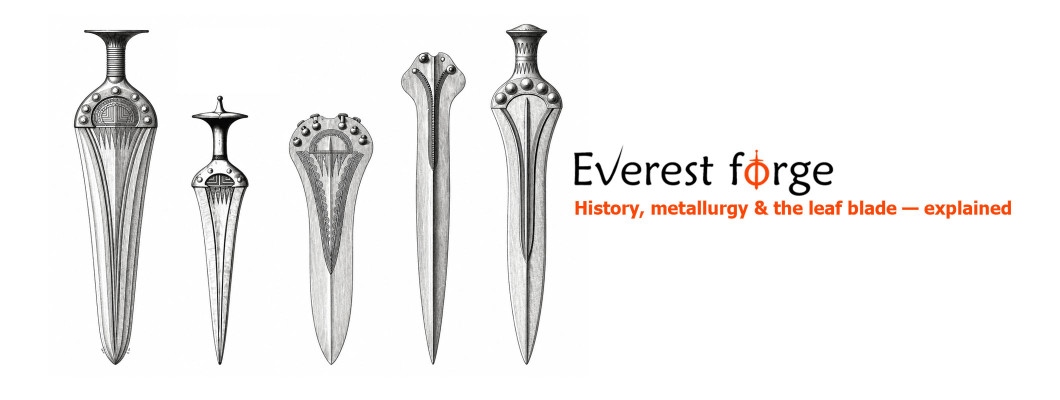
The earliest origins of the Xiphos date back to the Bronze Age. Historians can find the earliest finds of Xiphos in Greece's Classical period in the form of a leaf shape. From the 5th BCE, it slowly evolved into a more polished functional survival sword for war. Alexander the Great used to carry different variations of the Xiphos in war. The Xiphos sword has influenced many other tools developed in Greece, such as the Kopis sword. The Kopis is a single-edged sword and a forward-cutting sword. Today, the Xiphos sword still holds a title for control, balance, and versatility. Xiphos swords can also be traced by archaeological data in Greece and the surrounding areas.
Structure of the Xiphos sword
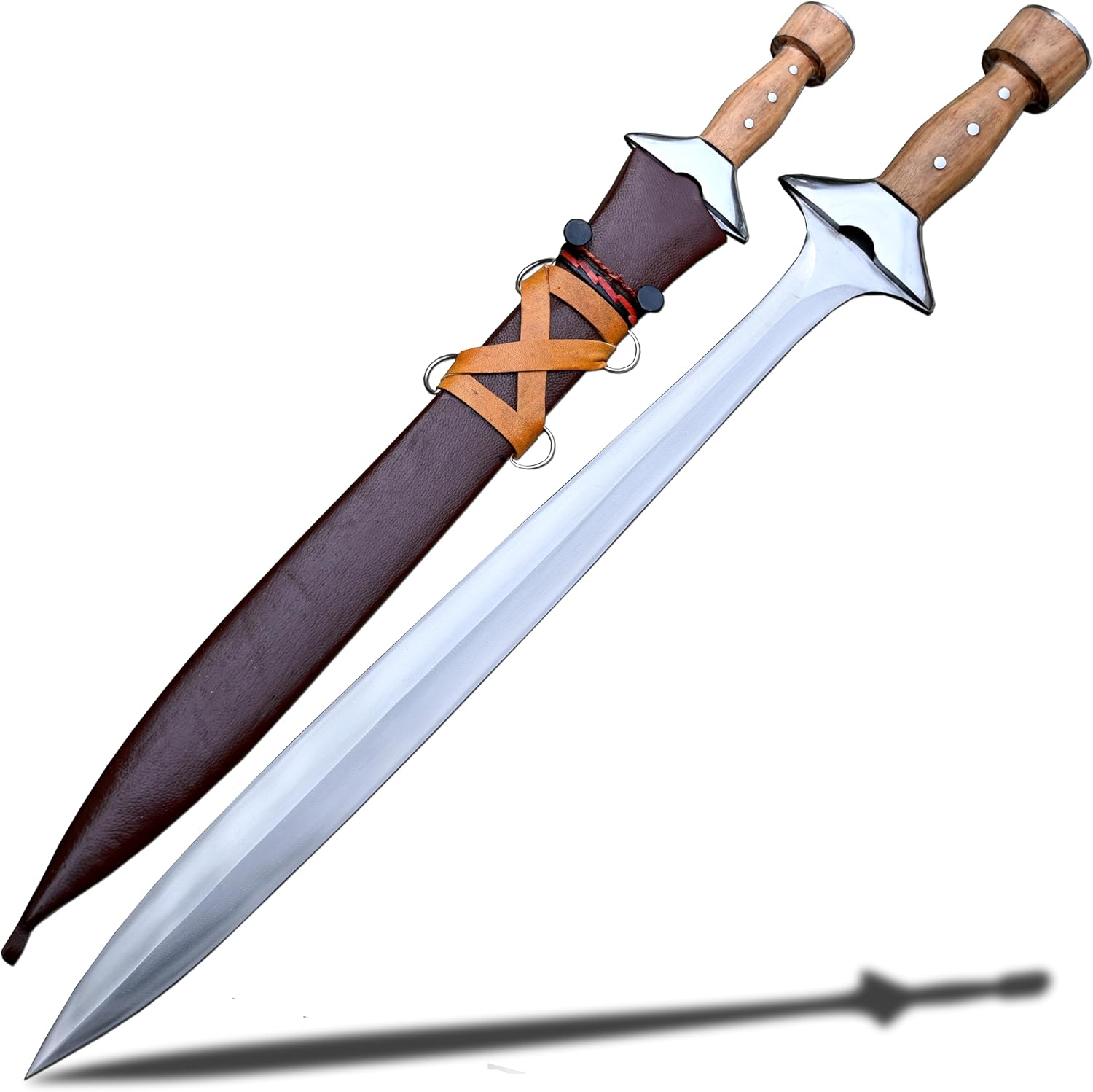
The Xiphos is a short and double-edged sword. It ranges in length from 18 to 24 inches. The blade is shaped like a leaf, flaring outward at the midpoint and narrowing to a sharp point. This unique geometry allows for tactical flexibility. The wide area of the mid-blade could slash effectively, that provides a wounding function. Similarly, a narrowed tip could stab effectively. The short length ensured a light blade weight, which, when combined with quickness, allowed for short and fast strikes, especially when fighting in close-quarter formations. The Xiphos blade was not intended to be as heavy as battlefield swords, but rather to swing as a weapon with slight force, quickly, and to be adaptable.
Uses of the Xiphos sword
While the spear was highly used as a tactical weapon on the Greek battlefield, the Xiphos always became essential when the fighting turned into melee. The warriors used it for stabbing and slashing motions. Its thrusting ability made it a deadly weapon. It was used to easily thrust through the armor of the opponents.
The Xiphos was more than a sword that was only for use in war,it also had cultural meaning. In Greek art, the heroes and warriors are typically displayed with the sword. Given its actual use and representation, the Xiphos became part of Greek martial culture for many centuries.
Now in the possession of collectors and historians, the Greek Xiphos is universally accepted as a founding component of ancient weaponry. The Xiphos is one of the most recognized classical swords. Today, hand-forged replicas bring their living legacy back to life, maintaining the tradition for one's enjoyment, and ensuring its legacy remains in the hands of someone who appreciates workmanship and practice, rather than in the pages of a history book.
The Gladius Sword
Very few ancient swords have had the historical impact of the Roman Gladius. The Gladius was used as the principal weapon in wars and is a representation of Rome's emergence as a world power. The Gladius was a practical and deadly weapon. It was used in conjunction with Roman tactics and stood firmly as one of the most symbolic weapons of the Roman warriors.

History: Origins and Evolution
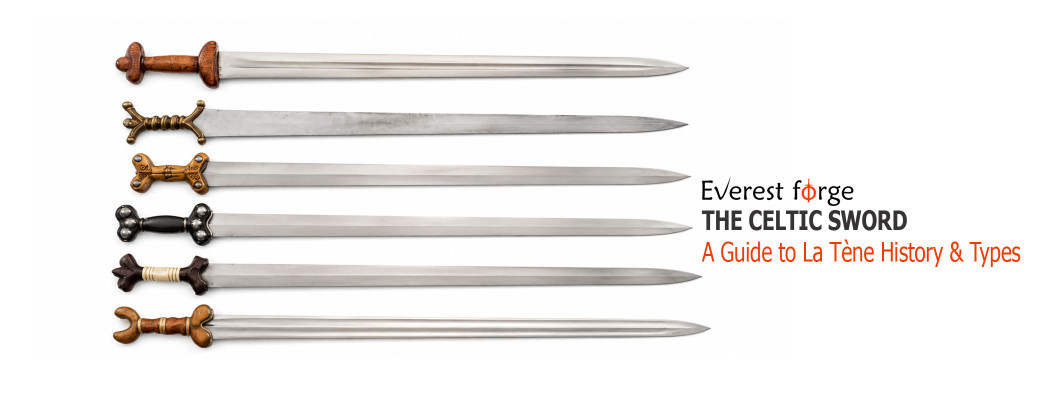
Gladius is a Latin word. It means sword. Over time, it is referred to as a specific type of short double-edged weapon. Early designs of the Gladius were influenced by Celtiberian blades. This blade was encountered during Rome's war in Iberia around the 3rd century BCE.
Romans quickly recognized the efficiency and effectiveness of the blade. With time, armies started using the Gladius. Now, the Gladius sword has evolved into different variants. The most popular are the Mainz Gladius and the Fulham Gladius. There have been a few changes in length, width, and tip shape.
Structure of Gladius
The blade of a Gladius typically ranges from 18 to 24 inches. It is compact and has a tight formation. The blade is straight and double-edged. The end of the blade has a sharp point. It is designed primarily for thrusting into unarmored gaps. The pointed tip allowed Roman soldiers to exploit weaknesses in enemy defense. It is not just a stabbing weapon but also effective for slashing. Lightweight build of the sword made it easy to handle and reduced fatigue. The handle part of the Gladius is unique. It has a large, rounded pommel without a handguard.
Role in Roman Warfare
The legacy of the Gladius started in Roman warfare. It was mainly a tactical weapon. The warriors in Greece relied on long spears; the people of Rome emphasized flexibility and discipline. The Gladius was perfect to match the unique way of fighting of Roman warriors. It worked perfectly with a large Roman shield, the scutum. The different style of fighting made it different from any other Roman weapons. It allowed for both defense and offense at the same time. The Gladius made it possible to strike quickly and repeatedly without exposing the soldier. The Warriors could easily have control over the thrusts and could easily bring down enemies with their brutal efficiency. With the use of the Gladius, the combat methods were combined with the discipline of the legions. This made the Roman army unbeatable for centuries. The gladius and its use in the tactics of the Roman legion made it a symbol of discipline and strength. To carry a gladius represents the fearlessness of the Roman Empire.
Xiphos vs Gladius – Differences in design and combat
Xiphos is a weapon of the ancient Greeks. The gladius originated in ancient Rome. The Xiphos was the main weapon of hoplites, whereas legionaries heavily used the Gladius. In the comparison, both the Gladius and the Xiphos remain significant as two crucial weapons of ancient times that carry deep history and value.

1. Blade length, shape, and weight
Both Gladius and Xiphos are short swords. Generally, the Xiphos is around 18-24 inches long. It also has a recognizable leaf-shaped pattern. The blade is wide at the center and comes with a pointed tip. Because of this, it can be used both for cutting and piercing. The Xiphos is also not heavy and is nicely balanced. The Roman Gladius is a straight double-edged blade. It is around 18-24 inches long. The Gladius has a narrow, constant shape. It has a straight formation throughout the blade and has a sharp tip at the end of the blade. This design makes it less flexible but perfect for thrust. The Xiphos is light and well-balanced. The gladius is slightly heavy but still compact.
2. Use in Fighting Style
The Xiphos matched the dynamites of Greek hoplites. In the Phalanx formation, the soldiers first relied on long spears. If the long spears were damaged, the warriors used Xiphos for short and fast strikes. The sword was versatile and fitting for warriors. It had both agility and adaptability. The gladius, on the other hand, was the main weapon of the Roman legionary. The Roman tactics highly relied on the gladius. Soldiers fought close together, protecting themselves behind overlapping shells. With this, they thrust with a gladius through the gaps. The narrow point of the gladius made it easier to stab into the vulnerable areas. The gladius was less about flexibility but more about precision and control.
3. Cultural and Tactical Influences
Xiphos was mainly used as a secondary weapon. It has been a part of Greek Hellenistic weapons. It reflects a warrior ethos centered on individual bravery. It symbolizes heroism as well as practicality. It gives a balance between slashing and stabbing. The Roman gladius was born out of a culture that valued discipline and collective power. With the gladius, the Roman armies emphasized coordinated teamwork. The gladius was a perfect weapon for group collectivity during war. It was a tool of discipline and Roman order.
Real World Inspirations and Historical Significance
The Xiphos and the Gladius stand out as historical swords. Both have left a lasting mark on world history as well as the evolution of different weapons. Both Gladius and Xiphos belonged to the armies of ancient Greece and the disciplined legions of Rome. Their roles on the battlefield highlight their absolute utility and use in shaping civilization. The Greek Xiphos was the classical sword. It was used in conjunction with hoplites. Even though it was shortened in size, the warriors used it to slash and thrust. The dual-purpose design gave Greek soldiers flexibility while using the sword. The Xiphos complemented the phalanx formation. It was a crucial battlefield weapon that supported Greece's rise.
The Roman Gladius was created with more specialization. With its short and double-edged blade, it was perfect for thrusting attacks. Roman legionaries fighting in organized ranks used the Gladius for precise strikes. This made Gladius the centerpiece of Rome's military weapon. The Gladius embodied discipline and unity. It became the symbol of Roman military efficiency. It helped to establish Rome as the dominant power of the Mediterranean world.
Beyond their use, both swords have deeply influenced the history of the sword. The Xiphos sword is an example of a short sword. It is used for both cutting and thrusting. This paved the way for similar designs in later battlefield weapons. The Gladius inspired variations such as the Roman Spatha. It later evolved into longer medieval swords. The idea of balance became crucial during the Middle Ages. By the Renaissance, swordsmiths experimented with blades. They designed blades for speed, precision, and dwelling.
Many blades were focused on the Xiphos' versatility, and Gladius emphasized thrusting efficiency. In this way, both swords left a huge impact on European weapon development for centuries. The historical significance of both Gladius and Xiphos remains great. They reflect the cultural and tactical needs of societies and civilizations. The Xiphos represented the independent spirit of Greek cities and their reliance on soldiers. They are the reminders that battlefield weapons are not just for war and are the symbols of values and strategies. Both the Gladius and the Xiphos helped to define the civilizations and have deeply influenced the evolution of warfare.
Collecting Xiphos and Gladius Swords, Things to Look for
Many modern enthusiasts and sword collectors are often drawn to Xiphos and Gladius. Xiphos and Gladius have a rich history and distinctive design. These swords are not just battlefield relics. They are the historical swords that capture the artistry and military traditions of two great civilizations. There are many factors that one must look for while collecting Xiphos and gladius swords.
1. The appeal of ancient swords for collectors: Xiphos and Gladius are deeply rooted with ancient civilization. Both the sword holds the historical significance. A faithful replica of this hand-forged sword is more than an aesthetic pursuit. It is a way to preserve and honor history. Many collectors use them as a display piece, while others prefer them as a functional swords.
2. Authentic design and craftsmanship: The authenticity of a real sword or a replica is essential when buying a sword. A quality Xiphos sword represents its signature double-edged, tapered leaf-shaped blade. A Gladius will have a short, tapered blade. Paying attention to accuracy in construction is important because you want the piece to reflect the characteristics of classical swords.
3. Materials and constructions: The ancient Gladius and Xiphos were made of iron and bronze. Now, one can easily find the best replicas on the market. The replicas are made from high-carbon steel. Some lower replicas use stainless steel. Both types of steel may look appealing, but the stainless steel lacks the structural strength. Handles are constructed from authentic materials such as wood, horn, or bone. It also has metal fittings that mirror ancient design.
4. Functional swords versus decorative replicas: While collecting Gladius or Xiphos, one must look at whether they want a functional sword or a decorative piece. A decorative piece has blunt edges and welded tangs. Functional hand-forged swords have full tangs and sharp edges.
5. Common pitfalls and buyer awareness: There are many weapon sellers on the market. Mass-produced versions may lack design accuracy, weight distribution, or quality of the sword. They may have mis-levels. Some sellers present generic swords as Xiphos or Gladius replicas. They might lack the defining features. The collector can't just sell the sword as it is. Some sellers present generic swords as Xiphos or Gladius replicas. They might lack the defining features. Collectors should research the maker, check reviews, and verify that the sword is built according to the standards.
Best Xiphos and Gladius Collection at Everest Forge
Everest Forge stands out for its passionate and functional collection of historical swords. It has the finest collection available today. Each blade is hand-forged and crafted with premium materials. The designs are made with a connection to the original designs of the Greek hoplites and Roman legionaries.
Best Xiphos Sword at Everest Forge
The Ancient Greek Xiphos Sword is known for its leaf-shaped design and double-edged sharpness. It has a perfect balance between being a functional battlefield sword and an impressive collector's piece. This sword is designed to be used with proper weight balance and a full tang for durability. It has elegant detailing, which enhances its visual appeal. It is a great choice for anyone seeking a historically accurate piece, which serves as a collector's item and a weapon capable of real use.
Best Gladius at Everest Forge
Everest Forge Force offers various variations of the Roman Gladius. Each sword is carefully forged to mirror archaeological finds and historical references.
-
Römisches Fulham Gladius
It is known for its sleek design. This gladius reflects the style used by Roman soldiers during the height of the Empire. It has a sharp taper and a lightweight build. This makes it ideal for thrusting, just as the legions would have used in formation.
-
Republican Delos Gladius
This piece reflets early Republican designs. It gives collectors a chance to own a sword from Rome's formative years. It has a broad blade and a classic wooden grip. This highlights both practicality and elegance.
-
Eagle Gladius Sword
Eagle Gladius Sword is adorned with symbolic detailing. The Eagle Gladius celebrates Rome's military and imperial pride. It is as much a ceremonial piece as it is a functional historical sword.
-
24-Inch Blade Gladius Sword
The 24-Inch Blade Gladius Sword is a long variant gladius sword. This Gladius offers a distinctive approach while remaining faithful to Roman battlefield standards. Its extended reach makes it both collectible and practical for training.
-
Customized Roman Gladius Sword
Everest Forge offers a customizable Gladius for those who would like something a little more personal. While collectors and martial artists will want their sword to be a little different, the finish, engravings, and grip materials will allow you to make it your own.
Practical use of Xiphos and Gladius
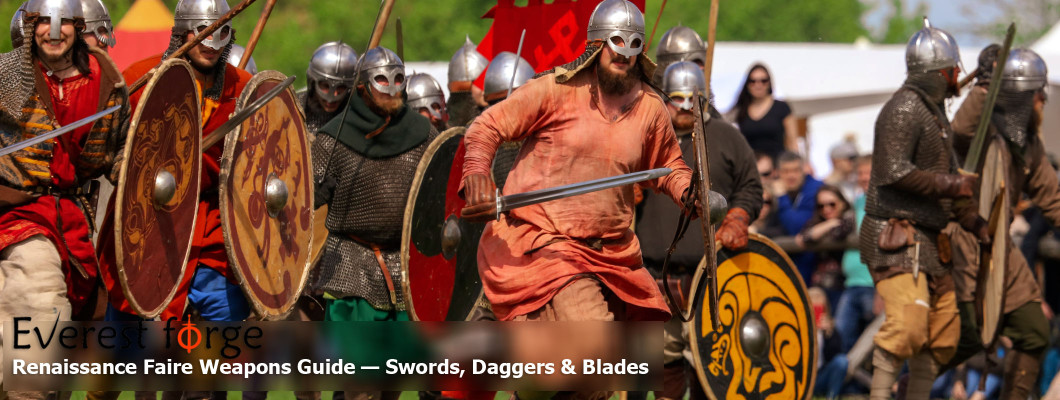
A hand-forged sword, like an Xiphos or Gladius, is not just a collector's piece. It is a blade that can be used for practical and functional utility. These blades are used for training, re-enactments, or are displayed proudly as a part of a collection.
Using Swords in Historical Martial Arts
Xiphos and Gladius are used in martial arts. These weapons are perfect for learning combat, like Greek hoplite fighting or Roman legion drills. The Greek Xiphos is flexible. With this, one can learn slashing and stabbing in combat practice. Roman Gladius is excellent for close formation drills. Similarly, it can be used in reenactments and in role play. Since they are forged like real weapons, they provide balance and handling similar to original battlefield replicas. This makes them perfect tools for anyone wanting to connect with history through martial arts.
Display piece for Collectors
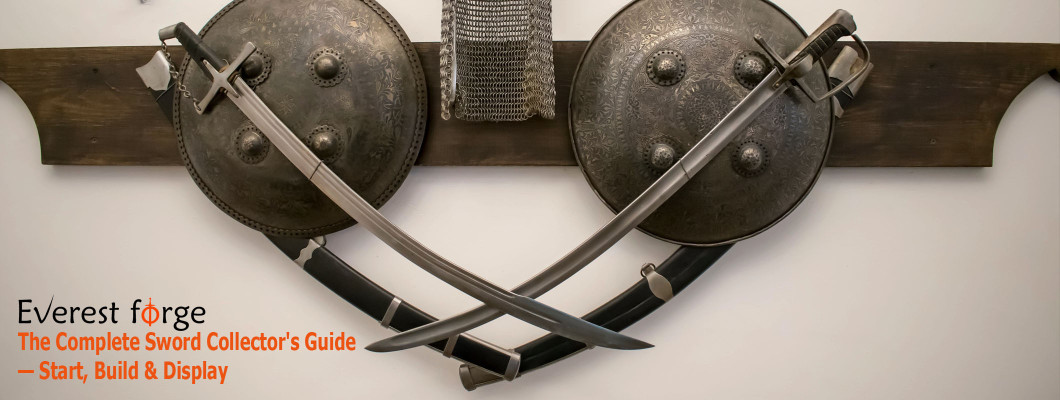
Xiphos and Gladius remain the most visually appealing weapons. The beauty of the sword display is just as important as its function. Both weapons carry deep cultural meaning. Displaying it at home or in the office tells the story of ancient battles. In the collection, both the Gladius and Xiphos showcase discipline and honor. Xiphos has a beautiful sense of Greek artistry, and Gladius symbolizes the Roman Empire. Collectors often mount them on walls, in cases, or alongside armor and shields.
Maintenance for Longevity
To keep your sword in good shape, regular care is an important factor. Similarly, one must follow different methods to maintain the quality of the sword.
1. Keep the blades clean and dry: Blades like Xiphos and Gladius can rust too easily. The rusting can come from water; thus, it is important to clean the sword with a soft cloth after every use.
2. Use of oil for protection: After cleaning the sword with a soft cloth, one can lightly oil the blade. This prevents corrosion. It is helpful if the sword is stored for a long period of time.
3. Check the structure of the sword time and again: To understand the quality of the sword, one must regularly check the structure of the blade. Similarly, one must also check the handle and its fittings. You can easily tighten or adjust any loose parts so that your sword becomes sturdy.
4. Store properly: For better longevity of the Xiphos and Gladius, one can store the weapon in a scabbard. Similarly, as a display piece, one can always use display mounts. This supports the blade without scratching it.
Conclusion
The Xiphos and the Gladius are the two most significant swords in history. Every one of these blades represents the culture and strategies of the armies that used them in wars. Their combined symbolism is that of the transformation of combat and the craftsmanship of the ancients in weapon-making. Both xiphos and Gladius have been historically significant enough to keep the present-day collector, historian, and martial artist community inspired.
These swords are not only things of history for modern enthusiasts. They are valuable for sword collectors, being admired not only as swords that can be used but also as artworks. The creation of an original Xiphos or a Gladius replica by hand brings the essence of the old-time warriors right back to the present. Put on display, they are silent narrators of bravery, self-control, and inventiveness. When used in drills or performances, they provide a feeling of control and strength, as they have had an impact on the history of empires.
Everest Forge has maintained its position as the producer of the most exceptional, historically accurate replica swords. The beautifully made Greek Xiphos sword, to numerous styles of custom Gladius swords, every single one has been constructed with historical precision, quality materials, and genuine design. If you have been collecting for a long time or are only starting your adventure with the weapons used in battles, Everest Forge has a range available that integrates the past, the aesthetics, and the functionality.
FAQ's
1. What are the main differences between Xiphos and Gladius swords?
Xiphos features a leaf-shaped blade. It allows users to cut and stab with ease. On the other hand, a Gladius is a bit shorter and has a straight blade that enables the user to make quick thrusts in close combat only.
2. How can we clean Xiphos and Gladius?
To clean the sword, use soft cloths and avoid chemicals. After cleaning, you have to apply a light coat of oil. You need to store the sword in a proper environment with no moisture.
3. What are the benefits of getting Xiphos and Gladius swords at Everest Forge?
Everest Forge provides custom hand-forged swords manufactured with quality materials and authentic history. Their blades are not just decorations - they are made for collectors and martial artists and are functional, strong, and durable.
4. What materials are used for Xiphos and Gladius swords?
Historically, these swords were made from iron or early steel with wood or bone handles. Everest forgings are made with high-carbon steel and with realistic grips of wood (oak, persimmon, or box wood) or bone for strength and realism.
5. How long are the Xiphos and Gladius swords?
The Xiphos is 18–24 inches in length. The Roman Gladius is approximately 20–22 inches. Both are suitable for fighting at close range.