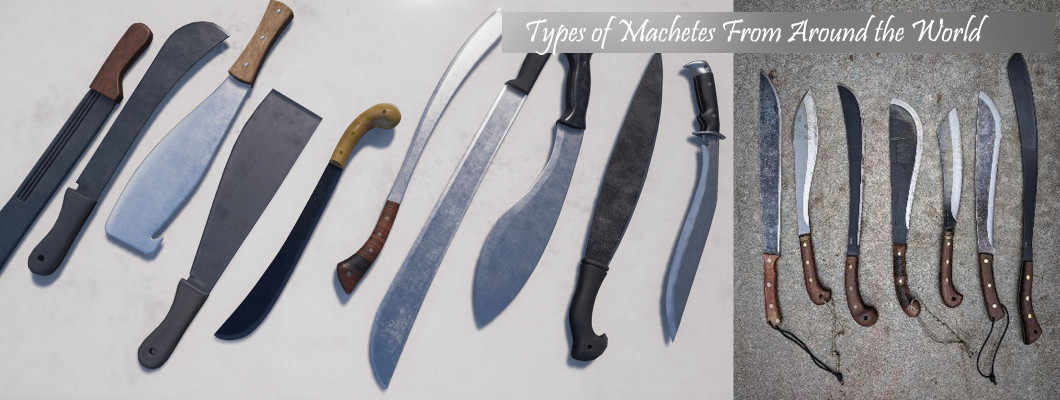
Types of Machetes From Around the World — 15 Blades, Every Culture
Machetes are more than just tools — they are symbols of utility, culture, and power across every region of the world. From the dense rainforests of Southeast Asia to the sugarcane plantations of the Caribbean, the highlands of Nepal, and the savannas of Africa — every culture that needed a blade developed its own version of the machete. Each one shaped by climate, terrain, tradition, and the demands of the people who carried it.
This guide covers 15 of the most significant machete types from around the world — their origins, their design logic, what makes each one distinct, and what they are best used for today.
Hand-Forged Machetes — Made in Nepal, Ships Worldwide
Every machete at Everest Forge is individually hand-forged by skilled Kami blacksmiths in Nepal using 5160 high-carbon steel. Functional blades built for real work — farming, bushcraft, survival, and collection.
A Brief Origin of the Machete
The machete as a concept — a large, single-edged cutting blade designed for agricultural and outdoor work — appeared independently across multiple cultures with no single point of origin. The word "machete" itself comes from Spanish, derived from macho (sledgehammer) and the diminutive suffix -ete. Spanish colonisers carried the term to Latin America where it became the dominant name for the blade.
But the tool predates the word by thousands of years. The kukri of Nepal, the parang of Borneo, the panga of East Africa, the bolo of the Philippines — all emerged independently from the same human need: a blade heavy enough to chop, curved enough to slice, and durable enough to survive years of daily work in demanding outdoor environments.
What unites every machete across every culture is the forward-weighted blade — a design that delivers more chopping force per swing than a straight knife of the same weight, by shifting the centre of gravity toward the tip. Everything else — curve, thickness, handle style, blade profile — varies by region, tradition, and purpose.
1. Parang Machete — Malaysia & Indonesia
Best for: Dense jungle clearing, heavy bush work, rainforest survival
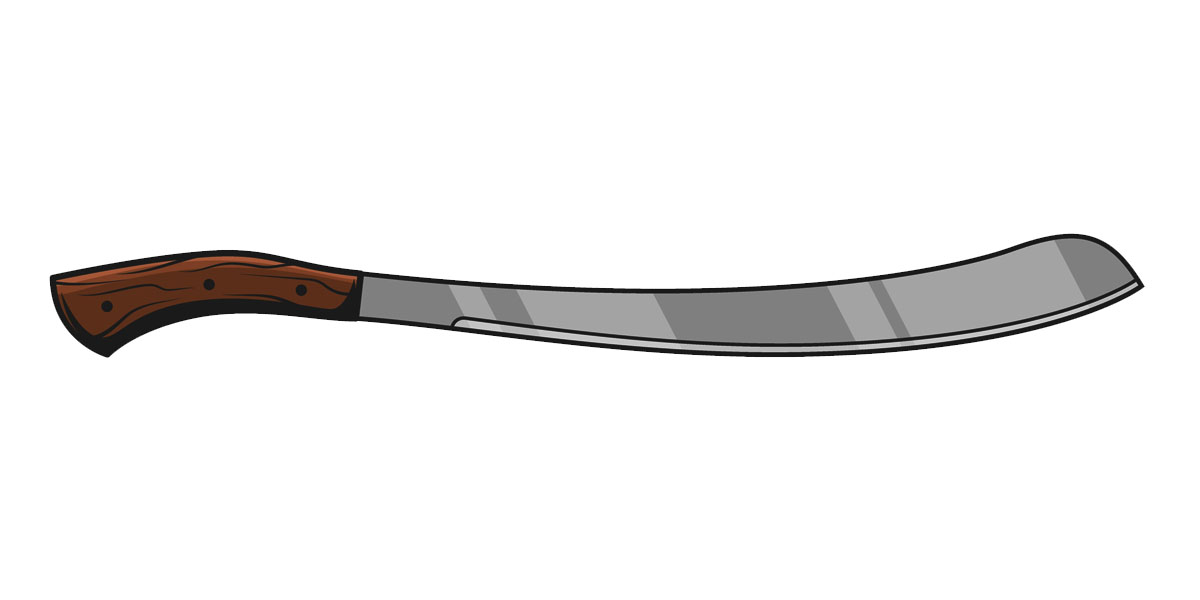
Parang Machete — Malaysia & Indonesia | View Product
The Parang is arguably the most purpose-built jungle machete in the world. Its heavy, deeply curved blade with a convex edge and thick spine was designed for one environment: the dense, wet, endlessly growing rainforests of Borneo and Sumatra. Every design choice serves that environment — the forward weight concentrates chopping force exactly where the blade meets dense vegetation, the thick spine resists the lateral forces of chopping through tangled jungle growth, and the convex edge sheds moisture and debris after each stroke.
For the Dayak peoples of Borneo, the parang is not a tool they carry into the jungle — it is a tool they cannot enter the jungle without. Beyond cutting, it is used for building shelters, processing food, and as a close-combat weapon when required. The parang's design has changed remarkably little over centuries because it works exactly as well today as it always has.
Blade profile: Heavy, deeply curved, convex edge, thick spine
Weight: Heavy — forward-weighted for maximum chopping power
Origin regions: Malaysia, Indonesia, Borneo, Sumatra
Shop our hand-forged Parang machete →
2. Golok Machete — Indonesia
Best for: Agricultural work, vine clearing, compact jungle use
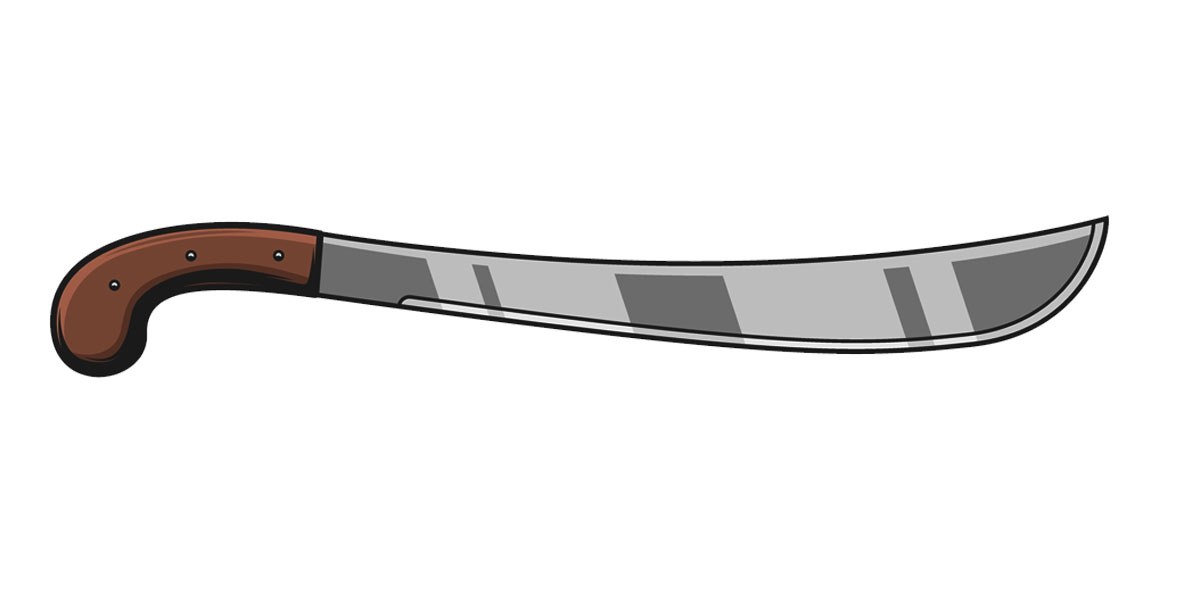
Golok Machete — Indonesia | View Product
The Golok is shorter and thicker than the Parang — a more compact agricultural companion for everyday farm and garden work. Used widely across Indonesia and Malaysia, its broad blade and gentle curve make it ideal for controlled agricultural cutting where the full-force chopping power of the Parang is more than needed. The Golok splits wood, clears vines, and processes harvested crops with equal ease.
Beyond agriculture, the Golok has a significant martial arts tradition — it features prominently in Pencak Silat, the Indonesian martial art, where its compact weight and balance make it well-suited to close-quarters techniques. This dual identity as tool and martial weapon reflects the broader tradition of Southeast Asian blades that blur the boundary between utility and combat.
Blade profile: Shorter and thicker than Parang, broad blade, gentle curve
Weight: Medium — balanced between chopping power and control
Origin regions: Indonesia, Malaysia
Shop our hand-forged Golok machete →
3. Bolo Machete — Philippines
Best for: Rice harvesting, agricultural work, Filipino martial arts
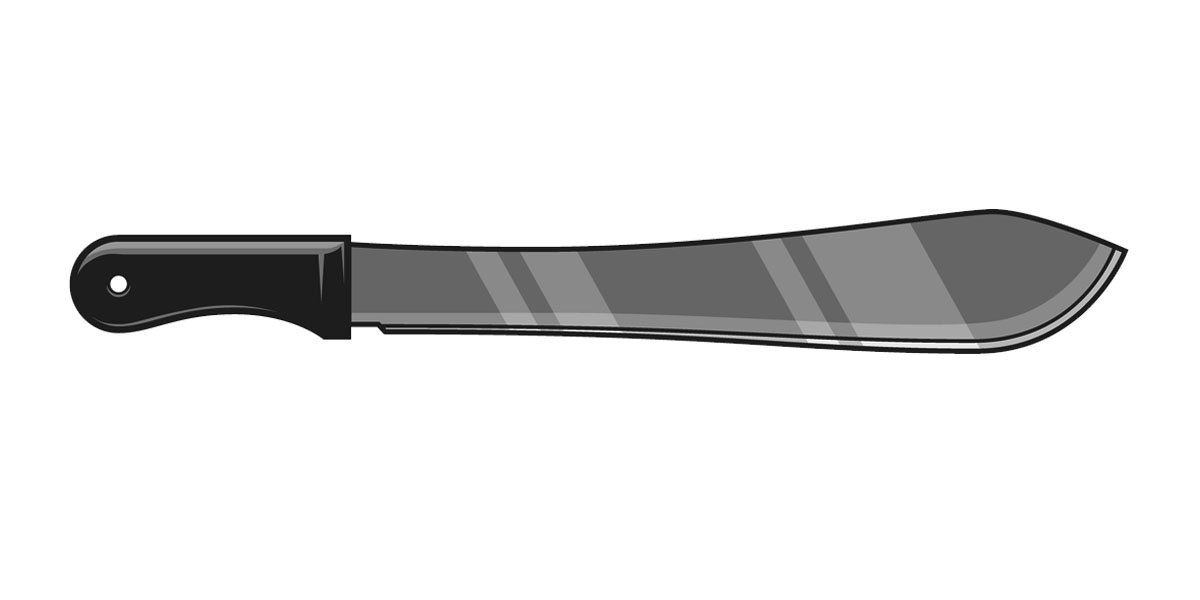
Filipino Bolo Machete | View Product
The Bolo is the definitive Filipino working blade — wide-bellied, forward-weighted, and designed for the repetitive chopping demands of rice farming. Its distinctive shape, widening significantly toward the tip, concentrates mass at the cutting point and delivers exceptional chopping force with minimal effort. Filipino farmers have harvested rice with the bolo for generations, and its ergonomics are optimised for that specific motion — a downward chopping stroke repeated thousands of times across a working day.
The bolo also holds a significant place in Filipino military history. During the Philippine Revolution against Spanish colonial rule in the late 1890s, Filipino revolutionaries — the Katipuneros — armed themselves with bolos against muskets and bayonets. The bolo became a symbol of resistance and national pride that persists in Filipino culture today. In the martial art of Arnis and Eskrima, bolo techniques remain a living tradition.
Blade profile: Wide belly, pronounced forward weight, single edge
Weight: Heavy at tip — designed for downward chopping
Origin regions: Philippines
Shop our hand-forged Bolo machete →
4. Kukri Machete — Nepal
Best for: All-purpose utility, heavy chopping, survival, collecting
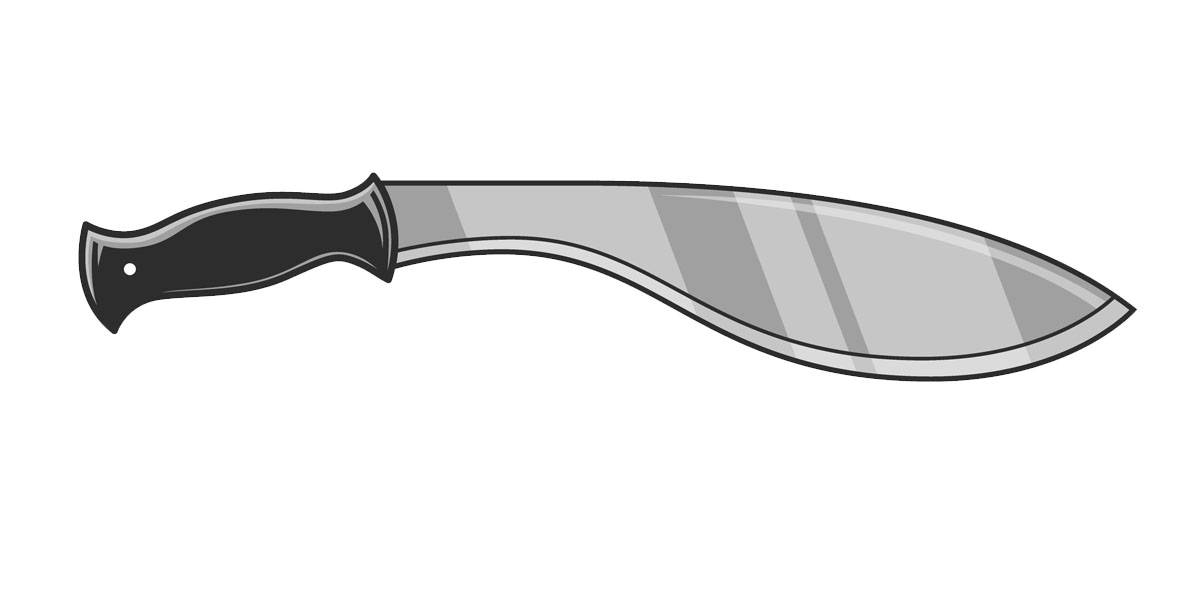
Kukri Machete — Nepal | View Product
The Kukri is Nepal's national blade and one of the most recognised cutting tools in the world. Its inwardly curved profile — sweeping forward then angling down — concentrates power on the forward portion of the blade and delivers chopping force that belies its relatively compact size. This geometry makes the kukri simultaneously effective as a chopping tool, a close-combat weapon, and a utility knife for camp tasks.
The kukri's fame is inseparable from the Gurkhas — Nepal's elite soldiers who have carried it into virtually every major conflict of the past two centuries. From the jungles of Burma in World War II to the Falklands in 1982 and modern operations in Afghanistan, the kukri has been the Gurkha's constant companion. Its reputation — both as a formidable weapon and as an everyday tool — is earned from real-world use across generations.
At Everest Forge, the kukri is our home blade. Our Kami blacksmiths have been forging kukris for generations, and we have supplied the BSI Service No.1 Kukri to the British Gurkha Army, the Nepal Army, and Nepal Police. Every kukri we make carries that heritage.
Blade profile: Inwardly curved, forward-weighted, thick spine
Weight: Medium — exceptional balance between chopping power and handling
Origin regions: Nepal, Himalayan region
Shop our hand-forged Kukri collection →
5. Panga Machete — East & Central Africa
Best for: Bush clearing, sugarcane cutting, heavy agricultural work
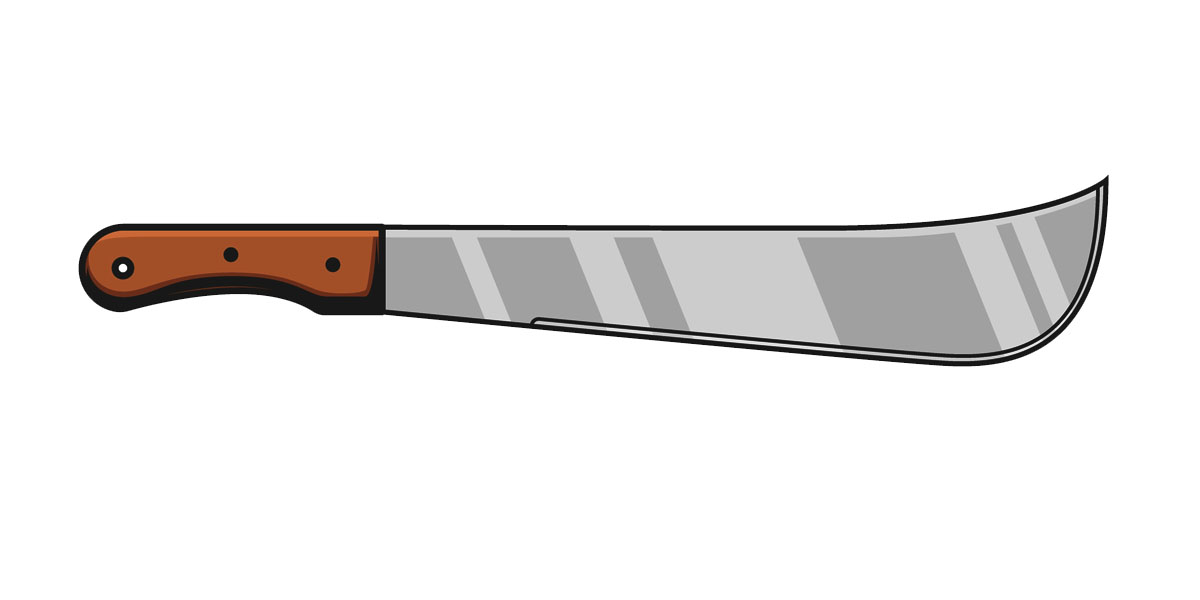
African Panga Machete | View Product
The Panga is the dominant agricultural blade across East and Central Africa — Kenya, Tanzania, Uganda, Rwanda, and beyond. Its broad blade with a curved tip and pronounced point is designed for the specific demands of African agricultural environments: clearing dense bush, chopping through thick branches, cutting sugarcane at ground level, and general farm work in clay-heavy soils that blunt cheaper blades rapidly.
The panga's design prioritises downward striking power — its blade geometry is optimised for overhead chopping strokes rather than the forward slashing motion of Southeast Asian machetes. This reflects the different vegetation encountered: African bush tends to grow thicker and woodier than equatorial rainforest vegetation, requiring more force-per-stroke rather than continuous slashing motion.
In many African communities, the panga carries deep cultural weight beyond its utility — it has featured in independence movements, traditional ceremonies, and as a symbol of agrarian identity across generations of farming communities.
Blade profile: Broad, curved tip, strong point, optimised for downward strikes
Weight: Heavy — built for African bush conditions
Origin regions: Kenya, Tanzania, Uganda, Central Africa
Shop our machete collection →
6. Latin Machete — Central & South America
Best for: General purpose, beginners, crop cutting, trail clearing
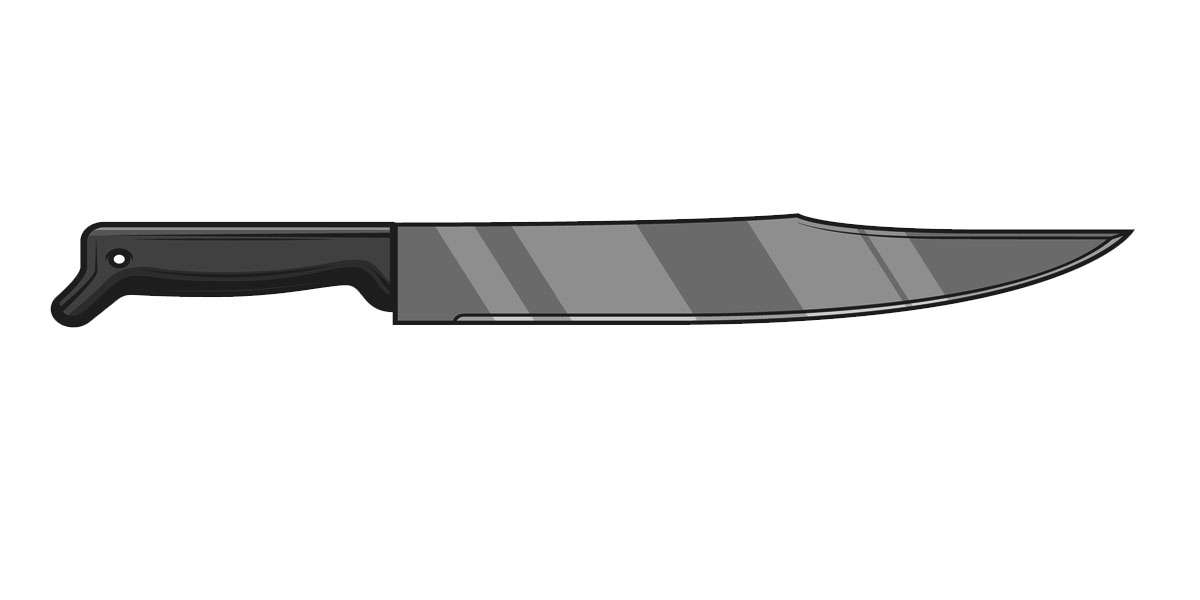
Latin Machete — Central & South America | View Product
The Latin machete is the archetypal machete — the design most people picture when they hear the word. Straight or very slightly curved blade, evenly distributed weight, simple handle, consistent thickness along the spine. It is the generalist in a world of specialists — not optimised for any single task but capable of performing all of them to a reasonable standard.
This versatility is precisely why the Latin machete became the dominant design across Mexico, Central America, and much of South America. In environments where a single blade must serve a farmer through a full working day of mixed tasks — clearing undergrowth, harvesting crops, cutting fence posts, preparing food — a blade that does everything adequately beats a blade that does one thing brilliantly. The Latin machete is the tool of agricultural communities across an entire continent.
Blade profile: Straight to slightly curved, evenly distributed weight
Weight: Medium — balanced for all-day use
Origin regions: Mexico, Central America, South America
Shop our big machete collection →
7. Cane Machete — Caribbean & South America
Best for: Sugarcane harvesting, plantation work, repetitive agricultural cutting
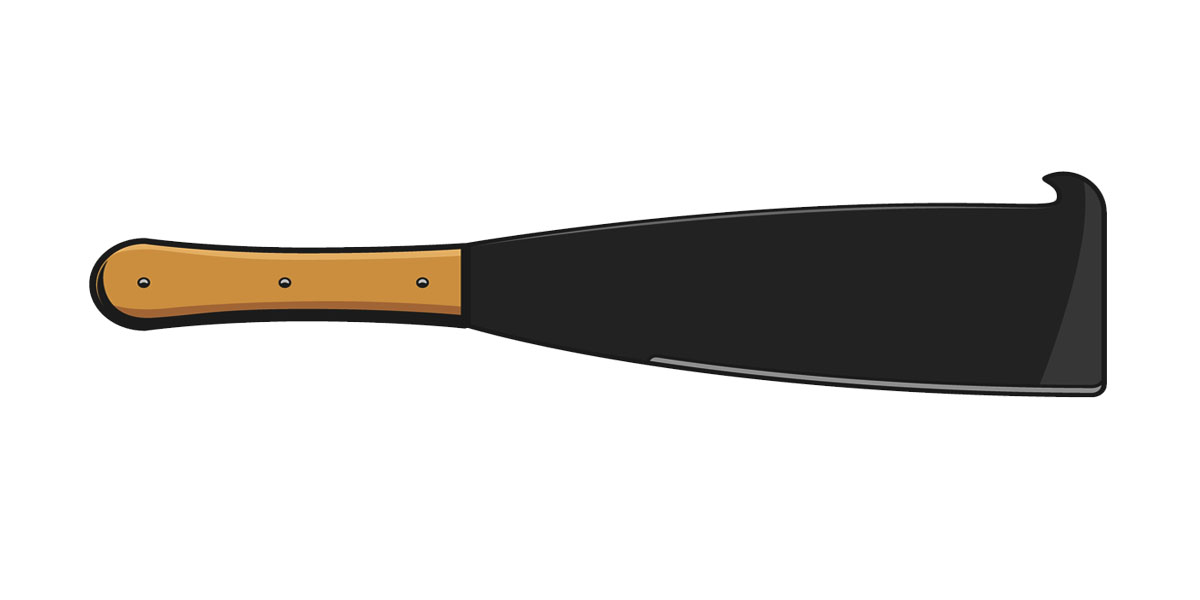
Cane Machete — Caribbean & South America | View Product
The cane machete is a specialist tool engineered for a single task: cutting sugarcane at ground level, thousands of times per day, across seasons of plantation harvest. Every design choice reflects this singular purpose. The blade is short and broad, reducing wind resistance and increasing control during the precise ground-level cut required. The squared-off or slightly hooked tip prevents the blade from driving into the earth when the cut reaches soil level. The weight is concentrated in the blade to aid the repetitive downward chopping motion that defines cane harvesting.
The short handle gives workers control in the tight spacing of a cane plantation where long-handled blades become obstacles. The cane machete is perhaps the most specialised machete design in the world — optimised to the point where using it for anything other than cane harvesting feels awkward. That specialisation is its strength.
Blade profile: Short, broad, squared tip
Weight: Heavy in blade — designed for repetitive downward cutting
Origin regions: Caribbean, Brazil, South America
Shop our oversized machete collection →
8. Barong Machete — Philippines
Best for: Chopping, combat, ceremonial use, collecting
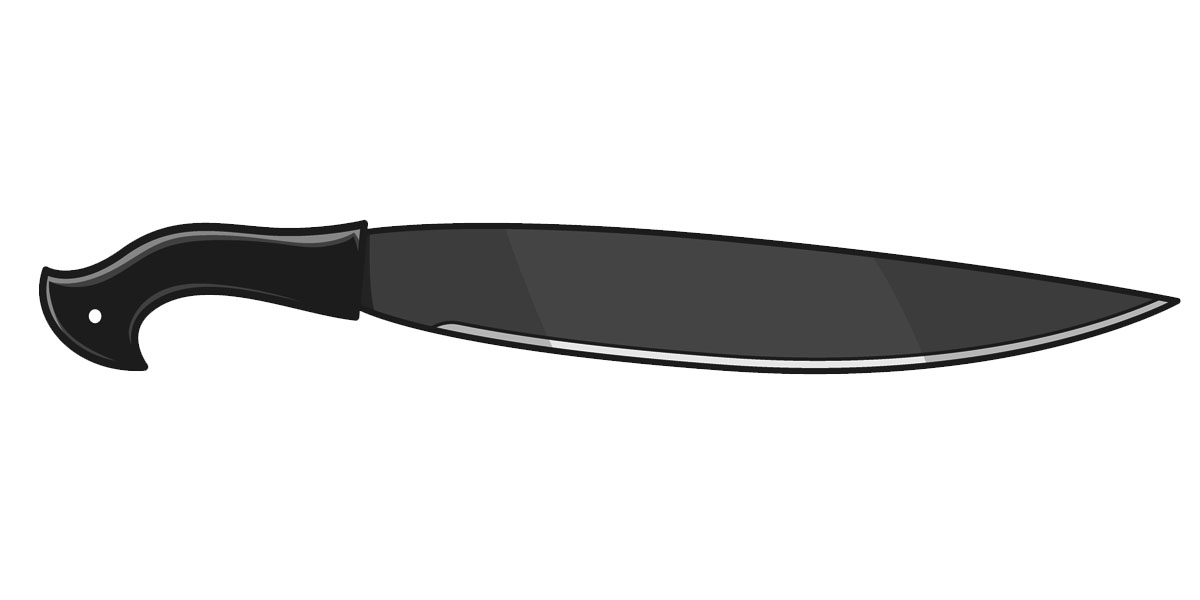
Barong Machete — Philippines | View Product
The Barong is the battle blade of the Moro peoples of the southern Philippines — a leaf-shaped machete with a thick spine, swelling belly, and single edge that delivers devastating chopping power in a compact form. Unlike the Bolo, which evolved primarily as an agricultural tool that saw combat use, the Barong was designed first and foremost as a weapon — its geometry optimised for power strikes in close-quarters combat rather than repetitive agricultural cutting.
The Barong carries deep ceremonial significance among Moro communities — it is a symbol of status, honour, and cultural identity that has been passed down through generations. Finely crafted Barongs feature elaborately carved hilts of horn or hardwood and ornate scabbards that reflect the artistic traditions of their makers. As a collector's piece, the Barong represents one of the most visually distinctive and culturally significant blade traditions in Southeast Asia.
Blade profile: Leaf-shaped, thick spine, swelling belly
Weight: Heavy — combat-optimised chopping power
Origin regions: Southern Philippines, Mindanao, Sulu archipelago
Shop our hand-forged Barong machete →
9. Naga Machete — Northeast India
Best for: Agricultural work, hunting, ceremonial use
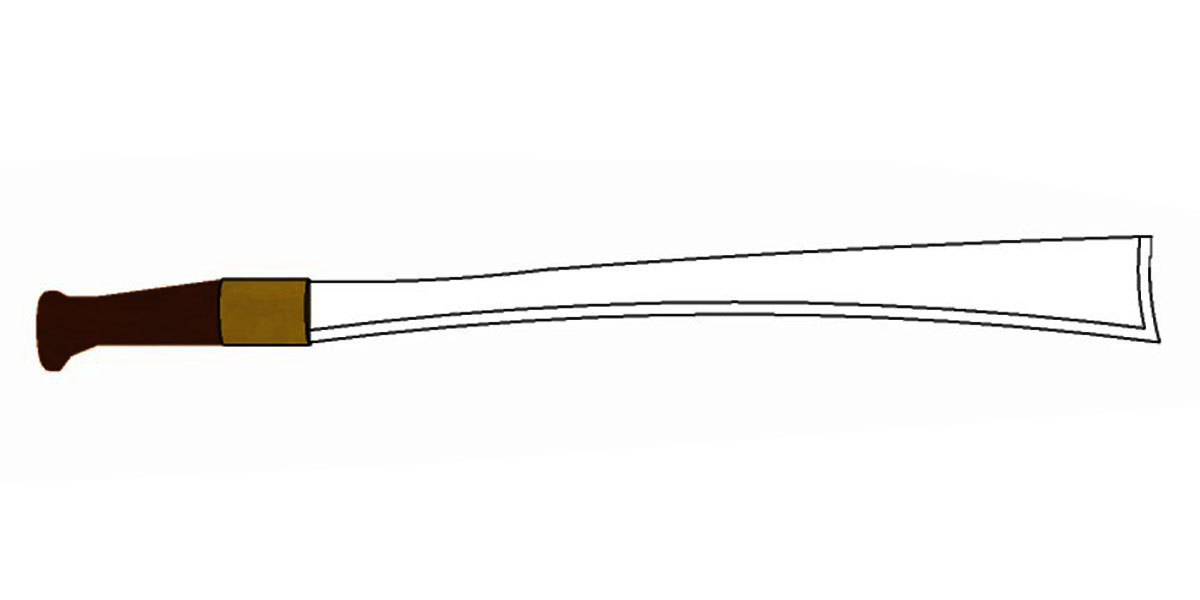
Naga Machete — Northeast India | View Product
The Naga machete is a traditional blade used by the Naga tribes of Nagaland and the surrounding hill states of Northeast India. Its short, wide, heavy blade was developed for the specific conditions of the Naga hills — dense forest, steep terrain, and the demands of both agriculture and hunting in an environment where a blade must do everything. The Naga machete functions simultaneously as a clearing tool, a hunting blade, and a weapon — reflecting the self-reliant lifestyle of the hill communities who carry it.
What distinguishes the Naga machete from other Asian machetes is its cultural embeddedness. The blade is not merely a tool — it is an object of deep tribal identity. Traditional Naga machetes feature tribal engravings on the handle and scabbard, and the quality of a man's blade reflects his status within the community. Headhunting ceremonies historically involved the Naga machete, giving it a ceremonial weight that goes far beyond its agricultural function.
Blade profile: Short, wide, heavy
Weight: Heavy — built for all-purpose use in demanding hill conditions
Origin regions: Nagaland, Northeast India
Shop our hand-forged Naga machete →
10. Tapanga Machete — West Africa
Best for: Heavy chopping, wood processing, agricultural work
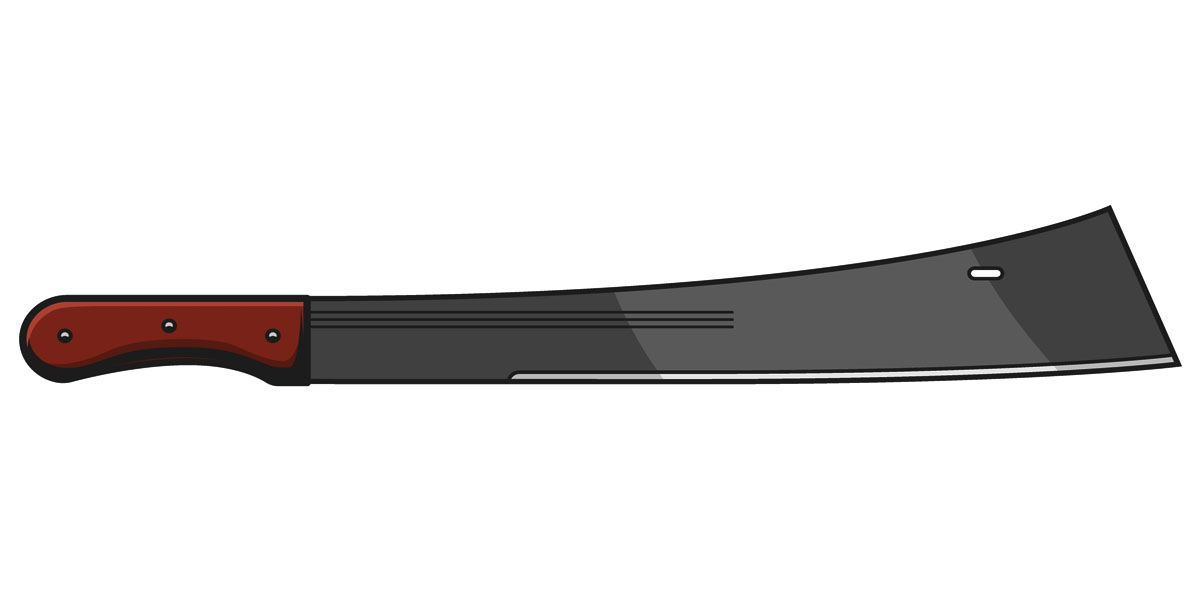
Tapanga Machete — West Africa | View Product
The Tapanga is immediately recognisable by its distinctive angled tip — a pronounced angle near the blade's end that gives it a hatchet-like appearance unique among machete designs. This angular geometry is not decorative. It concentrates striking force at a precise point, making the Tapanga exceptionally efficient at chopping through thick wood and dense West African bush vegetation that would deflect or slow a conventional straight-tipped machete.
Used across West African countries including Nigeria, Ghana, and Cameroon, the Tapanga is the heavy-duty workhorse of the region — the blade you reach for when the vegetation is thickest and the work is hardest. Its rugged, practical design reflects the demanding agricultural environments of West Africa where blades must perform reliably through years of intensive daily use.
Blade profile: Straight edge with pronounced angled tip
Weight: Heavy — tip geometry concentrates chopping force
Origin regions: Nigeria, Ghana, West Africa
Shop our compact machete collection →
11. Billhook Machete — Europe
Best for: Pruning, hedging, vine cutting, forestry work
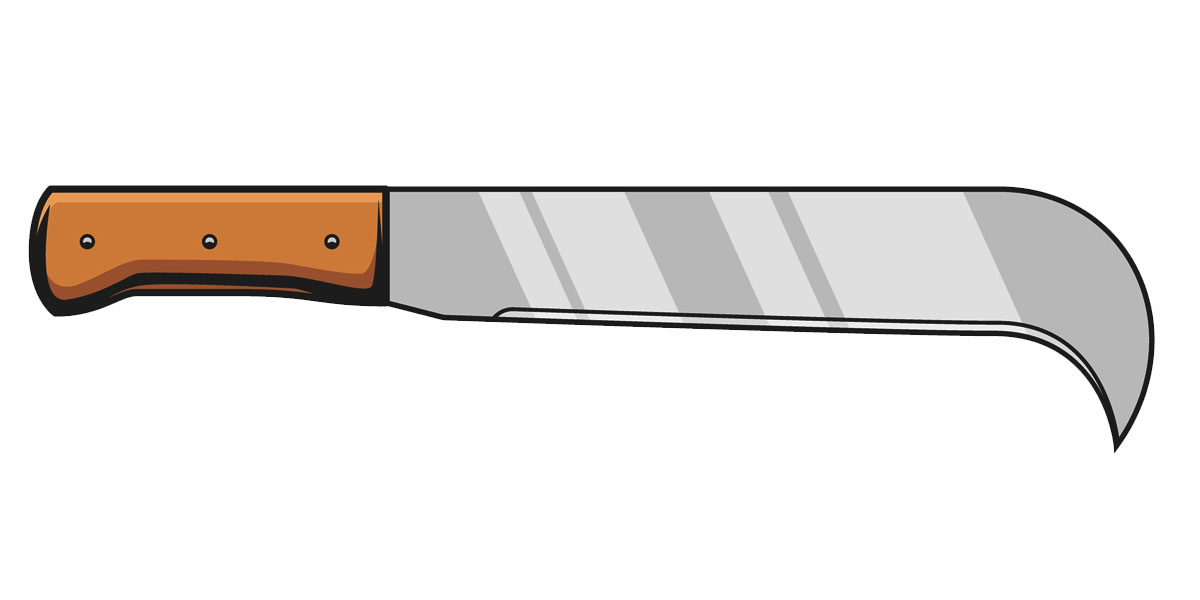
Billhook Machete — Europe | View Product
The Billhook is Europe's answer to the machete — a traditional agricultural blade that evolved for the specific demands of European farming and forestry rather than tropical vegetation. Its defining feature is the inward-curving hook at the tip, which allows the user to pull vegetation while slicing — a technique essential for hedging and pruning where controlled cuts on specific branches matter more than raw chopping power.
The billhook has been a standard farming tool across Britain, France, Germany, and much of Europe for centuries. Different regional variations developed — the Hampshire billhook, the Yorkshire pattern, the French serpe — each adapted to local hedgerow styles and farming traditions. Its utility led to its use in rural uprisings and close-quarter combat throughout European history, though its primary identity has always been agricultural.
Blade profile: Inward-curving hook tip, single edge
Weight: Light to medium — precision over power
Origin regions: Britain, France, Germany, wider Europe
Shop our farmer sickle machete →
12. Dao Machete — Southeast Asia & Nepal
Best for: Heavy chopping, jungle clearing, survival
Dao Machete | View Product
The Dao is a broad, heavy-bladed cutting tool found across Myanmar, Northeast India, and parts of Nepal — a cleaver-style machete with a wide blade that prioritises raw chopping power over precision. Its thick, heavy blade excels at processing wood, clearing thick vegetation, and heavy-duty camp work where a lighter machete would struggle.
The Dao exists in several regional variations — the Nepalese dao is closely related to the kukri family while the Southeast Asian dao shares characteristics with the golok. What unites them is the broad, forward-weighted blade designed for heavy-duty work in demanding jungle and hill environments.
Blade profile: Broad, heavy, cleaver-style
Weight: Heavy — maximum chopping power
Origin regions: Myanmar, Northeast India, Nepal
Shop our Dao machete →
13. Ginunting — Philippines
Best for: Combat, martial arts, collecting
Ginunting — Philippines | View Product
The Ginunting is the official close-combat blade of the Philippine Marine Corps — a modern military machete with deep roots in traditional Filipino blade culture. Its double-curved blade — sweeping forward then back — creates a distinctive silhouette that serves two cutting geometries in a single blade. The forward curve delivers chopping power. The recurve near the tip delivers a slicing draw cut. The result is a blade equally effective at heavy outdoor work and close-quarters combat.
The ginunting represents the evolution of traditional Filipino blade-making into modern military application — a tradition that began with the bolo-wielding Katipuneros of the 1890s and continues in the Philippine armed forces today.
Blade profile: Double-curved, single edge
Weight: Medium — combat-optimised balance
Origin regions: Philippines
Shop our Ginunting machete →
14. Kora — Nepal
Best for: Ceremonial use, collecting, heavy chopping
Kora — Nepal | View Product
The Kora is Nepal's traditional sword-machete — a large, forward-curved blade used for both heavy agricultural work and ceremonial sacrifice. Its pronounced forward curve concentrates mass at the tip for devastating downward chopping force, making it one of the most powerful single-edged blades in the Himalayan tradition. The Kora is used in Dashain, Nepal's most important festival, for ceremonial animal sacrifice — a role that elevates it from tool to sacred instrument.
The Kora occupies a unique space between machete and sword — too large and ceremony-laden to be a pure working tool, too agricultural and practical to be purely a weapon. It represents the deep integration of blade culture into religious and social life that characterises Nepalese tradition.
Blade profile: Large, pronounced forward curve, single edge
Weight: Heavy — ceremonial and functional
Origin regions: Nepal
Shop our Kora machete →
15. Garab — Philippines
Best for: Agricultural harvesting, collecting, cultural heritage
Garab — Philippines | Learn more →
The Garab is a traditional Filipino harvesting blade — smaller and more specialised than the Bolo, designed for the precise cutting required in rice harvesting and agricultural work on smaller crops. Its sickle-like form reflects the specific demands of Philippine agricultural traditions where controlled cuts on individual stalks matter more than the raw chopping power of larger blades.
The Garab represents the Filipino tradition of developing highly specialised blades for specific agricultural tasks — a tradition that produced some of the most diverse blade cultures in the world from a single archipelago.
Blade profile: Sickle-like, compact
Weight: Light — precision harvesting tool
Origin regions: Philippines
Read our Garab guide →
Why Are Machetes Curved or Straight?
The curve — or lack of it — in a machete blade is not aesthetic. It is functional, and it tells you everything about what the blade was designed to do.
Curved machetes — the Parang, Kukri, Bolo, Barong, Kora — use the curve to maintain blade contact through the full arc of a cutting stroke. As the blade sweeps through vegetation, the curve keeps the edge engaged with the material being cut rather than glancing off it. This is why curved blades excel at slicing — the blade draws through the cut rather than striking it. The more pronounced the curve, the more the design prioritises slicing over raw impact.
Straight machetes — the Latin machete, the Panga, the Tapanga — deliver impact force more directly. A straight blade concentrates all the momentum of the swing onto the point of contact rather than distributing it through a curving arc. This makes straight blades more effective for chopping through thick, woody material where penetration matters more than a clean slice. Straight blades also offer better precision for thrusting and fine cutting work.
The design reflects its primary use — jungle clearing, farming, combat, or survival. When choosing a machete, the blade curve is the most important design decision you will make.
What Type of Machete Should I Buy?
The right machete depends entirely on what you need it for. Here is a practical guide:
For dense jungle and heavy bush clearing: The Parang is the best choice — heavy, forward-weighted, built for exactly this environment.
For general outdoor and camping use: The Latin machete or Kukri — versatile, manageable, capable of most outdoor tasks.
For farming and agricultural work: Match the blade to your specific crop and terrain. The Farmer's Machete or Latin machete for general crops. The Cane Machete for sugarcane specifically.
For collectors and enthusiasts: The Kukri, Barong, or Kora — culturally significant blades with strong historical heritage and visual impact.
For beginners: Start with the Latin machete. It is the most versatile, the most forgiving to use, and the easiest to maintain. Once you understand what you actually need a machete for, you can specialise.
Want something built specifically for you? Request a custom machete from Everest Forge — any size, any blade profile, any handle material.
Own a Hand-Forged Machete — Built in Nepal, Ships Worldwide
At Everest Forge, every machete is individually hand-forged by skilled Kami blacksmiths in Nepal from 5160 high-carbon steel. Functional blades for real work — farming, bushcraft, survival, and collection. Ships worldwide.
Frequently Asked Questions — Types of Machetes
What is the best machete for jungle use?
The Parang or Golok are the best choices for dense jungle environments. Their heavy forward-weighted designs are built specifically for the demands of tropical rainforest vegetation — thick, fast-growing, and relentless.
Can a Kukri be used as a machete?
Yes — and it is one of the best all-purpose machete alternatives available. The Kukri's inward-curved blade delivers excellent chopping power for its size, and its compact form makes it more versatile than most specialist machetes. It serves equally well in agricultural work, bushcraft, and survival situations.
Is a curved machete better than a straight one?
It depends entirely on the task. Curved machetes maintain blade contact through the full cutting arc — better for slicing through vegetation. Straight machetes deliver impact force more directly — better for chopping through thick woody material. Most users find a moderate curve the best compromise.
What machete should I buy for survival?
For general survival use, the Kukri or Latin machete are the strongest starting choices. For heavy jungle survival specifically, the Parang is hard to beat. For mixed environments, the Kukri's versatility gives it the edge.
Are machetes legal to own?
In most countries, yes — machetes are legal to own for utility or agricultural purposes. Laws vary on public carry. For a full breakdown by country, read our complete machete legality guide.
What is the best machete for beginners?
The Latin machete is the best starting point — simple design, multipurpose capability, lightweight and easy to control. Once you understand what you actually use a machete for, you can move to a more specialised type.
What is the difference between a Parang and a Golok?
Both originate from Southeast Asia. The Parang is longer, heavier, and more deeply curved — built for heavy jungle work in demanding rainforest environments. The Golok is shorter, thicker, and more compact — better suited to agricultural work and mixed-use situations where the Parang's size would be unwieldy.
What is the difference between a Panga and a machete?
The Panga is a specific type of machete from East and Central Africa — broader-bladed with a curved tip, optimised for downward chopping strokes in African agricultural conditions. All pangas are machetes, but not all machetes are pangas. The distinction is regional and design-specific.
Where can I buy a hand-forged machete?
Everest Forge hand-forges machetes in Nepal and ships worldwide. Every blade is individually forged from 5160 high-carbon steel by traditional Kami blacksmiths. Browse our full machete collection or request a custom build.
Continue Reading
- Are Machetes Legal? Understanding the Laws by Region
- Kukri vs Machete — A Functional and Cultural Comparison
- Garab: The Traditional Filipino Machete