

Types of Daggers from Around the World
Daggers have existed since the dawn of civilization — from flint and bone blades used in early rituals to the finely tempered steel masterpieces of knights, samurai, and artisans. Every culture forged its own distinct dagger design, each one carrying the spirit, artistry, and purpose of its people. Below are some of the most influential dagger types — blades that defined warriors, trade routes, and aesthetics across continents.
Own a Hand-Forged Dagger — Made in Nepal, Ships Worldwide
At Everest Forge, every dagger is individually hand-forged in Nepal by traditional blacksmiths using 5160 high-carbon steel. Full tang construction, water-tempered edge, leather scabbard included. Browse our full collection or request a fully custom design.
Bronze Dagger

The Bronze dagger marks one of humanity's earliest steps into the age of metal. Emerging around 3000 BCE in Mesopotamia, Egypt, and the Indus Valley, these daggers replaced stone and bone tools, offering superior strength, durability, and craftsmanship. Their broad, leaf-shaped blades and cast bronze hilts symbolized both utility and prestige in early societies.
Used by warriors, nobles, and priests alike, the bronze dagger served as both a weapon and a ceremonial artifact. Many surviving examples display decorative inlays or engraved motifs reflecting religious and cultural beliefs. Forged through early casting techniques, the bronze dagger stands as a testament to human innovation — bridging the gap between primitive tools and the refined steel blades of later civilizations.
Push Dagger
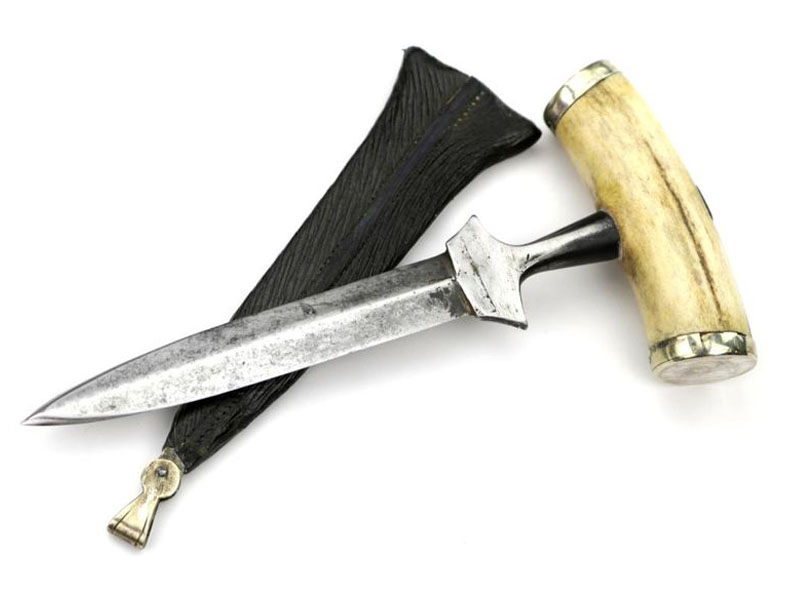
The push dagger is instantly recognizable by its T-shaped grip and short, double-edged blade that sits between the fingers. This configuration channels the force of a punch directly into a thrust, giving excellent point control in cramped, high-stress encounters. Its compact size made it easy to conceal in waistbands or pockets without sacrificing stopping power.
Popular in 19th-century America and Europe among travelers, gamblers, and soldiers, the push dagger balanced discretion with lethality. Modern self-defense and tactical communities still value its intuitive ergonomics and retention — the fist-like hold resists disarms and enables rapid, repeated thrusts with minimal wrist deviation.
Stiletto Dagger

The stiletto emerged in Renaissance Italy as a specialist thrusting weapon. With a narrow, often triangular or square-sectioned blade, the stiletto focused mass along a small point to penetrate textiles, leather, and the gaps of armor. It complemented the cloak and rapier culture of Italian city-states where agility and precision dominated close-quarters fighting.
Beyond its dark reputation with assassins, the stiletto showcased refined metallurgy and minimalist elegance. Its influence persists in modern designs that favor needle points and slim profiles for deep penetration, though today's versions typically emphasize legality and utility rather than clandestine use.
Bellatrix Lestrange Dagger

The Bellatrix Lestrange dagger is an iconic fantasy blade immortalized in the Harry Potter films, most notably used by the dark witch Bellatrix during the Second Wizarding War. Its design blends gothic elegance with sinister symbolism — a narrow, tapered blade, ornate crossguard, and twisted handle that mirror Bellatrix's volatile and obsessive personality.
Though fictional, replicas of the Bellatrix dagger are highly sought after by collectors and fantasy weapon enthusiasts. Many hand-forged recreations feature carved hilts, etched runes, and aged finishes that capture the cinematic atmosphere of the Dark Arts. As a display piece, the dagger represents the perfect fusion of artistry, storytelling, and craftsmanship — a tribute to one of cinema's most memorable villains.
Akan Knife

The Akan knife is a traditional blade from the Akan people of present-day Ghana, symbolizing prestige, strength, and craftsmanship. Typically featuring a slightly curved, single-edged blade with artistic detailing, the Akan knife was both a functional weapon and a ceremonial object of social status.
Forged by skilled blacksmiths using locally sourced iron, the Akan knife often bore intricate carvings or metal inlays that reflected tribal motifs and spiritual beliefs. Beyond combat, it held ritual and symbolic importance — representing authority, ancestral heritage, and the power of its owner. Today, the Akan knife stands as a testament to the deep metallurgical knowledge and artistic sophistication of West African forging traditions.
Bollock Dagger

The bollock dagger (also known as the ballock dagger) was a hallmark of late medieval and early Renaissance Europe. Named for the distinctive twin lobes forming the guard, it provided a secure, natural hand stop and immediately identifiable silhouette. Soldiers, sailors, and townsmen carried it alike, using it for self-defense and daily chores.
Its broad popularity and ergonomic grip helped it evolve into the Scottish dirk. Surviving examples range from plain working knives to highly embellished pieces, reflecting the owner's wealth and station while preserving a practical, balanced blade suited to both cut and thrust.
Commando Dagger
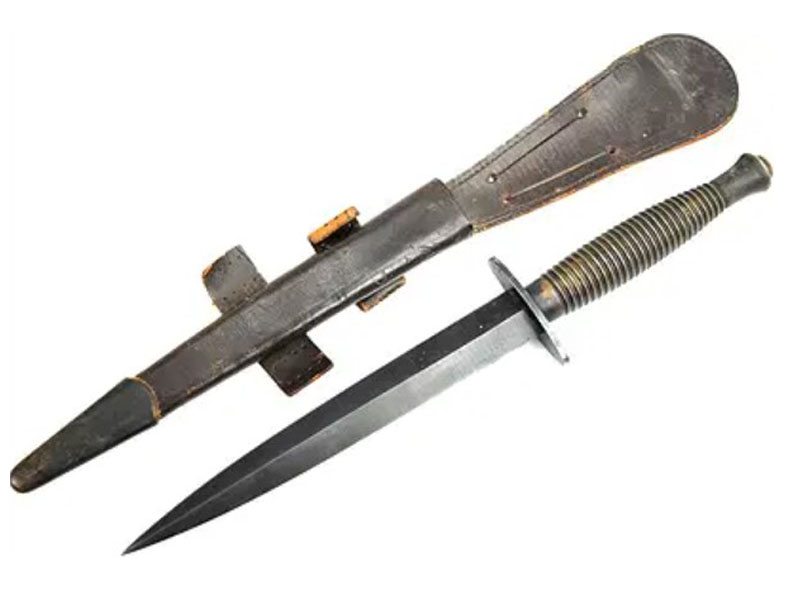
The Fairbairn–Sykes commando dagger, developed in WWII for British special forces, optimized silent, rapid thrusting with a long, symmetrically ground double edge. Its thin ricasso and central balance point enabled quick indexing and point-forward accuracy under stress. Issued worldwide, it became an emblem of elite units and unconventional warfare.
Beyond symbolism, its geometry informed generations of combat knives. Many later designs adopted a thicker spine or modified tip for durability, but the original's sleek, spear-point profile remains the archetype for dedicated infiltration blades.
Scottish Dirk Dagger
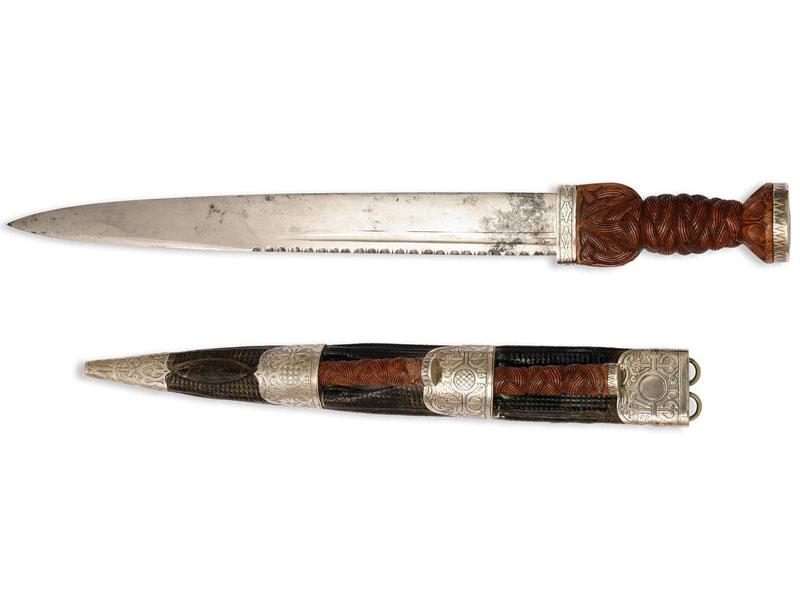
The Scottish dirk evolved from the bollock dagger into a longer, single-edged sidearm central to Highland dress and identity. Often featuring intricate carved hilts of bog oak or antler, and sometimes matched with a by-knife and fork, the dirk served both martial and ceremonial roles.
Highlanders prized the dirk for battlefield utility — powerful draw cuts, close-in thrusts, and camp tasks. As firearms spread, the dirk shifted toward tradition and pageantry, yet it still symbolizes clan honor, craftsmanship, and the Highland warrior ethos.
Baselard Dagger

The baselard (or basilard) is distinguished by its characteristic H-shaped hilt, offering strong lateral control and a firm, guarded grip. Originating in the 14th century, it bridged the gap between stout dagger and short sword, sometimes reaching formidable lengths.
City militias, merchants, and travelers favored the baselard for its versatility and presence. Surviving pieces range from austere to lavishly decorated, signaling the wearer's rank while delivering reliable cutting and thrusting performance.
Jambiya Dagger

The jambiya is a curved Arabian dagger traditionally worn at the waist, especially in Yemen and neighboring regions. Its pronounced belly and medial ridge enhance slicing and controlled thrusts, while the scabbard and hilt — often of horn, silver, or gold — convey lineage and honor.
More than a weapon, the jambiya functions as a social and ceremonial emblem. Heirloom jambiyas pass through generations, with regional styles reflecting local artistry and values. The blade's curve and balance epitomize both grace and readiness.
Parrying Dagger (Main Gauche)

The parrying dagger, or main gauche, served the off hand in Renaissance fencing. Its broadened guard, side rings, and sometimes blade notches helped trap or deflect an opponent's rapier while setting up ripostes. A strong quillon layout protected the hand during aggressive engagements.
Fencing treatises document sophisticated techniques using blade opposition, binds, and beat-parries. In skilled hands, the main gauche transformed defense into initiative, showcasing the intellectual, technical side of European swordplay.
Rondel Dagger

The rondel dagger — named for its round disk guard and pommel — was the knight's final argument in armor. With rigid, tapered blades (often triangular or diamond section), it exploited gaps at the visor, armpit, or joints during grappling and ground fighting.
Designed for control and precise point placement, the rondel excelled in armored combat where slashes failed. Its robust construction made it a dependable tool for both battlefield dispatch and practical camp use.
Bowie Knife
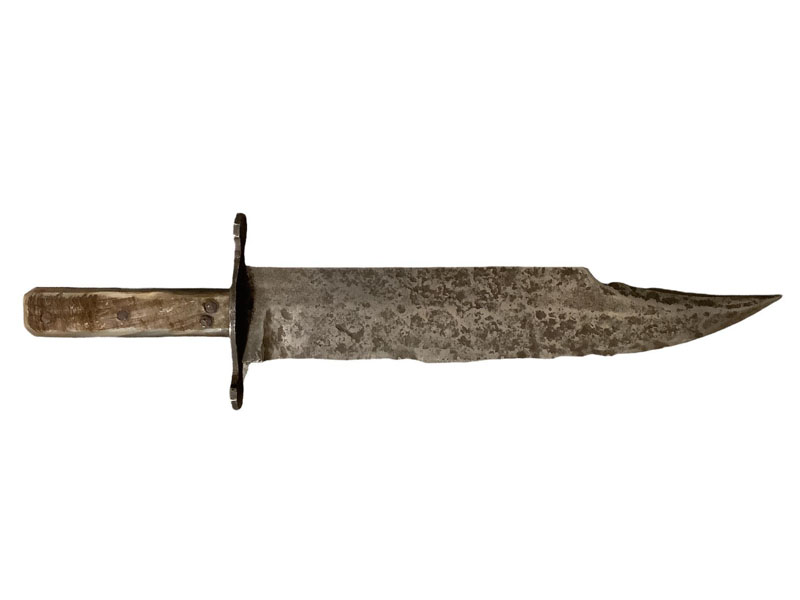
The Bowie knife straddles dagger and utility blade, emerging from 19th-century American frontier culture. Hallmarks include a long blade, clipped point for swedged penetration, substantial guard, and ergonomic handle suitable for heavy chores and defense.
From hunting and skinning to dueling and daily camp work, the Bowie became synonymous with rugged independence. Modern iterations vary widely, but the archetype remains a versatile, confidence-inspiring tool with formidable cutting power. Browse our hand-forged Bowie knives →
Fantasy Daggers

Fantasy daggers fuse myth, cinema, and personal symbolism. Designers experiment with recurved or flame-shaped blades, sculpted guards, runic motifs, and gemstone accents, prioritizing narrative and visual impact.
While many serve ceremonial or display purposes, quality builds still emphasize balance and safe handling. These pieces celebrate imagination, giving makers freedom to pay homage to historical forms while pushing boundaries of form and finish. Request a custom fantasy dagger →
Belt and Boot Daggers
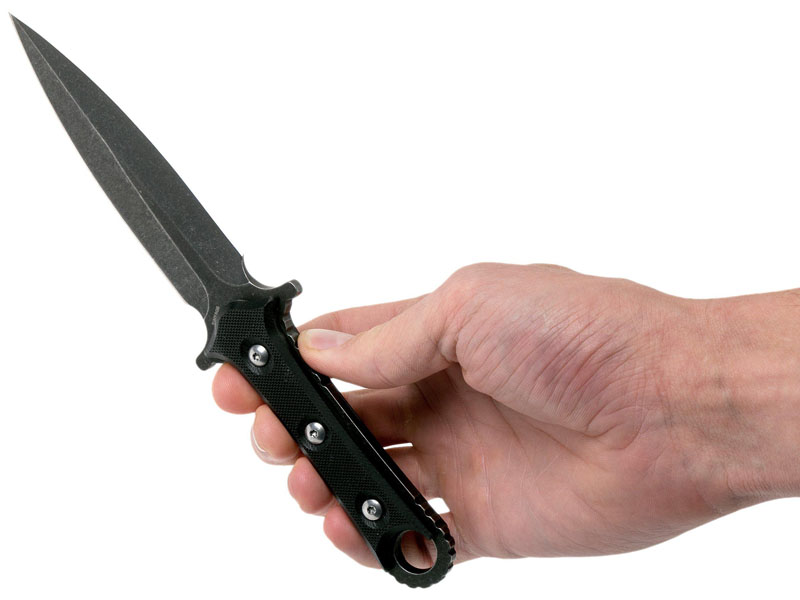
Belt and boot daggers emphasize concealment and instant access. Slim profiles, secure sheaths, and ambidextrous draws make them ideal last-ditch tools for travelers, scouts, and soldiers throughout history.
Though compact, the best examples maintain reliable geometry and stout tips. Modern EDC concepts echo this lineage with discrete fixed blades designed for controlled utility and emergency defense.
Looking for a specific dagger type?
Everest Forge hand-forges daggers inspired by historical designs from around the world — Scottish Dirk, Rondel, Kris, Katar, Jambiya and more. Every blade is individually forged in Nepal from 5160 steel with full tang construction and leather scabbard.
Cinquedea Dagger

The cinquedea ("five fingers") features a very wide blade near the hilt, tapering to a thrust-capable point. Popular in Renaissance Italy, it balanced cutting authority with elegant civic fashion, often richly etched with classical scenes.
This hybridized form — somewhere between dagger and short sword — made the cinquedea a statement of status and taste, while remaining practical for self-defense in urban settings.
Kirpan Dagger
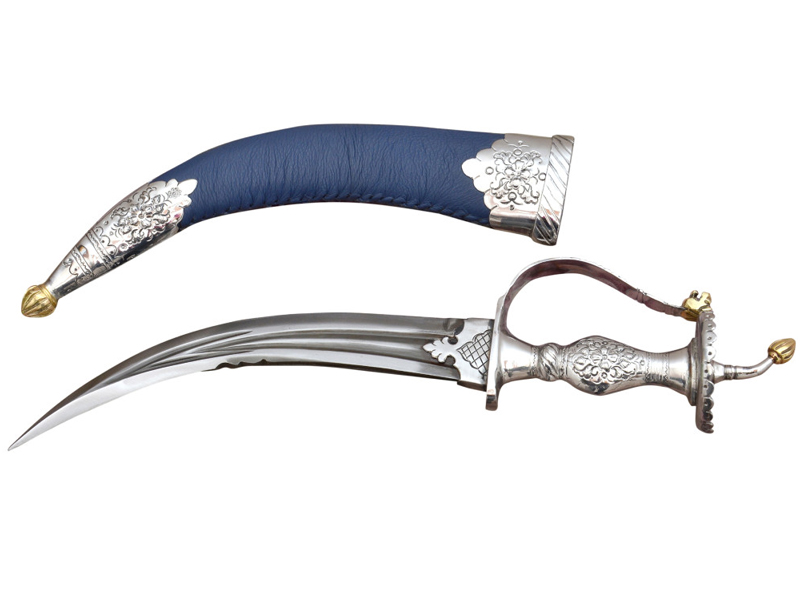
The kirpan is a sacred Sikh article of faith symbolizing courage, justice, and the duty to protect the vulnerable. Traditionally worn sheathed, it emphasizes moral responsibility over aggression.
Historic kirpans ranged from small devotional blades to substantial fighting weapons used by Sikh warriors. Today, the kirpan's primary role is spiritual, reminding the bearer to pair strength with compassion.
Kris (Keris) Dagger

The Kris of Indonesia and Malaysia is renowned for its distinctive wavy (luk) or straight blade and patterned steel called pamor. Forging the Kris blends metallurgy with ritual; smiths (empu) historically imbued blades with spiritual significance.
Used for ceremony, status, and self-defense, the Kris anchors Southeast Asian identity. Its complex construction — separate ganja (guard), pesi (tang), and hilt angles — creates unique handling and cultural resonance.
Miséricorde Dagger
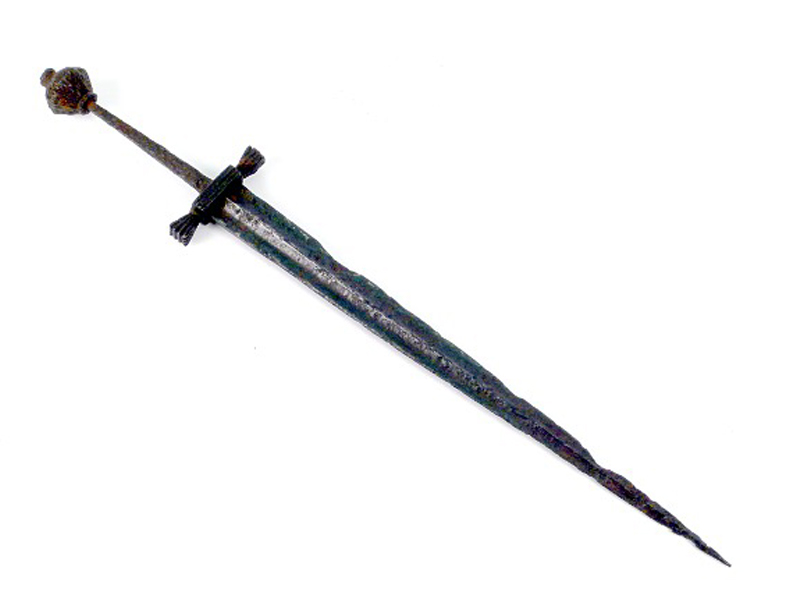
The miséricorde ("mercy") is a slender, stiff dagger used in the Middle Ages to deliver a swift, compassionate end to a mortally wounded foe, often through vulnerable armor gaps. Its purpose reflected chivalric ideals amid brutal realities.
While somber, the miséricorde highlights medieval attention to ethics and battlefield pragmatism: a precise instrument intended to reduce suffering when combat's outcome was clear.
Curved Daggers (Family)

Curved daggers — including the Khanjar, Jambiya, and certain Katar variants — leverage belly and sweep for slicing efficiency. The curvature improves draw cuts and retention while offering striking visual drama.
Across Persia, Arabia, and South Asia, curved blades became status markers, wedding regalia, and heirlooms, uniting utility with aesthetics and regional identity. Browse our curved dagger collection →
Boot Knife
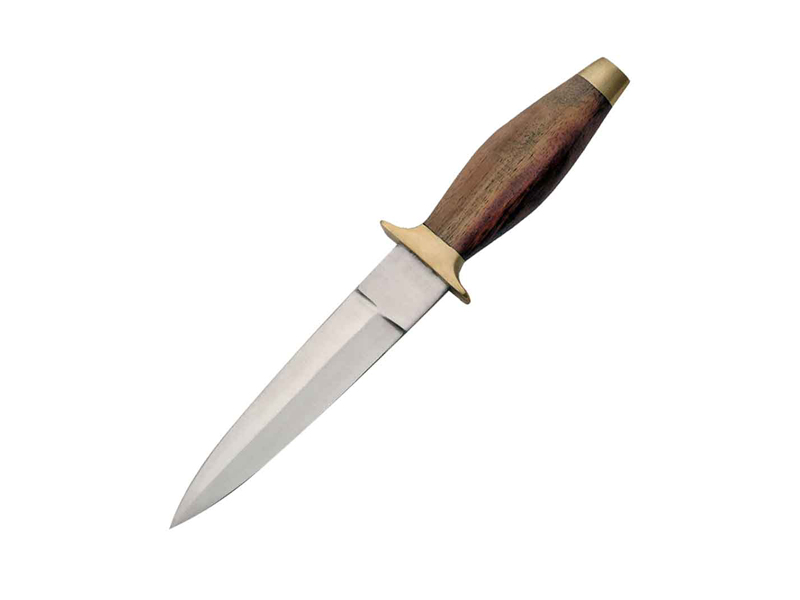
The boot knife is a compact, double-edged dagger optimized for hidden carry and quick deployment. Its straight, spear-point profile provides predictable penetration, while short blades reduce printing and snag risk.
Modern boot knives often ride in ankle or inside-boot sheaths with positive retention. Despite their size, quality examples maintain proper heat-treat, edge geometry, and safe, secure grips.
Katar Dagger

The Katar, or Indian push dagger, features a horizontal H-shaped grip that aligns the wrist behind a broad, triangular blade. This "punching" posture generates tremendous linear force and natural point alignment.
Royal and temple smiths produced ornate Katars with chiselled guards, koftgari (gold/silver inlay), and mechanical tripartite blades. On the battlefield and in ceremony, the Katar embodied valor, craftsmanship, and engineering ingenuity.
Pugio Dagger
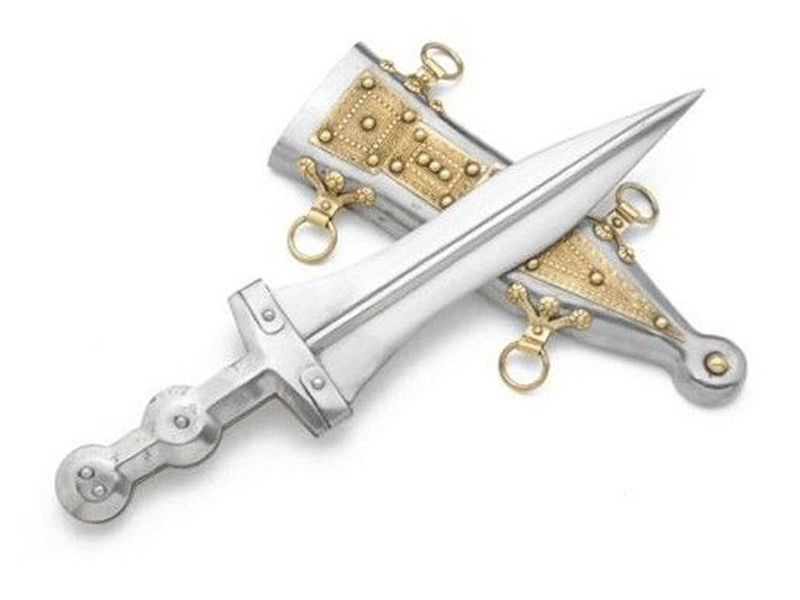
The Pugio dagger was the standard sidearm of Roman legionaries, carried alongside the gladius. Compact yet formidable, it featured a broad, leaf-shaped double-edged blade ideal for both thrusting and slashing. The Pugio's strong midrib added rigidity, allowing soldiers to penetrate armor and heavy clothing with precision and force.
Beyond combat, the Pugio held symbolic importance as a mark of rank and Roman discipline. Officers and high-ranking soldiers often owned ornately decorated versions with engraved hilts, silver inlays, or jeweled scabbards. Today, the Pugio remains one of the most recognizable daggers of antiquity — a weapon of practicality, craftsmanship, and imperial identity.
Vajra Musti Dagger

The Vajra Musti dagger integrates knuckle guard and blade, reflecting the Indian martial tradition of combining strikes and cuts in the clinch. The hilt often features a stylized vajra (thunderbolt), symbolizing spiritual strength and indestructibility.
Used alongside grappling, it enabled hammer-fist blows transitioning into thrusts or short arcs. Surviving pieces show devotional ornament, linking martial practice to sacred iconography.
Karambit Dagger

The Karambit, rooted in the Indonesian archipelago, mimics a tiger's claw with a tight curve and ring pommel for retention. The grip supports edge-in or edge-out mechanics, enabling hooks, rakes, and control in close quarters.
In Pencak Silat and related arts, the karambit's ergonomics marry leverage with safety — the ring reduces drops and allows rapid transitions. Modern variants include folding versions, but the traditional fixed blade remains a benchmark for biomechanical efficiency.
Degen Dagger

The Degen dagger paralleled smallswords in 17th–18th-century Europe as a refined gentleman's sidearm. Slim, double-edged blades and protective hilts favored courtly dueling and dress wear, emphasizing speed and thrust precision over chopping power.
Often adorned with shells, pas d'âne, or knuckle bows, the Degen expressed aristocratic taste. Surviving examples demonstrate exceptional balance and the transition from battlefield steel to civilian etiquette. View our hand-forged dagger collection →
Beja Dagger
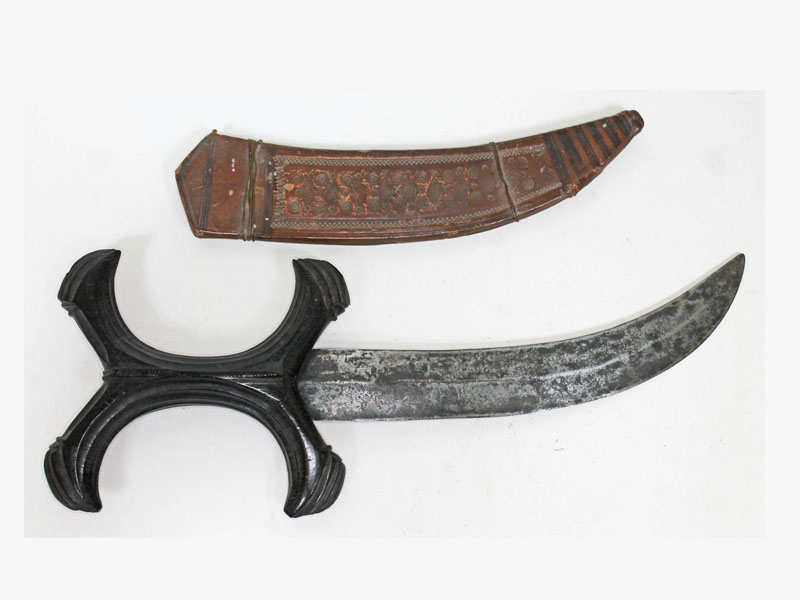
The Beja dagger, also known as the Sudanese dagger or "Shotel-style" blade of East Africa, originates from the Beja tribes inhabiting the Red Sea hills of Sudan and Eritrea. It is characterized by its distinctive inward curve, designed for powerful slashing and hooking cuts. The blade's geometry allows it to bypass shields or armor, making it both elegant and lethal in close combat.
Traditionally hand-forged from locally sourced steel, the Beja dagger often features a leather-wrapped hilt and scabbard, sometimes decorated with brass or beadwork. Beyond warfare, it served as a cultural symbol of courage, manhood, and tribal pride.
Sword Breaker Dagger

The sword breaker used deep teeth or comb-like serrations along a thickened spine to seize, lever, and sometimes snap an opponent's blade. Paired with the rapier, it gave duelists a mechanical advantage in bind and control phases.
While actually breaking a tempered sword was rare, the psychological effect and disarming potential were real. Collectors prize these ingenious parrying daggers for their bold profiles and specialized purpose.
Phurba Dagger
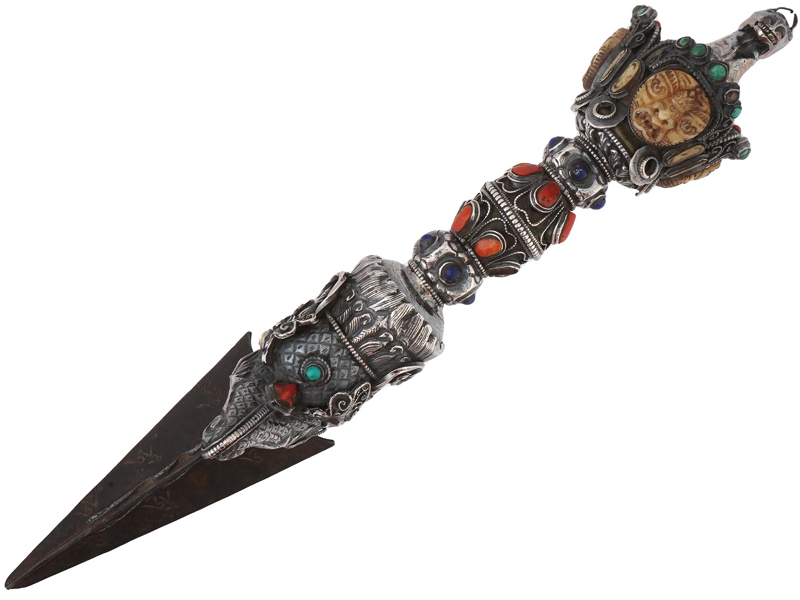
The Phurba dagger — also known as the Kīla — is a sacred ritual implement in Tibetan Buddhism and Himalayan spiritual traditions. Unlike combat daggers, the Phurba is primarily symbolic, used by monks and shamans to channel energy, dispel negativity, and subdue demonic forces. Its triple-sided blade represents the transformation of the three poisons: ignorance, desire, and hatred.
Traditionally hand-forged from bronze or iron and richly adorned with carvings of deities such as Vajrakilaya, the Phurba embodies both power and compassion. Revered as a spiritual weapon rather than a physical one, the Phurba dagger reflects the deep connection between craftsmanship and sacred ritual in Himalayan culture.
Jile Dagger

The Jile dagger is a traditional Ethiopian blade carried by both men and warriors as a symbol of pride, status, and readiness. Characterized by its curved, single-edged blade and distinctive T-shaped pommel, the Jile balances elegance with practical lethality. It was commonly worn on the belt as part of everyday dress, especially among the Oromo and Amhara peoples.
Hand-forged from carbon steel and often housed in ornately decorated leather sheaths, the Jile served as both a defensive weapon and a cultural emblem. Its craftsmanship reflects Ethiopia's deep blacksmithing heritage — a blend of tribal artistry and utilitarian design that continues to influence African blade-making traditions today.
Moro Dagger
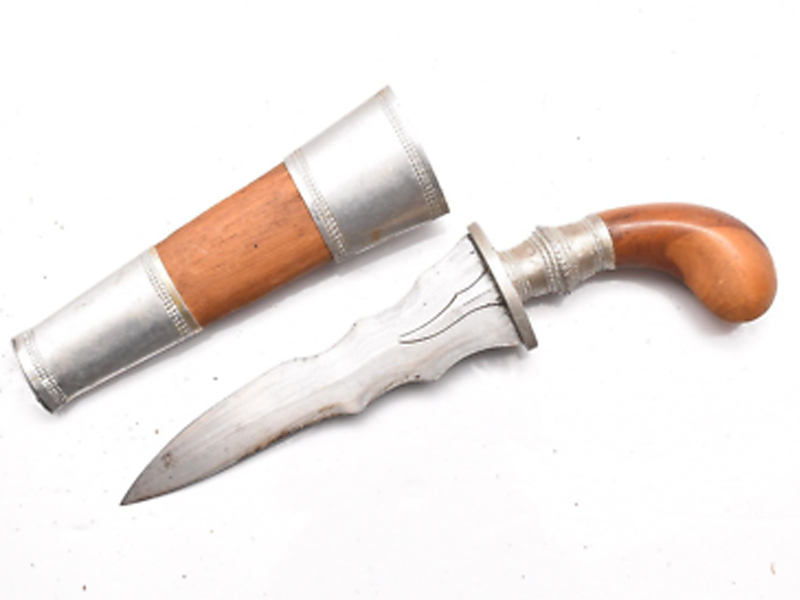
The Moro dagger originates from the southern Philippines, where it served both as a weapon and a cultural symbol among the Moro people of Mindanao and the Sulu archipelago. Known for its curved, double-edged blade and elaborate hilt designs, the Moro dagger blends Islamic artistry with practical battlefield function.
Traditionally carried by warriors alongside larger kampilan or barong swords, the Moro dagger reflected personal honor and regional identity. Hilts were often carved from horn or hardwood and inlaid with silver or mother-of-pearl, while the blade's flowing geometry allowed swift, controlled strikes.
Kunai — Ninja Dagger
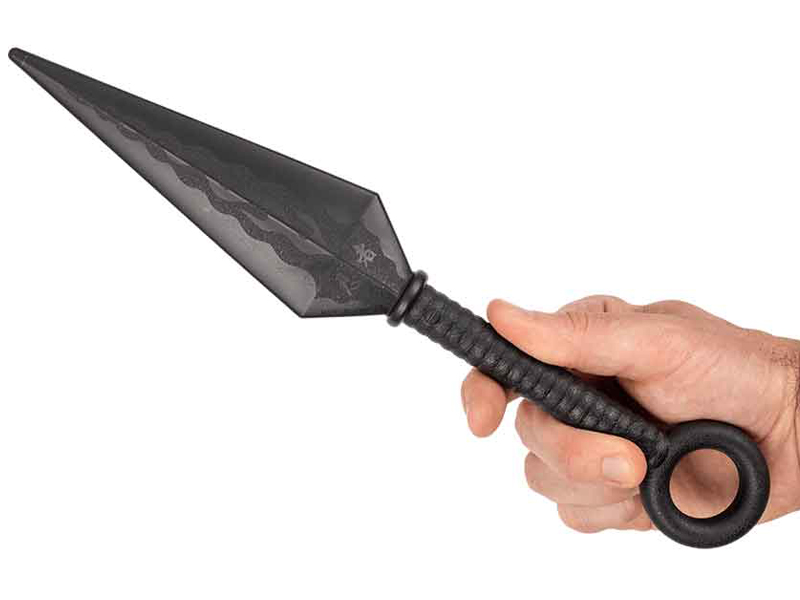
The kunai began as a masonry and gardening tool with a leaf-shaped blade and ringed pommel. In the hands of shinobi, it became a multipurpose implement for prying, climbing (with rope through the ring), distraction throws, and close defense.
Historical kunai were often heavier and simpler than pop-culture depictions. Their utility-first design exemplifies adaptability — a practical tool that, with training, doubled as an effective weapon.
Balarao — Winged Dagger

The Balarao of the Philippines is distinguished by wing-like projections near the guard that aid hand protection and blade indexing. Associated with Visayan and Mindanao cultures, it merges sculptural aesthetics with battlefield pragmatism.
Carved hilts, etched blades, and regional motifs tie the Balarao to ritual and prestige. Its handling favors controlled thrusts and guarded cuts, suitable for the archipelagic warrior traditions of pre-colonial Southeast Asia.
Khanjar Dagger
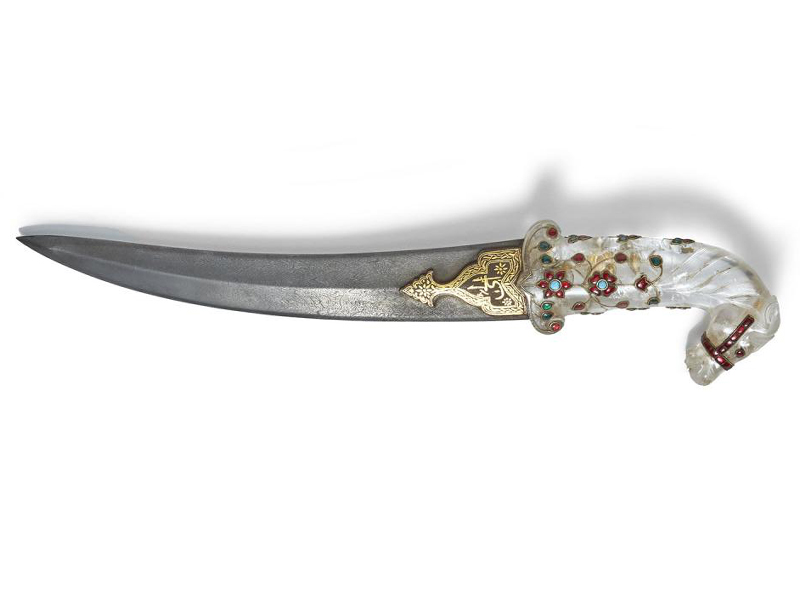
The Khanjar is a curved, double-edged dagger prevalent from Persia to Oman and the Indian subcontinent. With its characteristic "J" sweep and often flared pommel, it excels at drawing cuts and close-in thrusts while showcasing metalwork and jewelry arts.
Khanjars signal rank and identity; courtly examples feature silver repoussé, niello, enamel, and filigree. Whether worn in ceremony or carried in turbulent times, the khanjar unites elegance with latent lethality.
Didn't Find Your Type of Dagger?
Our blacksmiths can hand-forge any custom dagger or historical design to your exact specifications. Choose your blade length, handle material, and finish — we'll bring your vision to life.
Request Your Custom Dagger →The Enduring Legacy of the Dagger
Daggers are more than weapons — they are portable archives of culture, technology, and belief. From the sacred kirpan to the mystical Kris and the pragmatic push dagger, each form embodies a solution to the same problem: controlled force at arm's length. Their stories — forged in hearths, courts, and battlefields — continue to inspire makers and collectors worldwide.
Whether you are drawn to the history of a specific culture, the aesthetics of a particular blade form, or the craftsmanship of a hand-forged edge — the dagger is one of the richest collecting categories in the world of edged weapons.
Leave a Comment