Traditional Kukris / Khukuris – The Living Blades of Nepal
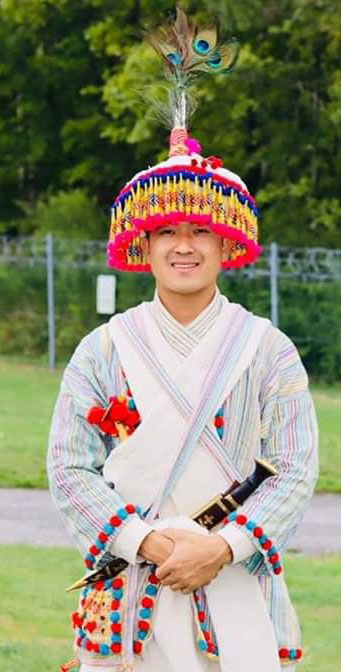
Pick up a traditional kukri and you are not just holding a knife—you are holding a village story, a mountain path, and the steady rhythm of a hammer on anvil. Across Nepal’s hills and valleys, families have relied on these curved blades to build homes, tend fields, clear forest tracks, and protect what matters. Every region shaped its own version to suit the terrain and the people who carried it. That is why no two village kukris feel exactly the same, and why a truly traditional blade seems to sit in the hand as if it has always belonged there.
At Everest Forge, we celebrate that living tradition. Our master smiths use time-honored methods to hand-forge kukris that respect the original intent of each regional pattern. The result is not a “modernized” interpretation, but a faithful working blade—tough, balanced, and endowed with the quiet dignity of craft done well.
What Makes a Kukri “Traditional”
Traditional kukris are born from practical needs rather than factory designs. They are forged at high heat from high carbon steel, shaped by eye, and tuned by experience. Instead of chasing perfect symmetry, the smith balances weight where the hand expects it: a forward-biased belly that bites into wood, a spine thick enough to carry momentum, and a taper that keeps the tip lively. These choices were refined over centuries by people who depended on their blades every day.
Materials remain simple and honest: rosewood, buffalo horn, or walnut for the handle; brass or mild steel for the bolster and pommel; a wooden scabbard wrapped in leather or natural fiber. Many scabbards are made to the individual blade, embracing its slight nuances. The outcome is a tool that looks modest until you use it—then it becomes self-explanatory.
Steel, Heat Treatment, and the Feel in the Hand
A traditional kukri earns its reputation at the forge. Smiths typically select a tough high carbon spring steel, then draw out the profile with firm, deliberate hammer blows. After rough shaping, the blade is normalized to relieve stress, and the edge zone is hardened—often by a fast water quench—followed by careful tempering. This differential treatment leaves the edge hard enough to hold a keen bevel while keeping the spine resilient, so the blade absorbs shock without becoming brittle.
Proper heat treatment shows up in use. A good kukri will bite with the belly, split kindling without chatter, and still feather a stick when the campfire calls for finesse. The balance point sits forward of the grip to add authority to every swing, yet the distal taper keeps the tip responsive and the transitions smooth.
Handle Geometry and Grip
Traditional handle shapes are made for long days. Subtle palm swells, a gentle flare toward the pommel, and a proud bolster that nests the index finger—these details keep the blade oriented without a death grip. Rosewood offers warmth and stability; buffalo horn provides a smooth, weather-resistant finish that comes alive with a wipe of oil. Whether peened through a metal pommel or secured with visible rivets, the construction stays faithful to regional norms while meeting modern expectations for strength.
Scabbards, Karda, and Chakmak
Most village scabbards begin with a hand-carved wooden core fitted precisely to the blade, then wrapped in dyed leather or natural fiber and finished with brass or steel chapes. Some regions favor clean, utilitarian scabbards; others add simple tooling or stitching that signals local pride. Tucked into a pocket behind the main blade you may find the karda and chakmak—small companions that complete the set. The karda is a handy utility knife for fine work, while the chakmak is used traditionally for edge upkeep and spark-making with flint.
Choosing the Right Traditional Kukri
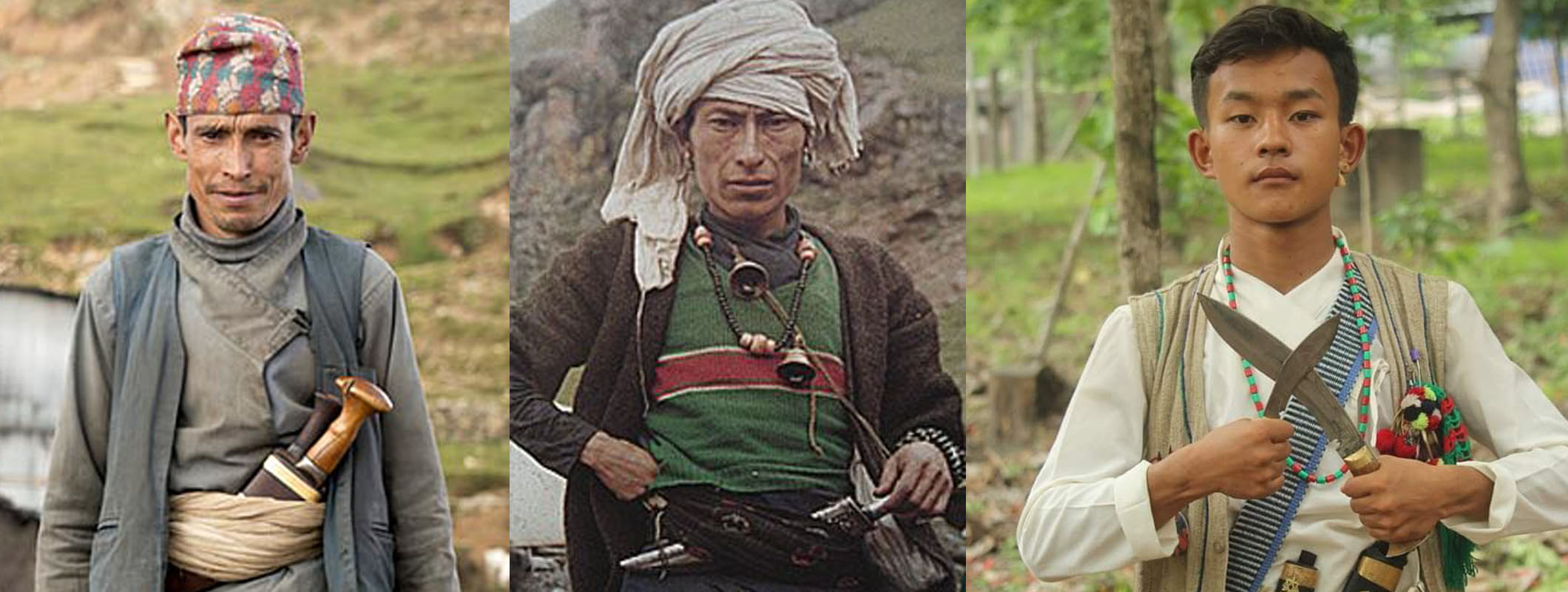
Think first about how you plan to use the blade. If you hike light and value control, a slimmer pattern keeps fatigue at bay. If you process firewood, clear camps, or work around a homestead, a broader-bellied profile moves material quickly. Collectors interested in cultural history often look for the designs most closely tied to ceremonies or distinctive village identities. Whatever you choose, the right kukri should feel intuitive from the first swing—alive, not inert; eager, not unruly.
Bhojpure Khukuri
Born in the Bhojpur region, the Bhojpure is the straightforward workhorse many people picture when they think “kukri.” A generous belly and confident spine push weight into the cut, making short work of branches and stove-length billets. In the hand, it feels deliberate and trustworthy—less about flourish, more about getting the job done without fuss.
For everyday fieldwork and homestead tasks, the Bhojpure’s geometry earns its keep. Many craftspeople in hill villages still prefer this profile because it equals reliability. In a collection, the Bhojpure anchors the story of the kukri as a tool first, and a weapon only when it must be.
Sirupate Khukuri
The Sirupate takes its name from the slender siru grass and carries that grace into steel. Thinner through the spine and longer in profile, it is lively, precise, and wonderfully quick. Where the Bhojpure leans into power, the Sirupate leans into control—perfect for light clearing, trail work, and camp chores that reward accuracy.
Carried traditionally in Eastern Nepal, the Sirupate suits those who value finesse. In practiced hands it feels like an extension of intent, changing direction easily and responding to subtle inputs from the wrist and fingers.
Dhankute Khukuri
Dhankute blades often wear their pride on the outside: tasteful ornament on the handle, cleanly finished scabbards, and thoughtful lines that nod to ceremonial use without sacrificing function. Beneath the decoration lies a true working edge—shaped and hardened to the same standards as any village knife.
If you want a traditional kukri with a touch of formality, Dhankute patterns blend heritage and elegance. They display beautifully, wear proudly at festivals, and still cut like a proper tool when called upon.
Angkhola Khukuri
Look for the long groove—the fuller—running parallel to the spine, and you will know an Angkhola when you see it. That fuller lightens the blade while preserving stiffness, shifting the balance just enough to make long sessions of work feel easier on the arm. Many users consider Angkhola the “all-day” pattern: powerful when you need it, surprisingly nimble when you do not.
In field use, the Angkhola’s tuned mass distribution stands out. The belly bites cleanly, the spine soaks up shock, and the groove helps the edge re-center quickly after each cut. It is the kind of blade you take when you are not sure what the day will bring.
Panawal Khukuri
Panawal refers to a full-tang handle with slabs (scales) secured along the tang—usually with visible rivets. It is a rugged, confidence-inspiring build favored by people who push their tools hard. The grip fills the hand without hotspots, and the slab construction resists seasonal movement well when properly maintained.
If you want traditional geometry married to a belt-and-suspenders handle construction, Panawal is the pattern. It is the quiet specialist that shows its value after months and years of use, not minutes.
Chitlange Khukuri
Chitlange kukris marry a graceful curve with crisp detailing. The line from bolster to belly seems to flow in one unbroken gesture, and that elegance carries into the scabbard and fittings. Many are worn at ceremonies or special occasions, but the core remains functional: a balanced blade that transitions smoothly from chopping to slicing.
Collectors appreciate Chitlange for the way it bridges function and form. In hand, it reassures you that beauty and utility are not opposites—they are partners.
Chainpure Khukuri
From the Chainpur region comes a blade that prioritizes practicality above all else. The profile is honest and efficient, the edge geometry straightforward, and the handling familiar to anyone who has spent time around village tools. It is the kind of kukri that lives near the door, goes to the field in the morning, and returns with the day’s work finished.
For hikers, campers, and homestead users, a Chainpure offers a dependable companion. It is also a powerful reminder that tradition survives because it works.
Budhune Khukuri
The Budhune’s compact form and modest inward sweep make it ideal for tight spaces—limbing close to the trunk, working around a cook fire, or carving stakes and toggles. It rewards good technique, responding instantly to small adjustments in angle and pressure.
If you prefer a lighter carry and a faster wrist, Budhune provides that nimbleness without giving up the heart of a kukri: a forward curve that does useful work every time it meets wood.
Tin Chira Khukuri
“Chira” refers to the fullers; “Tin Chira” means three. Those triple grooves are more than decoration—they tune the stiffness-to-weight ratio and create a visual rhythm along the blade. In use, a well-forged Tin Chira feels surprisingly fresh after an hour of chopping because the mass is where it needs to be, not where it looks impressive.
As a piece of craft, Tin Chira highlights a smith’s control at the anvil. As a tool, it earns its place with performance that matches the promise of its lines.
Limbuwan Khukuri
Associated with the Limbu communities of Eastern Nepal, the Limbuwan kukri carries distinctive curvature and often regionally characteristic handle forms. It is as much identity as instrument—an heirloom pattern that ties the present to ancestors who walked the same ridgelines.
For collectors drawn to ethnographic blades, Limbuwan offers rich study. For users, it offers a tangible connection to a people and a landscape that shaped one another over centuries.
Practical Use: Field Techniques That Respect the Blade
A kukri is not swung like a hatchet. Let the forward belly do the heavy lifting, guiding the cut with your shoulder and elbow while the wrist fine-tunes the angle. For limbing, work from the underside of the branch and allow the curve to roll through the cut. For kindling, a controlled push-cut at the belly will surprise you with how cleanly it bites. The same geometry that clears a trail will also pare a tent stake when you ease up and listen to what the blade wants to do.
In camp, the companion karda handles food prep and small tasks, keeping the main edge ready for heavier work. The chakmak helps touch up the bevel in the field; back home, a medium stone and light stropping restore a crisp, durable edge without grinding away history.
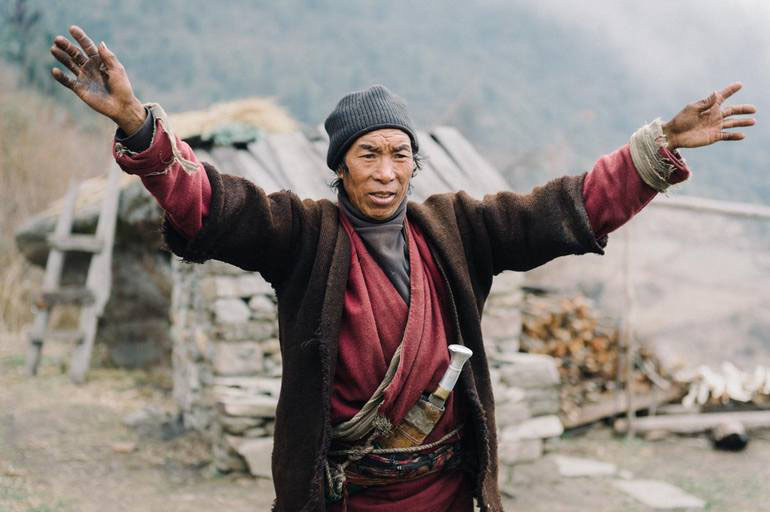
Care, Maintenance, and Longevity
Traditional kukris last a lifetime when cared for properly. Wipe the blade dry after use and apply a thin coat of oil, especially if you live near the sea or store gear in humid spaces. Condition wooden or horn handles with a little natural oil now and then. If the scabbard becomes damp, let it air-dry fully before sheathing the blade again. Sharpen with modest pressure—preserve the established bevels and the subtle convex that gives the belly so much bite.
Above all, treat the blade as a partner. Traditional kukris repay attentiveness with decades of ready service and a patina that records the miles you walked together.
Authenticity, Ethics, and the People Behind the Steel
Every traditional kukri represents work done by human hands in real communities. When you choose an authentic blade, you support smiths who learned from parents and mentors, who keep charcoal fires and knowledge alive, and who pass both to the next generation. At Everest Forge, we insist on fair collaboration and respect for the rhythms of craft, because the object is only as honorable as the way it was made.
That is also why we hold to regional geometries and materials wherever possible. “Improving” a design that survived centuries of real use often means misunderstanding it. Our task is to listen to what the blade has been saying all along—and to let it keep speaking clearly in your hand.
Looking for a Custom Traditional Kukri?
Maybe you inherited a village blade with a broken tip, or you found an old photograph of a family knife worn at a festival, or you just know exactly how your camp kukri should feel. We can help bring that vision to life. Share reference photos, sketches, or measurements, and our smiths will forge a faithful, functional piece that honors the original. From fuller placement and cho style to handle material and scabbard finish, we observe the details that make a tradition ring true.
Request a Custom Traditional Kukri
Have a rare village style or family pattern to recreate? Our master smiths can forge it from your photos, sketches, or dimensions.
Whether you want a Bhojpure that mirrors your grandfather’s tool, a Sirupate tuned for long miles, or a Chitlange worthy of ceremonial wear, we will craft a blade that feels inevitable the moment you pick it up.
Conclusion: A Blade With a Past—and a Future
Traditional kukris are not relics; they are companions. They are still carried on steep footpaths, still used to split kindling in evening light, still given and inherited and remembered. When you choose a traditional kukri from Everest Forge, you are choosing a tool that will work hard today and tell its story tomorrow. You will feel the craft in the balance, hear the lineage in the cut, and know—after the first few swings—why this curve has endured so long in the hands of people who truly need it.