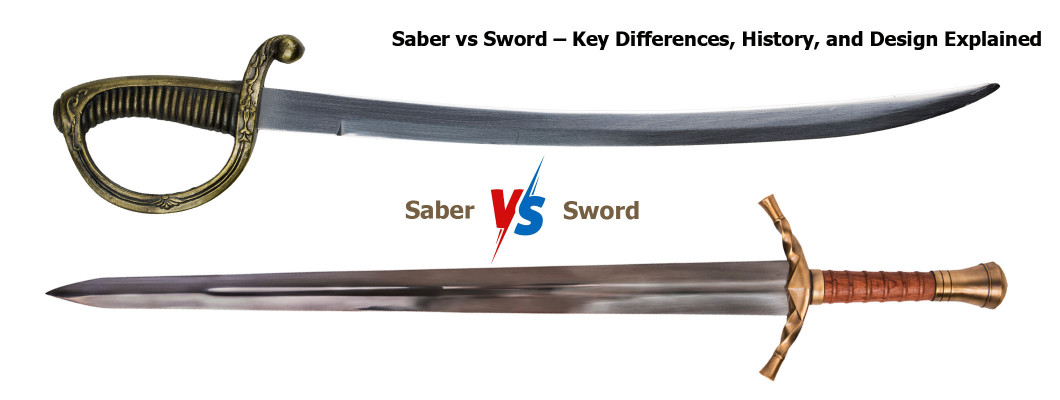
Saber vs Sword – Key Differences, History, and Design Explained
Throughout human history, the sword has symbolized power, honor, and mastery. Yet within the world of blades, the saber (or sabre) stands out as a unique evolution — a weapon that transformed the way warriors fought on horseback and in the field. This guide explores the differences between sabers and swords, their design, history, and how Everest Forge continues this craft today.
Key Takeaways
• A sword is a general category of bladed weapons, double or single-edged, straight or curved, used for cutting, thrusting, or slashing.
• A saber (or sabre) is a single-edged, slightly curved sword designed for mounted cavalry, later used in military dress and fencing.
• All sabers are swords, but not all swords are sabers; the difference lies in blade shape, hilt protection, and purpose.
Glossary of Terms
Sword: A bladed weapon longer than 18 inches, double- or single-edged, used for cutting or thrusting.
Saber (Sabre): A curved or slightly curved single-edged sword for cavalry warfare.
Backsword: A straight, single-edged sword of European design often mistaken for a saber.
What Is a Sword?
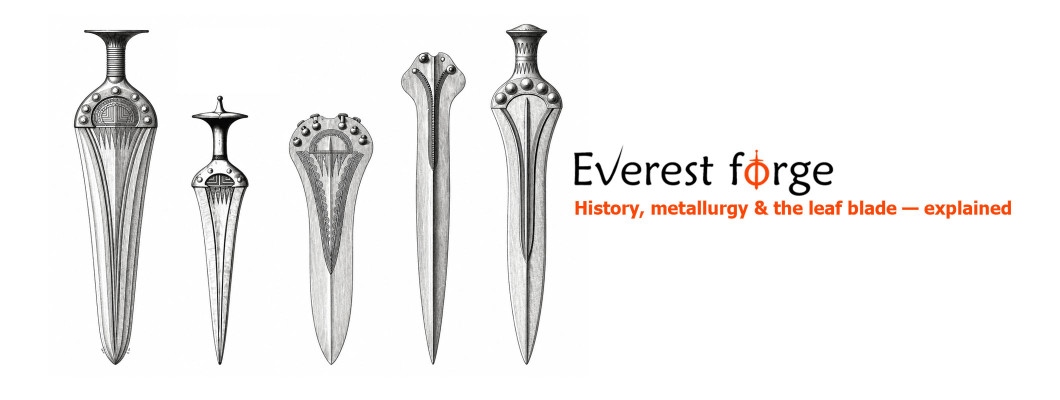
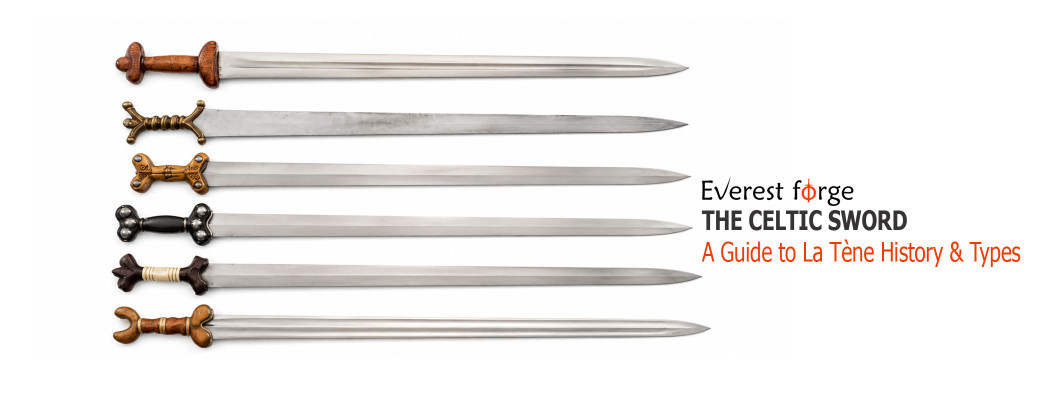
The sword has existed for over 5,000 years. Early examples were made from bronze, later from iron and steel, evolving into balanced weapons suited for cutting and thrusting. Designs ranged from the Roman gladius to the Japanese katana and the European longsword. Every culture forged its own version, reflecting its combat style and metallurgy.
What Is a Saber?
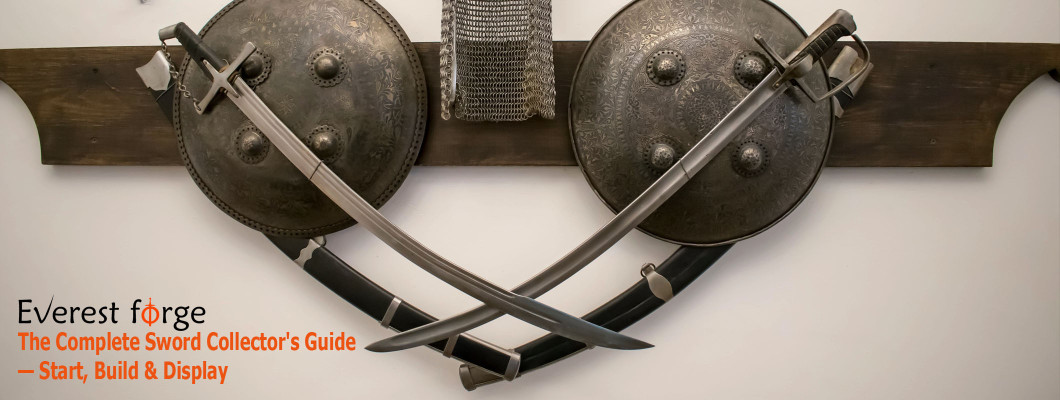
The saber originated among Central Asian and Eastern European horsemen. Its curved, single-edged blade made it perfect for slashing from horseback while maintaining speed and control. As mounted warfare spread through Europe, the saber became the signature cavalry weapon from the 17th to 19th centuries. Even today it remains a ceremonial and fencing weapon that symbolizes discipline and motion.

Note: Every saber is a sword, but not every sword qualifies as a saber. The key distinction lies in the saber’s curvature and protective hilt.
Design and Structure
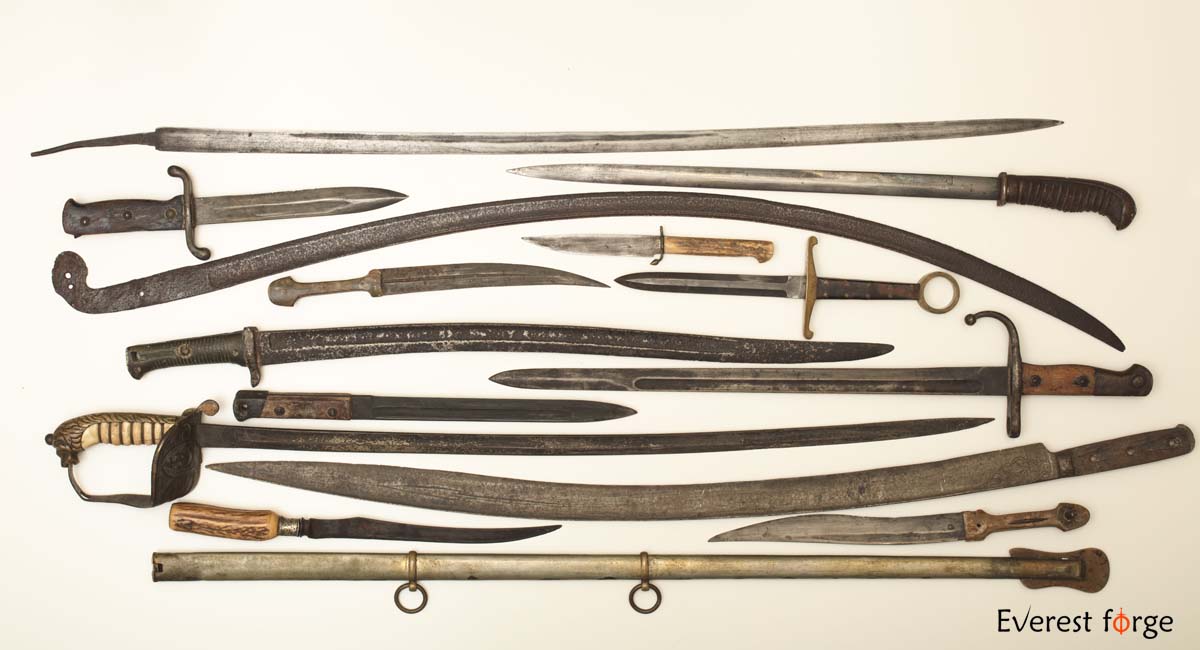
Blade: Swords can be straight or curved, single- or double-edged. Sabers are nearly always curved and single-edged, emphasizing cutting momentum. The curve helps align the edge during slashes, and some, like the Turkish kilij, have a widened tip (yelman) for stronger strikes.
Hilt and Guard: Swords often feature crossguards or two-handed grips. Sabers, in contrast, use one-handed grips with protective knuckle guards or baskets for cavalry combat. The Russian shashka is an exception, lacking a guard for faster movement.
Size and Weight: Swords vary widely, from short one-handed weapons to massive two-handed greatswords. Sabers are lighter and more consistent, averaging 30–40 inches in length and under 3 lbs in weight, optimized for swift mounted use.

Historical Development
The Sword: Appearing as early as 3000 BCE, the sword evolved from daggers into longer weapons. Across centuries, it symbolized status, valor, and mastery of the blade. From Greek hoplites to medieval knights, it remained humanity’s defining weapon.
The Saber: Emerging later, sabers were influenced by Turkic and Persian designs. They spread into Europe via the steppes and became dominant by the 18th century, especially in Napoleonic cavalry. Asian sabers such as the Chinese dao and Indian talwar also shared similar curved forms, showing how function dictated form across cultures.
Combat Use
Swords: Straight swords excelled at thrusting and parrying, ideal for duels or armored combat. Two-handed variants offered reach and leverage, while lighter one-handed swords balanced speed and defense.
Sabers: Sabers specialized in cutting. Their curve allowed cavalrymen to slash while maintaining motion. European models like the British light cavalry saber were quick and effective, while heavier sabers like the Hussar types delivered crushing strikes.
Modern Legacy
Today, both swords and sabers endure as symbols of craftsmanship and history. Fencing sabers test speed and precision, while collectors and martial artists continue to value forged replicas for their authenticity and design. At Everest Forge, artisans hand-forge functional swords and sabers using high-carbon 5160 steel, oil-tempered for resilience and balance — keeping this ancient art alive.
FAQs
Are all sabers curved?
Most are, but some 19th-century European models had straight blades for both cutting and thrusting.
What is the difference between a saber and a katana?
Both are curved, single-edged weapons, but the katana is two-handed and Japanese, while the saber is one-handed and European or Central Asian in origin.
Which is better — a sword or a saber?
Neither is superior overall. The sword offers precision and versatility, while the saber excels at mounted slashing and speed.
Are sabers still made today?
Yes, sabers are produced for ceremonial, fencing, and collector purposes. Hand-forged sabers remain prized for their craftsmanship and balance.
Explore More
See our collection of Hand-Forged Swords, Battle-Ready Sabers, or visit our Custom Forge to design your own blade.