
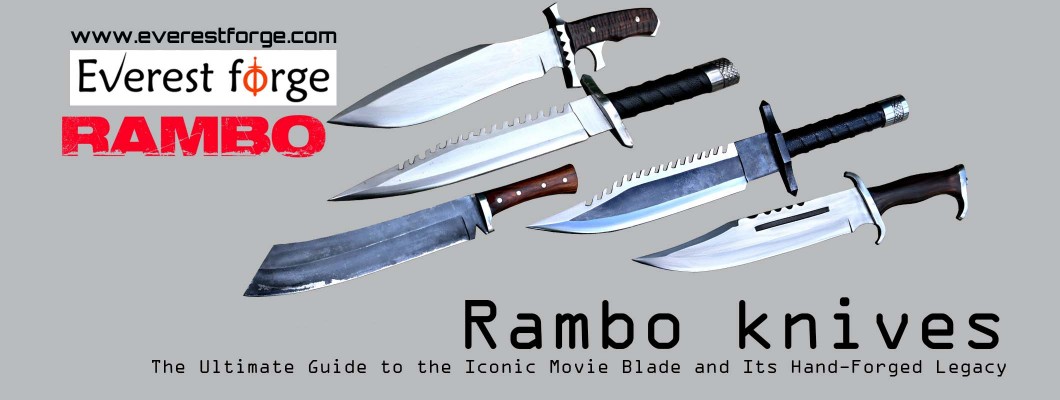
The History of the Rambo Knife: A Hollywood Icon Turned Survival Legend
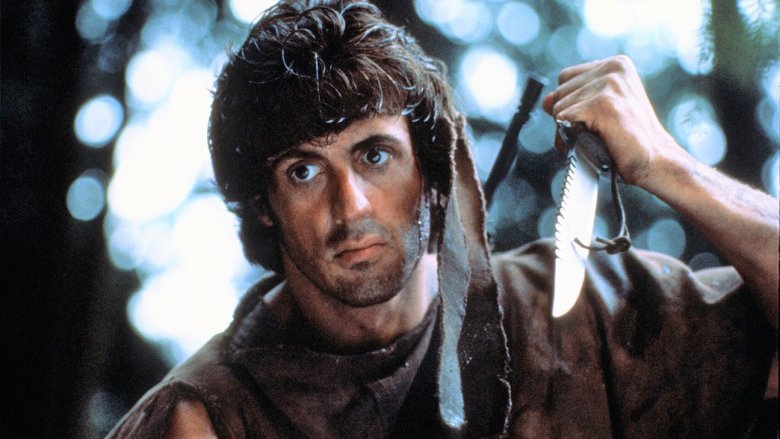
When it comes to legendary survival knives, few blades have captured global attention like the Rambo knife. Popularised by Sylvester Stallone's portrayal of John Rambo across five films from 1982 to 2019, the Rambo knife went from cinema prop to real-world survival icon — and the story of how it got there involves two of America's most legendary knifemakers, a 9-inch hollow-handle blade made in Arkansas, and nearly 40 years of evolution across one of cinema's longest-running action franchises.
This is the complete history of the Rambo knife — who designed it, what changed across each film, and why it still matters to collectors and survivalists today.
The Rambo Knife Was Designed by Two Legendary American Knifemakers
There is no single "Rambo knife." The blade evolved across five films and was designed by two different American master knifemakers, each bringing their own school of thought to the project.
Jimmy Lile (1933–1991), known as "The Arkansas Knifesmith," designed the original First Blood survival knife (1982) and the First Blood Part II knife (1985). Lile was a former president of the Knifemakers' Guild, an early member of the American Bladesmith Society, and was inducted into the Blade Magazine Cutlery Hall of Fame in 1984. He worked from his shop in Russellville, Arkansas, and his Lile Lock folding knife sits today in the Smithsonian Institution.
Gil Hibben, a Kentucky-based knifemaker and a member of the Blade Magazine Cutlery Hall of Fame in his own right, took over for Rambo III (1988) and continued designing Rambo blades through Rambo IV (2008) and Rambo: Last Blood (2019). Stallone originally asked Lile to design the Rambo III knife, but Lile declined — he could not afford to produce Stallone's larger Bowie-style design. Stallone, also a fan of Hibben's work, called Hibben instead. The handover from Lile to Hibben represents a stylistic shift across the franchise that's still debated by collectors today.
How the Rambo Knife Evolved Across Five Films
First Blood (1982) — The Original Survival Knife
The knife that started it all was Jimmy Lile's First Blood survival knife. When Stallone's production team approached Lile, they didn't want a Hollywood prop — they wanted a functional tool that could plausibly perform every task John Rambo would need it for in the wild.
Lile's response was a 9-inch clip-point Bowie blade (14 inches overall length) forged in 440C high-chromium stainless steel — which Lile famously claimed could "cut through the fuselage of an aircraft." The spine was serrated as a saw blade. The hollow handle, sealed with an O-ring, contained matches, fishing line, needles, thread, and a survival compass mounted in the aluminium butt cap. The handle was wrapped in nylon line that could be cut free for fishing or trapping. The crossguard tips were ground into a flathead and a Phillips screwdriver. The hollow handle was specifically designed so the knife could be lashed to a pole and used as a spear or fishing gig.
Lile produced only 13 prototypes for production use — numbers 1 through 6 went to Stallone for filming; Lile kept numbers 7 through 13. The film knives had 14 sawteeth on the spine. Later, Lile released 100 numbered consumer knives with 12 sawteeth; today, surviving numbered Lile First Blood knives sell at auction for tens of thousands of dollars.
First Blood Part II (1985) — "The Mission" Knife
For the 1985 sequel, Lile delivered an evolved design called "The Mission" knife. The basic design language stayed close to the original — hollow handle, sawback spine, clip-point profile — but the Mission knife featured aggressive black-coated styling and refined geometry suited to the more action-driven sequel. Lile's Mission II is widely considered by collectors his finest film knife and is among the most coveted Rambo blades ever made.
The two Lile knives together established the Mission Series and effectively created the modern hollow-handle survival knife genre. Every survival knife with a hollow handle made since 1982 traces its lineage back to Lile's First Blood design.
Rambo III (1988) — Hibben's Bowie Hunter
For the third film, Stallone wanted something different — a larger, more exotic Bowie-style knife with a dramatic profile suited to the Afghanistan jungle setting. After Lile declined the project, Gil Hibben designed what would become the most iconic Rambo knife of the 1980s: a massive broad-bladed Bowie hunter with a pronounced clip-point and forward curve, dramatic enough to fill a movie poster and brutal enough to look authentic in jungle combat scenes. The Rambo III knife abandoned the hollow handle entirely — Hibben's design philosophy was that survival should rest on the blade's quality, not on stowed-away supplies.
The Hibben Rambo III knife is the design that most casual viewers picture when they think "Rambo knife." It's the most reproduced Rambo design of all time and remains the bestselling Rambo replica across most knife retailers today.
Rambo (2008) — The Cleaver
For Stallone's 2008 return to the franchise, Hibben designed something even more brutal — a thick, heavy cleaver-style blade with a forward weight bias optimised for chopping. The film's setting was the Burmese jungle, and the knife reflected that environment: less a precision tool and more a machete-cleaver hybrid for the heavy clearing and combat work demanded by the script.
The Rambo IV cleaver is the most divisive Rambo design among collectors — some consider it the most practical Rambo knife (it actually works hard for chopping), others find it stylistically too far from the survival-knife elegance of the Lile originals. Either reaction is valid.
Rambo: Last Blood (2019) — The "Heartstopper"
For Stallone's farewell to John Rambo, Hibben designed a smaller, more refined combat blade nicknamed "the Heartstopper" by fans. After 30 years of escalating size, the Last Blood knife reverses course — compact, brutally functional, designed for close-quarters work rather than the oversized cleaver of Rambo IV.
The Heartstopper closes the Rambo knife evolution with a return to practicality. If you trace the design language across all five films, you see a wave: Lile's elegant 9-inch survival tool, the refined Mission II, Hibben's massive Bowie hunter, the brutal cleaver, and finally a return to a compact combat blade. The Rambo knife came full circle.
What Made Lile's Original Rambo Knife So Influential
Lile's First Blood knife wasn't the first survival knife — military pilot survival knives, hunters' Bowies, and the Marble's "Trailmaker" all predate it — but it was the first survival knife that looked the part of a hero's blade. Before 1982, "survival knife" was a category for military supply clerks. After 1982, it was a category every American teenager wanted on their belt.
The hollow handle alone changed the genre. Before Lile, survival kits were carried in pouches or pockets. Lile's hollow handle — sealed with an O-ring, packed with matches, line, hooks, and a compass — turned the knife itself into the survival kit. By the late 1980s, almost every American knife brand had a hollow-handle "Rambo-style" survival knife in their catalogue. The cultural impact was that significant.
The sawback spine was equally influential. Lile's serrated spine could be used to saw through bone, cut wood, scrape tinder, or score branches for snares. The serrations became a visual shorthand for "this is a serious survival tool." Decades later, the sawback spine still appears on military and outdoor knives that owe their look directly to Lile's 1982 design.
The Rambo Knife in Knife Collecting Today
Original Lile film knives — the actual numbered prototypes Stallone used on set — sell at auction for $35,000 to $80,000 USD when they appear, which is rarely. The 100 numbered consumer Lile First Blood knives sell for $5,000 to $15,000 at auction depending on condition and serial number. Hibben's signed limited-edition Rambo III, IV, and V knives sell in the $1,500 to $5,000 range.
Below that tier, the Rambo knife collecting world divides into licensed reproductions (Master Cutlery for Lile's First Blood and Part II; Hibben Knives for Rambo III, IV, and V), and tribute pieces from independent knifemakers around the world. The licensed reproductions are excellent display knives but are typically machine-finished. Tribute pieces vary enormously — from cheap stainless costume knives at the bottom to genuinely hand-forged working knives at the top.
Why the Rambo Knife Still Matters
More than 40 years after Lile's first knife appeared in First Blood, the Rambo knife remains the single most recognised movie knife in the world. Most collectors couldn't identify the knives from The Hunted, Crocodile Dundee, or Predator — but everyone recognises the silhouette of a Rambo knife at a glance.
Part of that durability comes from the films themselves — Rambo went global, the knife went with it. But part of it comes from the design itself. Lile and Hibben weren't designing props. They were designing real working knives that happened to be filmed. The knives endure because the design endures — the geometry, the proportions, the mechanical purpose were all sound the day they were forged. They still work today.
That's also why the Rambo knife continues to be reinterpreted by modern knifemakers. At Everest Forge, our hand-forged tribute pieces in 5160 spring steel are part of that long tradition — not a licensed reproduction, but a real working knife in the design language Lile and Hibben established. See the complete Rambo Series Knives collection.
Hand-Forged in Kathmandu — All 5 Films
Own a Real Hand-Forged Rambo Knife
Everest Forge crafts hand-forged Rambo knives in 5160 high carbon spring steel — full tang, water-tempered, sharpened to a working edge. The complete collection covers all five film designs: First Blood, Part II, Rambo III (Rosewood & Bone handle), Rambo IV cleaver, the Last Blood Heartstopper, plus the Rambo Bowie and Ranger Machete. Made to order in Nepal. Free engraving up to 30 characters. Worldwide shipping with DHL Express & FedEx International.
View the Rambo Series Collection →Want Something Truly Unique?
Custom Forge Your Own Rambo-Style Knife
Want a Rambo-inspired blade built to your exact design — a specific blade length, a blend of Lile and Hibben design elements, custom engraving with military insignia or a memorial dedication, or a one-of-a-kind matched set? Our master smiths in Kathmandu can build it. Custom Forge orders start at $75 above base price and ship in 2–3 weeks.
Request a Custom Forge →Want to Compare the Different Rambo Blade Types?
The five Rambo knives across the films vary significantly in blade profile, grip design, and intended use. For a technical breakdown of each blade type, the differences between Lile's hollow-handle survival design and Hibben's full-tang Bowie hunters, and what to look for in a Rambo knife if you're considering one for your collection, read the companion article: The Ultimate Guide to Rambo Knife Blade Types and Grip Designs.
Frequently Asked Questions About the Rambo Knife
Q1. What is the Rambo knife?
The Rambo knife is a survival or combat knife featured in the five Rambo films starring Sylvester Stallone (1982–2019). The original was designed by Arkansas knifemaker Jimmy Lile for the 1982 film First Blood — a 9-inch hollow-handle Bowie-style knife with a sawback spine and survival kit stored in the handle. Across the series, the design was redesigned several times by Lile and later by Kentucky knifemaker Gil Hibben.
Q2. Who designed the original Rambo knife?
The original Rambo knife from First Blood (1982) was designed and hand-forged by Jimmy Lile, an American knifemaker from Russellville, Arkansas, known as "The Arkansas Knifesmith." Lile also designed the second Rambo knife for First Blood Part II (1985), called "The Mission" knife. Lile passed away in 1991. The Rambo III, IV, and V knives were designed by Kentucky knifemaker Gil Hibben after Lile declined the Rambo III project.
Q3. What kind of knife did Rambo use in First Blood?
In First Blood (1982), John Rambo used a 9-inch clip-point Bowie survival knife with a hollow handle and sawback spine, designed by Jimmy Lile. The hollow handle (sealed with an O-ring) contained matches, fishing line, needles, thread, and a survival compass in the aluminium butt cap. The handle was wrapped in nylon line. The crossguard tips were ground into a flathead and Phillips screwdriver. Total length was approximately 14 inches.
Q4. What steel is the Rambo knife made of?
The original Lile First Blood knife was forged in 440C high-chromium stainless steel — Lile famously claimed it could "cut through the fuselage of an aircraft." Hibben's later Rambo III, IV, and V knives use various carbon and stainless steels depending on the production run. Modern hand-forged Rambo tribute knives, including those by independent knifemakers worldwide, often use 5160 spring steel, 1095 carbon steel, or D2 tool steel for working durability.
Q5. How much is an original Jimmy Lile Rambo knife worth?
Original Lile film prototypes — the actual knives Stallone used on set — sell at auction for $35,000 to $80,000 USD when they appear (rarely). The 100 numbered consumer Lile First Blood knives sell for $5,000 to $15,000 USD depending on condition and serial number. Lile passed away in 1991, so production stopped — surviving numbered knives are now rare collectors' pieces.
Q6. Are all five Rambo knives the same design?
No — each film features a different knife. The First Blood (1982) and First Blood Part II (1985) knives, both designed by Jimmy Lile, share the hollow-handle survival design language. The Rambo III (1988) knife, designed by Gil Hibben, is a much larger Bowie hunter with a full tang (no hollow handle). The Rambo IV (2008) knife is a heavy cleaver-style blade. The Rambo: Last Blood (2019) knife, nicknamed "the Heartstopper," is a smaller compact combat blade. Each blade reflects the film's setting and tone.
Q7. What is the difference between a Lile and a Hibben Rambo knife?
Jimmy Lile designed survival-knife-style Rambo blades with hollow handles, sawback spines, and 9-inch clip-point Bowie geometry. His designs are subtler, more practical as actual survival kit, and rooted in Arkansas knifesmithing tradition. Gil Hibben designed larger, full-tang Bowie-style Rambo knives with dramatic forward curves and visual aggression. His designs are bigger, more visually iconic, and rooted in Kentucky-school custom knifemaking. Lile designed Rambos I and II; Hibben designed Rambos III, IV, and V.
Q8. What is the "Heartstopper" Rambo knife?
"The Heartstopper" is the fan nickname for the Rambo knife featured in Rambo: Last Blood (2019), designed by Gil Hibben. After three films of escalating blade size (the Rambo III Bowie hunter, the Rambo IV cleaver), the Last Blood knife reverses course — a compact combat blade designed for close-quarters work rather than oversized chopping. It's the smallest of Hibben's Rambo knife designs.
Q9. Why didn't Jimmy Lile design the Rambo III knife?
Stallone originally approached Jimmy Lile in 1988 to design the Rambo III knife, but Lile declined — Stallone's vision called for a much larger, more exotic Bowie knife than Lile typically produced, and Lile reportedly couldn't afford the production setup needed to make it. Stallone, also a fan of Kentucky knifemaker Gil Hibben's work, contacted Hibben instead. Hibben designed the famous Rambo III Bowie hunter and went on to design the Rambo IV and V knives as well.
Q10. Are Rambo knives real or just movie props?
The Rambo knives used on set in all five films were real, fully functional knives — not display props. Both Jimmy Lile and Gil Hibben were and are working master knifemakers, not prop makers. Lile produced 13 numbered prototypes for the original First Blood and these were the actual knives Stallone handled in the film. The knives were designed to be real survival tools, not stage props that "looked good on camera." This commitment to functional design is one reason the Rambo knife became culturally durable.
Q11. What is the saw on the back of the Rambo knife for?
The serrated sawback spine on Jimmy Lile's First Blood and Mission knives was designed for cutting wood, sawing through bone, scraping tinder, scoring branches for snares, and cutting through aircraft skin or rope in survival situations. The serrations became a visual signature of "serious survival knife" after First Blood, and many military and outdoor knives still feature sawback spines today as a direct influence from Lile's 1982 design. Hibben's later Rambo III, IV, and V knives mostly omit the sawback — Hibben favoured uninterrupted spine geometry.
Q12. Is the Rambo knife illegal to own?
Ownership of fixed-blade survival knives is legal in most countries, including the United States, Canada, and most of Europe. Carrying a Rambo-sized knife in public, however, is restricted in many jurisdictions — including most US states, the United Kingdom, Australia, Germany, Japan, and Singapore — due to fixed-blade carry laws. Display, collection, and at-home use are almost universally legal. Travel with a Rambo knife may require declaring it as cargo on flights and following customs rules at international borders.
Q13. Why is the Rambo knife still popular today?
Three reasons. First, the films endure — Rambo went global, the knife went with it, and four decades of repeat exposure on TV, streaming, and home video kept the design culturally fresh. Second, the design is sound — both Lile and Hibben were master knifemakers, and the knives were forged as real working tools. The geometry, balance, and mechanical purpose are still valid. Third, no other movie knife reached the same cultural mass — Crocodile Dundee, the Predator knife, the Bowie from The Iron Mistress all had moments, but none penetrated global culture like Rambo. The Rambo knife remains the default mental image when most people hear "movie knife."
Q14. Where can I learn more about Rambo knife blade types and grip designs?
For a technical comparison of each Rambo knife's blade profile, grip materials, tang construction, and intended use, see the companion article: The Ultimate Guide to Rambo Knife Blade Types and Grip Designs. For the complete hand-forged Rambo knife collection at Everest Forge, see the Rambo Series Knives category.
Leave a Comment