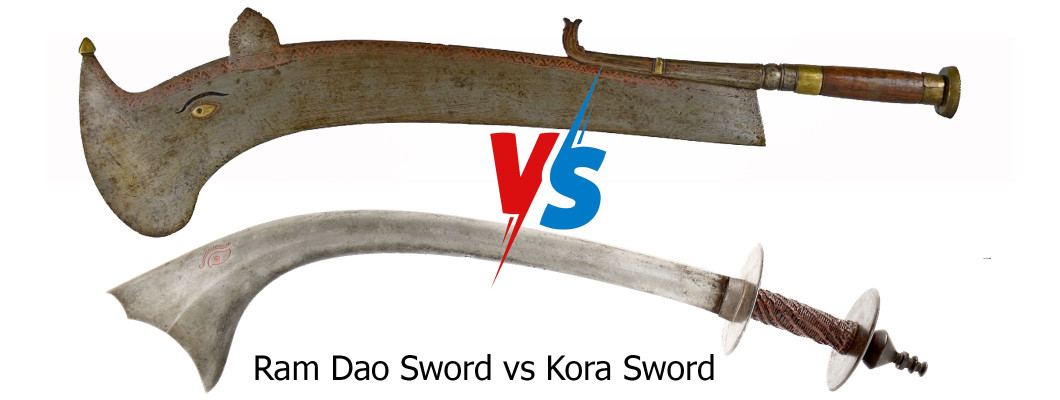
Ram Dao Sword vs Kora Sword
The Himalayan kingdom of Nepal produced two of the most distinctive blades in South Asian history — the Ram-Dao Sword and the Kora Sword. Though they share cultural roots, each served a very different purpose. The Ram-Dao was a sacred ceremonial sword, while the Kora was a brutal weapon of war used by Nepal’s Gurkha warriors.
Origins and Purpose
The Ram-Dao sword was designed for ritual use, especially during major festivals such as Dashain, when animals were sacrificed to honor the goddess Durga. Its broad blade and weight were meant to deliver a single, clean stroke — a symbolic act of strength and purity in worship.
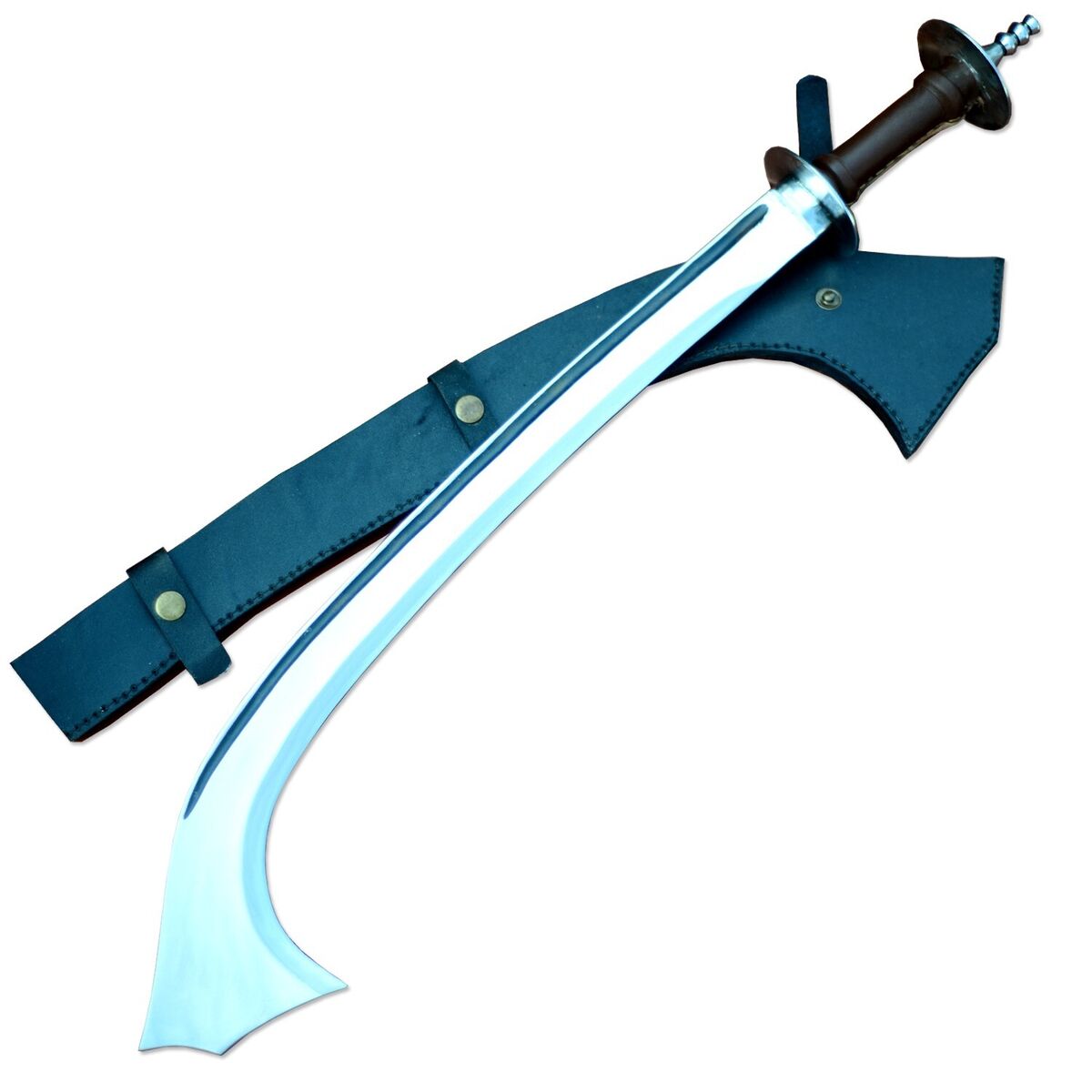
The Kora sword, by contrast, was forged for battle. It was carried by Nepalese soldiers long before the kukri became famous. The Kora’s forward-curved shape and heavy tip gave it tremendous chopping power, allowing warriors to strike with devastating force in close combat.
Blade Design
The Ram-Dao features a broad, recurved blade with an upturned tip ending in a ball finial. Its surfaces are often decorated with engraved floral borders, eyes, or peacock motifs — each symbol carrying spiritual meaning. The spine continues into an octagonal metal bar that extends to the handle, sometimes finished with a monkey-head motif. Wooden grips with checkered texture and large ivory pommels reflect its ceremonial grandeur.
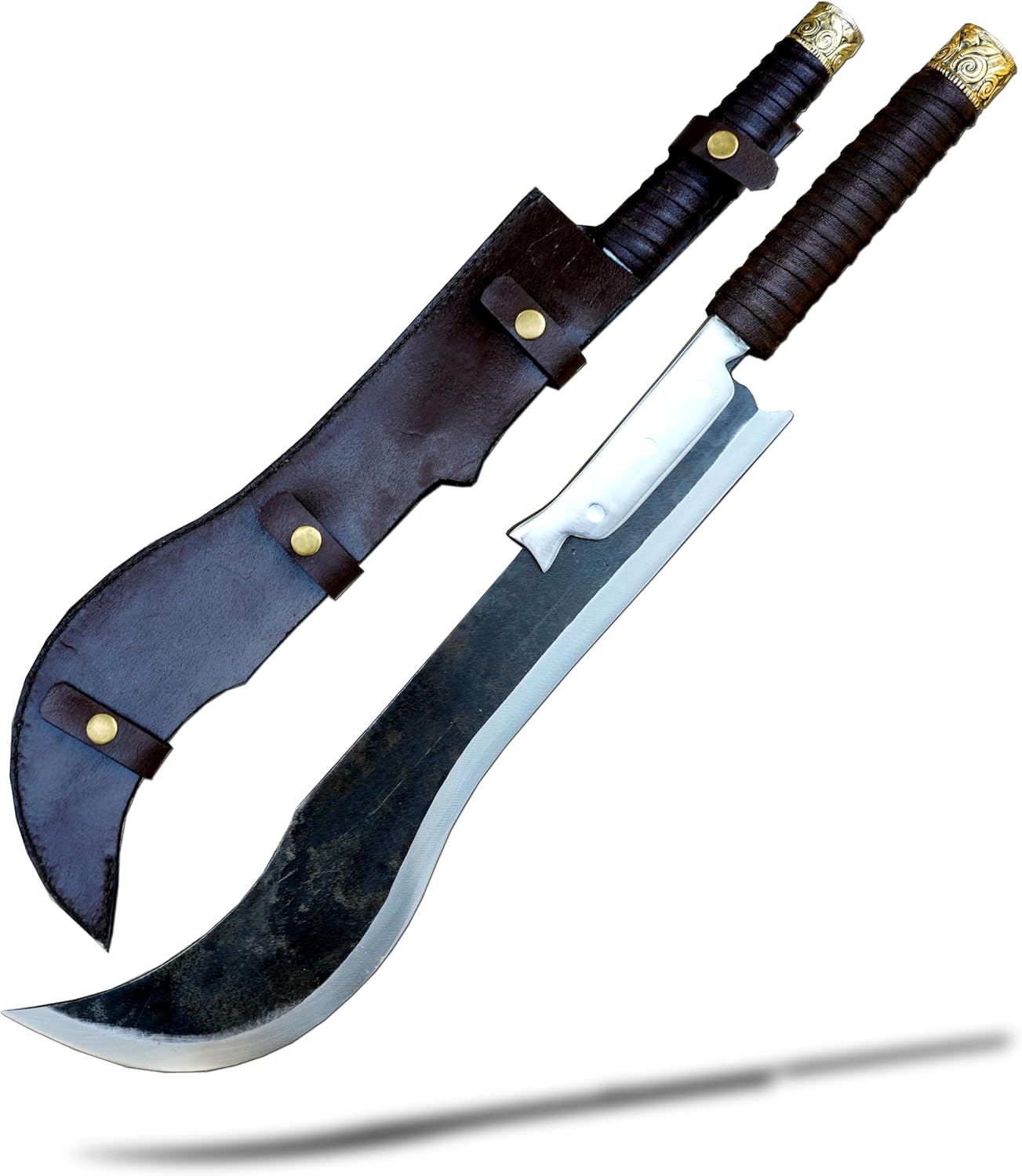
The Kora, on the other hand, has a distinct forward curve and a flared tip. The thick spine gives it strength, while the edge focuses power at the front of the blade. Many Koras display forge-folded patterns, known as “bird’s eye” welding, revealing the artistry of Nepal’s traditional smiths.
Handle and Balance
The Ram-Dao’s handle design emphasizes appearance over agility. Its checkered wood grip and heavy pommel provide balance for ritual use, not for prolonged combat. It’s built to deliver one powerful, controlled stroke rather than multiple attacks.
The Kora is made for combat efficiency. Its cylindrical handle, placed between two disc guards, gives excellent hand protection and control. The forward-weighted design makes the Kora a strong chopper, yet it remains well-balanced in skilled hands.
Symbolism and Meaning
The Ram-Dao symbolizes purity, sacrifice, and devotion. It connects the human world to the divine through sacred ceremony, representing the spiritual side of Nepalese culture.
The Kora stands for bravery, strength, and the warrior’s honor. It embodies the martial spirit of the Gurkhas, who earned global respect for their skill and courage.
Key Differences
| Feature | Ram-Dao Sword | Kora Sword |
|---|---|---|
| Primary Use | Ceremonial, ritual sacrifice during Dashain and other festivals | Warfare and close combat weapon of Gurkha soldiers |
| Blade Design | Broad, recurved blade with upturned tip and engraved motifs | Forward-curved blade with widened tip for maximum impact |
| Decoration | Highly ornate with floral, eye, and peacock engravings | Simple, functional with forge-folded pattern welding |
| Handle Design | Checkered wooden grip with ivory pommel | Cylindrical grip with dual disc guards for protection |
| Balance | Center-balanced for a single powerful stroke | Forward-weighted for strong chopping action |
| Symbolism | Represents faith, purity, and devotion | Represents courage, honor, and warrior spirit |
Legacy of Nepalese Swordcraft
Together, the Ram-Dao and the Kora reflect the dual essence of Nepalese craftsmanship — devotion and warfare. One served the temple, the other the battlefield. Both continue to captivate collectors, historians, and artisans who admire Nepal’s unmatched forging tradition.
Common Feature – The Eye Engraving
Both the Ram-Dao and the Kora share a significant symbolic detail — the engraved “Eye” near the tip of the blade. In Nepalese tradition, this sacred eye represents divine protection and spiritual vision. It is believed to watch over the wielder, guiding every stroke with purpose and faith. Whether used in ritual sacrifice or in ancient warfare, the presence of the eye symbolizes clarity, awareness, and the ever-watchful gaze of the gods.
Conclusion
The Ram-Dao Sword and Kora Sword may differ in form and function, but both tell the same story — one of skill, strength, and spirit. They remain enduring symbols of Nepal’s cultural and martial heritage, forged in faith and fire.
Frequently Asked Questions (FAQ)
What is the main difference between a Ram-Dao and a Kora sword?
The Ram-Dao is a ceremonial sword used during religious festivals like Dashain, while the Kora is a combat weapon used by Gurkha warriors in warfare.
Was the Ram-Dao ever used in battle?
No. The Ram-Dao was not intended for warfare; it was made exclusively for religious rituals and ceremonial purposes.
Why is the Kora sword shaped forward like a cleaver?
The forward curve of the Kora shifts weight toward the tip, creating immense cutting power, perfect for heavy strikes in close combat.
Do craftsmen still forge Ram-Dao and Kora swords today?
Yes. Traditional blacksmiths in Nepal continue to forge both swords by hand, preserving centuries-old techniques and artistry.
Which sword is rarer — Ram-Dao or Kora?
Authentic ceremonial Ram-Dao swords are rarer today, as they were produced in smaller numbers compared to battle-used Kora swords.