Parts of a Sword and Their Anatomy Explained
For centuries, the sword has symbolized honor, craftsmanship, and balance. Whether used on the battlefield or displayed as a collector’s treasure, every sword follows a precise design — a harmony between art and engineering. Understanding the parts of a sword reveals how each component contributes to strength, balance, and cutting performance. At Everest Forge, every blade is hand-forged in Nepal using traditional blacksmithing techniques passed down through generations. Each curve and edge is shaped with purpose, reflecting both function and heritage.
Main Parts of a Sword

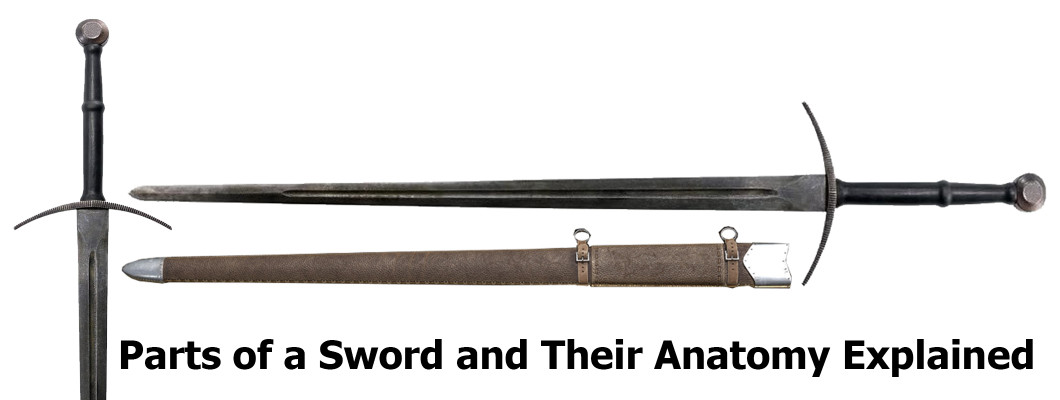
Across centuries and cultures, swords have evolved — but nearly all share three essential parts that define the sword anatomy:
Blade: The sharpened section used for cutting, slashing, or thrusting. It’s the heart of the sword’s performance.
Hilt (Handle): The area gripped by the wielder. It provides balance, control, and safety during use.
Scabbard (Sheath): The protective cover that encases the blade when not in use, preventing damage and rust.
Together, these three components form the foundation of every sword — whether it’s a European longsword , a Japanese katana, or one of our traditional kukris from Nepal.
Sword Blade Anatomy

The blade determines the sword’s purpose — whether for combat, ceremony, or collection. Each feature contributes to how the weapon cuts, balances, and endures.
Tip (Point): The very end of the sword used for thrusting or piercing. A narrow tip delivers precision, while a broad tip offers powerful slicing ability.
Edge: The sharpened portion of the blade used for cutting and slashing. Some swords are double-edged for versatility, while others are single-edged for focused strength.
Fuller: A groove or channel that lightens the blade without sacrificing durability — improving handling and reducing fatigue.
Spine or Ridge: The thicker, unsharpened back of the blade that adds rigidity and strength.
Ricasso: The short, unsharpened section near the guard that offers better control when handling the sword.
Shoulders: The transition point between the blade and the tang, providing crucial structural stability.
Tang: The hidden extension of the blade that runs inside the handle. A full tang design — used in all Everest Forge swords — ensures exceptional balance and strength.
Forte and Foible: The lower half of the blade (forte) is stronger for parrying and blocking, while the upper half (foible) is lighter and more agile for slicing and thrusting.
Sword Handle (Hilt) Anatomy

The hilt — or handle of a sword — connects the wielder to the blade. It determines how comfortably and securely the sword can be handled, and how well it balances in motion.
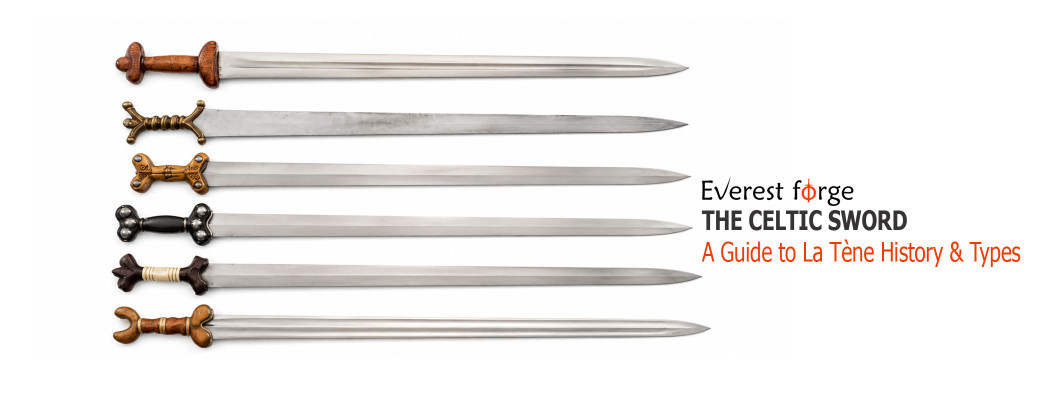
Pommel: A counterweight located at the base of the handle, balancing the blade and securing the tang. It can also serve as a striking weapon in close combat.
Grip (Handle): The gripped part of a sword, made from wood, horn, bone, or metal. Often wrapped in leather or cord, it provides comfort and control.
Guard / Crossguard: The horizontal bar between the blade and handle that protects the hand from slipping forward or being struck.
Quillons: Extensions of the guard designed to catch or deflect an opponent’s blade.
Ferrule & Tang Nut: Metal fittings that reinforce and secure the hilt components, keeping them tightly aligned and stable.
Every sword handle forged at Everest Forge is shaped, fitted, and finished by hand. It’s built not only for looks, but for comfort, safety, and real performance.
Scabbard and Its Components

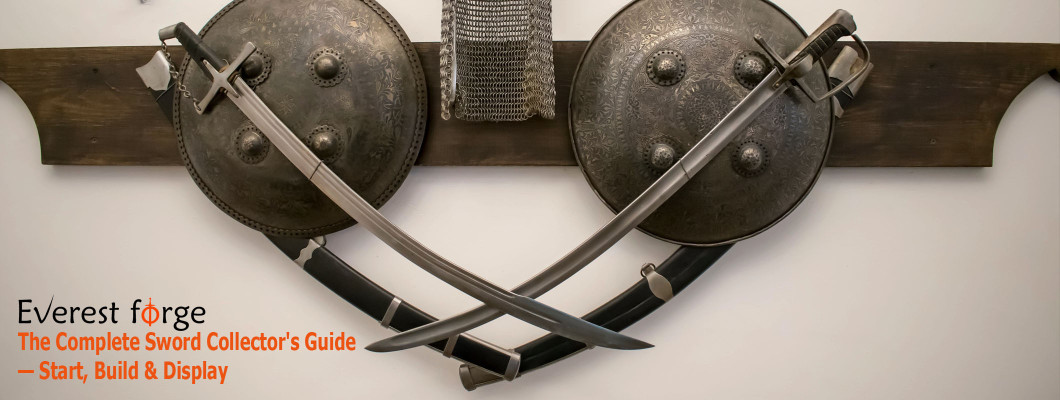
The scabbard is the sword’s companion, protecting both the blade and the user. It prevents corrosion, maintains sharpness, and adds an elegant finish.
Throat: The opening where the blade enters, guiding it smoothly into the sheath.
Locket: The metal collar that strengthens the top of the scabbard, reinforcing the most-used area.
Chape: The decorative and protective tip that prevents wear and adds visual harmony.
Each Everest Forge scabbard is handcrafted from carved hardwood, wrapped in leather or yak hide, and finished with brass or iron fittings for a refined traditional look.
Sword Materials
Every material used in a sword defines its strength, flexibility, and appearance. At Everest Forge, materials are carefully chosen for balance and durability.
Blade Materials: 5160 high carbon spring steel, Damascus, or wootz steel — all forged and oil-tempered for superior flexibility and cutting power.
Hilt Materials: Wood, horn, bone, or metal, often wrapped in leather or cord for secure handling.
Scabbard Materials: A solid hardwood core covered with leather or canvas, finished with brass or iron fittings for lasting protection.
Why Sword Anatomy Matters
Every part of a sword serves a purpose — the blade for power and precision, the hilt for control and safety, and the scabbard for preservation. Together, they represent the perfect blend of art and engineering that has defined swords for millennia.
Understanding the different parts of a sword reveals how craftsmanship and culture combine in every blade. It also helps collectors and enthusiasts recognize the difference between decorative pieces and true functional weapons.
If you’re inspired by authentic craftsmanship, explore our custom forged swords — handmade in Nepal to match your personal design, purpose, and passion.
Final Thoughts
The anatomy of a sword is far more than a list of components — it’s the story of innovation, culture, and human skill. From tip to pommel, every part plays a role in precision, balance, and beauty.
Every sword crafted by Everest Forge carries that story — forged by hand, built for performance, and made to endure for generations.