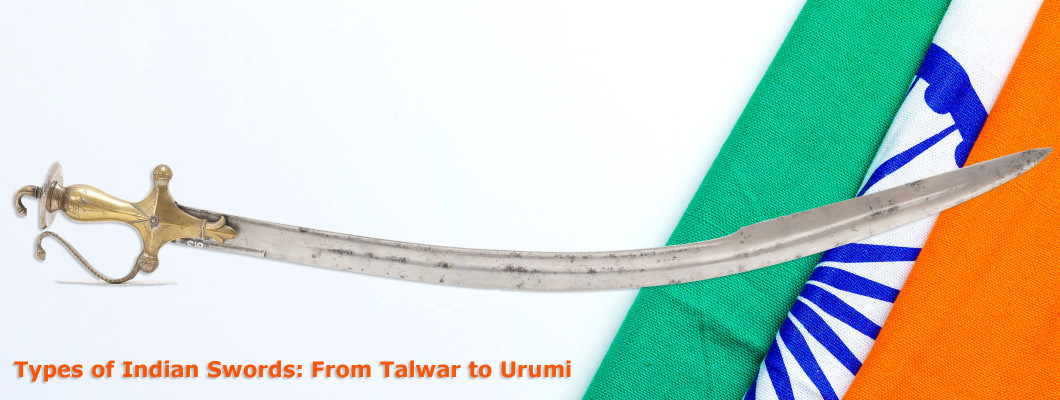
India’s Sword Tradition Is One of the Richest in the World
Few regions produced as many distinctive sword forms as the Indian subcontinent. Across different kingdoms, climates, and martial traditions, Indian swordsmiths and warriors developed blades for cavalry, infantry, ceremonial display, and personal combat. Some were broad and straight for heavy cuts. Others were deeply curved for fast slashing from horseback. A few were so unusual that they have no true equivalent anywhere else in the world.

Traditional Indian warrior holding a sword, reflecting the rich martial heritage and craftsmanship of Indian blade culture.
What makes Indian swords especially fascinating is that they were never only about warfare. They also carried meaning. They could represent kingship, warrior status, spiritual duty, regional identity, and elite craftsmanship. In the same broad tradition, you can find the iconic Talwar, the powerful Khanda, the gauntlet-hilted Pata, and the astonishing Urumi, a flexible blade unlike almost any other sword in history.
This guide explores the major types of Indian swords, how they were designed, where they were used, and why they still command respect among historians, collectors, and modern bladesmiths.
1. Talwar – The Classic Curved Sword of India
The Talwar is the most recognized Indian sword, and for many people it is the blade most closely associated with Indian warfare. It is defined by its curved blade and its characteristic hilt, often featuring a disc-shaped pommel and a knuckle guard. In visual terms, it is elegant. In practical terms, it is highly efficient.
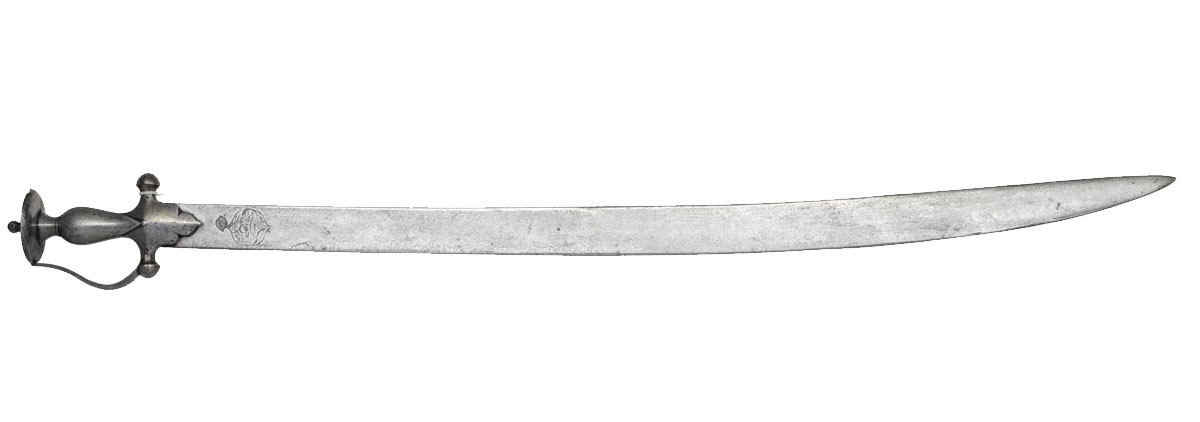
Traditional Talwar sword featuring a curved blade and disc pommel, widely used across India for fast slashing combat, especially by cavalry warriors.
The Talwar was especially effective in cutting attacks. Its curvature favored powerful slashes, making it extremely well suited to mounted combat. A rider could pass an opponent and deliver a deep cut without the blade binding as easily as a straighter weapon might. This made the Talwar particularly useful in the fast-moving cavalry warfare that shaped much of South Asian military history.
Although the Talwar is often compared with the Persian shamshir, it developed its own character in India. Many examples have a slightly broader blade profile and a hilt design that locks the hand securely into place. That secure grip gave the sword strong cutting authority even in compact, wrist-driven movements.
The Talwar became widespread under Rajput, Mughal, and later regional powers, and it remains the defining image of the Indian sword tradition for good reason. It is practical, balanced, visually distinctive, and historically important.
2. Khanda – The Broad Straight Sword of Power
If the Talwar represents Indian swordsmanship through speed and curvature, the Khanda represents it through force and authority. This is one of the great straight swords of the subcontinent, usually broad-bladed, double-edged, and built for strong chopping blows.
The Khanda often has a widened tip section and a design that emphasizes cutting power. Unlike slimmer thrust-oriented swords from other traditions, it projects weight and confidence. It was a sword that looked authoritative in the hand and could deliver heavy strikes in close combat.
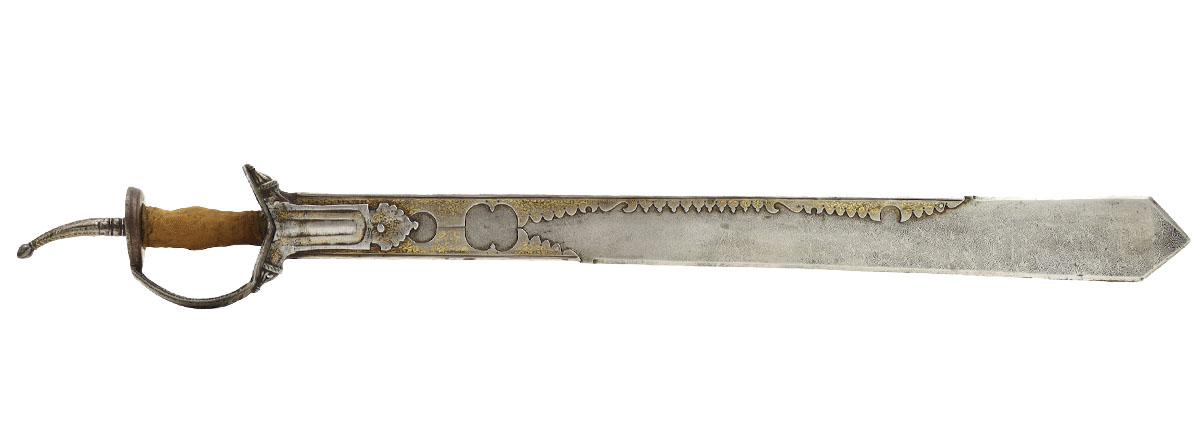
Khanda sword featuring a broad, double-edged straight blade, historically used by Indian warriors for powerful cutting and close combat.
The Khanda also carries symbolic importance far beyond the battlefield. It became associated with martial prestige and appears in religious and artistic traditions. In Sikh visual culture, the word and image of the khanda carry deep resonance, which helped preserve the sword’s place not just in arms history, but in identity and symbolism as well.
Because of that dual role, the Khanda is one of the rare swords that feels both military and ceremonial at the same time. It belongs equally to the world of combat and to the world of cultural memory.
3. Urumi – The Flexible Sword That Defies Expectation
The Urumi is one of the most unusual swords ever created. At first glance, it can seem almost impossible as a weapon. Instead of a rigid blade, the Urumi uses a long, flexible strip of sharpened steel. In use, it behaves more like a bladed whip than a conventional sword.
Associated especially with southern India, particularly Kerala and the martial art tradition of Kalaripayattu, the Urumi demanded exceptional control. It was not a sword for beginners. Its movements could be circular, flowing, and highly dangerous to anyone who lacked training. The weapon’s flexibility allowed it to strike from unexpected angles and maintain motion in a way rigid blades could not.
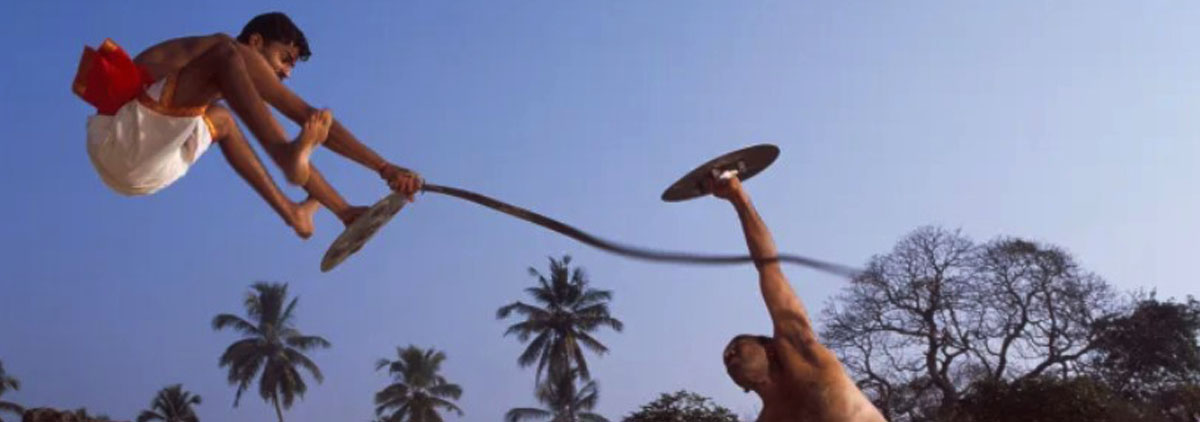
Urumi sword with a flexible steel blade, a unique weapon from South India known for its flowing, whip-like combat style.
That same flexibility also explains why the Urumi has always carried an almost legendary reputation. It combines technical sophistication with visual drama. Even today, it captures attention instantly because it challenges common assumptions about what a sword should be.
Among all Indian swords, the Urumi may be the most distinctive. It is not simply an exotic curiosity. It is proof of how inventive South Asian martial design could become when it evolved within its own training culture.
4. Pata – The Indian Gauntlet Sword
The Pata is one of India’s most original contributions to sword design. Rather than using a conventional grip, the blade is attached to a steel gauntlet that encloses the hand and extends over the forearm. The weapon is held from inside this armored hilt, creating a structure that feels halfway between sword and arm defense.
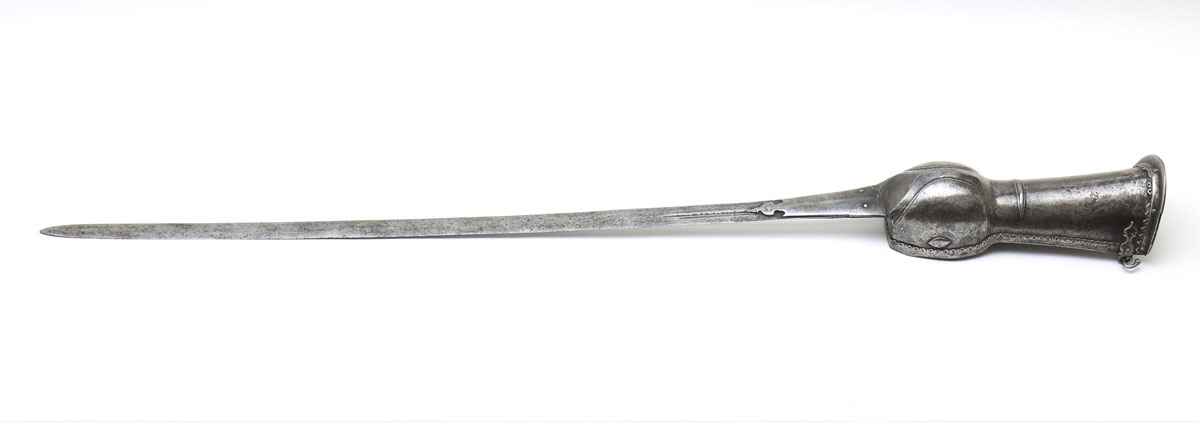
Pata sword featuring a unique gauntlet-style hilt that protects the forearm, designed for powerful thrusting attacks in Indian combat traditions.
This design gave the Pata an aggressive, forward-driving character. It worked especially well in thrusting and committed attacks, and it protected the wielder’s sword hand in the process. Historical examples show that it was more than a novelty. It was a serious weapon with a real battlefield role.
The Pata is strongly associated with the Marathas and western India, though its influence spread more broadly. In silhouette alone, it stands apart from nearly every other sword type in the world. Once seen, it is never mistaken for anything else.
For a blog like this, the Pata is important because it shows that Indian swords were not just regional versions of Middle Eastern or European blades. India also produced its own highly original forms with unique tactical logic.
5. Firangi – The Indo-European Hybrid Sword
The Firangi tells a different story. Where the Pata reflects local innovation, the Firangi reflects adaptation and exchange. The name is linked to the idea of the foreigner, and the weapon is best known for combining an Indian hilt with a blade of European origin or European style.
That combination was not accidental. European blades could be valued for their quality, length, or particular geometry, while Indian hilts offered handling features familiar to local warriors. The result was a hybrid weapon that carried both imported influence and Indian practicality.
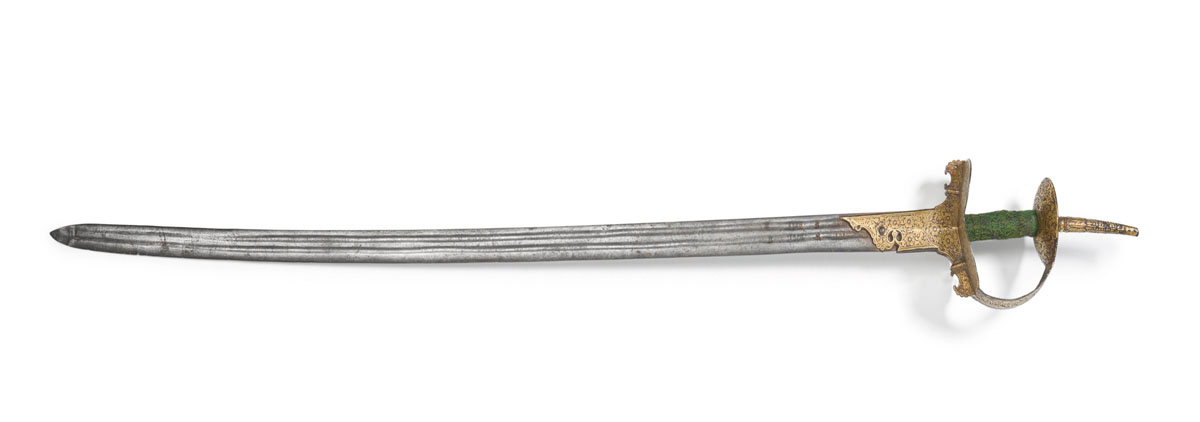
Firangi sword featuring a long straight blade with an Indian-style hilt, reflecting the blend of European blade design and traditional Indian craftsmanship.
Some Firangi swords are long, lean, and imposing, with a battlefield presence quite different from the Talwar. They remind us that the history of swords is not only about isolated traditions. It is also about trade, empire, movement, and adaptation.
The Firangi is one of the best examples of how Indian arms culture absorbed outside influences without losing its own character.
6. Tulwar – Why the Alternate Spelling Still Matters
Anyone researching Indian swords quickly notices that Talwar is also commonly written as Tulwar. In many contexts, these are simply spelling variations of the same sword. That does not make the distinction unimportant, especially online.
Many readers, collectors, and searchers still use Tulwar when looking for information, images, or replicas. For that reason alone, it is worth addressing. If your goal is to build a complete and useful guide, acknowledging the alternate spelling helps connect historical discussion with modern search behavior.
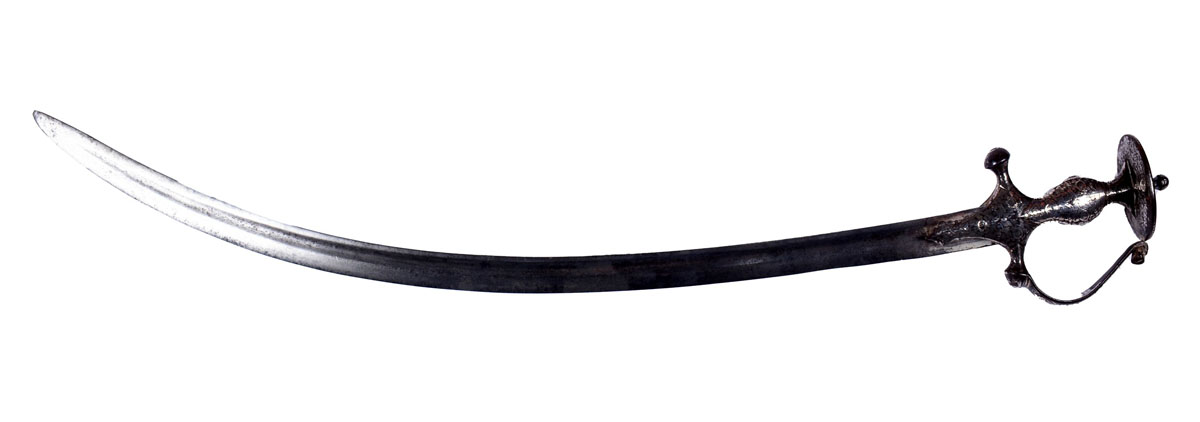
Tulwar sword featuring a curved blade and traditional Indian disc pommel hilt, designed for fast and effective slashing in battle.
In practical terms, when someone searches for a Tulwar, they are almost always looking for the same curved Indian sword tradition discussed under Talwar. Including both terms makes the article stronger, clearer, and more useful.
7. Tegha – A Heavier Blade for Strong Cutting
The Tegha is often described as a heavier cutting sword associated with North India and Sikh martial culture. Compared with more moderate curves, it is known for a stronger chopping emphasis and a battlefield presence built around force rather than finesse.
Not every Indian sword sought speed alone. Some were made to strike with authority, and the Tegha belongs in that category. It represents the heavier end of the cutting spectrum, where momentum and impact matter just as much as precision.
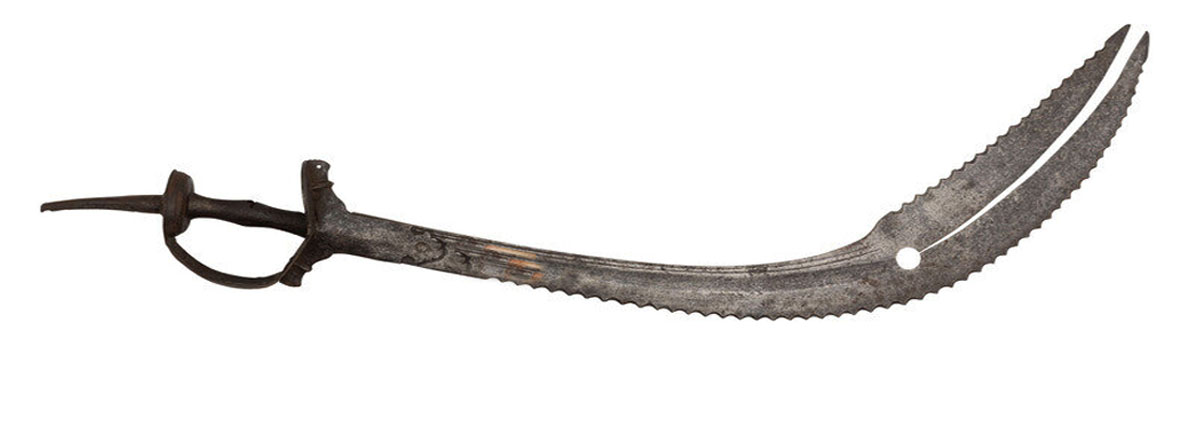
Tegha sword featuring a wide, deeply curved blade built for powerful cutting, historically used by Indian warriors in close combat.
In articles about Indian swords, the Tegha deserves mention because it broadens the picture. Indian blade design was not one single style repeated across centuries. It included lighter swords, heavier swords, straight swords, curved swords, and specialized forms with very different tactical intentions.
8. Shamshir – Persian Influence in the Indian World
The Shamshir was originally Persian, but its influence reached deeply into the Indian subcontinent, especially during periods of strong Persianate court culture and Mughal power. Its blade is generally more deeply curved and more narrowly slicing-oriented than many Talwars.
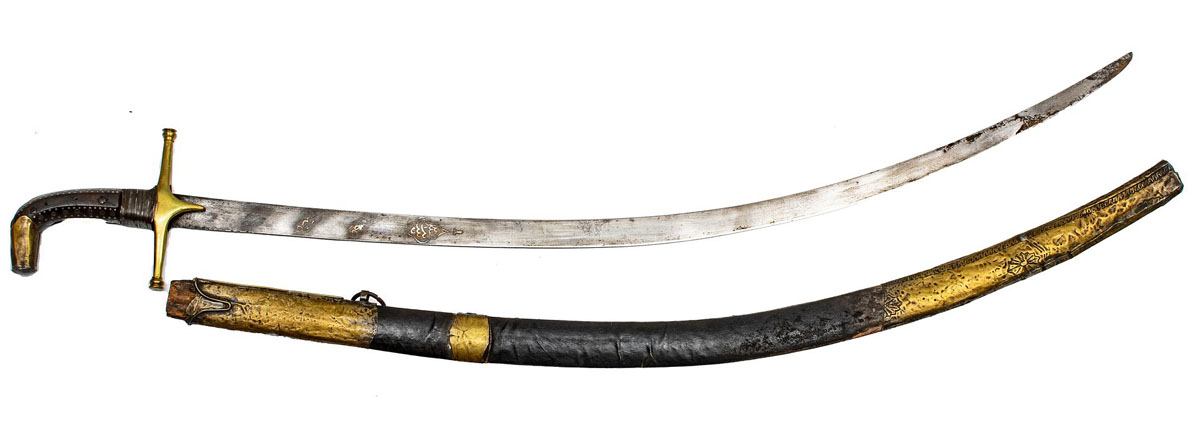
Shamshir sword featuring a deeply curved, slender blade, influenced by Persian design and widely used in Indian regions during the Mughal era.
In historical terms, the Shamshir matters here because Indian sword culture did not develop in isolation. Courtly taste, military contact, trade, and empire all shaped what kinds of weapons were admired, used, and produced. Some swords in India remained distinctly local. Others reveal layers of cross-cultural influence.
The Shamshir helps explain why some Indian-era swords can look similar at first glance but feel quite different in handling philosophy. A Talwar and a Shamshir may both be curved, but their proportions, blade behavior, and martial context are not necessarily the same.
9. Dandpatta – Another Name Linked to the Gauntlet Sword Tradition
Dandpatta is often used in connection with the same gauntlet-sword tradition as the Pata. In many discussions, the terms overlap closely, and readers will often encounter them together. Including Dandpatta here is useful because people researching Indian swords may know the weapon by one name but not the other.
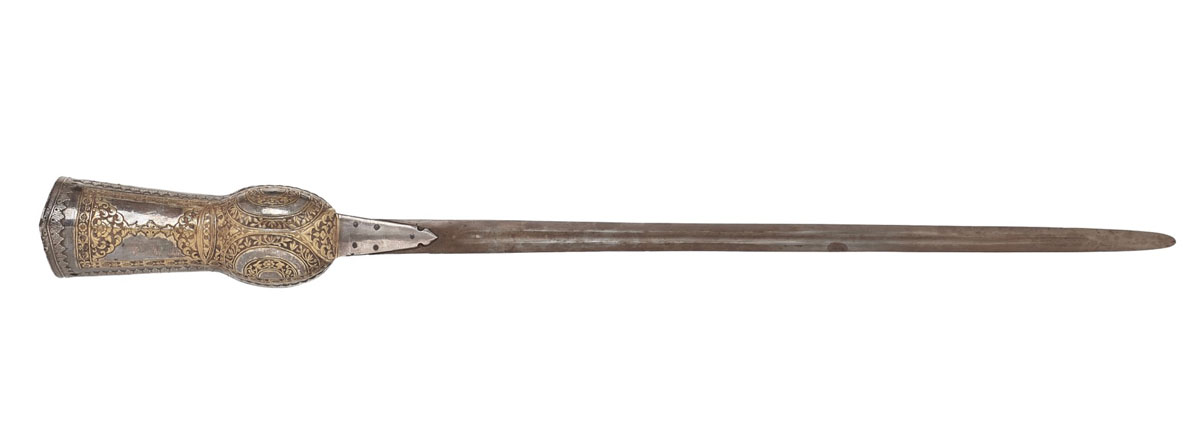
Dandpatta sword featuring a straight blade attached to a gauntlet-style hilt that protects the forearm, used by Indian warriors for powerful cutting attacks.
From a practical standpoint, the important point is the form itself: a blade mounted to an enclosed forearm-protecting hilt system that turns the whole arm into an offensive structure. Whether encountered under Pata or Dandpatta, it remains one of the most remarkable weapon designs in Indian arms history.
10. Ram Dao – The Functional Blade of the Northeast
The Ram Dao represents another side of Indian sword culture, one tied more directly to regional use and practical utility. Associated with northeastern India, it is a broad chopping blade with a strong functional identity. Depending on context, it could serve martial, ritual, and everyday purposes.
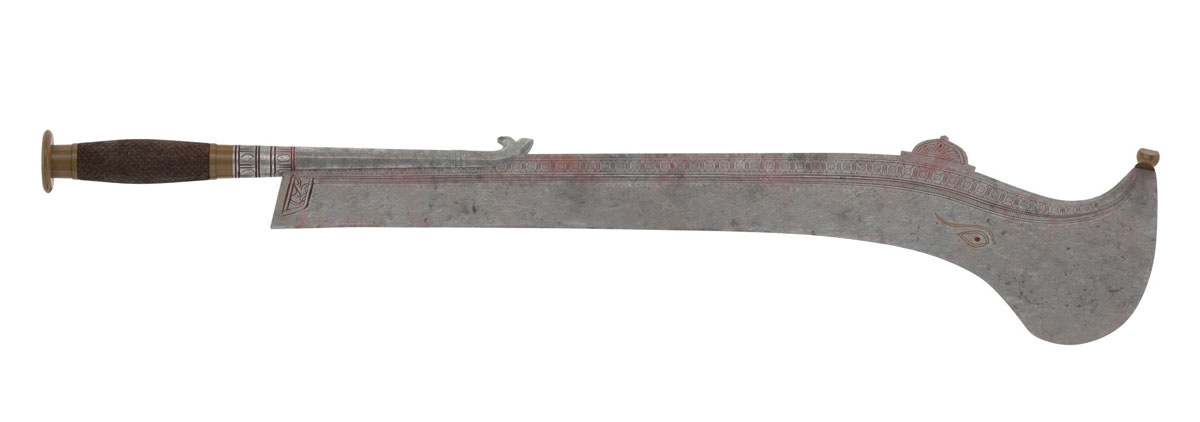
Ram Dao sword featuring a heavy, forward-curved blade designed for powerful chopping, traditionally used in ritual practices and regional applications across India and Nepal.
That combination is important. Not every sword tradition emerged only from elite cavalry warfare or royal courts. Some developed in communities where a blade needed to serve multiple roles. In that sense, the Ram Dao preserves a more grounded, working relationship between people and edged tools.
Its inclusion in this guide also reminds us that India’s sword history cannot be reduced to a few famous imperial forms. The subcontinent’s blade traditions were regional, layered, and varied far beyond the best-known museum examples.
Why Indian Swords Were So Different From European Swords
Comparing Indian swords with European swords helps reveal how closely weapons are shaped by the conditions of war around them. Many Indian swords favored cutting from horseback, fluid movement, and efficient slashing mechanics. Many European swords, especially in later medieval contexts, increasingly balanced cutting with thrusting against armored opponents.
This does not mean one tradition was superior to the other. It means each evolved to solve different combat problems. The Talwar did not need to become a longsword. The Khanda did not need to imitate a knightly arming sword. Each sword type made sense in the military world that produced it.
That is one reason sword history is so rewarding to study. A blade is never just a blade. It is a response to tactics, armor, terrain, training, and culture.
The Role of Wootz Steel in India’s Blade Reputation
No serious discussion of Indian swords feels complete without mentioning Wootz steel. Produced in the Indian subcontinent through crucible-steel methods, Wootz became famous for its quality and played a major role in the reputation of Indian metallurgy.
Over time, this steel became linked in wider historical memory with the blades later celebrated as Damascus steel. That connection helped turn Indian steelmaking into part of a much larger global story about legendary edged weapons, advanced premodern craftsmanship, and the movement of materials across regions.
Even when individual swords varied widely in form and purpose, the reputation of Indian steel remained one of the great foundations of the subcontinent’s arms heritage. Indian swords were admired not just for decoration or symbolism, but for the material skill behind them.
Indian Swords Were Also Symbols of Honor and Identity
To understand Indian swords fully, it is not enough to look only at their blade shape. These weapons also carried meaning. They could signal rank, lineage, warrior identity, royal service, or religious association. A sword might be worn in battle, displayed in ceremony, gifted in diplomacy, or preserved as an heirloom.
That deeper meaning is part of why Indian swords still resonate so strongly today. They were never only practical objects. They stood at the meeting point of craftsmanship, status, and memory.
For modern collectors and enthusiasts, that legacy remains a major part of the appeal. A well-made Indian sword is not only visually striking. It carries the weight of a long martial and cultural tradition behind it.
Explore Hand Forged Swords Inspired by Historic Blade Traditions
If Indian swords, curved sabres, and historic fighting blades inspire you, explore Everest Forge’s collection of hand forged swords built for collectors, enthusiasts, and custom projects.
Why Indian Swords Still Command Respect Today
Indian swords remain compelling because they combine function, beauty, and identity in a way few blade traditions do. The Talwar is elegant but dangerous. The Khanda is authoritative and symbolic. The Pata is mechanically unique. The Urumi is almost unbelievable until you see it in motion. Together, they show a sword culture that was inventive, refined, and deeply rooted in regional history.
That is why Indian swords continue to fascinate scholars, collectors, reenactors, and bladesmiths. They are not just relics from the past. They are evidence of a civilization that understood steel not only as a weapon, but as an expression of craft, prestige, and power.
To study Indian swords is to study more than blades. It is to study the meeting point of warfare, metallurgy, artistry, and memory. And that is exactly what makes them impossible to ignore.
British Swords Guide – Types, History & English Sword Evolution
Explore the full evolution of British swords, from Anglo-Saxon blades to cavalry sabres and military officer patterns. A complete guide for collectors and enthusiasts.