How to Blunt a Knife, Sword, Kukri, Machete, Dagger, or Spear for Display or Training
Not every blade should be razor sharp. Whether you own a knife, sword , kukri, machete, dagger , or spear, there are moments when safety, training, or display are more important than cutting performance. Blunting a blade is a controlled process that removes its cutting edge, transforming it into a safe, authentic-looking piece suitable for practice, stage performance, or exhibition. This guide from Everest Forge explains how to blunt a blade safely while maintaining its balance, structure, and finish.
Read This First: Safety and Legal Basics
Protect yourself. Always wear eye protection, gloves, and a dust mask while working. If you use power tools, include hearing protection. Secure the blade. Clamp it firmly before touching the edge. Control heat. Excessive heat can ruin a blade’s temper, so cool it often during sanding or grinding. Know your local laws. Even a blunted sword or knife can be regulated, so check weapon laws before modifying or transporting your blade. When in doubt, consider purchasing a purpose-built training or display replica instead of modifying a live weapon.
Tools and Materials You Will Need
Files: a flat mill file or bastard file is ideal for removing the cutting lip evenly. Sandpaper: use a range from 80 to 600 grit mounted on a sanding block. Optional tools: a belt sander or grinder for long blades, used with light pressure. Cooling and finish: a spray bottle of water to prevent heat build-up and a thin coat of oil or wax to protect the steel afterward.
DIY Method: Home Setup for Blunting
Blunting a blade can be done safely at home with minimal tools. The following simple setup is perfect for hobbyists who want control and precision without industrial equipment.
Step 1 – Create a stable workbench: Use a sturdy table or bench. If possible, add a wooden surface that you can clamp to without damaging your furniture. The blade must not move during filing.
Step 2 – Secure your blade: Place the blade in a vice with the edge facing up. Use a cloth or rubber pad between the vice jaws and blade to avoid scratching the finish.
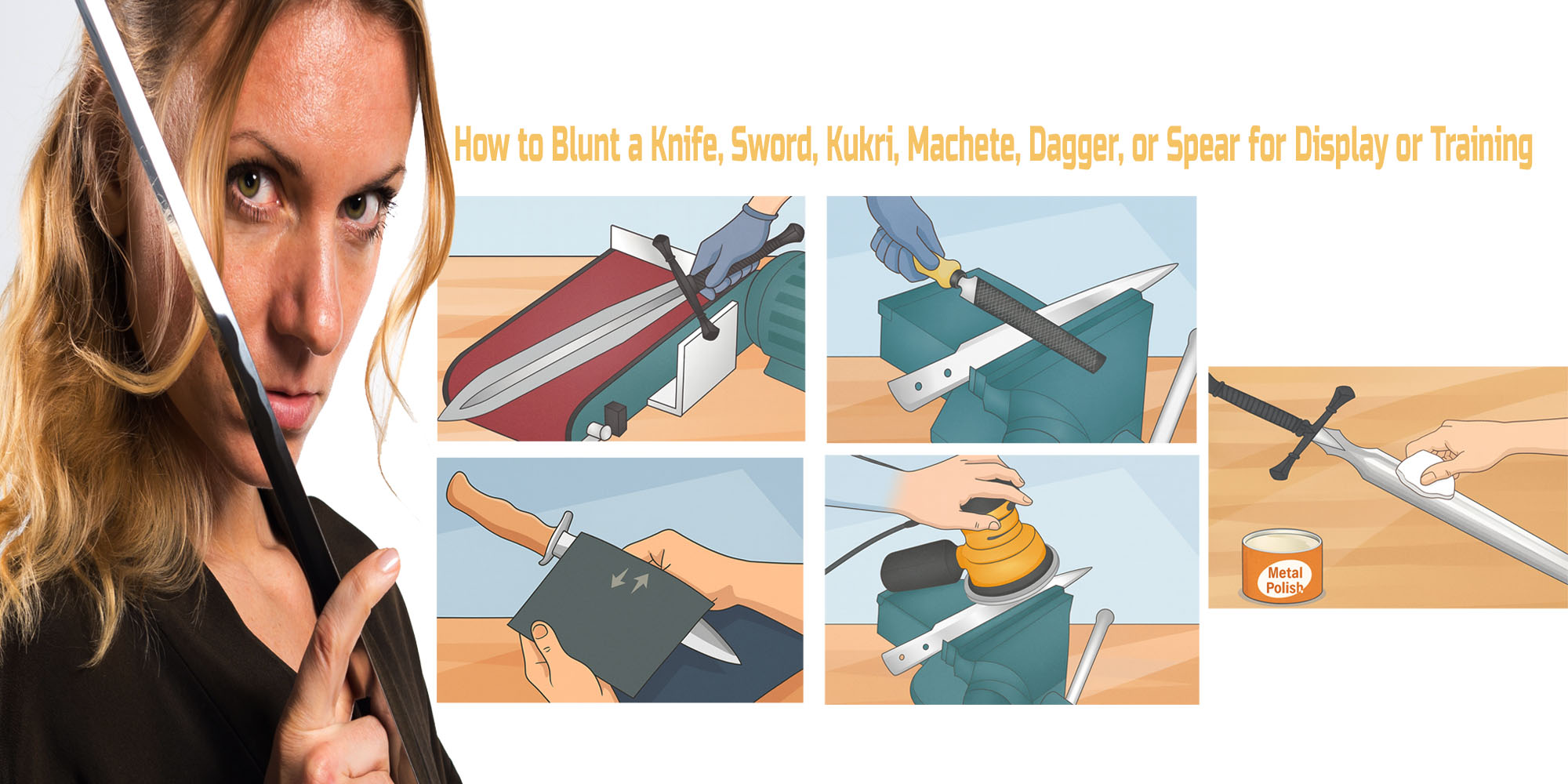
Step 3 – Start dulling with a file: Hold a flat file at a 90-degree angle to the edge and make smooth, light strokes along the length of the blade. Work in small sections until the entire edge feels dull to touch.
Step 4 – Smooth and round the edge: Wrap coarse sandpaper around a sanding block and go over the filed edge. As the edge begins to round off, switch to a finer grit. Wipe clean between grits to remove filings.
Step 5 – Finish and protect: After the blade is completely dull, use 400–600 grit sandpaper for a satin finish. Wipe the blade dry and apply a light layer of oil or wax to prevent corrosion. The result is a clean, safe, rounded edge ready for training or display.
Method One: File and Sandpaper (Most Control, Minimal Risk)
Clamp the blade securely so the edge is fully supported. Use a flat file with light, even strokes along the cutting edge to remove the sharp lip. Work in small sections to maintain a straight line. Switch to 120–220 grit sandpaper and round the edge into a smooth radius. Alternate sides to keep the edge centered. Finish with 400–600 grit to remove burrs and polish the surface.
Why this works: It provides maximum control with almost no risk of overheating. Perfect for knives, daggers, and kukris where fine geometry matters.
Method Two: Belt Sander (Fast on Long Edges, Requires Care)
Use an 80–120 grit abrasive belt at low to medium speed. Keep the blade constantly moving to avoid overheating. Pause frequently to cool the steel in water. Once the edge is dull and rounded, move to finer grit belts or return to hand sanding to finish the surface.
Why this works: It quickly dulls long edges on swords, machetes , and spears, but requires careful temperature control to prevent ruining the temper.
Method Three: Peening or Edge Reshaping (Advanced Technique)
This traditional blacksmithing method involves lightly hammering the edge to flatten and work-harden it before sanding it smooth. It is effective but risky without experience. Improper peening can warp or crack the blade, so it’s best left to trained smiths or used on heavy, forged pieces only.
Why this works: It preserves metal and creates a safe rounded edge without removing much material, ideal for historical sword replicas.
Type-Specific Guidance
Knife: Use hand tools only. Take your time and keep the edge even. If you may wish to re-sharpen later, remove as little metal as possible.
Sword: Work the edge in short sections to maintain straightness. Avoid grinding into fullers, engravings, or etch lines. Keep the reflection consistent along the edge.
Kukri: Match the curve of the belly using a shaped sanding block. Be extra careful near the cho (notch). The goal is to retain the classic kukri profile.
Machete: Form a smooth radius instead of a flat ledge to preserve structural strength. Great for turning a working machete into a training or display piece.
Dagger: Round both edges evenly and blunt the tip for safety. Work slowly to maintain perfect symmetry for balance and aesthetics.
Spear: File down edges and heavily round the tip. Once complete, check that the spearhead is tightly fitted to the shaft before using or displaying it.
How to Check If the Blade Is Truly Blunt
Visual check: A blunted edge will reflect light along its entire length and appear rounded. Paper check: A dull edge will fail to slice through regular paper. Thumb-pad feel: Gently press your thumb across the edge—never along it. A safe edge will feel smooth and offer no bite.
Common Mistakes and How to Fix Them
Overheating: If you see blue or straw-colored metal, stop immediately and let it cool. Use lighter pressure. Uneven edge line: Work in smaller sections and recheck alignment frequently. Flat instead of rounded: Blend the transition using 220–400 grit sandpaper until it curves smoothly. Persistent burrs: Lighten your pressure, alternate sides, and finish with a higher grit.
Finishing and Aftercare
Remove all burrs completely; even small ones can still scratch skin. Blend the new radius into the bevel so it looks authentic. Wipe away filings and apply a thin layer of oil or wax to prevent rust. Check the fit of scabbards, guards, and spear sockets after blunting to ensure proper alignment.
When Not to Blunt a Blade
Do not blunt knives or tools still used for real cutting or survival tasks. For regular training or stage work, it’s smarter to order a purpose-built blunt trainer with a factory-rounded edge and safe tip. This keeps your original blade functional and prevents heat or geometry damage.
Frequently Asked Questions
Will blunting ruin my blade? If done slowly with files and sandpaper and without overheating, blunting won’t harm the steel. The only risk comes from removing too much material or overheating the temper.
Can I re-sharpen a blunted blade later? Yes, a lightly rounded edge can be re-sharpened. Heavily peened or rounded edges may need professional regrinding and may not return to their original cutting geometry.
Is blunting a weapon legal? Usually yes, but local laws vary. Many regions regulate the possession or transport of blades, even when dull. Always verify before modifying or moving a weapon.
What tools are safest for beginners? A bench vice, flat file, and mid-grit sandpaper offer maximum safety and control. Avoid power tools until you have practice maintaining even pressure and cooling.
Can I blunt a spear or polearm safely? Yes. Round the tip and edges with a file, and after blunting, make sure the spearhead is tightly secured to the shaft to prevent accidents.

If you are reading this guide on how to blunt your blade, but you actually need to sharpen your sword, kukri, machete, dagger, or knife for real cutting performance — we have a full sharpening tutorial ready for you.
Read the full sharpening guide here:
How to Sharpen a Machete – Complete Guide
How to Blunt a Knife, Sword, Kukri, Machete, Dagger
Many customers want a blunt edge for training, cosplay, display, or to meet local laws. We can supply most Everest Forge products with a blunt, non-sharpened edge on request.
How to Request a Blunt Edge
- Ordering from the website: When you place your order, simply write "BLUNT" (or "Blunt Edge") in the Order Comment box.
- Custom blunt sword, kukri, dagger or spear: You can also request a fully custom blunt piece (training sword, stage combat kukri, display dagger, etc.) from our Custom Forge page.
Our smiths will grind and finish the blade with a safe, rounded edge while keeping the same profile, balance and craftsmanship.