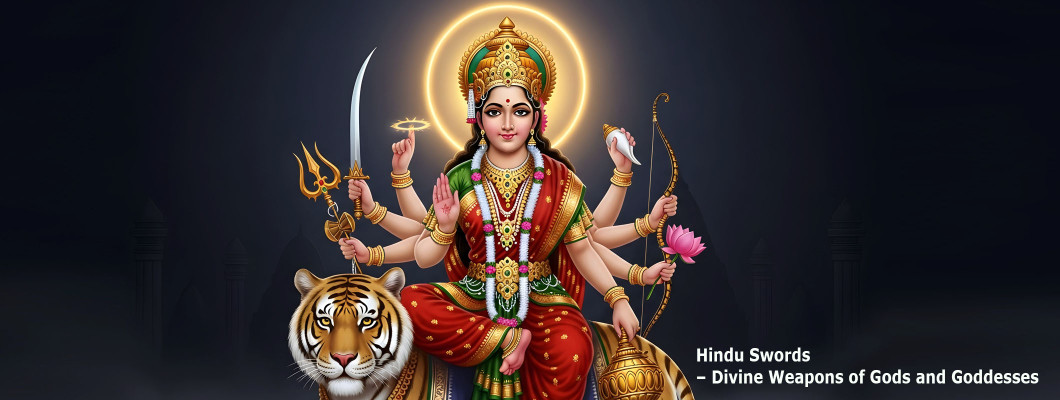
The Meaning of Hindu Swords (Khadga) – Symbol of Knowledge and Power
In Hindu tradition, swords are not just weapons. They are symbols of divine knowledge, power, protection, and spiritual awakening. The Sanskrit word Khadga refers to a sword, but in Hindu thought its meaning goes far beyond steel and combat.
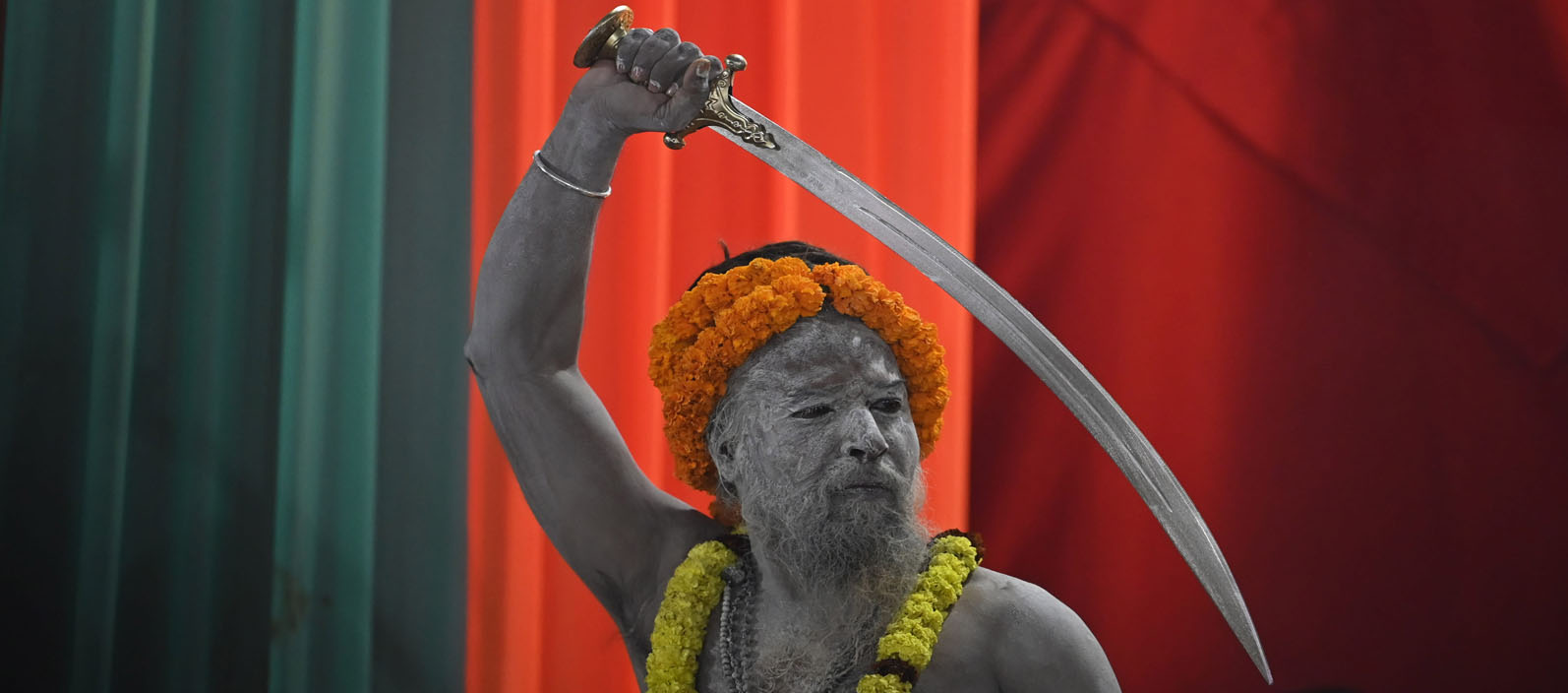
The Khadga represents Jnana (knowledge)—the sharp wisdom that cuts through ignorance, illusion, ego, and inner darkness. This is why Hindu gods and goddesses are often shown holding swords. These blades are not only instruments of war. They are sacred symbols of truth, clarity, justice, transformation, and the protection of dharma.
Across Hindu mythology, ritual tradition, and Indian history, the sword appears as both a divine weapon and a spiritual idea. From the first sword of creation to the ritual Ram Dao associated with Goddess Kali, Hindu swords carry meanings tied to cosmic order, sacrifice, courage, and the destruction of evil.
Divine Swords of Hindu Gods and Goddesses
Many of the most famous Hindu swords are connected to gods, goddesses, and epic heroes. Some are purely mythological divine weapons, while others also reflect real ritual and martial traditions that survived in India and Nepal for centuries.
Asi – The First Sword of Creation
The legendary Asi is regarded in Hindu tradition as the first sword ever created. It emerged from sacred fire through the will of Brahma and became a weapon of divine justice.
- Created by Brahma from sacrificial fire
- Given to Shiva to destroy evil forces and restore cosmic balance
- Passed down through gods, sages, and heroic warriors
- Later associated with Nakula in the Mahabharata tradition
Asi is not just a weapon. It represents the beginning of righteous force, divine authority, and the power of justice in the universe.
Nandaka – The Sword of Vishnu
Nandaka is the divine sword of Lord Vishnu, the preserver and protector of cosmic order. In Hindu symbolism, Nandaka is closely tied to wisdom, truth, and higher knowledge.
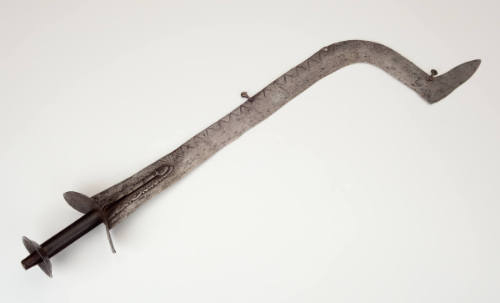
Nandaka – the divine sword of Lord Vishnu, symbol of knowledge and truth in Hindu tradition
- Personal sword of Vishnu
- Symbol of pure knowledge and spiritual truth
- Associated with the destruction of ignorance
- Often described as radiant or divine in appearance
Nandaka represents the idea that true knowledge is the sharpest weapon. It cuts through confusion and protects dharma.
Chandrahas – The Divine Blade of Shiva
Chandrahas is one of the most famous mythological swords in Hindu tradition. It was gifted by Lord Shiva to Ravana as a reward for intense devotion and penance.
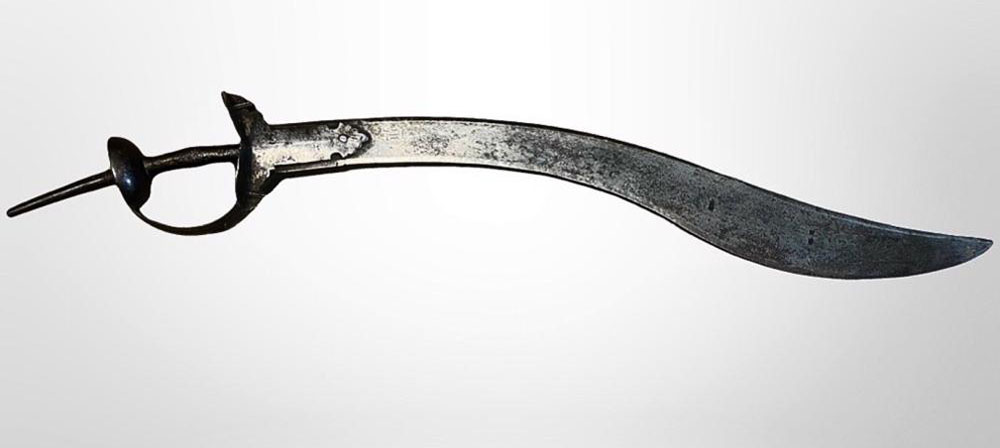
Chandrahas – the divine sword of Lord Shiva, gifted to Ravana, symbolizing power and devotion
- Gift from Shiva to Ravana
- Often described as crescent-shaped
- Associated with divine favor and supernatural power
- Name means “Laughter of the Moon”
Chandrahas represents both beauty and destructive power. It is a divine weapon linked with devotion, strength, and the dangerous privilege of divine blessing.
Kharga – The Sword of Durga and Kali
The Kharga is one of the most important swords in Hindu iconography. It is often seen in the hands of Goddess Durga and Goddess Kali, where it symbolizes far more than battle.
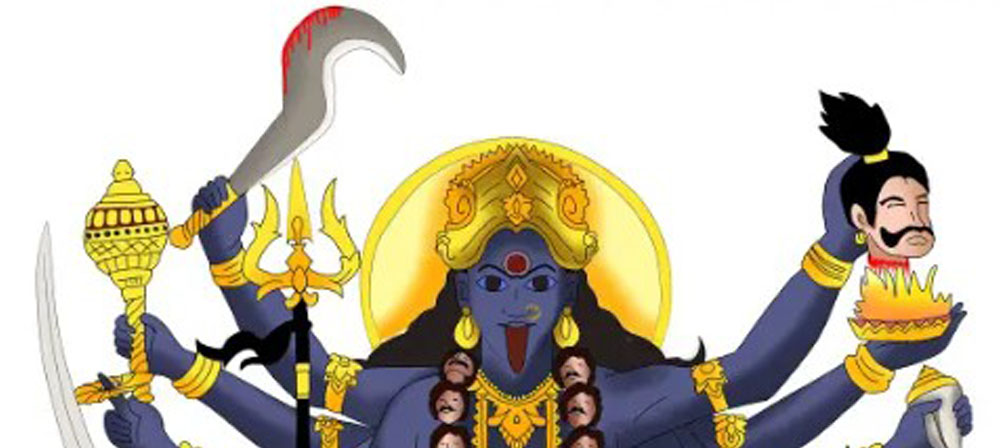
Kharga – the sacred sword of Goddess Durga and Kali, symbolizing power, protection, and the destruction of evil
- Weapon of Durga and Kali
- Represents Viveka, or spiritual discernment
- Used to destroy demons, ego, illusion, and negativity
- Symbol of divine protection and fierce wisdom
In this form, the sword becomes a spiritual tool. It cuts away pride, falsehood, evil, and ignorance so that truth can emerge.
Ram Dao – The Ritual Sword of Goddess Kali
The Ram Dao must be included in any serious discussion of Hindu swords because of its strong association with Goddess Kali. Unlike purely mythological blades, the Ram Dao is also a real ritual sword type used in temple and ceremonial traditions, especially in parts of eastern India and Nepal.
- Large forward-curved ritual sword
- Associated with Kali worship and sacrificial traditions
- Designed for strong downward cutting
- Represents sacrifice, surrender, divine force, and transformation
The Ram Dao stands at the intersection of mythology, ritual, and real blade culture. In the context of Kali worship, it reflects fierce divine energy, the cutting away of ego, and the offering of the lower self before the divine.
Nistrimsha – The Warrior’s Sword
Nistrimsha is another important sword name found in Hindu and epic tradition. It is associated with warrior identity, battlefield skill, and heroic power.
- Traditional straight sword form
- Associated with Pradyumna, son of Krishna
- Represents royal discipline and martial strength
- Linked with warrior excellence
Nistrimsha reflects the sword as a symbol of trained strength, noble action, and martial readiness.
Pattayudha – Sword of Virabhadra
Pattayudha is associated with Virabhadra, the fierce warrior form created by Shiva. This sword belongs to one of the most intense and destructive mythological figures in Hindu tradition.
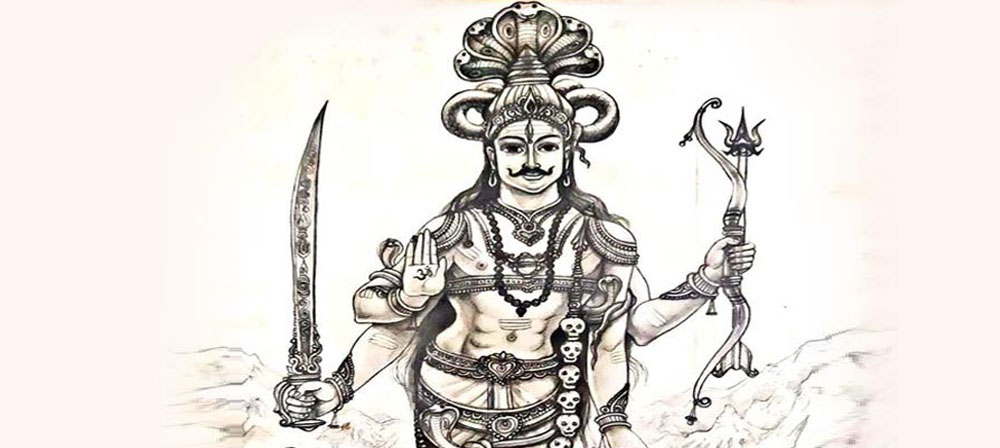
Sword of Virabhadra – the fierce divine weapon symbolizing justice, destruction, and power in Hindu mythology
- Weapon of Virabhadra
- Represents divine wrath and justice
- Used in the destruction of Daksha’s sacrifice
- Symbol of righteous destruction against arrogance and disorder
This sword represents force used in the service of cosmic justice, especially when pride and adharma challenge divine order.
How Hindu Mythology Connects to Real Indian Sword Traditions
The symbolism of Hindu swords did not remain only in myth. These ideas influenced real Indian sword culture and helped shape how blades were viewed in ritual, warfare, kingship, and martial identity.
Historical Indian swords such as the Khanda, Talwar, Firangi, and Pata were not simply battlefield tools. They also carried meaning connected to status, honor, sacred duty, protection, and martial tradition. In many regions, the sword stood for both practical power and spiritual responsibility.
This is why Indian swords remain so fascinating today. They belong to a world where steel was not just forged for combat, but also for symbolism, legacy, and sacred meaning.
Custom Hindu-Inspired Swords by Everest Forge
At Everest Forge, we create real hand forged swords inspired by history, mythology, sacred symbolism, and custom design ideas. If you want a sword inspired by Hindu traditions, divine symbolism, ritual blade forms, or ancient Indian aesthetics, we can forge it by hand.
Request a Custom Forged Sword
If you have your own concept, reference image, or mythological inspiration, our Custom Forge service can turn it into a real handmade blade. This is ideal for collectors, historical enthusiasts, and anyone looking for a one-of-a-kind sword forged to their vision.
Explore the Everest Forge Sword Collection
Browse our sword category to explore hand forged swords inspired by historical weapons, battle-ready designs, and custom-crafted blades made by skilled Nepalese artisans. This collection is ideal if you want to see ready design directions before placing a custom request.
Why Hindu Swords Still Matter Today
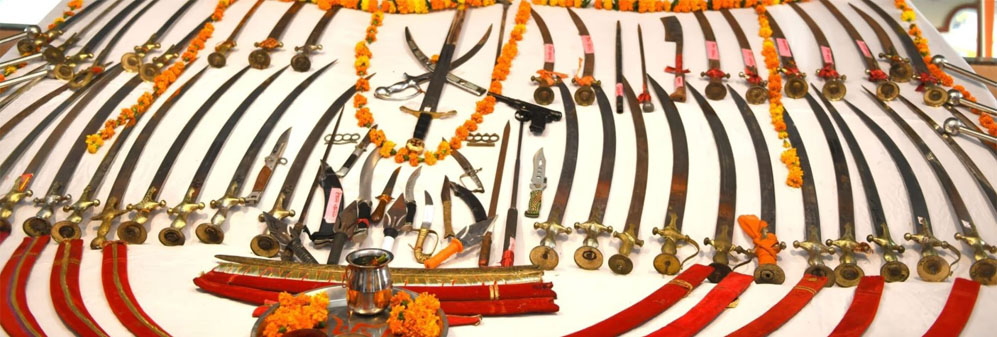
Hindu sword worship ritual – the Khadga as a sacred symbol of divine power, protection, and spiritual knowledge
Hindu swords still matter because they represent more than old weapons or mythological objects. They express a worldview in which strength must be guided by wisdom, and power must serve truth.
The Khadga, Kharga, Ram Dao, Nandaka, Asi, and Chandrahas all show different sides of the sword in Hindu tradition. Some represent knowledge. Some represent divine justice. Some represent destruction of evil. Others connect real ritual practice with sacred symbolism.
Together, they make Hindu swords one of the richest and most meaningful blade traditions in the world—where mythology, religion, ritual, and martial culture all meet.
FAQ About Hindu Swords, Khadga, and Divine Blades
Below are some of the most common questions people ask about Hindu swords, divine weapons, and the symbolic meaning of the Khadga.
What is a Khadga in Hinduism?
A Khadga is a sword, but in Hindu symbolism it represents divine knowledge, truth, and the power to cut through ignorance, illusion, and ego.
Which Hindu gods and goddesses carry swords?
Several Hindu deities are associated with swords, especially Vishnu, Shiva, Durga, Kali, and Virabhadra. Their swords symbolize knowledge, justice, protection, and destruction of evil.
What is the difference between Khadga and Kharga?
Khadga is a broader Sanskrit term for sword, often used symbolically, while Kharga is commonly associated with the divine sword carried by fierce goddesses such as Durga and Kali.
What is Ram Dao in Hindu tradition?
Ram Dao is a large curved ritual sword strongly associated with Kali worship. It has been used in ceremonial and sacrificial traditions in parts of India and Nepal and carries deep symbolic meaning related to sacrifice and transformation.
Is Ram Dao a mythological sword or a real sword?
Ram Dao is a real ritual sword type, unlike some purely mythological divine blades. However, it is also spiritually important because of its connection to Goddess Kali and sacred ritual practice.
What is the most famous sword in Hindu mythology?
Some of the most famous Hindu mythological swords include Asi, Nandaka, Chandrahas, Kharga, and Pattayudha. Each has its own meaning and divine association.
Did Hindu mythology influence real Indian swords?
Yes. Hindu mythology, ritual traditions, and ideas of dharma influenced how swords were understood in India. Real Indian swords such as the Khanda, Talwar, Firangi, and Pata were shaped not only by warfare but also by cultural and spiritual meaning.
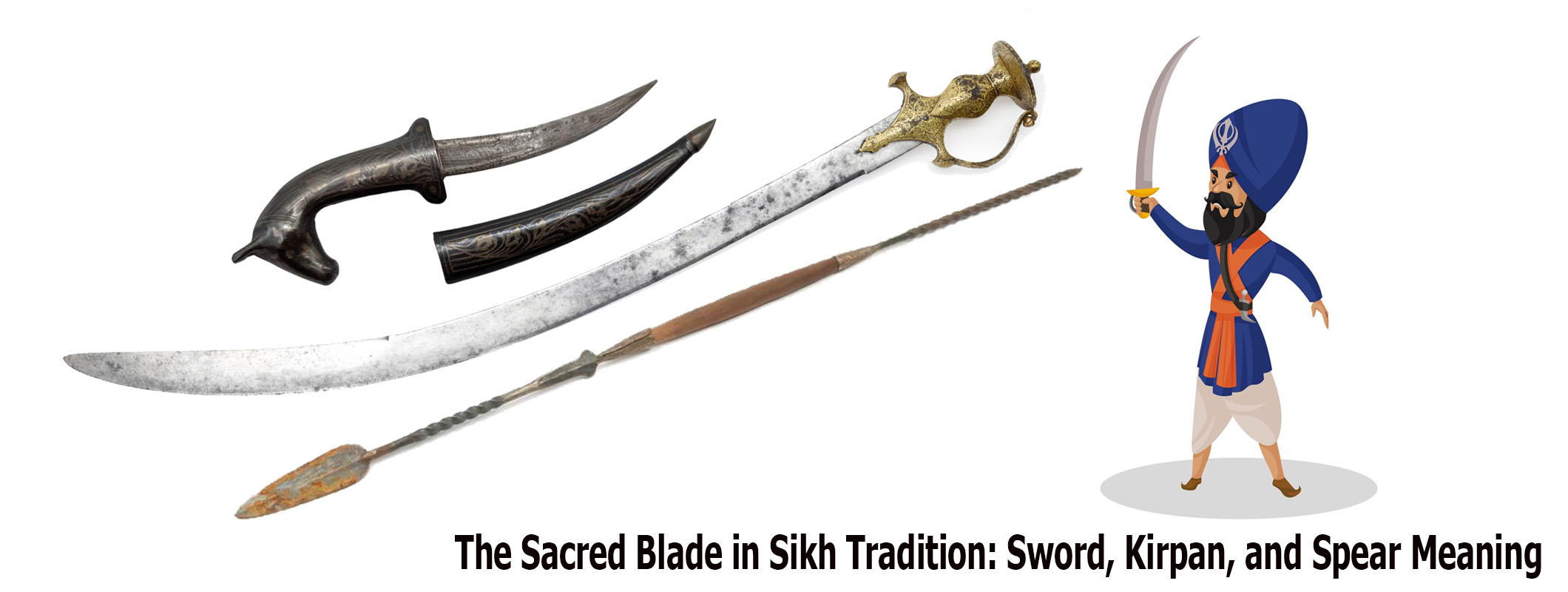
The Sacred Blade in Sikh Tradition: Sword, Kirpan, and Meaning
Understand the deeper meaning behind the Sikh sword, kirpan, and spear — from historical roots to modern identity, discipline, and warrior tradition.
Read Full Guide →