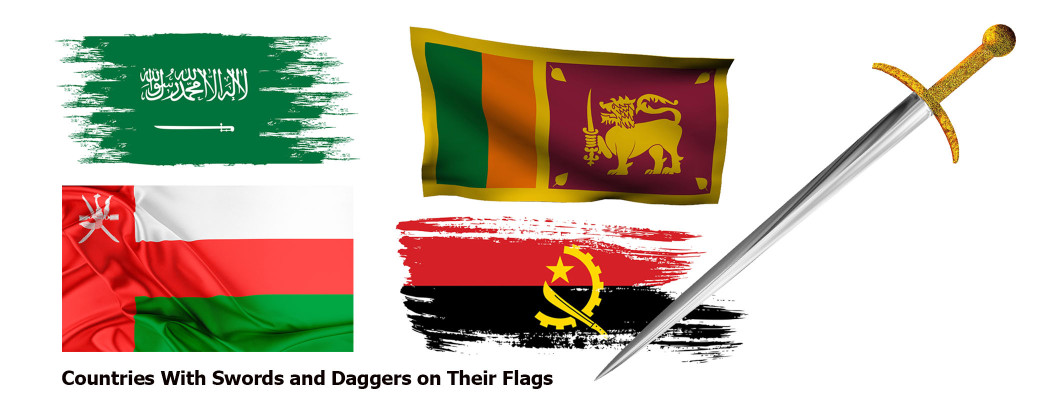
Countries With Swords and Daggers on Their Flags
Some countries use stars. Some use colors. But a few choose something far more powerful — the blade.
When a sword or dagger appears on a national flag, it is not decoration. It represents strength, authority, protection, and a history shaped by real weapons. These symbols come from cultures where blades were not optional — they were essential.
This guide explores the countries that feature swords and daggers on their flags, along with the real meaning, history, and blade traditions behind them.
Countries With Swords on Their Flags
Saudi Arabia – Sword Symbol of Justice and Authority
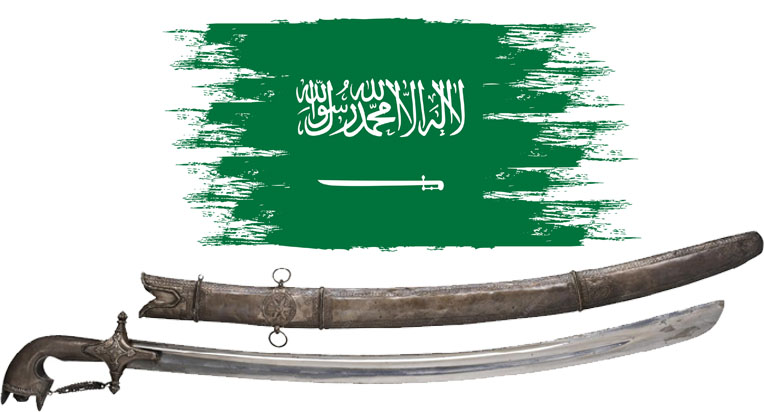
Traditional Saudi Arabian Saif sword, a real blade form connected to the sword symbolism seen on the flag of Saudi Arabia.
The flag of Saudi Arabia features a single horizontal sword beneath the Shahada. It is one of the most direct and recognizable sword symbols in the world.
This sword represents justice, strength, and unity. Its straight design reflects discipline and control — qualities that define both leadership and a well-crafted blade.
Unlike decorative imagery, this sword is minimal and purposeful. It shows authority without excess, making it one of the strongest examples of sword symbolism on a modern national flag.
Oman – Crossed Swords Representing Heritage and Defense
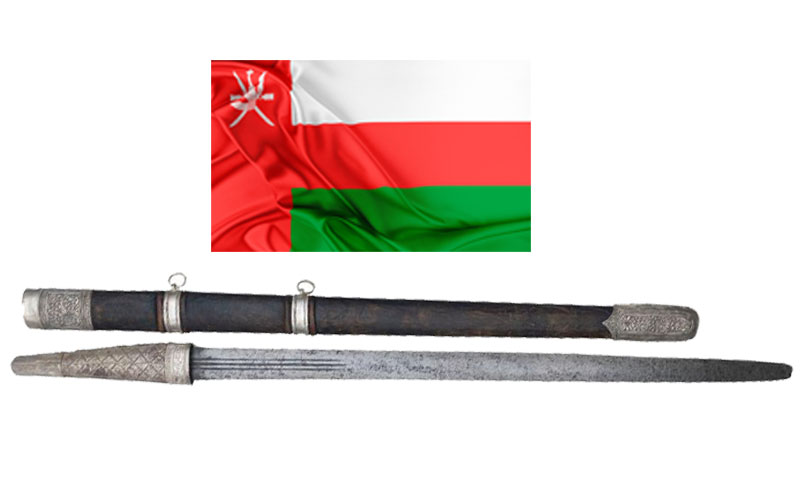
Traditional Omani Saif sword, a classic Arabian blade design reflecting the same weapon culture behind the crossed swords symbol used in Oman’s national emblem.
Oman’s national emblem includes two crossed swords, symbolizing military tradition, readiness, and protection.
The crossed design suggests balance and preparedness rather than aggression. It reflects a culture where weapons were carried with responsibility and pride.
These swords are not abstract symbols. They represent real historical blades used in defense and identity, forming a core part of Omani heritage.
Sri Lanka – Lion Holding Sword Symbolizing Power
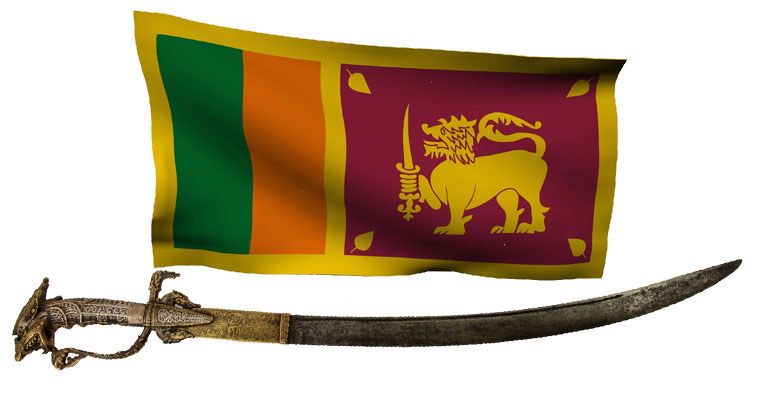
Traditional Sri Lankan Kastane sword, a ceremonial blade featured in the flag of Sri Lanka where a lion holds the sword as a symbol of power and sovereignty.
Sri Lanka’s flag features a lion holding a traditional sword , often associated with the kastane blade.
This combination represents sovereignty, courage, and the authority to protect. The sword is not separate — it is part of the lion’s identity, making the symbol more dynamic and powerful.
It reflects a tradition where the blade was connected to leadership, protection, and royal authority.
Angola – The Machete as a National Symbol
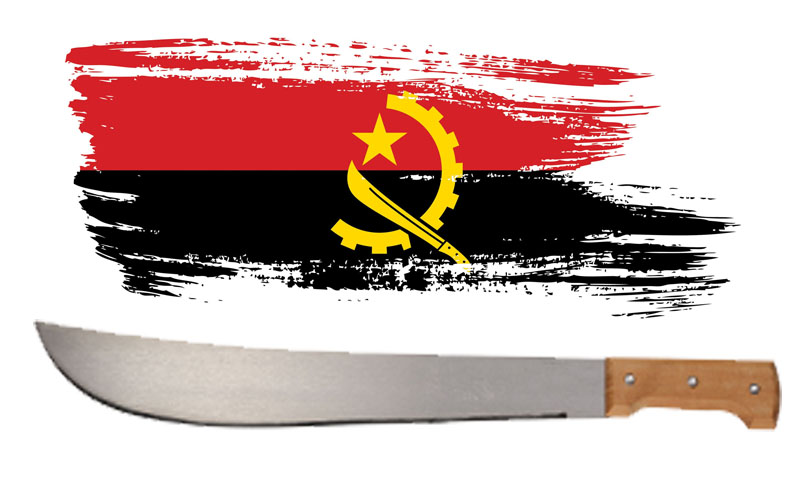
The machete on the flag of Angola represents agricultural workers and the armed struggle for independence, making it one of the few national flags to feature a functional blade symbol.
Angola is another important country to mention when discussing blades on national flags. While its flag does not feature a sword or dagger, it does include a machete , making it one of the few national flags in the world to display a bladed weapon.
On the flag of Angola, the machete appears alongside a gear and a star. This design is deeply tied to the country’s political history, independence struggle, and working-class identity. The machete represents both armed resistance and agricultural labor, giving it a meaning that goes beyond combat alone.
This makes Angola especially interesting from a blade culture perspective. Unlike the sword of Saudi Arabia or the khanjar of Oman, the machete on Angola’s flag reflects a more practical and revolutionary type of blade. It is not shown as a royal or ceremonial weapon. Instead, it represents struggle, survival, work, and liberation.
For enthusiasts of historical blades, Angola shows that not all bladed symbols on flags come from noble or courtly traditions. Some come from the realities of conflict, farming, and national transformation. That gives the Angolan machete a very different identity, but an equally powerful one.
Country With Dagger on Its Flag
Oman – The Khanjar Dagger and Cultural Identity
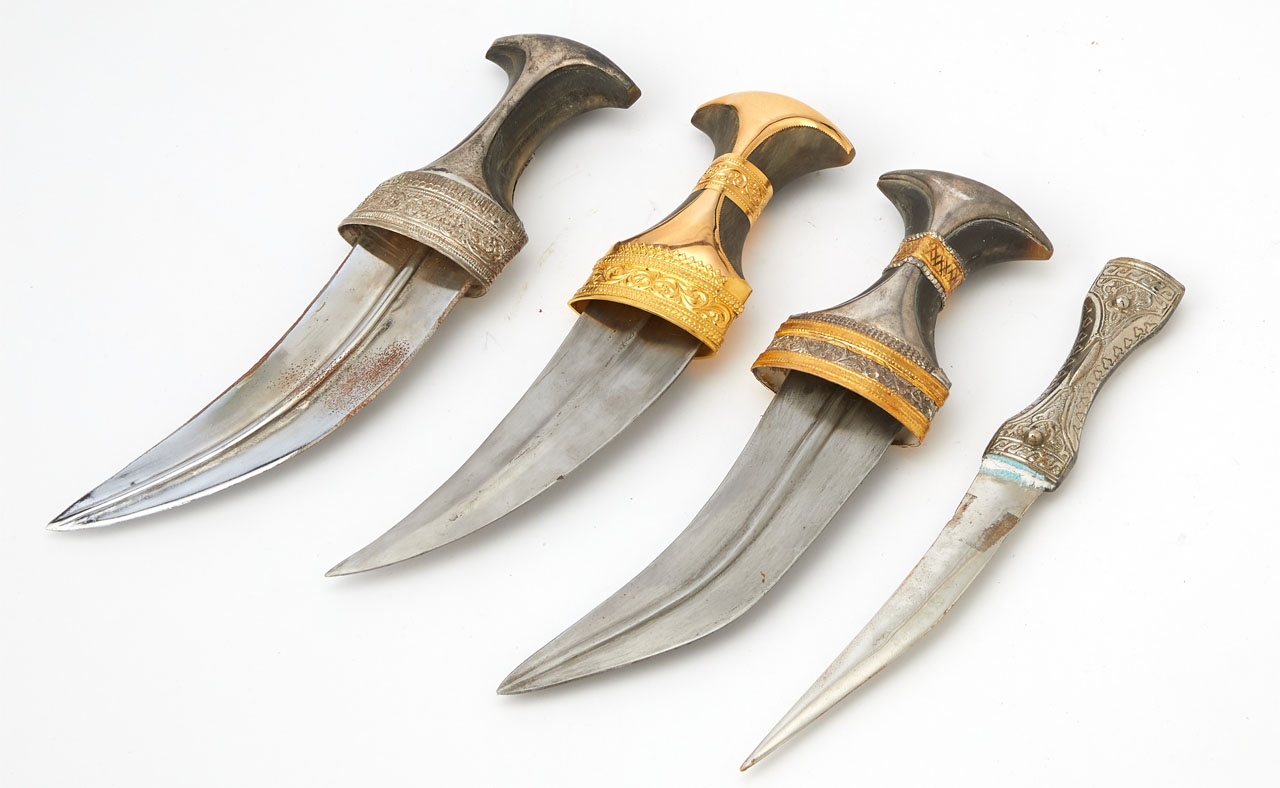
Traditional Omani Khanjar dagger, a curved ceremonial blade featured on Oman’s national emblem and flag, symbolizing honor, heritage, and cultural identity.
Oman is also the only country in this list that features a dagger — the khanjar — in its national emblem.
The khanjar is a curved dagger deeply tied to Omani identity. Unlike many symbolic weapons, it is still worn today in ceremonies, making it a living cultural symbol.
It represents honor, dignity, and craftsmanship. Traditionally, khanjars were handmade and passed down through generations, giving them both functional and symbolic value.
This makes Oman unique. It is not just representing blade history — it is actively preserving it.
What These Flags Reveal About Blade Culture
The presence of swords and daggers on flags is not random. It reflects real cultures built around blades that played essential roles in survival, defense, and identity.
- Blades used in battle and protection
- Symbols of leadership and authority
- Tools of survival and daily life
- Objects passed through generations
These flags show that blades were never just weapons. They were tools of responsibility, craftsmanship, and cultural meaning.
This is why swords and daggers continue to hold value today. They connect modern enthusiasts to real history and tradition.
Explore Hand-Forged Swords
Discover real hand-forged swords inspired by historical designs, functional craftsmanship, and traditional blade culture.
From Flag Symbols to Real Forged Blades
The swords and daggers shown on flags are inspired by real weapons used throughout history. These include Arabian swords, royal blades, and traditional daggers that shaped cultures.
Today, these designs continue to influence modern blade making. A properly forged sword or dagger still carries the same values: strength, balance, and purpose.
At Everest Forge, this tradition continues through handcrafted blades designed for real use, not just display.
Request a Custom Blade
Have a design in mind? We create custom forged swords and daggers based on your requirements, inspired by history and built for real use.
Countries that display swords and daggers on their flags are making a clear statement. They represent strength, identity, and tradition through one of the oldest tools in human history.
For those who understand blades, these symbols are not just visual elements. They are reminders of real craftsmanship, real purpose, and real history.
Frequently Asked Questions
Which countries have swords on their flags?
Saudi Arabia, Oman, and Sri Lanka are among the best-known countries that feature swords on their national flags or official emblems displayed on the flag. Each blade has its own cultural and historical meaning tied to authority, protection, and identity.
Which country has a dagger on its flag?
Oman is the clearest example. Its national emblem includes the khanjar, a traditional curved dagger that remains one of the strongest symbols of Omani heritage and cultural identity.
What does a sword on a flag symbolize?
A sword on a flag usually symbolizes strength, justice, authority, protection, and national heritage. In many cases, it reflects a real blade tradition that played an important role in the country’s history.
Why do some countries use weapons on their flags?
Some countries use weapons on their flags or emblems to represent defense, sovereignty, courage, and warrior tradition. These symbols are often connected to real historical weapons that shaped leadership, identity, and survival.
Is the dagger on Oman’s flag still important today?
Yes. The khanjar is still an important part of Omani culture and is worn during ceremonial and formal occasions. This makes it more than a historical symbol. It remains a living part of national identity.
Are the swords on these flags based on real weapons?
Yes. The swords and daggers shown on these flags are inspired by real historical blades. They reflect actual weapon traditions rather than imaginary or purely decorative designs.
Why are swords still admired today?
Swords are still admired because they represent craftsmanship, purpose, history, and presence. For collectors and enthusiasts, a sword is more than a weapon. It is a symbol of tradition, skill, and identity.