British Swords and English Swords: The Complete Guide
British swords represent one of the most refined and historically layered weapon traditions in the world. Rather than following a single design philosophy, these blades evolved over centuries in response to real combat needs, regional influences, and changing military systems.
From the early Anglo-Saxon period in England to the structured military patterns of the British Empire, each sword type reflects a specific function. Some were designed for shield combat, others for armored warfare, mounted cavalry, or close-quarter fighting. Together, they form a continuous lineage of functional design.
What Are British Swords?
British swords refer to the blades developed and used across England, Scotland, and later Britain as a unified military power. This includes Anglo-Saxon swords, medieval arming swords and longswords, Civil War mortuary swords, Scottish basket-hilted broadswords, infantry hangers, cavalry sabres, and standardized officer swords.
Unlike many simplified classifications, British swords are best understood as a system of evolving designs rather than a single style. Each form emerged to meet a practical need, making functionality the defining characteristic of this tradition.
Anglo-Saxon and Early English Swords
Anglo-Saxon swords represent the foundation of English sword design. These blades were typically double-edged, featuring a central fuller to reduce weight while maintaining structural strength. Pattern welding was commonly used, combining different steels to produce both resilience and flexibility.
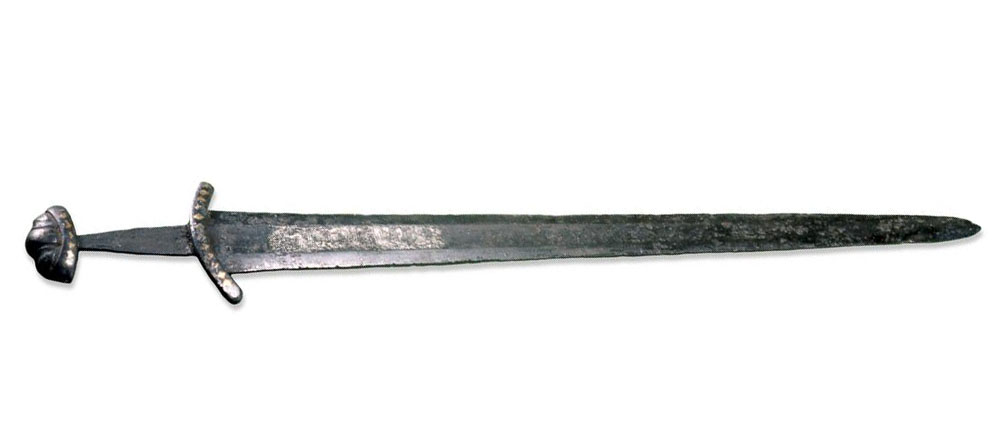
These swords were not mass-produced tools. They were high-value items, often owned by elite warriors. Decorative hilts, inlaid metals, and carefully shaped pommels indicate their importance as both weapons and status symbols.
In combat, Anglo-Saxon swords were designed for close engagement. Their balance allowed effective cutting while still maintaining control. This balance between strength and usability would carry forward into later English sword designs.
Reference: British Museum Collection
Viking Influence on English Sword Design
The Viking presence in England had a direct impact on sword design during the early medieval period. Many blades discovered in England share characteristics with Viking swords, including long fullers, broad cutting edges, and inscribed blades.
This influence was not one-directional. England became part of a wider northern European martial network, where weapons, techniques, and materials were exchanged through both trade and conflict.
The result was a hybrid development phase in which English swords adopted and adapted Viking elements. This contributed to stronger, more versatile blades that would later evolve into the medieval arming sword.
Medieval English Arming Swords
The arming sword is the defining weapon of medieval England. Typically one-handed, it was designed to be used alongside a shield and later as a standalone sidearm. Its straight, double-edged blade allowed both cutting and thrusting, making it highly versatile.
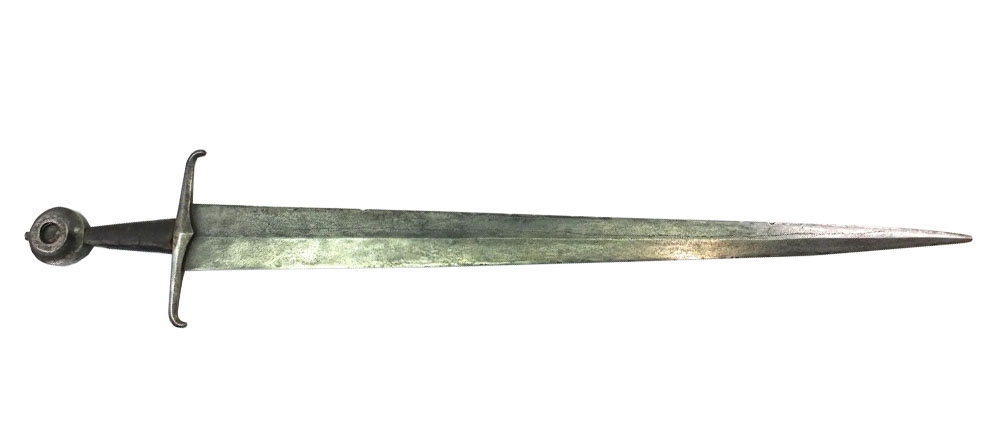
Blade geometry became more refined during this period. The fuller reduced weight while preserving strength, and the point was increasingly shaped for effective thrusting against gaps in armor.
These swords were not oversized weapons. Their effectiveness came from balance, speed, and control. A well-made arming sword could respond quickly in combat, making it a reliable weapon for knights and soldiers alike.
Reference: Royal Armouries Collection
English Longswords and War Swords
As armor became more advanced, sword design adapted. The longsword introduced a longer grip, allowing the weapon to be used with two hands. This provided greater leverage, control, and power in both cutting and thrusting.
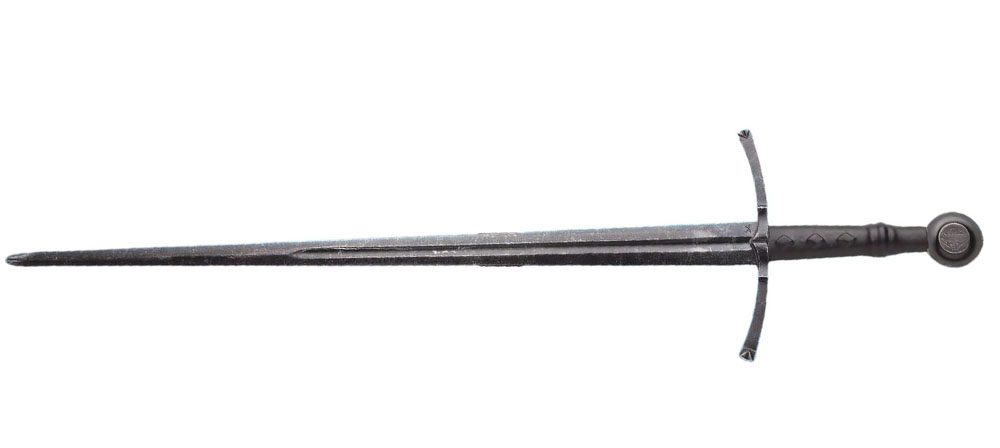
The blade itself became more specialized. It was often narrower and more rigid toward the tip, allowing it to penetrate armor gaps more effectively. This reflects a shift in combat style, where precision became just as important as raw force.
Longswords required training and technique. They were part of a more advanced martial system, where footwork, timing, and control played a major role. This makes them one of the most respected sword types in historical combat studies today.
Single-Edged and Falchion-Type Blades
Single-edged swords represent a different approach to combat. Instead of balancing cut and thrust, these blades focused primarily on cutting power. Their wider profile and forward weight allowed for heavy, decisive strikes.
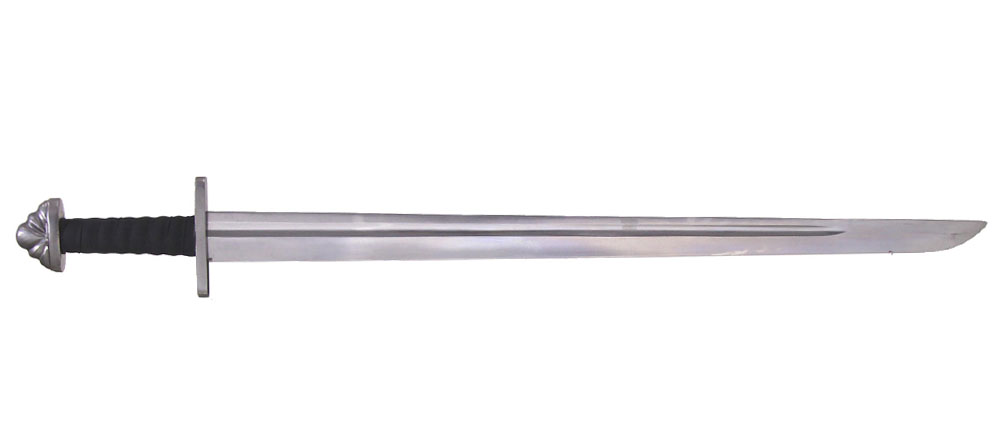
Falchion-type blades are the most well-known example. These swords could deliver strong chopping blows, making them effective against lightly armored opponents.
This category highlights an important point: historical sword design was driven by function, not uniformity. Different battlefield conditions required different solutions, and single-edged blades provided an alternative to traditional double-edged swords.
Tudor and Stuart Rapiers
During the Tudor and Stuart periods, sword use extended beyond the battlefield. The rapier became a prominent sidearm, associated with personal defense, dueling, and social status.
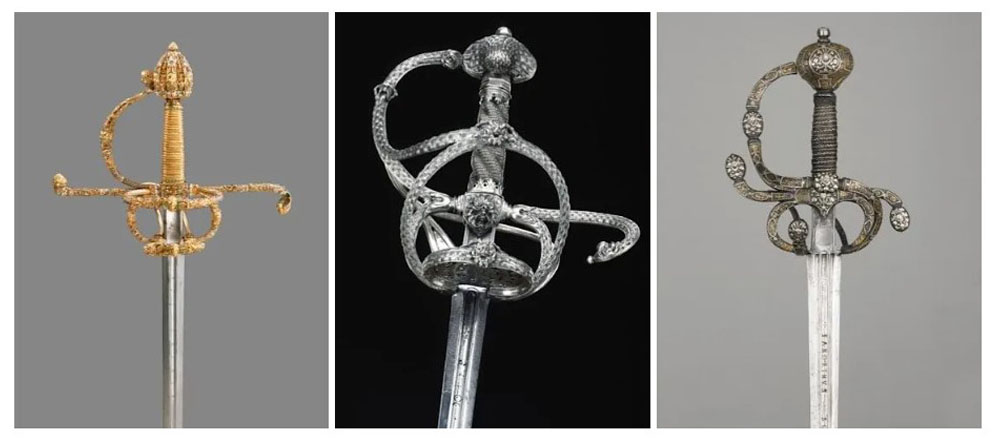
Unlike earlier swords, rapiers were optimized for thrusting. Their long, narrow blades and complex hilts allowed for precise control and protection of the hand.
These swords represent a transition in how blades were used. They were not primarily military weapons but tools of personal combat and identity, reflecting the changing role of swords in society.
Mortuary Swords of the Civil War
Mortuary swords are one of the most distinctive British designs, closely associated with the English Civil Wars of the 17th century. They feature partially enclosed hilts that provide increased hand protection while maintaining cutting ability.
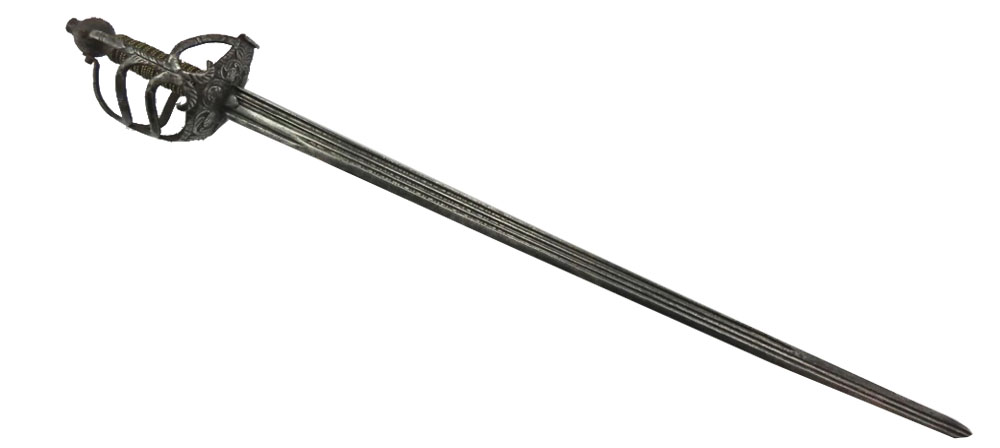
These swords were widely used by cavalry and officers. The hilt design often included decorative elements, sometimes linked to political or cultural identity during the conflict.
Functionally, mortuary swords bridge the gap between medieval open-hilt designs and later fully enclosed guards. They reflect a period of rapid development in both combat style and weapon construction.
Scottish Basket-Hilted Swords
The Scottish basket-hilted sword is one of the most recognizable British weapons. Its defining feature is the enclosed guard, which protects the hand while allowing strong, controlled strikes.
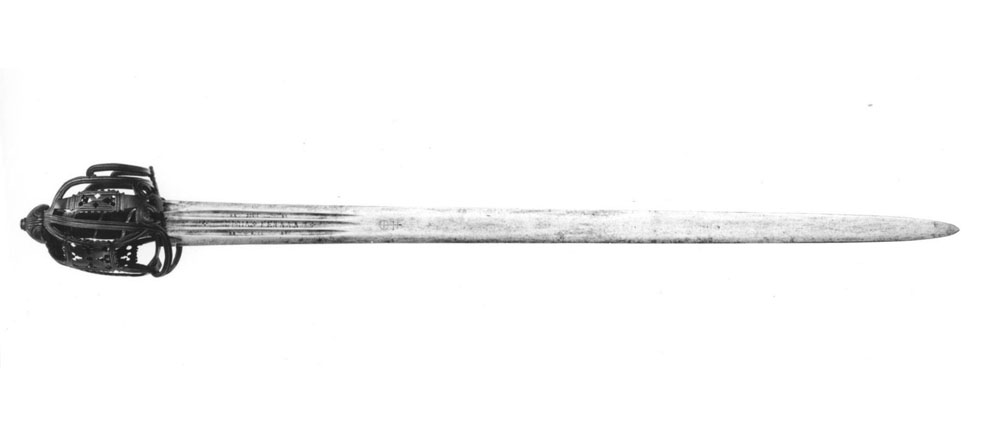
The blade is typically straight and double-edged, designed for cutting and thrusting. The combination of blade and hilt creates a weapon that is both durable and highly practical in close combat.
These swords were widely used by Highland warriors and later became part of formal military equipment. Their distinctive design makes them one of the most iconic symbols of British sword history.
British Infantry Hangers
Infantry hangers were shorter swords issued to soldiers as secondary weapons. Unlike knightly swords or officer blades, they were designed for practicality and ease of use.
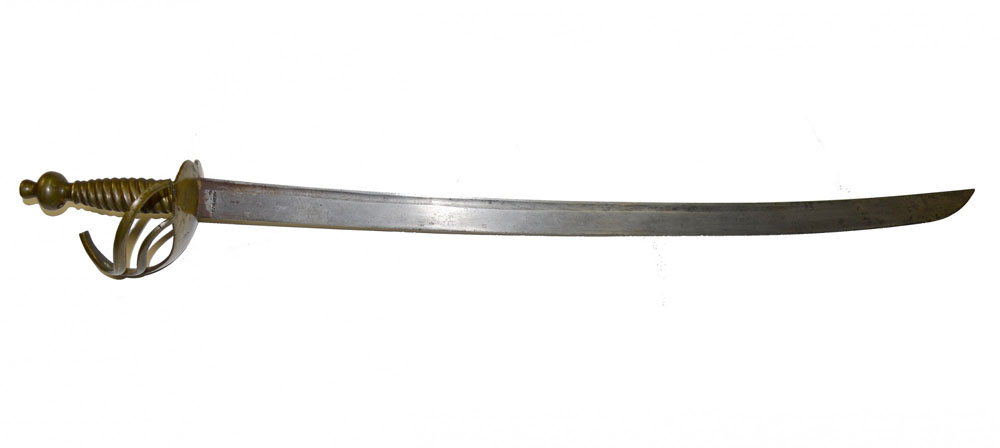
Their shorter length made them suitable for confined spaces and everyday military situations. They were not intended as primary battlefield weapons but as reliable tools when needed.
This category demonstrates that British sword design extended beyond elite weapons. It included functional, accessible blades for ordinary soldiers.
British Cavalry Sabres
The British cavalry sabre represents a major shift in sword design. Unlike straight medieval blades, sabres featured a curved profile optimized for slashing from horseback.
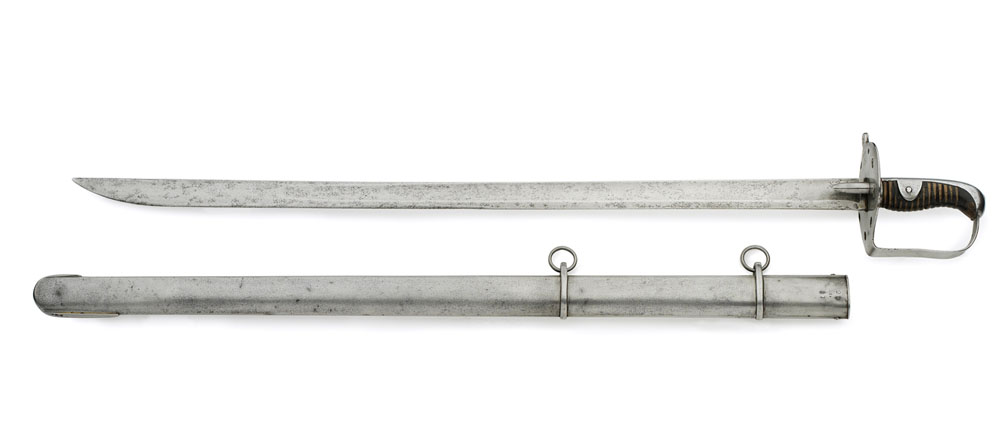
The 1796 Light Cavalry Sabre is the most famous example. Its forward-weighted blade allowed powerful cutting strikes, making it highly effective in mounted combat.
This design reflects the importance of mobility in later warfare. Speed, reach, and cutting efficiency became more important than the versatility required in earlier sword types.
Officer Swords and Military Patterns
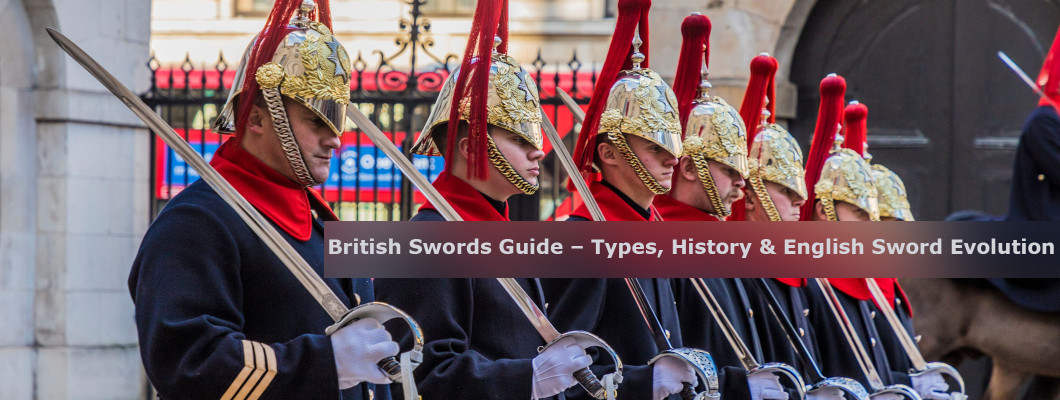
By the 19th century, sword design in Britain became standardized. Officer swords, such as the 1822 pattern, combined functionality with ceremonial importance.
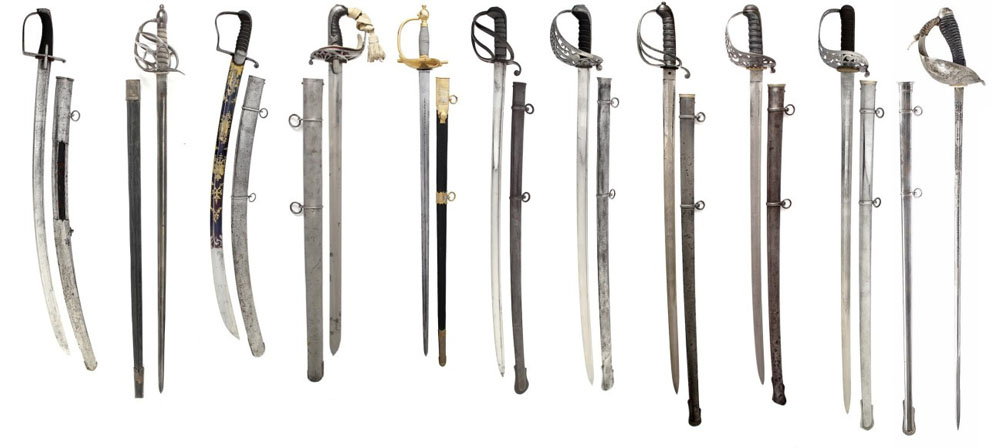
These swords were designed to represent rank and authority while still maintaining practical construction. Over time, their role became more symbolic, but their design remained rooted in functional origins.
Reference: National Army Museum Collection
Custom Hand-Forged British Style Swords
Inspired by historical British and English sword designs, modern blades can be forged to match both traditional form and real functional use.
At Everest Forge, each sword is hand forged using high carbon steel, built for durability, balance, and real performance.
You can request a fully custom sword based on historical styles such as arming swords, basket-hilted broadswords, or cavalry sabres.
How to Choose a British-Style Sword
Choosing the right sword depends on purpose. Some are intended for display, while others are designed for functional use.
Key factors include steel quality, heat treatment, construction, and balance. A well-made sword should feel controlled in hand, not just visually appealing.
Understanding historical design helps ensure that the sword you choose is not only accurate but also functional.
Explore Hand-Forged Swords
Browse our collection of functional swords inspired by historical British and European designs.
The Legacy of British Swords
British swords are defined by evolution, not uniformity. Each design reflects a response to specific combat needs, from early close combat to mounted warfare and structured military systems.
What remains consistent is the emphasis on function. These swords were built to perform, and that principle continues in modern forging today.
A well-crafted British-style sword is not only a historical reference but a continuation of centuries of practical design.
FAQ
What is the most famous British sword?
The 1796 Light Cavalry Sabre is one of the most well-known British swords.
Are English swords different from European swords?
They share similarities but evolved based on local combat needs and historical development.
Are British swords still used today?
They are mostly ceremonial, but functional versions are still forged for collectors and practical use.