The Most Iconic and Deadliest Blades in Human History
For thousands of years, before gunpowder ever touched a battlefield, the sword decided who lived and who died. Every empire that mattered forged its identity in steel — and the swords they left behind tell the story of how warfare, craft, and culture evolved together.
Below are the ten greatest fighting swords ever made. Some you can still own today, hand-forged in Nepal from 5160 high-carbon spring steel. We've marked which ones are available in our collection so you can browse straight from the article — but first, here's how they compare at a glance.
Comparison Table: 10 Greatest Fighting Swords
| Sword | Origin | Era | Best For | Buy at Everest Forge |
|---|---|---|---|---|
| Khopesh | Ancient Egypt | 2500–1300 BCE | Hooking, slashing | Shop |
| Gladius | Ancient Rome | 3rd c. BCE – 3rd c. CE | Thrusting, formation combat | Shop |
| Falcata | Iberian Peninsula | 5th–1st century BCE | Heavy chopping | — |
| Xiphos | Ancient Greece | 8th–4th century BCE | Cut and thrust, hoplite combat | Shop |
| Miao Dao | China | Ming Dynasty onward | Long-reach slashing | Shop |
| Ulfberht | Frankish / Viking | 9th–11th century CE | Versatile combat, status | Shop |
| Scimitar | Middle East / Persia | 9th century onward | Cavalry slashing | Shop |
| Katana | Japan | 15th century onward | Precision cutting | — |
| Zweihander | Germany | 15th–17th century CE | Pike-breaking, two-handed power | — |
| Kukri (Khukuri) | Nepal | Centuries old, still in service | Chopping, survival, combat | Shop |
Every sword marked "Shop" is hand-forged in Nepal from 5160 high-carbon spring steel and shipped worldwide.
1) Khopesh — The Sword of the Pharaohs (Ancient Egypt)
The khopesh is one of the oldest curved swords ever forged — and arguably the most distinctive. Its sickle-shaped blade, evolved from the battle axe around 2500 BCE, gave Egyptian warriors something no straight sword could match: the ability to hook around an opponent's shield, pull weapons from their grip, and deliver crushing slashing blows in the same fluid motion.
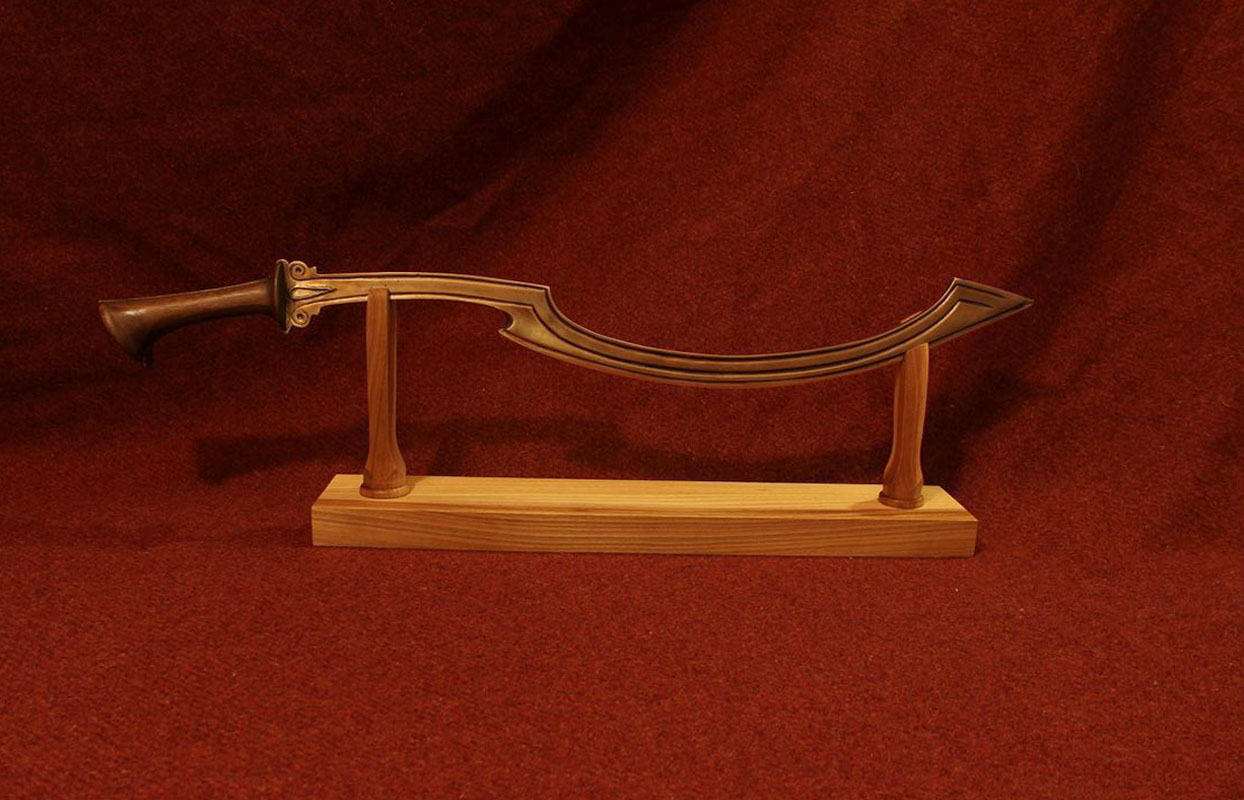
The khopesh became a symbol of pharaonic authority. Tutankhamun was buried with two of them. Temple walls and battle reliefs across Egypt show pharaohs gripping the curved blade as a sign of divine kingship. Even Canaanite and Hittite armies adopted the design after facing it on the battlefield.
What made it so feared wasn't just the curve — it was the bronze-into-iron evolution that turned a heavy chopping tool into a precision instrument. By the New Kingdom era, master smiths were producing khopesh blades with hardened edges and decorative inlays that rival anything from later civilisations. Read the full khopesh history here.
Own a Hand-Forged Khopesh Sword
Forged from 5160 high-carbon spring steel. Full tang construction. Buffalo horn or rosewood handle. Battle-ready, individually hammered to shape by master smiths in Nepal — using the same techniques that produced this blade for over 4,000 years.
- Blade material: 5160 spring steel, water-tempered
- Construction: Full tang, hand-forged
- Handle: Buffalo horn or traditional rosewood
- Shipping: Worldwide, 7–14 business days
2) Gladius — The Sword That Built Rome (Ancient Rome)
No sword has shaped the modern world more than the Roman gladius. For nearly 700 years, this short, leaf-shaped blade was the standard weapon of the Roman legions — and the Roman legions built the largest empire the ancient world had ever seen. The gladius didn't win because it was the most beautiful sword. It won because it was the most ruthlessly practical.

At roughly 60–85 cm long, the gladius was designed for one thing above all: thrusting in tight formation. While enemy armies relied on long slashing weapons that needed space to swing, Roman soldiers locked their shields together and stabbed forward through the gaps. A trained legionary could deliver a fatal thrust in the time it took an opponent to raise his arm. Multiplied across 5,000 soldiers, the effect was devastating.
The gladius came in several regional variants — Hispaniensis, Mainz, Pompeii — each refined over centuries of campaign experience. Roman generals understood something most ancient civilisations missed: the soldier matters more than the sword, but the right sword multiplies the soldier. The gladius was that multiplier. Explore the full gladius evolution and types here.
Own a Hand-Forged Roman Gladius
Authentic legion-style short sword. Hand-forged from 5160 spring steel, full tang, with hardwood or bone handle and brass fittings styled on the Mainz and Pompeii patterns. Battle-ready, sharpened, and built to the proportions Roman legionaries actually carried.
- Blade material: 5160 spring steel, water-tempered
- Length: Approx. 24–28 inches overall
- Construction: Full tang, leaf-shaped blade, brass fittings
- Shipping: Worldwide, 7–14 business days
3) Falcata — The Sword That Terrified Rome (Ancient Iberia)
When Hannibal's army crossed the Alps to invade Rome, his Iberian troops carried a weapon Roman legionaries had never faced: the falcata. Forward-curved like a heavy chopping blade with the speed of a sword, the falcata was so effective that captured Roman officers reportedly inspected it with a mixture of awe and dread.

The genius of the falcata was geometry. The forward curve concentrated mass at the cutting point, so every swing landed with the force of an axe — but unlike an axe, the long blade could thrust, parry, and recover at sword speed. Roman legions eventually adapted parts of their kit specifically to counter falcata-armed opponents, including reinforcing helmets and shields.
If you're drawn to the falcata's style, the closest blade in our collection is the Greek Kopis — a related forward-curved sword from the same family of Mediterranean cutting weapons.
4) Xiphos — The Hoplite's Last Resort (Ancient Greece)
Every Greek hoplite carried a spear as his primary weapon. But when the spear shattered, broke, or was lost in the press of phalanx combat, the soldier reached for his xiphos. This double-edged short sword — typically 50–60 cm long — was the weapon that decided the closest, bloodiest moments of ancient Greek warfare.
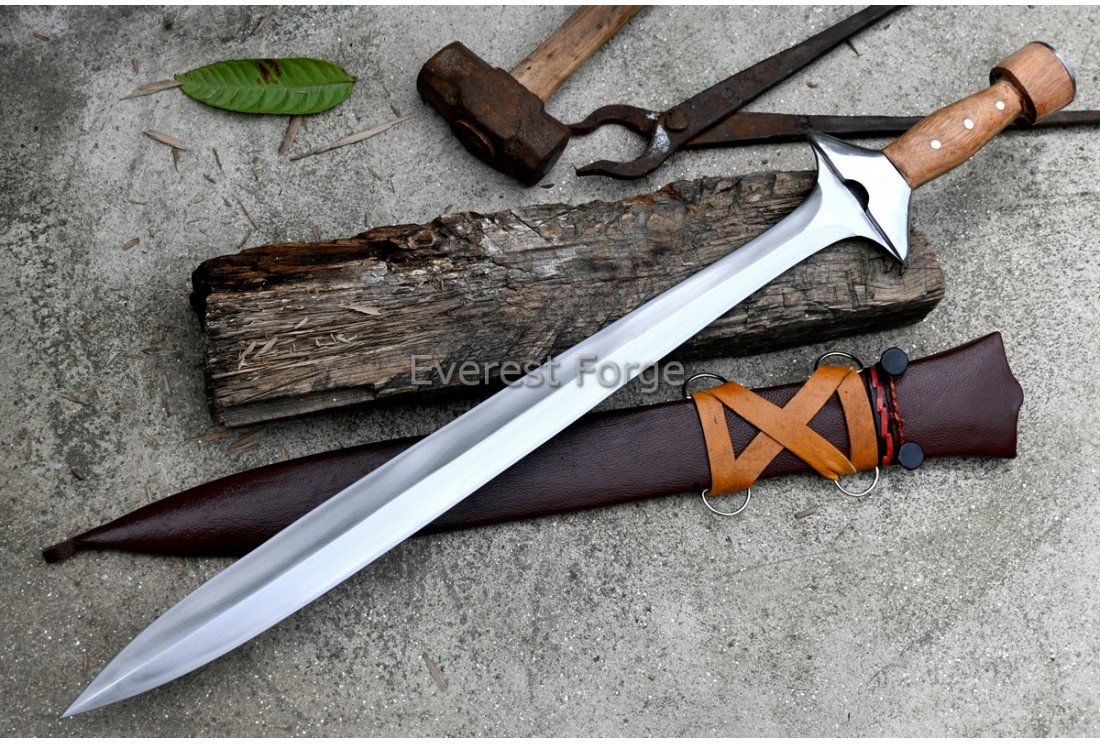
The xiphos shape — a leaf-bladed, double-edged design — was elegant for a reason. The widest part of the blade sat about two-thirds of the way to the tip, putting the centre of mass exactly where a hoplite needed it for fast, accurate thrusts in the tight gaps between shields. It could also slash effectively, making it the ideal weapon when phalanx formations broke down into close-quarters chaos.
Spartan warriors famously carried even shorter xiphos blades than other Greeks. When asked why, a Spartan reportedly answered: "Because we fight close to the enemy." The xiphos shaped how Greek hoplites trained, fought, and won the wars that defined Western civilisation.
Own a Hand-Forged Greek Xiphos
Authentic hoplite-style short sword. Double-edged, leaf-bladed, hand-forged from 5160 spring steel with traditional grip materials. Built to the proportions Spartan and Athenian warriors actually carried — fully functional, sharpened, and battle-ready.
- Blade material: 5160 spring steel, water-tempered
- Construction: Full tang, double-edged leaf blade
- Style: Classical Greek hoplite proportions
- Shipping: Worldwide, 7–14 business days
5) Miao Dao — The Sweeping Saber (China)
The miao dao is the long Chinese saber that gave Ming and Qing dynasty soldiers an answer to longer-reach weapons. Stretching up to 1.6 metres, it required two hands to wield properly — but in skilled hands, it became an extraordinary blend of cutting power and battlefield reach.
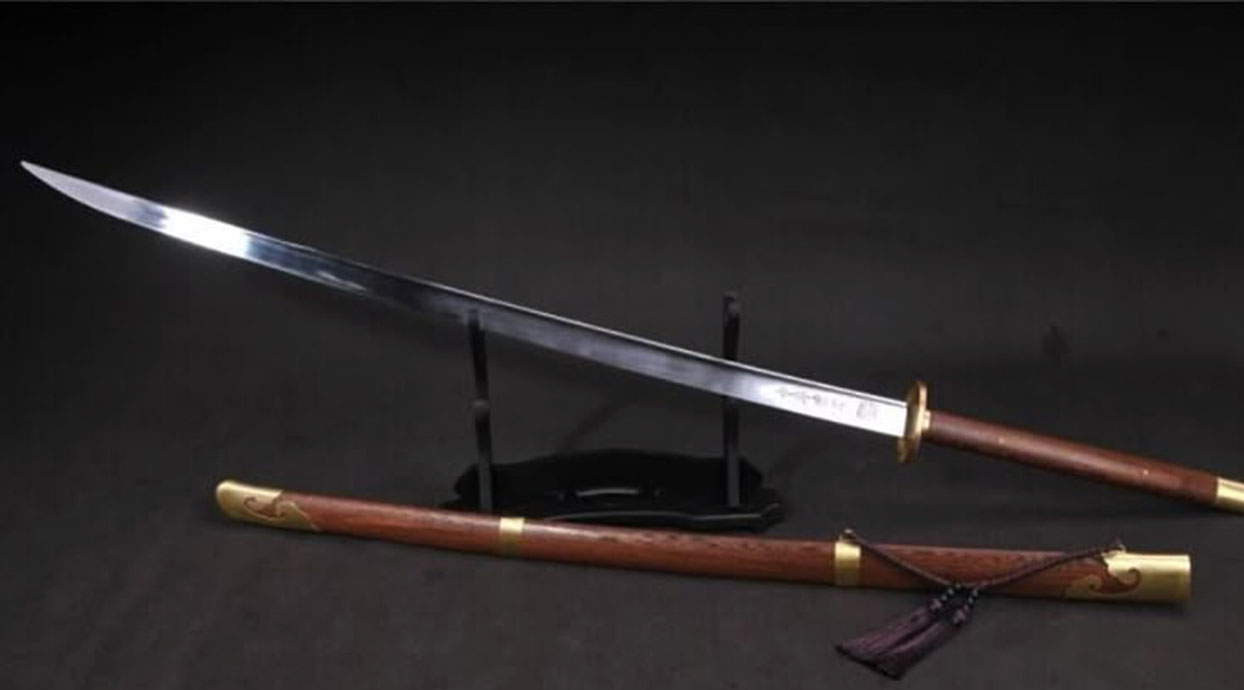
The miao dao's curve is gentle compared to a Japanese katana, but the philosophy is similar — the gradual arc allows for sweeping draw cuts that slice rather than chop. Chinese martial arts schools still teach miao dao forms today, preserving fighting techniques that go back four hundred years. View our hand-forged Dao sword.
6) Ulfberht — The Viking Sword Centuries Ahead of Its Time
Ulfberht swords are the most metallurgically advanced blades of the early medieval world — and modern scientists still don't fully understand how they were made. Forged in the Frankish empire between the 9th and 11th centuries CE and traded throughout Viking territories, these swords used crucible steel of a purity that Europe wouldn't see again for nearly 800 years.
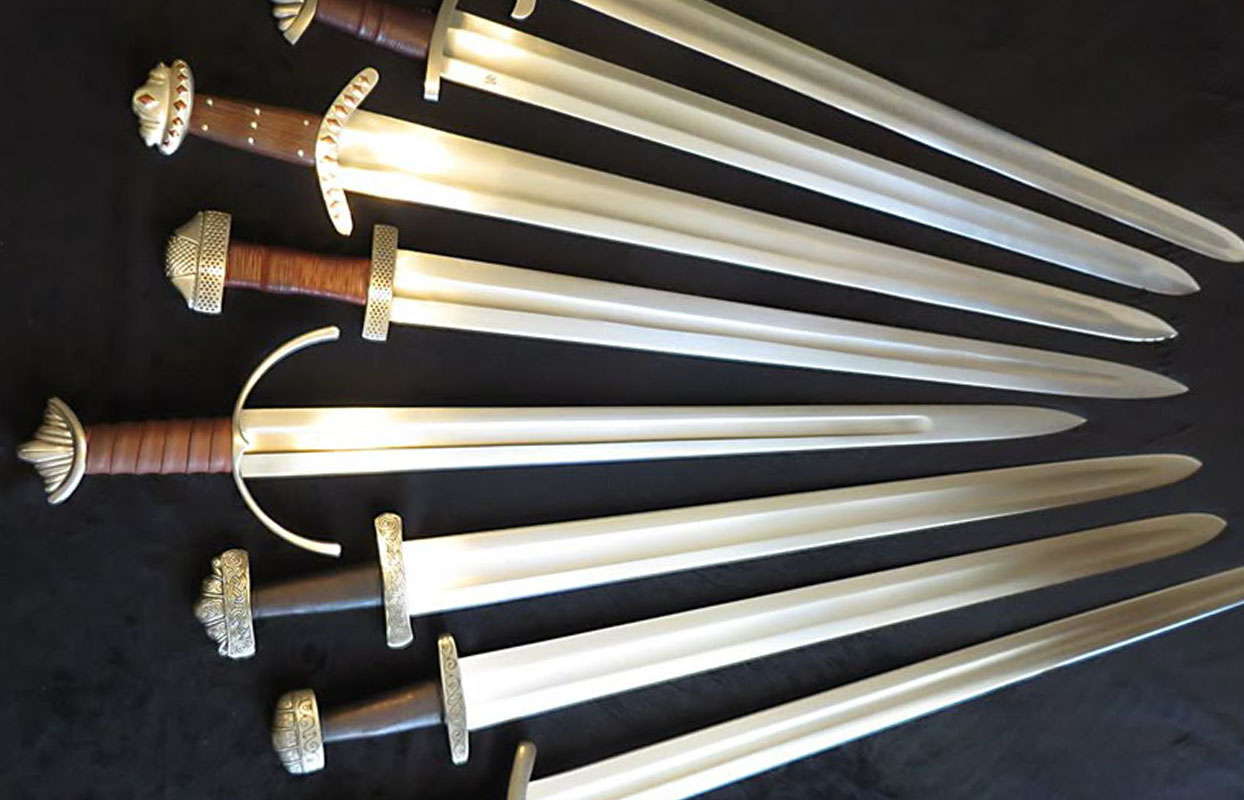
The signature inlay +VLFBERHT+ on the blade marks it as a brand — possibly the world's earliest example of a quality mark on a weapon. Genuine Ulfberhts were so prized that warriors were buried with them, and even fakes appeared during the period (with deliberately misspelled inlays trying to pass as the real thing). It remains one of the great metallurgical mysteries of medieval Europe. Browse our Viking sword collection.
7) Scimitar — The Curved Blade of the Islamic World
The scimitar is the umbrella name for a family of curved swords that dominated cavalry combat from Persia to North Africa for over a thousand years. The Shamshir, Kilij, Talwar, and Saif are all scimitars — each shaped by the warriors and craftsmen of a different region, but united by a single design philosophy: the curve.
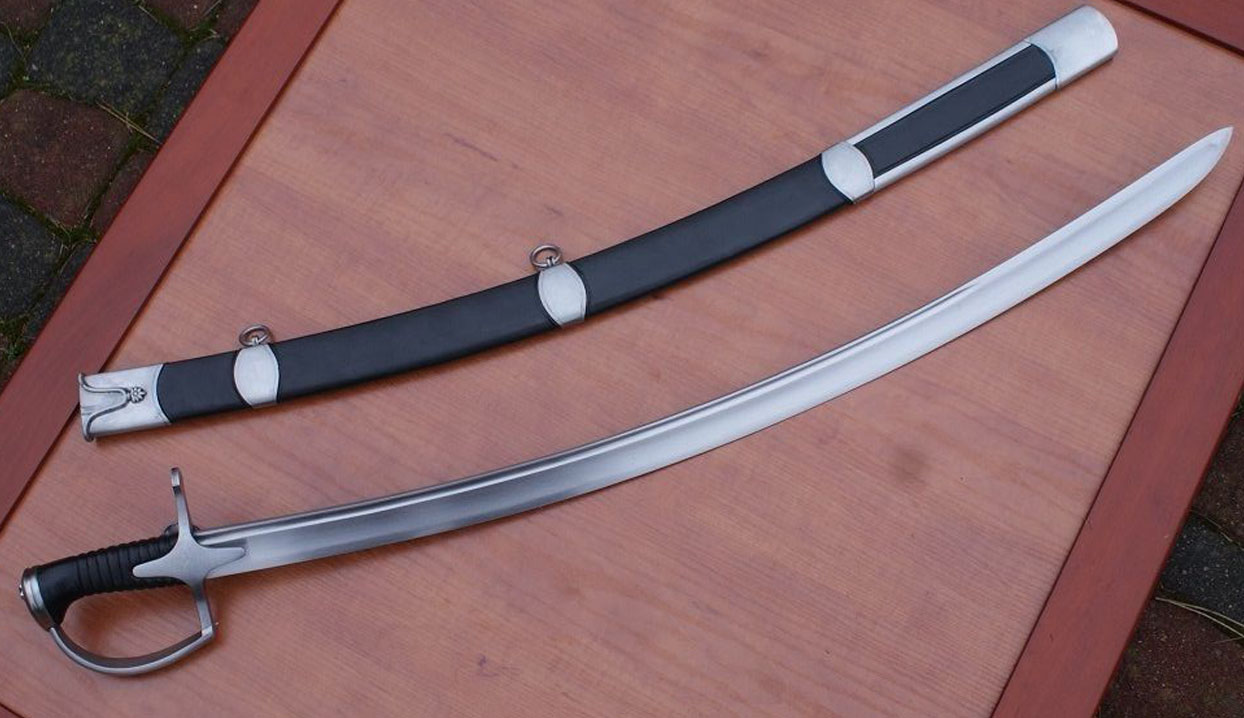
That curve does something a straight blade can't — it draw-cuts. As the edge contacts a target, the curved geometry slides forward, multiplying cutting force without extra effort from the rider. At full gallop, the result was devastating. Persian, Ottoman, Mughal, and Arab cavalry all built their fighting traditions around this single principle. Read the complete scimitar history and meaning, or browse our hand-forged scimitar collection — all 5160 steel, all individually forged in Nepal.
8) Katana — The Soul of the Samurai (Japan)
No sword is more recognised, romanticised, or carefully preserved than the Japanese katana. Crafted through a lamination and folding process that took weeks per blade, the katana achieved an edge sharpness that has rarely been surpassed. For the samurai, it wasn't just a weapon — it was a moral object, a sign of caste, and the literal soul of the warrior.

The katana's gentle curve emerges naturally from the differential hardening process — the spine cools slowly while the edge cools fast, shrinking at different rates and pulling the blade into its iconic shape. Every detail of the katana's construction reflects centuries of refinement: the hamon temper line, the wrapped tsuka grip, the hand-fitted tsuba guard. It is not just a sword. It is a discipline.
If you're drawn to the katana's style, the closest blades in our hand-forged collection are the Chinese Dao saber and the scimitar family — same single-edged curved philosophy, hand-forged in Nepal from 5160 steel.
9) Zweihander — The Six-Foot Pike Breaker (Germany)
The German zweihander was an enormous two-handed sword — sometimes nearing two metres long — wielded by elite Landsknecht mercenaries to do one specific job: break through pike formations. When ranks of pikemen advanced shoulder-to-shoulder, the only way to disrupt them was to send a Doppelsoldner forward with a zweihander to chop the pike shafts and create gaps.

Doppelsoldners earned double pay for the brutal, terrifying work of fighting in the front rank with a sword that needed both hands and considerable space to swing. The zweihander's parrying lugs — small spurs on the blade above the guard — let the wielder slide one hand up the blade for half-swording techniques, turning the long sword into a shorter, more controllable weapon at close quarters. It was the heaviest and arguably the most physically demanding sword in regular battlefield use anywhere in history.
10) Kukri (Khukuri) — The Sword the Gurkhas Still Carry (Nepal)
Most swords on this list are museum pieces. The kukri is not. Gurkha soldiers — universally regarded as among the finest light infantry in the world — still carry the kukri into combat today, and have done so for over two centuries of service in the British and Indian armies. No other weapon on this list can claim that record of unbroken military service.
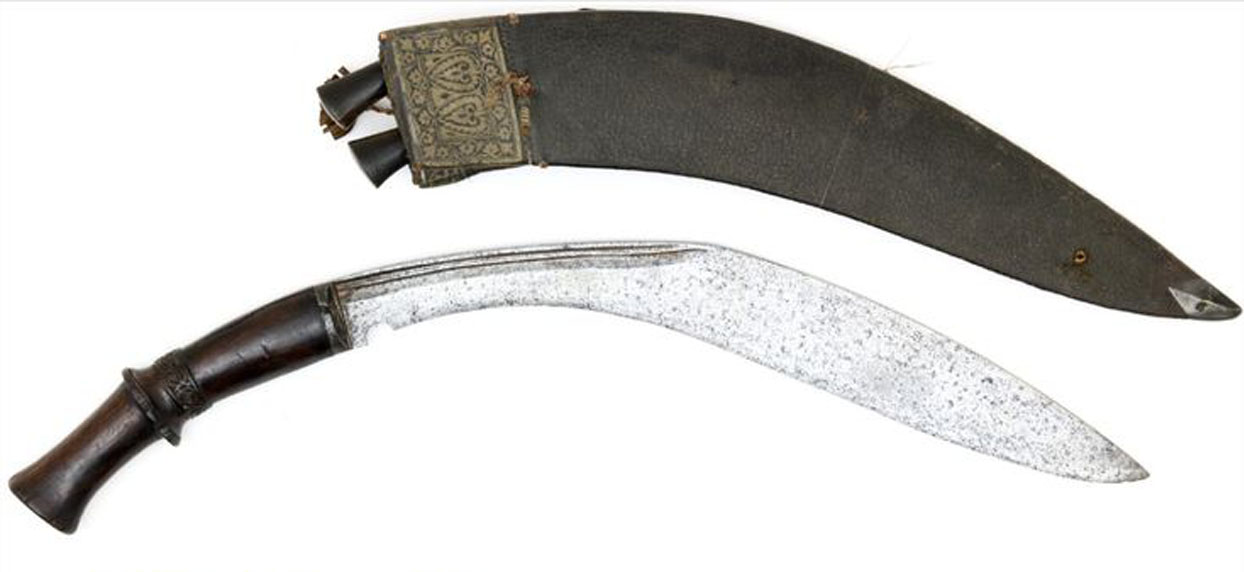
The kukri's distinctive forward-curved blade — the inward bend creates a forward weight bias — turns every cut into a chop with the force of a much larger weapon. A skilled Gurkha can take down a tree, butcher game, or end a fight with the same blade. It's the single most versatile bladed tool ever created, and the reason the British Army has issued kukris to Gurkha regiments continuously since 1815.
The reputation precedes the blade. Learn what makes a quality kukri in our buying guide, or browse the full collection below.
Own an Authentic Hand-Forged Kukri
Forged in Nepal — the home of the kukri. 5160 spring steel, water-tempered, full tang, with traditional rosewood or buffalo horn handles. Made by smiths who learned the craft from fathers and grandfathers — the same villages that have supplied Gurkha regiments for generations.
- Blade material: 5160 spring steel, differentially tempered
- Construction: Full tang, traditional fuller groove
- Handle: Rosewood or buffalo horn, brass-fitted
- Includes: Leather sheath, karda and chakmak (small companion knives)
- Shipping: Worldwide, 7–14 business days
How to Choose Your Sword: A Quick Buyer's Guide
Drawn to one of these blades but unsure which to pick? Most of our buyers fall into one of three groups. Find yours below.
If you want a display piece with serious history
Go for the Khopesh or the Scimitar. Both have visually striking curves that look extraordinary mounted on a wall, and both come from cultures with deep, well-documented histories that make great conversation pieces. The Khopesh is rarer in collections — most people have never seen one in person — which makes it a standout for collectors who already own straight blades.
If you want a functional, battle-ready blade
Choose the Kukri or the Gladius. Both are short enough to handle safely, robust enough to actually cut targets (water bottles, tatami mats, light brush), and built from 5160 spring steel that holds an edge through real work. The Kukri doubles as a survival tool — it's the most genuinely useful blade in the collection.
If you want something for collecting or test-cutting
The Xiphos and the Gladius are short, balanced, and built for accuracy. Both classical Greek and Roman designs reward training — the proportions are correct, the steel is right, and the weight distribution feels exactly as it should.
If you want something completely custom
Tell us the blade length, curve, steel grade, handle material, engravings, and scabbard style — we forge to your specification. Request a Custom Forge here.
Frequently Asked Questions About Fighting Swords
What is the deadliest sword in history?
Most historians point to the Roman gladius. Its short, leaf-shaped blade was perfectly suited to disciplined formation combat, and the Roman legions that wielded it built the largest empire of the ancient world. No other sword has shaped global history more directly.
Which sword had the best craftsmanship?
The Japanese katana is widely regarded as the pinnacle of sword craftsmanship, thanks to its meticulous folding, lamination, and differential hardening. Honourable mentions go to the Frankish Ulfberht (centuries ahead of its time metallurgically) and the Persian Shamshir (renowned for wootz Damascus steel).
Which sword was most effective against armor?
The estoc was designed specifically for piercing through chainmail and the gaps in plate armor, and the German zweihander could chop through pike shafts and dent plate at close range. Most swords on this list were optimised for unarmoured or lightly armoured opponents.
What is the largest sword used in real warfare?
The German zweihander, often reaching nearly two metres in length, is the largest sword used effectively in regular battlefield combat. Larger ceremonial swords exist, but they were never meant to be swung in earnest.
Are these swords battle-ready, or just for display?
Every Everest Forge sword on this list is hand-forged from 5160 high-carbon spring steel and water-tempered for genuine functional performance. They are built to the same proportions as the historical originals and can be sharpened to a true cutting edge. They are display-worthy — but they are also fully functional weapons.
What steel do you use, and why does it matter?
We use 5160 high-carbon spring steel for all our hand-forged swords. It's the same steel used in heavy-duty truck leaf springs, prized for its toughness, shock resistance, and ability to hold a sharp edge through repeated impact. It's the modern equivalent of the spring steels traditional smiths sought out for centuries.
Do you ship internationally?
Yes. We ship worldwide from Nepal, with most orders arriving within 7–14 business days. Customs duties and import laws vary by country — please check your local sword and blade import regulations before ordering. We also have a global sword laws guide covering most major destinations.
Can I order a custom sword?
Yes. We forge custom swords to your specification — choose the blade length, profile, steel grade, handle material, engravings, and scabbard style. Visit our Custom Forge page to request a custom design.
Conclusion
These ten swords are the high points of two thousand years of human warfare and craftsmanship. Each one solved a real combat problem with steel — and each one carried the identity of its civilisation into history.
You don't need to be a soldier to appreciate them. Collectors, martial artists, historians, and anyone who responds to genuine craftsmanship can own a hand-forged version of these blades today, made by smiths in Nepal who learned the work from their fathers and grandfathers. Browse the four signature pieces below — or commission your own custom blade.