From Battlefield to Collection: The Timeless Appeal of the Baselard Dagger
The Legacy of the Baselard Dagger
Daggers: More Than Just Weapons
In the Middle Ages in Europe, daggers were fighting instruments and multifunctional companions. The people utilized them both for keeping themselves alive and for protecting themselves. The dagger was also recognized as the symbol of the social class. A dagger made with care could be the shield of a traveler in the wilderness. These small knives not only help in hunting but also become the owner's personal epitome of bravery and dexterity. In the time from busy city streets to calm rural villages, daggers are everywhere.
The unique baselard dagger
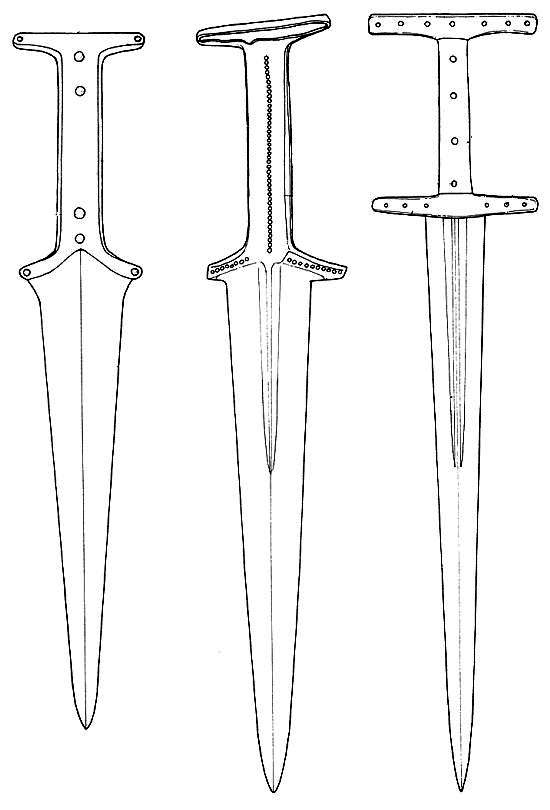
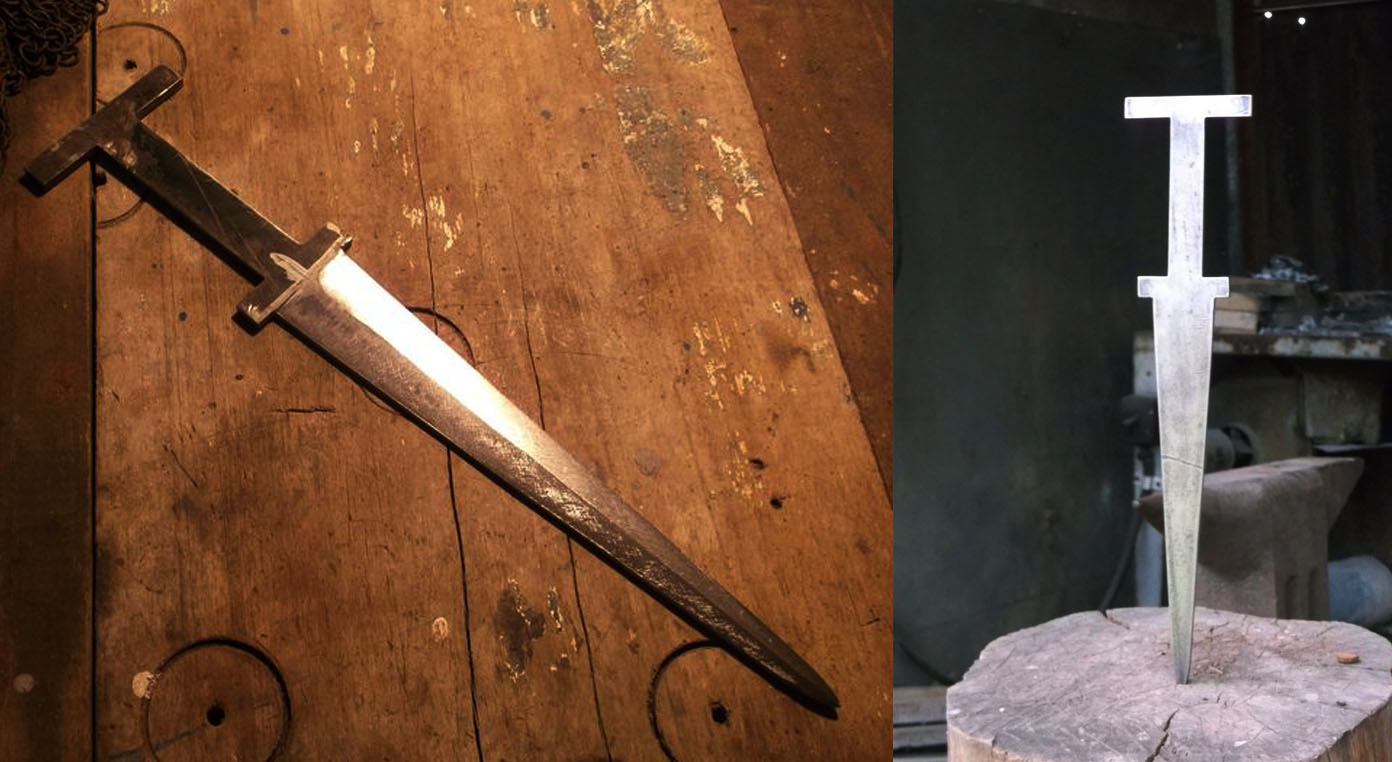
Among all the blades, the baselard dagger has a distinctive shape. Unlike ordinary daggers, it is designed for both practicality and prestige. It features a distinctive H-shaped handle. It is offered with a two-edged blade, which performs well in close-quarters combat. The baselard dagger has had a history of being used by knights, guards, and townsfolk. Carrying a baselard meant having a work of art, as it was a blade that was a cherished work of history. The popularity of the baselard was not limited to the battlefield only, it was a common companion for everyday use. It served as a backup weapon for knights in armor. Similarly, it was a reliable tool for guards patrolling city gates. It became a practical means of self-defense for civilians navigating crowded markets.
Baselard: more than collecting
Over time, the baselard has served as an integral weapon and tool for soldiers, guards, and townsfolk alike. Even as of today, the baselard dagger continues to attract fans and collectors alike. Collectors pride themselves in willingly seeking out the dagger for its historical significance, but also desire it immensely for the craftsmanship and aesthetics of the dagger itself. At Everest Forge, we pay homage to the storied history of the baselard dagger and make baselard daggers in that tradition. Each piece reflects the timeless artistry of medieval blades. They are fully functional and ready for display or use. At Everest Forge, we blend tradition with modern expertise. We create pieces that carry both heritage and quality.
What is a Baselard Dagger?
A distinctive medieval blade: The Baselard Dagger holds a special place in the history of weapons. It is the most recognizable medieval sidearm. It has a definite H-shaped grip. It is known to have a striking look. Similarly, its unique handle design makes it easier to control in combat. The handle part has a special guard, making it perfect as a functional and aesthetic piece. The blade is about 10 to 18 inches in length. It is larger than an ordinary dagger but shorter than a sword.
Blade and Function: The blade of the Baselard Dagger is double-edged. Both sides are sharpened. This makes it perfect for thrusting and cutting. You can also find different versions of the blade. Some versions have straight blades while others have leaf blades. The different design allows the dagger to serve multiple purposes.
Difference between a sword and a dagger: Baselard's biggest advantage is its hybrid nature. It is smaller and easier to carry than a sword. It often offers more reach and power than a standard dagger. It is a practical alternative to a sword. Swords are longer and better suited to battlefields. The Baselard Dagger is perfect as an everyday companion. It is accessible, reliable, and less cumbersome.
A trusted sidearm: The Baselard Dagger is a favorite sidearm. It is popular across Europe. It is ideal for self-defense in crowded towns. It is practical for everyday carry during travel or trade. The size of the Baselard Dagger makes it easy to adjust on the belt. Today, it is appreciated for its design. Modern artisans create hand-forged daggers in Baselard style.
The History of the Baselard
Origins in Switzerland and Germany
The Baselard dagger first appeared in late 13th century. Basel, in Switzerland, is where it started. Basel was the city where the blade first gained its popularity. The city's name gave birth to its own dagger's identity. The first dagger was not only famous for its distinctive H-shaped grip but also for its practical size. By the early 14th century, the Baselard spread across its surrounding regions. It quickly became a sidearm of choice in countries like Germany. Merchants, townsmen, and local militaries favored the Baselard dagger for its accessibility. Unlike expensive swords, this Baselard was affordable.

Battlefield and Civilian Use
During the 14th and 15th centuries, Europe was continuously pushed into conflicts. The baselard dagger found its way onto battlefields. For soldiers, it was a trusted backup weapon. It was easier to handle than longer swords. In closer quarter combat, its double-edged blade made it a deadly weapon. Knights carried it as a secondary blade beneath their armor. Even the city guards relied on it for its quick defense during the patrols. The baselard was not limited to warriors. For townsmen and travelers, it offered security. Its moderate size meant it was both practical for usage and a decorative piece.
By the 15th century, the baselard dagger became a common weapon to use. The laws were made so that the dagger was limited to its use, especially during times of unrest. This shows how deeply it had entered into civilian culture.
Symbol of Authority
Beyond combat and self-defense, the baselard dagger has evolved as a symbol of authority. By the late medieval period, it was no longer just a weapon. It marked personal prestige and reputation. Wealthier citizens commissioned daggers with decorated hilts and engravings. They were the statements of identity.
The dagger acted as a visible emblem of responsibility and respectability. For townsmen, it provided self-protection. For the elite, it projected authority and status. This dual role made it unique among medieval daggers. It served both practical and symbolic purposes. Only a few weapons have crossed the social classes.
Collectors at Everest Forge value this historical context when selecting authentic baselard daggers. Each article is a reflection of a time when the baselard was also firmly situated at the intersection of function, identity, and heritage from then to now. By the 16th century, the popularity of the baselard was fading due to the rise of many other arms, as well as the emergence of new styles of daggers and swords. However, the baselard dagger lived on. It survived in museums and private collections. It reminds us of its widespread use and cultural importance. Today, the baselard continues to captivate historians and collectors. This makes the baselard short sword one of the fascinating daggers in history.
Anatomy and Design of the Baselard
Blade: The blade of the Baselard dagger is what made it both practical and admired. Most examples feature a straight, double-edged blade. It is carefully tapered to allow for quick thrusting and effective cutting. Some versions were crafted in a leaf blade dagger style. The blade widens slightly at the center and narrows at the tip. This gave the weapon more cutting power. It also has sharp and precise thrusting ability.
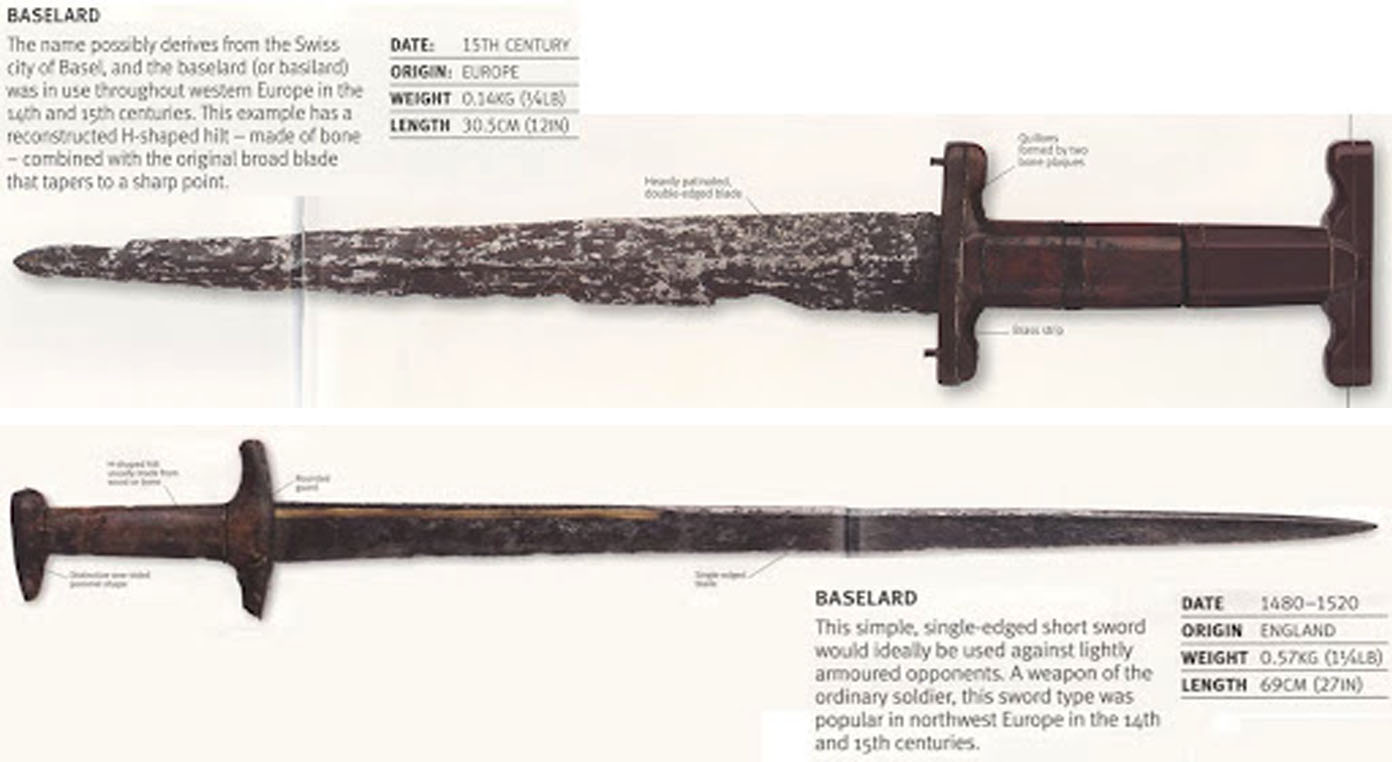
The dual edges offered versatility. It would cut in either direction in combat. Its combination of reach and sharpness made for a good weapon on the battlefield, but it could also work as a defensive tool in daily life. This ability to serve both functions was one of the reasons it became so popular.
Grip and pommel: The most iconic feature of the Baselard is its grip. The grip is H-shaped. This design is not just visually distinctive but also highly functional. It has a cross grip that offers security for the hand. It reduces the chances of slipping during combat. It is especially important in close-quarter fighting. The grip's structure makes it comfortable to hold. Whether used by a knight in armor or a townsman, the H-grip provides confidence in both combat and daily use, guard, and pommel.
Guard: The guard of the Baselard dagger is simple. It is minimal compared to a larger sword. The guard parts keep the hand safe from sliding onto the blade. It provides slight defense against the opponent's strike. The pommel plays a great role in the Baselard dagger. The pommel is nicely created with fine edges. It often carries decorative elements near the guard and pommel. A blend of craftsmanship and utility, the design of Baselard is a perfect example of medieval identity and creativity. It is a weapon built for function but also showcases personal prestige. It has clean geometry and a secure grip. The reliable blade combines a dagger that can be trusted in battle and admired in ceremony. At Everage Forge, each Baselard dagger is designed to honor traditional geometry. All the pieces of Everest Forge provide modern usability. It reflects the timeless balance of strength and artistry.
Craftsmanship in Baselard Dagger
Handforged Dagger Tradition
The traditional methods of baselard dagger making started from the medieval era. The art of making a baselard dagger is true to its medieval roots. It contains methods like traditional forging and skilled smiths use high-carbon steel or Damascus steel. High-carbon steel has strength and resilience. Damascus steel provides unique and wavy patterns. Every baselard is built with full-tang construction. This makes the blade extend through the handle. This design provides superior durability and balance. Handforging allows for precise control over every stage of dagger making. From shaping the blade to final tempering, the blade is carefully created. The blade goes through the careful process of polishing and tempering. After this, the blade becomes sharp and reliable. Each baselard forged this way continues to hold the centuries-old tradition.
Custom Dagger Options
With modernization, there is an opportunity for people to customize their dagger. Collectors and enthusiasts seek a design that reflects their personality. Making their dagger with a customized appeal makes it a piece of art. Common options include:
- Personalized engravings on the blade or hilt
- Handle materials like wood or bone
- Different handle finishes from polished to battle-worn looks
For anyone who wants a custom forge baselard, they can enjoy the connection to the past with the personal touch. At Everest Forge, you will get the flexibility to find and create a baselard that perfectly matches your vision.
Function meets artistry
Modern baselard is flexible. This adds to the beauty of Baselard. It can blend functionality and artistry. It is a practical, battle-ready blade. It is also a collectible masterpiece. From selecting materials to deciding the decorations, each blade reflects skill and tradition. At Everest Forge, we continue the hand-forged tradition. We create daggers that are not just battle-ready but also museum-worthy. Each piece celebrates the enduring legacy of baselard.
Baselard vs Xiphos Dagger
The Xiphos dagger is part of the Greek tradition. It is the short form of the Xiphos sword. The Xiphos dagger has a curved or leaf-like shape. The baselard blade is straight and it has a double-edged blade. Xiphos is often linked to ceremonial or symbolic use. It represents the heroic idols of the Greek warrior. The baselard, on the other hand, was not merely ceremonial. It was a daily sidearm carried by knights, guards, and townsfolk. The Xiphos dagger highlights culture and symbolism. The baselard strikes a balance between function and prestige.
Baselard vs Fantasy Daggers
Fantasy daggers are inspired by imagination and modern fiction. It comes from modern literature, films, and games. Fantasy daggers are mainly focused on appearances. They often consist of complicated designs and shapes. They are attractive to admirers of fantasy culture. The design has been developed through centuries of use. It is known for its balance of sharpness. Similarly, it has the grip and durability. With its H-shape, it is crafted for real-world defense and efficiency. Unlike fantasy daggers, it is known for its functionality.
Why the Baselard Stands Out
The baselard dagger occupies a unique position in the history of weapons. It has hybrid qualities. It is shorter than a sword yet larger than average daggers. This gives an advantage in both duels and self-defense. Unlike ceremonial daggers, the baselards are designed for daily use. This practicality, combined with the symbolism of status, makes it distinct. At Everest Forge, we highlight this uniqueness by offering baselard daggers. We are focused on preserving the historical authenticity. It embraces the artistry of modern craftsmanship.
Obtaining the Baselard Dagger Today
The Baselard Dagger has a unique position in the world of antique weapons. It is admired by historians, collectors, and weapon enthusiasts. It is more than a medieval sidearm. It has become a bridge from then to now. The Baselard Dagger contains or embodies many centuries of form, craftsmanship, symbolism, and utility.
A prized Collectible: The Baselard Dagger is valued as a collectible item. It represents both artistry and practicality. Its edge-shaped grip and double-edged blade make it the most recognizable. For historians, the dagger symbolizes medieval life and it was carried by knights, guards, and common townsmen alike. For modern collectors, it stands out as a statement piece. It is compact enough for display, yet rich in cultural depth, role in enactments, and displays.
Role in reenactments and display: Beyond the use by the knights, guards, and townsmen in the past, the Baselard Dagger has found its new identity. It has now become popular in:
- Medieval reenactments
- Stage performances
- Historical exhibitions
- Wall displays
- Display cases
Their distinct design makes them a centerpiece. The Baselard Dagger is carried by reenactors to recreate the look and feel of the medieval era. A well-crafted baselard sparks the conversation about its unique role in history.
Finding a Baselard Dagger: Authentic Baselard Daggers are not mass-produced items. They are the works and skills of craftsmanship. Collectors today often search for the best versions of the Baselard Dagger. They look for traditional techniques and high-quality materials that go into making the dagger.
At Everest Forge, we celebrate this legacy by offering the best of the best. Celebrate this legacy by offering the best Baselard Daggers. We combine the historical accuracy with modern durability. Each piece made by Everest Forge is designed with precision. This makes it suitable for both collectors and enthusiasts.
Value for all collectors: More than a historical piece, the Baselard Dagger is a great investment. For a first-time collector, this piece can ignite the best collection in the future. It is versatile enough to appeal to different types of collectors. In today's world, the Baselard Dagger is more than just an antique reproduction. It is a timeless symbol of history.
Caring for your Baselard Dagger
The Baselard Dagger contains accurate history and art. It is part of history and heritage. Proper care makes it last longer. There are many right steps that you can use to preserve the Baselard Dagger. This will also be able to retain the Baselard Dagger.
- Sharpen, oil, and clean: You will want to use the Baselight Dagger on many occasions. It is important to clean the blade. You can clean the blade with a soft, dry cloth. You can apply protective oil to the blade. Make sure to apply a thin layer of oil. You can sharpen the edges of the dagger using a whetstone. If not, you can seek for a professional help.
- Handle Preservation: The important part of the Baselard Dagger is its handle. The handle features materials like wood, bone, or leather. Each material requires a special care. The wooden grips benefit from occasional polishing. Bone handles should be kept away from high temperatures. Leather wraps need gentle conditioning to stay secure. You can preserve the dagger's authenticity and comfort by caring for the handle.
- Display and Storage Tips: Proper care and storage for the Baselard Dragger is very essential. Safe mounting ensures the weapon is secure. One should avoid direct sunlight for safety of the sword. This can fade or weaken the materials. When not displayed, you can store the dagger in a protective sheath. The Daggers from the Everest forge are made for both durability and display. Due to this, proper care is essential. With consistent maintenance, your Baselard Dagger can remain a stunning symbol of medieval craftsmanship.
Conclusion - Owning a Piece of Living History
The Baselard dagger is an artifact that has been around for ages. It was a side weapon that accompanied the personnel of medieval wars. It was used by knights, guards, and the common people so that they could defend themselves. It was also a sign that they belonged to a certain social class. Gradually, through the ages, it changed, and today this medieval weapon is seen as an icon of tradition, unveiling its peculiar H-shaped design and being acknowledged for its historical significance.
The Baselard continues to exist even today. It is a collectible piece and often recognized as a weapon of virtue. Historians and collectors value the Baselard for its connection to medieval culture. These stories embody themes of defense and everyday existence. It serves as an object of reenactment or is valued as an exquisite craft. The Baselard dagger is timeless. The dagger has the incredible ability to connect modern possessors with the cultural traditions of medieval Europe.
Owning a Baselard dagger is more than adding just a sword to a collection. At Everest Forge, we believe in keeping the legacy of a sword alive. We create swords that blend authenticity with durability. Each piece bridges history, art, and craftsmanship. Explore the Everest Forge and get a desired collection of Baselard dagger which carries centuries of tradition into your hands today.
FAQ
- What is a Baselard dagger?
The Baselard is a blade of the Middle Ages. It is characterized by an H-shaped handle and a double-edged design. It was a 14th to the 16th-century old dragger in Europe. These were the times when things were not only used for warfare but also for showing off. It is bigger than a normal dagger but smaller than a sword.
- What's the difference between a Baselard dagger and a Baselard sword?
The Baselard dagger is much lighter. The length usually falls between 10 and 18 inches. It is more of a close-combat weapon and a daily carry tool. The Baselard sword is a longer one and more appropriate for fighting on the battlefield. They have the same H-shaped grip style. But the dagger is more suitable for self-defense, while the sword was the primary weapon.
- Are Baselard daggers still functional today?
Yes, Baselard daggers are still functional. It is easier to use in cutting and thrusting. Now it is also popular as a collectible item.
- What type of steel does a hand-forged dagger consist of?
A dagger is forged by hand from premium steel. The steel that is used is carbon steel and Dacusmus steel.
- Can I order a custom dagger in Baselard style?
Yes, you can order a Custom dagger. You can personalize the style however you like. You can change the size, shape, and weight. You can also add engravings in the blade and handle at Everest Forge.
- Is the Baselard considered a leaf-blade dagger?
No, Baselard is not considered a leaf-blade dagger. But you can find some variations with a leaf-shaped design. Generally, a baselard is a straight blade. It doesn't have a curve.
- How long is a traditional Baselard?
The length of a traditional Baselard falls somewhere between 10 and 18 inches. In comparison, it is a bit higher than daggers but lower than swords. The Baselard was considered the perfect weapon to carry around daily. It was both handy and dangerous when fighting in close quarters.
- Is it lawful to carry a Baselard dagger?
Most countries allow having a Baselard dagger. Before making a purchase, it is a good idea for purchasers to be aware of the laws and regulations unique to their area and nation.
- How should I care for my dagger?
To care for a Baselard dagger, keep the blade clean. You can lightly oil and sharpen when needed. handle part handles require conditioning. Make sure to store it away from humidity, heat, and direct sunlight.
- Do collectors also value fantasy daggers alongside Baselards?
Yes, collectors often enjoy both fantasy daggers and Baselards. Fantasy daggers are inspired by fiction and it adds creativity and uniqueness. Many collections feature a mix of both, reflecting different interests in history, art, and storytelling. Each dagger type adds its own special value.
- How does the Baselard compare to a xiphos dagger?
The Baselard is a medieval European dagger. It is designed for practical combat and defense. The Xiphos dagger has Greek origins. It is more ceremonial or symbolic. The Baselard is straight and functional. It has an H-shaped grip. The Xiphos is shorter, often leaf-shaped, and associated with classical warriors. It emphasizes cultural meaning over daily practicality.
- Where can I find a dagger Baselard for sale?
You can find a dagger at an authentic marketplace or online store. You can always trust Everest Forge for the best quality dagger. They are the trusted source with a wide variety of daggers.