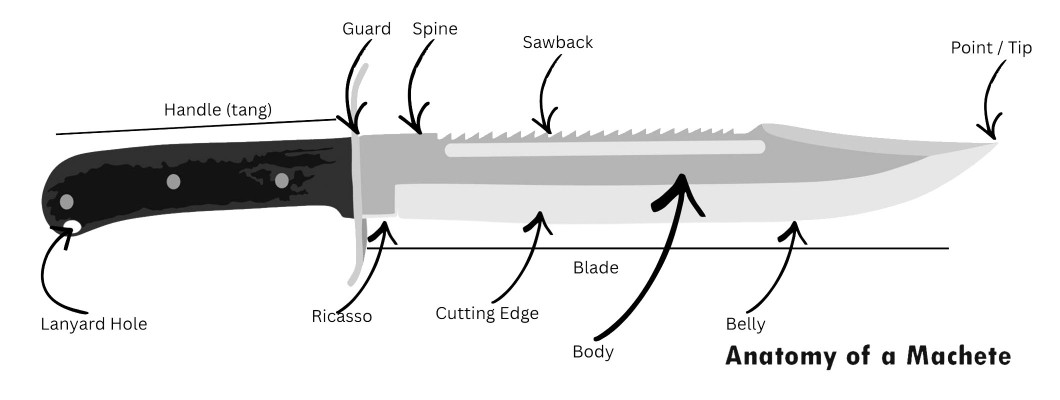
A Practical Look at the Parts That Make a Machete Work
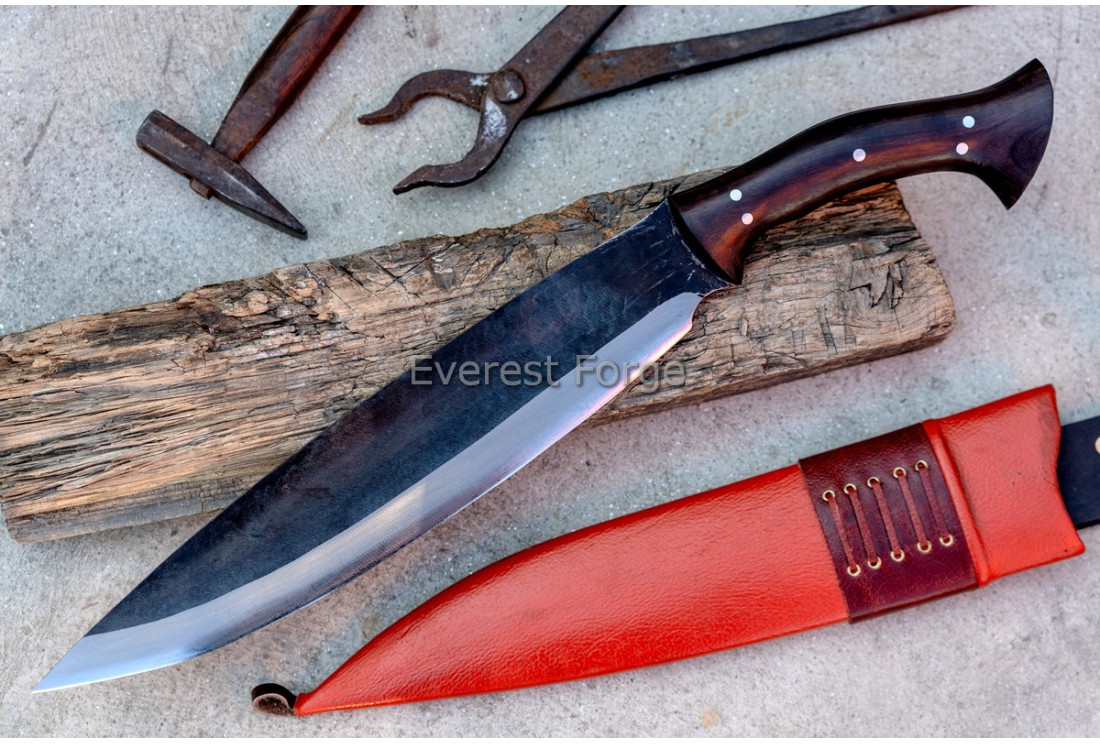
At first glance, a machete looks like a straightforward tool: a long blade attached to a handle, built for cutting and chopping. In reality, a well-made machete is the result of careful design choices. Every curve, edge, and transition affects how it performs in real work — from clearing vegetation to chopping wood and handling extended outdoor use.
Understanding the anatomy of a machete helps explain why some blades feel powerful and controlled, while others feel awkward or tiring. It also makes it easier to choose the right design for specific tasks and to appreciate the difference between mass-produced tools and well-forged working machetes.
Most machetes range from 10 to 28 inches in overall length, with around 18 inches being the most common and versatile size. Beyond length, however, performance depends heavily on the parts described below.
Blade
The blade is the primary working component of a machete. It is responsible for cutting, chopping, and clearing, and its geometry largely determines how the tool behaves under repeated impact.
Machete blades are commonly made from carbon steel or stainless steel. Carbon steel is valued for toughness and edge stability during heavy use, while stainless steel offers improved corrosion resistance and lower maintenance. Blade thickness, profile, and heat treatment vary depending on whether the machete is intended for light vegetation, agricultural work, or demanding outdoor use.
Body
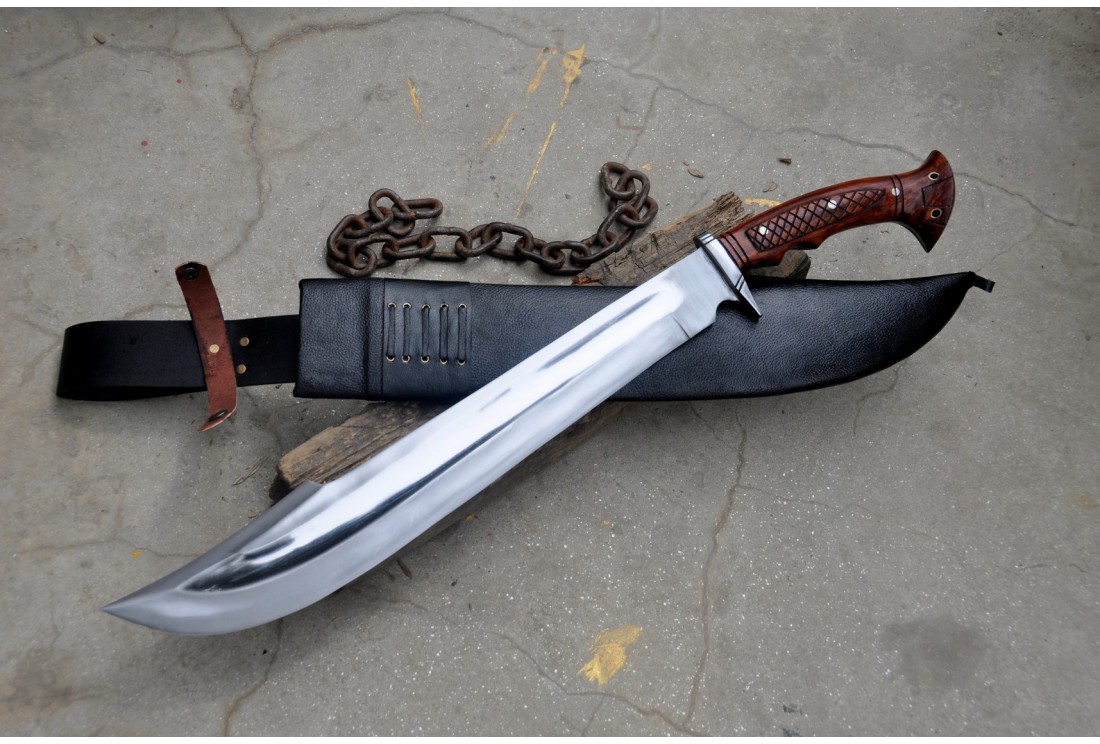
The body is the main flat surface of the blade between the spine and the cutting edge. This area contributes significantly to the machete’s weight, balance, and swing momentum.
A broader, heavier blade body increases chopping power by carrying more force through each strike. A slimmer blade body reduces overall weight and improves speed, which can be helpful during long periods of clearing where fatigue becomes a factor.
Spine
The spine is the unsharpened back edge of the blade and is usually its thickest section. It provides structural strength and helps the blade withstand repeated impacts without excessive flex.
A strong spine improves durability during hard use and adds weight that can enhance chopping performance. In heavier machetes, spine thickness plays a major role in overall blade strength.
Sawback
Some machetes include a sawback along the spine. This serrated section is designed for cutting branches, small logs, or fibrous materials that may be difficult to cut cleanly with a standard edge.
A sawback can add versatility in outdoor or survival situations, though many users prefer a clean spine for simpler maintenance and smoother handling during chopping.
Belly
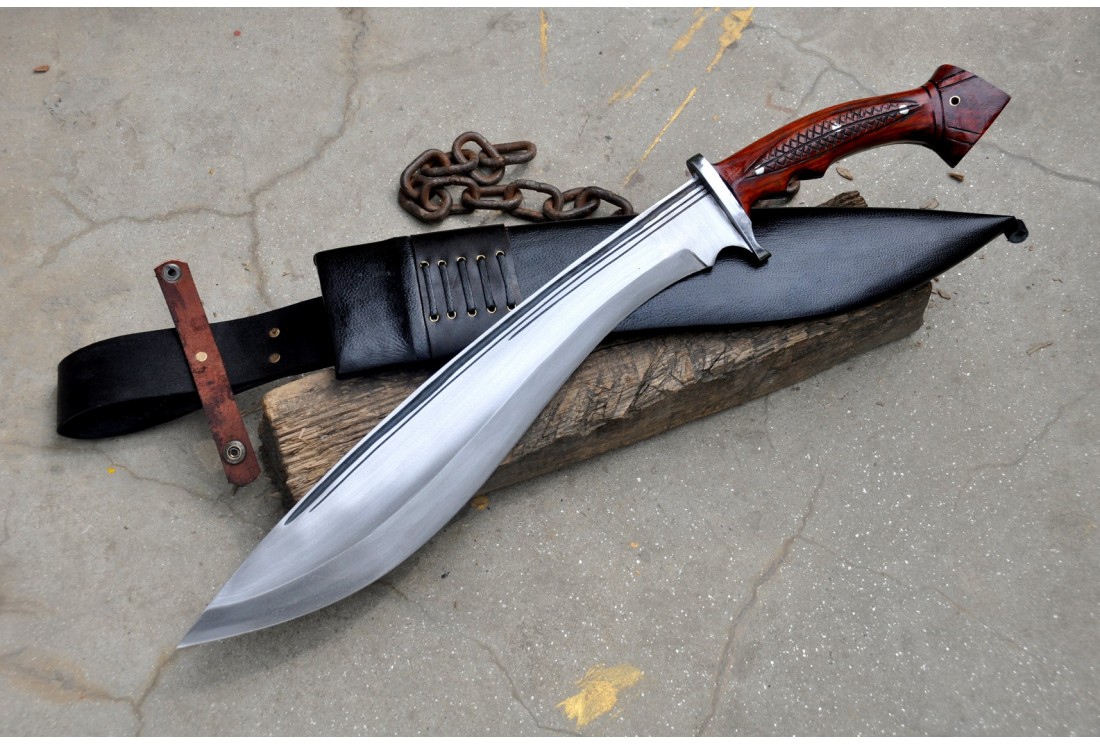
The belly is the curved portion of the cutting edge, typically located toward the front half of the blade. This curve plays a major role in chopping efficiency.
A well-shaped belly concentrates force at the point of impact, allowing the blade to bite deeper into material with less effort. Machetes with a pronounced belly often feel more powerful in use, even without excessive blade weight.
Cutting Edge
The cutting edge is the sharpened portion of the blade used for all cutting and chopping tasks. Unlike fine knives, machetes are usually sharpened for durability rather than razor-thin sharpness.
A robust working edge resists chipping, tolerates rough use, and is easier to maintain in the field. Edge angle and grind affect how easily the blade cuts and how long it holds an effective edge.
Ricasso
The ricasso is the short, unsharpened section of blade just in front of the handle. It provides a safe area for grip placement and improves control during close or detailed work.
Not all machetes feature a pronounced ricasso, but it is commonly found on heavy-duty or survival-oriented designs where control is as important as chopping power.
Tang
The tang is the portion of the blade that extends into the handle. It is one of the most important elements affecting strength and reliability.
A full tang, where the steel runs the full length of the handle, offers superior durability, balance, and resistance to failure during heavy chopping. Partial tang designs reduce weight but are generally less suitable for demanding use.
Handle / Grip
The handle connects the user to the blade and plays a critical role in comfort and safety. A well-designed handle improves control, reduces fatigue, and helps prevent slipping during powerful swings.
Common handle materials include wood, rubber, plastic, horn, and composite materials. Shape and texture matter just as much as material choice, especially when working in wet or muddy conditions.
Guard
The guard sits between the blade and the handle and helps prevent the hand from sliding forward during forceful chopping. While not present on all machetes, it adds an extra layer of safety, particularly on heavier designs.
Point / Tip
The point, or tip, is the front end of the blade. Tip shape influences how the machete performs beyond basic chopping. Pointed tips allow for precise cutting and piercing, while rounded tips prioritize safety and are better suited for clearing vegetation.
Lanyard Hole
The lanyard hole is located at the end of the handle and allows a wrist cord or retention strap to be attached. This helps prevent accidental drops and improves security during extended use, especially in slippery environments.
Choosing the Right Design
Two machetes can look similar but perform very differently. Understanding anatomy makes it easier to evaluate what really matters: blade weight and body shape for momentum, belly curve for chopping efficiency, spine strength for durability, tang construction for reliability, and handle design for safe control.
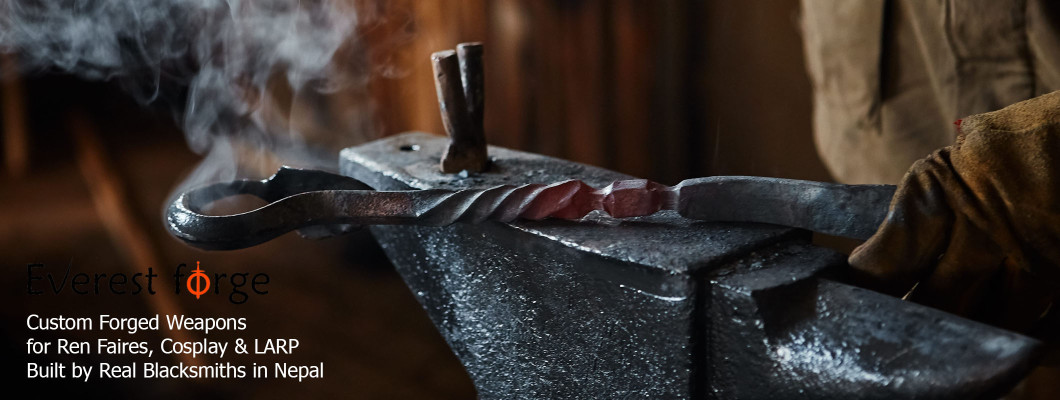
Custom-Forged Machetes Built for Your Needs
If you have a specific blade length, profile, thickness, handle material, or balance preference in mind, a custom-forged machete allows the design to match your exact requirements rather than forcing you to adapt to a standard pattern.
Request a Custom Forged Machete