Last Updated:
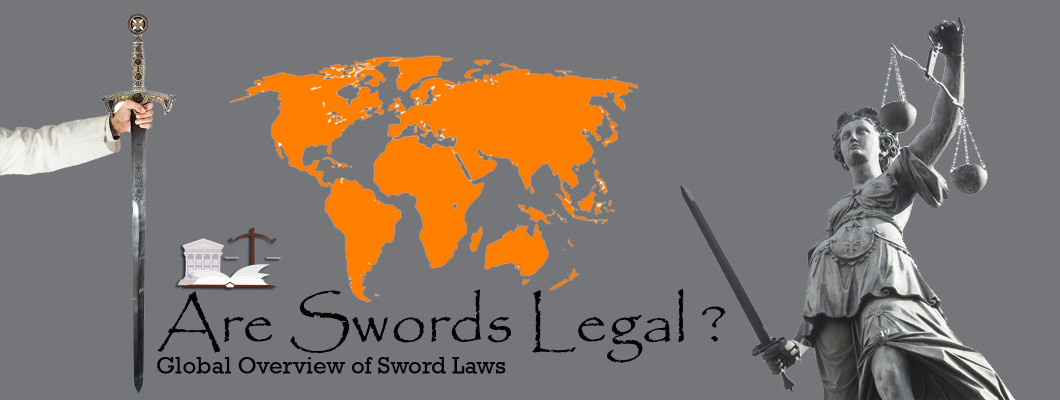
Are Swords Legal? Global Sword Laws by Country — Ownership, Carry & Import (2026)
If you are reading this page, you almost certainly want to own a sword — and you are doing the right thing by checking the law first. The good news: in the vast majority of countries, owning a sword at home is completely legal for adults. The restrictions that exist are mostly about carrying in public and importing — not ownership itself.
This guide covers sword laws in the USA, Canada, Australia, Germany, the UK, Japan, India, Nepal, and more — with links to official government sources so you can verify the rules for your region. At the bottom, we also explain how Everest Forge ships worldwide and what to do if your country requires a blunt blade.
Important: This guide is for general information only. Laws change, and local regulations vary. Always verify with your local authority before importing or displaying a sword.
Already know it's legal where you are?
Browse our hand-forged sword collection — historical, fantasy, scimitar, khopesh, Viking, medieval, and fully custom builds. Every blade is individually forged in Nepal and shipped worldwide.
Understanding Sword Laws — The Key Distinctions
Before diving into individual countries, it helps to understand how most legal systems categorise swords. The three areas regulated most often are:
Ownership at home — almost universally legal for adults. Most countries have no issue with a sword kept in your home as a collector's piece, display item, or martial arts training weapon.
Carrying in public — this is where most restrictions apply. Open carry or concealed carry of swords in public spaces is prohibited in almost every country without a legitimate purpose such as martial arts training, reenactment, or religious ceremony.
Importing — this is the area with the most variation. Some countries allow free import if declared at customs. Others require permits. A few restrict specific blade types such as mass-produced curved swords.
The most important thing to know: hand-forged traditional swords are treated more favourably than mass-produced blades in many jurisdictions — including the UK, where hand-forged curved swords are specifically exempt from restrictions that ban factory-made equivalents. This directly benefits buyers of Everest Forge swords.
United States (USA)
The USA is one of the most sword-friendly countries in the world. There are no federal restrictions on owning swords. Any adult can legally own and keep swords at home in all 50 states.
- Ownership: Legal in all 50 states with no federal restrictions.
- Carrying: Varies by state — open carry is permitted in Texas and Arizona, restricted in California and New York.
- Transport: Must be secured and sheathed. Air travel requires placing swords in checked baggage.
- Import: Generally unrestricted for personal collection use when declared at customs.
Official source: Transportation Security Administration (TSA) — Swords in Air Travel
Canada
Canada permits sword ownership for adults, but carrying one in public without lawful purpose is prohibited. Concealed or disguised blades such as sword-canes are classified as prohibited weapons under the Criminal Code.
- Ownership: Legal for adults.
- Carrying: Illegal in public spaces without a legitimate reason.
- Import: Must be declared to customs. Disguised or spring-loaded blades are prohibited — standard collector swords are fine when declared.
Official sources:
- Department of Justice Canada — Regulations Prescribing Certain Firearms and Other Weapons
- Canada Border Services Agency (CBSA) — Prohibited Weapons
Australia
Australia has some of the stricter weapon regulations globally, but collectors and martial artists can legally own swords. The key is that ownership is for legitimate purposes — collecting, display, martial arts — and swords are stored responsibly at home.
- Ownership: Legal for collectors and martial artists (varies by state).
- Carrying: Illegal in public without lawful justification.
- Import: Must be declared and sometimes requires a permit depending on state.
Official references:
United Kingdom (UK)
The UK has a rule that surprises many people — but it actually works strongly in favour of buyers who want a quality hand-forged sword. Since 2008, mass-produced curved swords over 50 cm are banned. However, there is a specific and important exemption: hand-forged swords made using traditional techniques are completely legal.
This means every Everest Forge sword — individually hand-forged by traditional Nepali blacksmiths — falls squarely within the legal exemption. You cannot legally import a cheap factory-made curved sword, but you can absolutely own a hand-forged one.
- Ownership: Legal for handmade, antique, or reenactment swords. Hand-forged curved swords are specifically exempt.
- Carrying: Illegal in public without lawful purpose.
- Import: Restricted for mass-produced curved blades. Hand-forged traditional swords are legal.
Germany
Germany permits sword ownership for adults under the Waffengesetz (Weapons Act). Collectors, martial artists, and reenactors can all legally own swords. The restrictions are about public carrying, not home ownership.
- Ownership: Legal for individuals aged 18 and above.
- Carrying: Permitted only for legitimate purposes — martial arts, film production, or reenactment.
- Transport: Must be securely packed in a locked or closed case.
Japan
Japan has strict sword regulation through its Firearm and Sword Control Law. Only swords made by licensed Japanese swordsmiths and registered with authorities are permitted for possession by residents. Foreign-made swords generally cannot be imported or possessed by residents.
- Ownership: Legal only for registered traditional swords (nihontō) made by licensed smiths.
- Carrying: Prohibited in public under all circumstances.
- Import: Requires prior approval and registration — very restricted for foreign blades.
India
India permits sword ownership under the Arms Act of 1959, with carrying in public requiring permission except in cultural or religious contexts. The Sikh kirpan has a specific religious exemption recognised nationally.
- Ownership: Legal for collectors and cultural purposes.
- Carrying: Requires permit, except for recognised religious exemptions.
- Import: Allowed when declared through customs with proper documentation.
Nepal
Nepal is home to Everest Forge and to the world-famous khukuri — one of history's most recognisable blades. Sword ownership is fully legal and culturally significant. Nepal has a centuries-old tradition of blade-making that is deeply woven into national identity.
- Ownership: Fully legal and culturally protected.
- Carrying: Discouraged in public places but not broadly prohibited for traditional blades.
- Export: Fully permitted when declared for sale or gifting — Everest Forge ships from Nepal worldwide every day.
Other Countries — Quick Reference
| Country | Ownership Legal? | Carrying / Transport | Notes |
|---|---|---|---|
| France | Legal | Public carry prohibited | Category D weapon. Legal for display and collection. |
| Italy | Legal | Carrying without permit illegal | Exceptions for martial arts. Collector ownership is fine. |
| Spain | Legal | Public carry prohibited | Allowed for antiques, display, and reenactment. |
| Sweden | Legal | Transport permit required | Ownership legal for adults. Public display restricted. |
| New Zealand | Legal | Illegal to carry in public | Allowed for collection, martial arts, or display. |
| Singapore | Restricted | Carrying and import tightly controlled | Requires police permit for ownership or importation. |
Ready to Own a Hand-Forged Sword? We Ship Worldwide.
At Everest Forge, every sword is individually hand-forged in Nepal by master blacksmiths using 5160 high-carbon steel and traditional techniques. That hand-forged status is not just about quality — in many countries including the UK, it is the legal distinction that makes our swords fully importable when factory-made equivalents are not.
Shop by type:
- Full sword collection — historical, fantasy, scimitar, khopesh, Viking, medieval and more.
- Historical swords — Viking, Roman Gladius, Celtic, Bronze Age, and medieval blades.
- Scimitar swords — Persian Shamshir style, Talwar, Kilij, Arabian scimitar and more.
- Khopesh swords — ancient Egyptian sickle swords in multiple sizes.
- Custom forged swords — unique one-of-a-kind blades built to your design.
Need a blunt version for countries that restrict sharpened blades? Simply add "Blunt" in your order note or submit a custom request — we accommodate this regularly for customers in Singapore, certain Australian states, and other restricted regions.
Frequently Asked Questions About Sword Laws
Are swords illegal to own in most countries?
No. In the vast majority of countries, owning a sword at home is completely legal for adults. The restrictions that exist are mostly about carrying in public and importing — not home ownership itself.
Can I travel internationally with a sword?
Yes, but swords must always be declared and packed in checked luggage when flying. Customs regulations vary by country — always check import rules for your destination before travelling.
Is it legal to carry a sword in public?
Generally no. Carrying swords in public is prohibited in most countries without a specific lawful purpose such as martial arts practice, religious ceremony, or historical reenactment with prior authorisation.
Are decorative or replica swords treated the same as real swords?
In many countries yes. Even blunt or decorative swords can fall under weapon laws if carried in public or imported without permits. Always verify your local rules before importing or displaying them.
How are antique or traditional swords regulated?
Antique and hand-forged traditional swords often have specific exemptions. In the UK, hand-forged curved swords are specifically legal while mass-produced equivalents are banned. In Japan, traditionally made registered swords are the only ones permitted. Registration or permits may still apply depending on jurisdiction.
Is it legal to own a sword in the United States?
Yes. Owning a sword in the USA is legal in all 50 states with no federal restrictions. Some states and cities restrict public carrying — open carry is allowed in Texas and Arizona but restricted in California and New York.
Is it legal to own a sword in Australia?
Yes, sword ownership is legal in Australia for collectors, martial artists, and cultural purposes. Each state has its own regulations, and carrying in public without lawful reason is prohibited. Importing may require a permit depending on state.
Is it legal to own a sword in the United Kingdom?
Yes, with an important distinction. Mass-produced curved swords over 50 cm are banned, but hand-forged swords made using traditional techniques — like all Everest Forge swords — are specifically exempt and fully legal to import and own.
Is it legal to own a sword in Germany?
Yes. Sword ownership is legal for anyone aged 18 or older under the Waffengesetz. Carrying in public is restricted unless for martial arts, reenactment, or film production. Transport must be in a locked case.
Can I import a sword into my country?
In most countries yes, when properly declared. Everest Forge ships worldwide and can advise on common import requirements. We also offer blunt versions for customers in countries with restrictions on sharpened blades. Contact us here.
Can I get a blunt sword if my country restricts sharp blades?
Yes. Simply add "Blunt" in your order note or submit a custom forge request. We accommodate blunt versions regularly for customers in Singapore, certain Australian states, and other restricted regions.
Conclusion
The bottom line is simple: if you want to own a sword, you almost certainly can — legally. In the USA, Canada, Australia, Germany, UK, India, Nepal, France, Italy, Spain, Sweden, and New Zealand — home ownership for collectors and enthusiasts is either fully legal or legal with straightforward requirements.
The restrictions that exist are about carrying in public and importing specific types, not about the fundamental right to own and appreciate one of history's most significant objects. And in countries like the UK where hand-forged swords have specific legal advantages over factory-made blades — owning an Everest Forge sword is not just the better quality choice. It is the legally smarter one.
Shop Hand-Forged Swords → Request a Custom Sword →