Menu
Your Cart

Double Ngulu Sickle Blade – Hand-Forged Central African Ceremonial Sword

Double Ngulu Sickle Blade – Hand-Forged Central African Ceremonial Sword
$294.99
Ex Tax: $294.99
  • Model: African Sword
  • Product Code: Africansword05
  • Location: Kathmandu,Nepal

Available Options

Double Ngulu Sickle Blade — A Hand-Forged Central African Ceremonial Sword

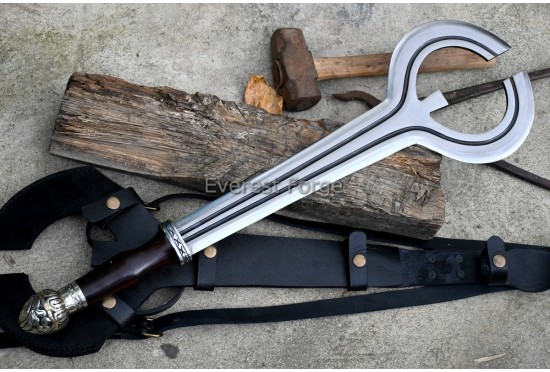
This sword is the Double Ngulu Sickle Blade — also called the Ngolo, Ngwolo or Mbeli na Banzi in the languages of the peoples who carried it — a hand-forged Central African ceremonial sword of the Ngombe people of the Congo basin. The Double Ngulu's compound silhouette is unlike anything else in African material culture: a parallel-fullered straight upper blade flowing into a dramatic twin-sickle lower section — an open circular ring at the mid-point and a forward-curving sickle hook below it — all forged from one continuous piece of steel. The Everest Forge version from Everest Forge is a faithful interpretation built for serious collectors of Central African ceremonial blades.

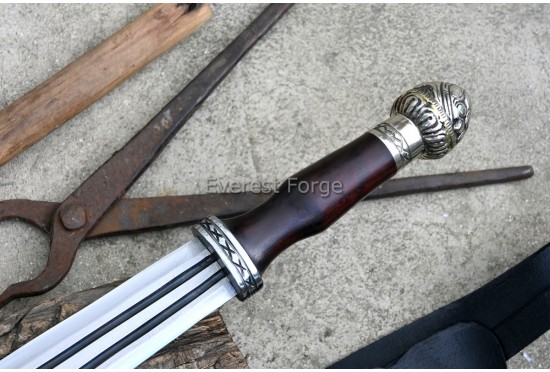
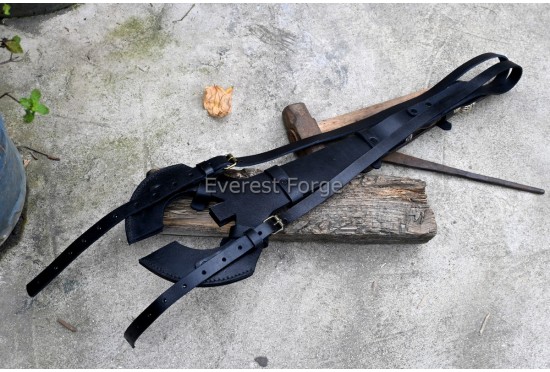
Each blade is hand forged in Kathmandu, Nepal from 5160 high-carbon spring steel — specifically reclaimed truck leaf spring — oil-tempered to working hardness, with a full tang. The handle is a rosewood (or white-wood) grip fitted with an ornate decorative ceremonial pommel. The leather scabbard is cut to accommodate the dramatic compound blade silhouette. The standard blade is 18 inches, and other lengths from 16 to 24 inches can be specified before forging.

An honest note. This is a hand-forged collector and display piece — an original Everest Forge interpretation inspired by the historical Double Ngulu of Central Africa. We describe how the Double Ngulu was carried historically — as a ceremonial and prestige weapon among the peoples of the Congo basin, not as an instrument of violence — because that history is what the design expresses. We do not sell our blades as weapons. Because every Double Ngulu is forged individually, small variations in wood grain, weight, finish and leatherwork are natural marks of handwork, not flaws.
Everest Forge — Hand-Forged in Nepal
Make This Double Ngulu Yours
Choose your blade length, finish, handle material and scabbard colour — or commission a fully bespoke Double Ngulu to your own reference. Personalised engraving is included.
Customise This Double Ngulu → Commission a Bespoke Ngulu →

The Double Ngulu — A Brief History

The Double Ngulu takes its name from the Ngombe people of what is today the Democratic Republic of Congo, and is also recorded in the literature under several other names — Ngolo, Ngwolo and Mbeli na Banzi in the languages of the peoples who carried it. Across the Congo basin, the Ngulu sword tradition produced some of the most distinctive ceremonial blades anywhere on the African continent. The Double Ngulu's compound silhouette — combining a fullered upper blade with a twin-sickle lower section — is closely related to the Bango blades of the neighbouring Lobala people, reinforcing the broad cultural reach of this design vocabulary across Central Africa.

The Double Ngulu has sometimes been mischaracterised in popular sources as an "executioner's sword". The serious ethnographic record — including the work of researchers Gosseau and Elsen, widely cited in collector and museum literature — is clear that this was not primarily a weapon of violence. The Double Ngulu was a marker of rank, prestige and ceremonial authority, worn or carried by chiefs and important elders during rites of passage, dances, and as visual declarations of standing. The work that went into a Double Ngulu — including brass and copper tack decoration, and engraved detailing applied while the blade was both hot and cold — is the work of status objects, not utilitarian weapons.

Why This Double Ngulu Stands Apart

True Double Ngulu compound silhouette

The unmistakable Central African Ngulu profile — a parallel-fullered straight upper blade and a dramatic twin-sickle lower section, all forged from one continuous piece of steel.

Twin-sickle lower section

A circular ring opening at the mid-point of the blade, flowing into a forward-curving sickle hook — the two visual features that give the Double Ngulu its name and set it apart from every other African sword.

5160 spring steel, oil-tempered

The same high carbon spring steel used in vehicle leaf springs, chosen for toughness and shock resistance. Oil-tempered to a working hardness — not a stainless display blade.

Full-tang construction

The tang runs the full length of the grip for structural integrity — even on a ceremonial piece, build quality matters when the blade is handled or displayed unsheathed.

Decorative ceremonial pommel

An ornate metal pommel and decorative collar paired with the rosewood grip — the prestige fittings that mark the Double Ngulu out as a ceremonial sword rather than a working tool.

Hand-forged in Nepal

Forged on hammer and anvil by our blacksmiths in Kathmandu. See the process on The Making and meet the team on Meet the Maker.

Specifications

Pattern
Double Ngulu — compound Central African ceremonial blade
Also known as
Ngolo, Ngwolo, Mbeli na Banzi
Peoples and tradition
Ngombe of the Congo basin (today the DRC); related to the Bango blades of the Lobala people
Blade configuration
Fullered straight upper blade with twin-sickle lower section — circular ring opening and forward-curving sickle hook
Blade length
18 inches (standard) — 16 to 24 inches available
Handle length
7.5 inches
Overall length
25.5 inches (standard)
Blade weight
Approx. 1.1 kg (about 2.42 lb)
Steel
5160 high carbon spring steel (reclaimed truck leaf spring)
Heat treatment
Oil-tempered to working hardness
Handle
Rosewood (standard) or white-wood (Sadhan); decorative ceremonial pommel and collar; full tang
Scabbard
Leather scabbard cut to the compound blade profile, included — choice of leather colour

Customise Your Double Ngulu

Most details on this Double Ngulu can be specified to your preference before forging begins. Use the options on this page to build your blade, or contact us for anything outside the standard list.

Blade Length

Standard 18-inch blade, or choose any length from 16 to 24 inches — forged to your dimension before the blade is made.

Blade Finishing

Satin as standard, or choose a Polished / Mirror finish, a Raw / Forge finish, or a Blacked / Coated blade to suit display or handling.

Handle Material

Rosewood as standard, or white-wood (Sadhan). The handle is shaped and fitted by hand to the full-tang, with the decorative ceremonial pommel fitted as part of the build.

Scabbard Colour

The leather scabbard comes in black, brown, yellow, red, green or blue, cut to follow the Double Ngulu's compound silhouette.

Personalisation

Add a name, initials or short message engraved on the blade or handle — included with your order.

Custom Logo & Photo Engraving

Upload your own logo, crest or photo to have it engraved on the blade for a one-of-a-kind piece.

Build My Double Ngulu →

Hand-Forged, Not a Wall-Hanger

An Everest Forge Double Ngulu

  • 5160 high carbon spring steel
  • Oil-tempered to working hardness
  • Full-tang construction
  • Compound silhouette forged from one piece
  • Decorative ceremonial pommel fitted by hand

A typical decorative wall-hanger

  • Stainless or unknown steel
  • Little or no heat treatment
  • Rat-tail or partial tang
  • Cast or stock-removed in a factory
  • Built for display only — not for handling

The Complete Ngulu Family Collection

Who This Double Ngulu Is For

  • Ngulu-family collectors — buyers who already own or are building toward a Central African Ngulu pairing, alongside the canonical Ngombe Ngulu Prestige Sword.
  • Central African arms collectors — those building a Congo-basin or wider Central-African arms collection, drawn to the most distinctive and most visually striking forms in African blade craft.
  • African material culture collectors — collectors of the metalwork and ceremonial-blade traditions of the Ngombe, Lobala and neighbouring Central African peoples.
  • Display pieces and wall centerpieces — the Double Ngulu's compound silhouette is one of the few sword forms that genuinely commands a room on its own. Few wall pieces match it.
  • Gift buyers — a high-value, lasting statement gift for a serious history enthusiast or African-arms collector, with optional engraving for names, dates or a crest.
  • Film, theatre and production — full-weight authentic steel for historical productions and African-set period work where a visually distinctive blade is essential.

How It Is Made

01

Steel selection

We start with reclaimed truck leaf spring in 5160 high carbon steel, chosen for toughness, shock resistance and edge retention.

02

Forging the compound silhouette

The bar is heated and hammered by hand into the Double Ngulu's distinctive form — a fullered straight upper blade, an open circular ring at the mid-point, and a forward-curving sickle hook below — all from one continuous piece of steel.

03

Heat treatment

The blade is hardened and oil-tempered to a working hardness, balancing a durable edge against a resilient spine.

04

Handle and ceremonial pommel

The rosewood grip is shaped and fitted to the full tang, the ornate decorative pommel and collar are set, and the leather scabbard is cut to follow the dramatic compound silhouette.

What Is Included

  • One hand-forged Double Ngulu Sickle Blade in 5160 spring steel
  • Rosewood (or white-wood) grip with decorative ceremonial pommel and collar (fitted)
  • Leather scabbard in your chosen colour, cut to the compound blade profile
  • Personalised engraving where requested
  • Care guidance for the blade, handle, pommel fittings and scabbard

Shipping, Returns and Warranty

Every Double Ngulu ships from Kathmandu, Nepal via DHL Express or FedEx International on a Delivered Duty Paid (DDP) basis — duties and taxes are handled so there is nothing to pay on arrival. Typical delivery is 8 to 15 business days from order, including forging and processing time. Some countries restrict the import of swords above certain lengths or shapes; it is the buyer's responsibility to check local law before ordering.

Standard Double Ngulus carry a 30-day satisfaction guarantee in unused condition and a 6-month warranty against manufacturing defects. Custom and personalised pieces are forged to your specification and are non-returnable. Full details are on our Shipping and Returns and Warranty and Returns Policy pages.

Caring for Your Double Ngulu

Wipe the blade clean after handling and apply a light film of mineral or blade oil to protect the high carbon steel from moisture. Pay particular attention to the inside of the ring opening and the inner curve of the sickle hook, as these areas can collect dust and humidity if not wiped down. The decorative pommel will develop a patina over time — wipe it clean with a soft cloth, and polish it lightly only if you prefer the bright finish. Treat the leather scabbard occasionally with a leather conditioner, and store the blade out of the scabbard in dry conditions for long-term keeping.

Everest Forge — Hand-Forged Double Ngulu Sickle Blade
Order Your Double Ngulu
Choose your length, finish, handle material and scabbard colour — or commission a fully bespoke Double Ngulu. Every blade is forged in 5160 spring steel and shipped worldwide with tracking, duties paid.
Customise This Double Ngulu → Ask a Question →

Frequently Asked Questions

What is a Double Ngulu Sickle Blade?

The Double Ngulu — also called the Ngolo, Ngwolo or Mbeli na Banzi — is a curved Central African ceremonial sword of the Ngombe people of the Congo basin, in what is today the Democratic Republic of Congo. It is identified by its compound silhouette: a parallel-fullered straight upper blade combined with a twin-sickle lower section — a circular ring opening at the mid-point and a forward-curving sickle hook below — all forged from one continuous piece of steel. The Double Ngulu is one of the most distinctive blade forms anywhere on the African continent.

What do Ngolo, Ngwolo and Mbeli na Banzi mean?

These are alternative names for the Ngulu in the languages of the peoples who carried it across the Congo basin. Ngolo and Ngwolo are spelling variants of the same word as recorded by different ethnographers. Mbeli na Banzi is a longer form recorded in some regional sources. All of these names refer to the same family of distinctive curved Central African ceremonial blades, of which the Double Ngulu on this page is the compound twin-sickle variant.

Is the Double Ngulu an executioner's sword?

No. The Double Ngulu has sometimes been mischaracterised in popular sources as an "executioner's sword". The serious ethnographic record — including the work of researchers Gosseau and Elsen, widely cited in collector and museum literature — is clear that this was a marker of rank, prestige and ceremonial authority, not a tool of violence. The decoration on historical Double Ngulus (brass and copper tack work, engraved detail applied while the blade was both hot and cold) is not the work that goes into a weapon of pragmatic use; it is the work that goes into a status object worn or carried by the powerful as a public sign of standing in the community.

What was the Double Ngulu used for historically?

The Double Ngulu was a ceremonial and prestige object across the Congo basin. Ngombe chiefs and important elders carried Double Ngulus during rites of passage, dances and other ceremonial occasions, as visual declarations of rank and standing. The blade also functioned in some contexts as a high-status object of exchange — in some sources it is recorded as serving as a form of currency between communities. Across all of these roles, the Double Ngulu's value was symbolic and social. Today it is collected and displayed as one of the most distinctive examples of Central African blade craft.

Why does the blade have a ring opening and a sickle hook?

The Double Ngulu's compound silhouette is what gives the sword its name and its visual identity. The fullered upper section provides the main blade form. The circular ring opening near the mid-point is a structural and decorative feature — both lightening the blade and creating space for the dramatic visual rhythm that defines the Ngulu silhouette. The forward-curving sickle hook below the ring continues the compound geometry, completing the form. All three elements — the fullered upper blade, the ring opening and the sickle hook — are forged from one continuous piece of steel, which is what makes the Double Ngulu a notable feat of metalwork as well as a notable ceremonial object.

How big is this Double Ngulu Sickle Blade?

The standard configuration is 25.5 inches overall — an 18-inch blade and a 7.5-inch handle — and weighs approximately 1.1 kg without the scabbard. Blade length is a choice; you can specify any length from 16 to 24 inches before forging.

What steel is the blade made from?

The blade is forged from 5160 high carbon spring steel — specifically reclaimed truck leaf spring, the same alloy Everest Forge uses on its battle-ready historical swords. 5160 is engineered to flex and recover under heavy shock load. After forging, the blade is oil-tempered to a working hardness.

What is the difference between this and the Ngombe Ngulu Prestige Sword?

The Ngombe Ngulu Prestige Sword is the canonical single-blade Ngulu — a forward-curving cutting blade with a multi-pointed upper-edge profile, fitted with a leather-wrapped grip and brass guard and pommel. The Double Ngulu Sickle Blade on this page is the compound variant: a fullered straight upper blade combined with a twin-sickle lower section (ring + hook), fitted with a rosewood or white-wood grip and an ornate ceremonial pommel. The two products are complementary, not alternatives — many collectors want both pieces together as a Ngulu-family pairing.

Can I choose a different length or handle material?

Yes. The standard 18-inch blade can be made at any length from 16 to 24 inches. The handle is offered in rosewood (standard) or white-wood (Sadhan). The leather scabbard comes in black, brown, yellow, red, green or blue. Choose your options on this page when ordering.

Can I personalise or engrave the Double Ngulu?

Yes. Add a name, initials or a short message, or upload your own logo, crest or photo for custom engraving on the blade. Personalised engraving is included with your order. See our Personalized Blades page.

Where is the Double Ngulu forged and how is it shipped?

The Double Ngulu is hand-forged in Everest Forge's own workshop in Tokha-3, Kathmandu, Nepal, by Kami-caste blacksmiths — the same forge behind Everest Forge's military-issue kukris for the British Gurkha Army (BSI Service No. 1), the Nepal Army and the Nepal Police. The sword ships worldwide via tracked DHL or FedEx on a Delivered Duty Paid (DDP) basis, with customs duties, import taxes and clearance fees prepaid at checkout. Signature is required on delivery.

Can I order a custom or fully bespoke Double Ngulu?

Yes. Specify your blade length, finish, handle material and scabbard colour with the options on this page, or commission a fully bespoke Double Ngulu from your own reference through our Custom Forge service. We confirm every detail before forging begins.

Specification
Blade: 18 inches Hand forged Blade made from Carbon steel (5160)
Total Length: 24 inches long in total
Handle: 6 inches full tang Handle made from Rosewood
Weight: 1150 Grams Arppoxmatly
Note: All dimensions and weights are approximate due to the handmade nature of the product.

Write a review

Note: HTML is not translated!
Bad Good
Captcha

All Video