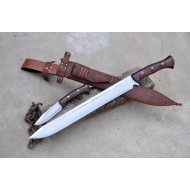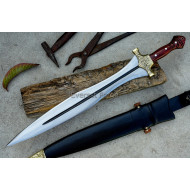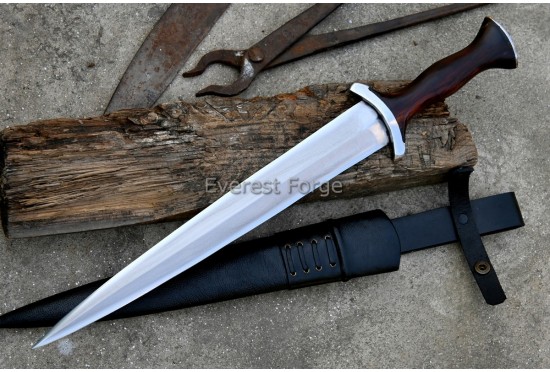
- Model: Degen Dagger
- Product Code: DGNOWN012
- Location: Kathmandu,Nepal
A Hand-Forged Medieval Degen Dagger, Built the Way You Want It
Choose the blade finish, the fittings, the handle, the scabbard, the chape and whether to make it full tang — then we forge that exact dagger. Every selection updates the preview on screen. There are 1,296 possible combinations, and each one is a build our smiths in Kathmandu make routinely.
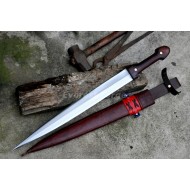
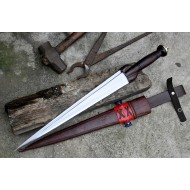
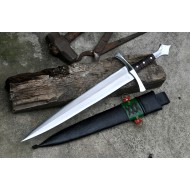
Underneath every combination is the same blade: 15 inches of hand-forged 5160 spring steel, broad, double-edged and diamond in section, running to a strong thrusting point. It is the long belt dagger of late-medieval Germany and Switzerland, with a curved guard and capped pommel, carried in a leather scabbard tipped with a metal chape.
Your Six Choices
Blade length is fixed on this pattern. For a shorter or longer Degen, see our other Degen daggers below, or use our custom forge service.
What Is a Degen Dagger?
In the German of the fifteenth century, Degen meant a dagger. Only from the sixteenth century onward did the word drift toward the long thrusting swords it names in modern German — which is why the same word now covers both the dagger on this page and our Degen swords. The long Degen dagger was a belt sidearm of the German-speaking lands: broad at the base, double-edged, stiffened by a diamond cross-section and built above all to thrust.
Its best-known relative is the Swiss dagger of the sixteenth century, with its curved guard and pommel framing the grip. Ours follows that family in outline and proportion. It is an Everest Forge interpretation rather than a copy of a single museum piece, and at 15 inches it sits at the long end of what the type was made in.
Which Blade Finish Suits a Degen?
Fittings, Chape and Handle
The fittings are the curved guard and the capped pommel that frame the grip; the chape is the metal tip that protects the end of the scabbard. Each comes in brass, silver-tone or copper, and you choose them separately. Matching metals give a unified, formal look; a contrast, such as silver-tone fittings with a brass chape, gives a quieter accent. Brass and copper soften to a patina with handling; silver-tone, a bright white metal, stays bright longest.
The handle comes in rosewood, our dense and warm standard; whitewood, a pale timber that contrasts with dark fittings; or glossy black buffalo horn, the most striking but the least forgiving of very dry heated rooms. The scabbard leather comes in six colours: black and brown are the most period-appropriate; red, green and blue give a heraldic feel; white is the most striking and shows wear soonest.
Standard Tang or Full Tang?
The tang is the part of the blade that runs into the handle. The standard build carries the tang through the grip to the pommel, which is how most historical daggers of this family were made. Choosing Make It Full Tang upgrades the dagger to full tang construction for buyers who want the strongest possible join between blade and grip, especially for heavy handling or cutting practice. Our guide to full tang versus rat-tail tang explains the difference in detail.
Want a Degen We Do Not List Here?
A shorter or longer blade, a bone or leather grip, engraving, a closer copy of a specific museum dagger or a matched Degen sword and dagger pair — anything outside this option list goes through our custom forge service, where we quote your design individually.
Request a Custom Forge →Why This Degen Works
Standard Build Specification
Blade, handle and overall length are fixed on this pattern and do not change with your selections. Weight varies slightly with handle material and tang choice. Because every piece is hand-forged, small variation in weight, dimensions and finish is normal.
An Honest Note on This Dagger
An honest note. Three things worth saying plainly. First, this is an Everest Forge interpretation of the German and Swiss long dagger, not a copy of one museum piece; if you need a specific original reproduced, send us the reference through custom forge. Second, the silver-tone fittings and chape are a bright white metal, not sterling silver. Third, 5160 is not stainless. It will rust if left wet or stored in its scabbard; keep it lightly oiled. We make it as a collector's and reenactor's dagger, and we do not sell our blades as weapons.
This Degen Suits
- Collectors of late-medieval and Renaissance European arms
- German and Swiss reenactment portrayals that need a belt dagger in real steel
- Historical fencing students who want a real-weight dagger
- Buyers who want to see their exact combination before it is forged
Look Elsewhere If
- You want a shorter 12-inch Degen — see the Degen daggers below
- You need a bone or leather grip — see the standard Degen dagger or custom forge
- You need an exact museum reproduction — use custom forge
- You want a stainless blade that tolerates neglect
How Your Order Is Made
Caring for Your Degen Dagger
Wipe the blade dry after handling — skin acid marks carbon steel quickly — and keep a light film of oil on it; any mineral or machine oil works. Do not store the dagger in its scabbard for long periods, because leather holds moisture against the steel. Brass and copper fittings and chape patina with handling and polish back with any metal polish if you prefer them bright. Condition the scabbard leather now and then, and keep a horn handle away from direct heat.
Shipping, Returns and Warranty
Every piece is prepared at the forge in seven to ten days, and shipping adds a further seven to ten days. Orders to the USA and Canada travel with FedEx; everywhere else ships on a DDP service, which means duties and taxes are settled before the parcel moves so there is nothing to pay on delivery. Every piece carries the Everest Forge manufacturer warranty against defects in forging and heat treatment. Because a configured dagger is made to your specification, it falls outside our standard returns window except where the blade is faulty — full terms are on our shipping and returns page. Import rules on daggers vary by country and are the buyer's responsibility to check before ordering.
Explore More Everest Forge Blades
Questions About the Degen Dagger
What is a Degen dagger?
A long, broad, double-edged belt dagger of late-medieval Germany and Switzerland, stiffened by a diamond cross-section and made above all to thrust. In fifteenth-century German, Degen meant a dagger; the word only later came to mean a thrusting sword, which is why it names both our Degen daggers and our Degen swords.
Is it historically accurate?
It follows the German and Swiss long-dagger family in outline, section and proportion, with the curved guard and pommel of that family. It is an Everest Forge interpretation rather than a copy of one museum original. If you want a specific piece reproduced, send the reference through our custom forge service.
Should I choose Make It Full Tang?
Choose it if you plan heavy handling or cutting practice and want the strongest join between blade and grip. The standard build carries the tang through the grip to the pommel, which is how most historical daggers of this family were made and is ample for collection, display and reenactment. Our tang guide explains the difference.
How is this different from your standard Degen Medieval Dagger?
This is the configurable version: a 15-inch Degen where you choose every finish and fitting and see the result live before ordering. The standard Degen Medieval Dagger offers other blade lengths and handle materials. Choose this page to design the look; choose the standard page for a different length.
How does it compare with your 12-inch Degen daggers?
Mainly in reach. This is the long 15-inch Degen. The Degen Dagger and the Swiss/German Degen Dagger are 12-inch patterns, lighter and handier at the belt. For more length, the Short Degen Sword-Dagger runs to 17 inches.
Do the fittings and chape have to match?
No, you choose them separately. Matching metals give a unified, formal look; contrasting them gives a subtle accent. The preview shows the combination before you order.
Are the silver fittings real silver?
No. The silver-tone option is a bright white metal chosen for a silver look. It stays bright longer than brass or copper and needs no special care. Sterling silver fittings can be quoted through our custom forge service.
Which handle should I choose?
Rosewood is our standard and the safest all-round choice: dense, warm and stable. Whitewood gives a pale grip that contrasts with dark fittings. Buffalo horn is glossy black and takes a deep polish, but can develop fine checks over years in very dry heated rooms.
Is it sharp, and can I get it blunt?
Both edges ship sharpened and the point is acute. For historical fencing, rehearsal or events, add "Stage combat build — rebated edge, rounded tip." in the order note and read our stage combat standard.
Will 5160 steel rust?
Yes, if you let it. 5160 is a high-carbon spring steel, not stainless, and that is a deliberate trade: it is far tougher than the stainless steel used in most display daggers, at the cost of needing care. Wipe it dry after handling, keep a light film of oil on it and store it out of the scabbard. Black coated reduces the upkeep.
Can I order a different blade length?
Not in this configurator, which keeps the blade at 15 inches. Our standard Degen Medieval Dagger is offered in other lengths, and anything else can be quoted through our custom forge service.
Can I order it left-handed?
A double-edged dagger works equally in either hand, so no change is needed. If you have a specific handling request, write it in the order note and the forge will take care of it.