Menu
Your Cart

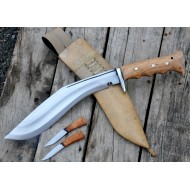
Afghan Issue Kukri / Khukuri – AEOF White Scabbard – 11" Modernised Gurkha Combat Blade

Afghan Issue Kukri / Khukuri – AEOF White Scabbard – 11" Modernised Gurkha Combat Blade
$119.99
Ex Tax: $119.99
  • Model: official issue kukri
  • Product Code: Afghanwhite
  • Location: Kathmandu, Nepal

Available Options

The First Modernised Gurkha Khukuri — Designed for Operation Enduring Freedom, Built for Desert Warfare

The Official Afghan Issue Kukri — sometimes called the AEOF Kukri (Afghanistan Enduring Operation Freedom Khukuri) — is the kukri the British Brigade of Gurkhas redesigned for Afghanistan. When Gurkha regiments deployed under Operation Enduring Freedom from 2001 onwards, the traditional Service No.1 pattern was found unsuited to desert warfare. The regiment commissioned a new design — and the result was the first fundamentally modernised kukri in the Brigade's lineage.

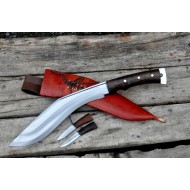
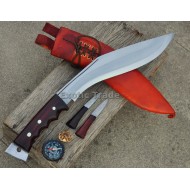
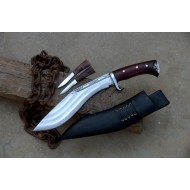
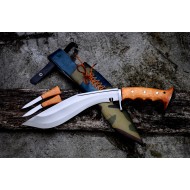
This is not a polished ceremonial blade with a modern handle bolted on. The Afghan Issue is a ground-up reengineering of the Gurkha kukri for 21st-century combat: chirra (double-fuller) blade for weight reduction without losing chopping power, full-tang construction with lanyard hole for combat security, Sadha wood handle shaped for desert-glove operation, and a distinctive white buffalo leather scabbard for desert camouflage. It was designed to fight in the conditions where traditional Gurkha kukris would falter — and it has been carried by Gurkha soldiers in Afghanistan, Iraq, and modern operational deployments ever since.

Quick Specs
  • Blade: 11" semi-polished 5160 high-carbon spring steel with chirra (double fuller), water-tempered
  • Handle: 5.5" full-tang Sadha wood with lanyard hole, extended tang construction
  • Total length: 16.5"
  • Weight: ~800g with scabbard
  • Scabbard: Cotton-wood core wrapped in natural white buffalo leather, dual frogs, leather loops
  • Included: Karda (utility knife) + Chakmak (sharpener) + lanyard cord
  • Forged by: Kami caste smiths, Tokha-3 Kathmandu, Nepal

Why This Khukuri Is Different — The Modernisation Story

For most of the Brigade of Gurkhas' history, the kukri pattern stayed close to its 19th-century roots. The Service No.1 (the parade-and-issue blade) was designed in the mid-1980s but kept the traditional silhouette — polished blade, smooth buffalo horn handle, rat-tail tang, brown leather scabbard. It works in jungle and field conditions but it was never engineered for desert warfare.

When Operation Enduring Freedom deployed Gurkha units to Afghanistan in 2001, several limitations of the traditional pattern became operationally significant:

  • Heat absorption. The polished mirror finish reflected sun and revealed position. A semi-polished or matte finish was needed.
  • Weight. The solid spine of the traditional blade was heavier than necessary for the chopping work soldiers actually did. Chirra (double fuller) cuts visible grooves into the blade flats — reducing weight by ~15% without weakening structure.
  • Glove handling. Smooth buffalo horn becomes slippery under sweat, dust, and tactical glove combinations. A shaped Sadha wood grip with finger indexing addressed this.
  • Combat security. The traditional rat-tail tang is built for chopping, not for the impact-and-twist forces of close-quarters combat. The Afghan Issue moved to full-tang construction with a lanyard hole at the pommel — wrist cord attachment standard for deployed soldiers.
  • Visual signature. Brown leather scabbards stood out against Afghan terrain. The white buffalo leather scabbard blended better in desert and dust environments.

The Afghan Issue is the first kukri that addressed all five at once. It is the breakpoint between "the traditional kukri" and "the modern combat kukri" in the Brigade's lineage.


Why This Specific Afghan Issue Khukuri

The Afghan Issue (AEOF) has been one of the most successful Gurkha kukri designs of the modern era. It has been carried by deployed soldiers, replicated by every major Nepalese kukri house, and sold widely on Amazon and other marketplaces for over a decade. What separates the Everest Forge version:

Direct-from-forge supply chain. No middleman, no marketplace inventory, no third-party reseller mark-up. The khukuri is forged in our Kathmandu workshop after you place your order. You're buying directly from the smiths.

Kami caste lineage. Our smiths are Kami — the hereditary blacksmith caste of Nepal that has forged kukris for the Gurkhas since the regiment's founding. Meet the smiths who forge every blade.

Military supply credentials. Everest Forge has supplied kukris to the British Gurkha Army (BSI Service No.1 contract, 2008), Nepal Army (2015–2018), and Nepal Police (2016–2017). Verifiable contract history, not branding language.

5160 spring steel, water-tempered for differential hardness. Edge 58–60 HRC for cutting performance, belly 45–46 HRC, spine 22–25 HRC for shock absorption. Same metallurgy used across our entire current-issue military range.

Free personalisation. Add a service year, deployment marker, regiment, name, or family dedication — engraved by hand on the left side of the blade. Up to ~30 characters. Free on every order. This is the single biggest reason to buy direct-from-forge instead of a marketplace listing.

Photo approval before dispatch. We photograph your finished khukuri and send the images for your sign-off before shipping. If anything looks off, we re-forge — something no Amazon listing offers.

30-day refund guarantee + DDP worldwide shipping. Duties and taxes paid upfront via DHL Express / FedEx. You pay one price; nothing more on arrival. Tracked door-to-door, typically 10–14 days from order to delivery. No customs surprises, no return-shipping fights.


Free Personalisation
Engrave Your AEOF Khukuri Before It Ships
Every order includes free text engraving — up to ~30 characters. Common requests on this product: deployment year + theatre ("AFG 2010", "OEF 09"), regiment marker ("RGR", "QGE"), service number, name in English or Nepali Devanagari script, or family dedication. Engraved by hand on the blade before dispatch — the photo approval you receive will show the finished engraving.

Who Buys the Afghan Issue Kukri

Veterans of Afghanistan operations — British Gurkhas, US, UK, Australian, Canadian, and NATO service members who deployed under Operation Enduring Freedom and want the operational kukri that was carried alongside them in theatre. Many own it engraved with their deployment year.

Serving and retired Gurkhas — the AEOF is current issue. Soldiers who carried this blade on tour and want a personalised, higher-finish version for keeping or for gift to family.

Modern military collectors — building a 21st-century operational kukri collection alongside Iraqi Freedom variants, BSI Service No.1, Jungle PRI, and WWII historical replicas. The Afghan Issue is the design landmark of modern Gurkha kukri history.

Tactical and combat-utility buyers — those who want a working kukri with proven combat-deployment engineering: full-tang, lanyard hole, finger-indexed grip, chirra-fullered blade. This is the kukri that competes head-to-head with Cold Steel and similar tactical brands — but with genuine military supply lineage behind it.

Outdoor and survival users — overlanders, bushcrafters, hunters, survival-kit builders. The 11" chirra blade is the single best chopping kukri in our current-issue range for outdoor work — lighter than a 12"+ working blade, more capable than a 9" police/army kukri.


Full Specification

Blade length11" (27.94 cm)
Total length16.5" (41.91 cm) — tip to pommel
Handle length5.5" (13.97 cm) — full tang with lanyard hole
Steel5160 high-carbon spring steel, hand-forged
Heat treatmentWater-tempered for differential hardness
Blade hardnessEdge 58–60 HRC, Belly 45–46 HRC, Spine 22–25 HRC
Blade finishSemi-polished (operational matte — not parade mirror)
Blade designChirra (double fuller) for weight reduction + structural strength
Tang constructionFull tang with extended tang and lanyard hole at pommel
Handle materialSadha wood, full-tang construction, shaped grip
ScabbardCotton-wood core wrapped in natural white buffalo leather, dual frogs, leather loops
Weight~800g (1.76 lb) with scabbard
OriginTokha-3, Kathmandu, Nepal
ProductionHand-forged after order (5–7 days forging time)

Each kukri is individually hand-forged. Minor variations in finish, grain, and dimension are part of the craft.


What's Included

  • Afghan Issue Kukri — semi-polished 11" chirra blade with full-tang Sadha wood handle and lanyard hole
  • Karda — small utility knife (traditional companion blade)
  • Chakmak — sharpening steel / fire striker (traditional companion tool)
  • White buffalo leather scabbard — hand-stitched over cotton-wood core, with dual frogs and leather loops
  • Lanyard cord (wrist cord) for the pommel lanyard hole
  • Free text personalisation — up to ~30 characters, engraved on the blade
  • Certificate of authenticity from Everest Forge
  • Photo-approval images sent before dispatch

Why Direct From Forge vs Amazon or Marketplace

The Afghan Issue has been listed on Amazon and major marketplaces for years. We get asked regularly: "Why buy from Everest Forge directly instead of from a marketplace seller?"

Honest answer:

  • Free personalisation — engrave your deployment year, regiment, or name on the blade. No marketplace listing offers this. A kukri without your engraving is a souvenir; a kukri with your engraving is your kukri.
  • Photo approval before dispatch — we send finished photos for your sign-off before the kukri ships. If anything looks off, we re-forge. Amazon and marketplaces ship blind.
  • Direct supply chain — when you order here, the smiths who supplied the British Gurkha Army contract are the ones forging your blade. Marketplace inventory is bulk-purchased, sitting in a warehouse, no traceable provenance.
  • DDP worldwide — duties paid upfront. You pay one price. No customs charges on arrival. Compare to marketplace international orders where customs invoices arrive weeks after delivery.
  • 30-day refund + replacement — direct from forge, full guarantee. Compare to marketplace return processes for $120+ knives shipped internationally.
  • Support real craft — your purchase goes directly to a Kathmandu forge employing 10 Kami caste smiths. Marketplace purchases route through middlemen who take 30–50% of every sale.

For a working kukri you'll engrave, photograph-approve, and keep for decades — the direct-from-forge path is honestly the better one. For a low-cost generic you don't plan to personalise or keep long-term, marketplace listings exist.


Import & Knife Law — Read Before Ordering

Buyer responsibility: Edged-weapon import and carry laws vary by country, state, and city. It is your responsibility to confirm legality before ordering.
  • UK: Curved blades over 50 cm fall under specific legislation. The Afghan Issue blade is 27.94 cm — well under the limit — but carry in public requires lawful reason.
  • Australia: Some states require permits for certain blade types. Check your state's edged-weapons schedule.
  • USA: Federally legal for import as a knife. Carry and ownership rules vary by state and city — check local statutes.
  • EU: Importable in most member states with applicable duties. We ship DDP (duties paid).
  • Canada, NZ: Generally importable; carry rules vary by province/jurisdiction.
We will not assist with under-declaration of value or evasion of customs duty. All shipments are DDP via DHL Express / FedEx with full tracking.

Related Operational Khukuri Patterns

The Afghan Issue sits at the centre of the modern operational kukri family. Buyers commonly consider:

For heavier chirra-fullered working blades, see our Chirra Kukri (Fullered Blade) range. For other modern operational patterns, see the Hybrid Combat-Utility-Survival range. Want to understand the parts of a kukri? See our Kukri / Khukuri Terminology Guide.


Frequently Asked Questions

What is the Afghan Issue Kukri?

The Afghan Issue Kukri — also called the AEOF Khukuri (Afghanistan Enduring Operation Freedom) — is the kukri designed for British Gurkha soldiers deployed to Afghanistan under Operation Enduring Freedom (2001 onwards). It is the first fundamentally modernised kukri in the Brigade's lineage, with chirra-fullered blade, full-tang construction, finger-indexed Sadha wood handle, lanyard hole, and white buffalo leather desert-camouflage scabbard. It has become one of the most successful and widely-collected modern Gurkha designs.

What does AEOF mean?

AEOF stands for "Afghanistan Enduring Operation Freedom" — the British military operational designation. The kukri designed for that deployment took the AEOF name. Some sellers shorten it to "OEF" (Operation Enduring Freedom) or call it the "Afghan Kukri." All refer to the same modern operational pattern.

Why is the scabbard white instead of traditional brown or black?

The white buffalo leather scabbard is part of the modernisation. Traditional brown and black leather stood out against Afghan terrain. The natural white buffalo leather blends with desert dust, sand, and arid environments — operational camouflage built into the carrying gear. The white scabbard is the visual identifier of the Afghan Issue pattern.

What is a chirra (double fuller) blade?

Chirra is the Nepali term for a fuller — a long groove cut into the flat of the blade to remove weight without weakening structure. A double-chirra blade has two parallel grooves on each side. The Afghan Issue uses chirra to reduce blade weight by approximately 15% while keeping the chopping mass at the spine and edge intact. It is also visually distinctive — chirra kukris are easy to identify at a glance.

How is this different from the BSI Service No.1?

The Service No.1 is the traditional polished parade-and-issue khukuri — buffalo horn handle, rat-tail tang, mirror finish, traditional brown scabbard. The Afghan Issue is the operational combat redesign — Sadha wood gripper-shaped handle, full tang with lanyard hole, semi-polished finish, chirra-fullered blade, white desert scabbard. Service No.1 is for parade and ceremony; Afghan Issue is for combat and field deployment.

Is this listing the Gripper Handle version?

No — this is the standard Sadha wood handle version. The shaped Sadha wood handle is full-tang construction with finger indexing for grip security, but it is the smooth-contour version of the design. If you want the contoured Gripper Handle variant, see Afghan Issue Kukri — White with Gripper Handle. Same blade, same scabbard, more aggressive grip contour.

What is the lanyard hole for?

The lanyard hole at the pommel takes a wrist cord. In combat operations, a wrist cord stops the kukri from being lost if it's dropped, knocked from the hand, or pulled away. The lanyard is standard issue on the AEOF pattern — the Afghan Issue ships with a cotton lanyard cord ready to thread through the hole.

Can I get a deployment year, regiment, or name engraved?

Yes — free of charge. Add your engraving text at checkout. Up to approximately 30 characters. The engraving is applied by hand on the left side of the blade. Common requests on this product: deployment year and theatre ("AFG 2010", "OEF 09"), regiment marker ("RGR", "QGE", "QOGLR"), service number, name in English or Nepali Devanagari script.

What is the blade hardness?

The blade is water-tempered for traditional differential hardness: edge 58–60 HRC for cutting performance, belly 45–46 HRC, spine 22–25 HRC for shock absorption. This zoned tempering allows a working khukuri to chop hard material — including bone, hardwood, and dense vegetation — without the spine cracking under impact.

Is this kukri suitable for bushcraft and outdoor use?

Yes — it is one of the best in our current-issue range for outdoor work. The 11" chirra blade is lighter than a heavy-duty 12"+ working blade but more capable than a 9" police/army issue. The full-tang construction takes batoning and chopping abuse without loosening. Many of our customers buy this kukri specifically for bushcraft, overlanding, hunting camp, or survival kit configurations.

What's included with the khukuri?

You receive the Afghan Issue Kukri, traditional Karda (small utility knife), Chakmak (sharpening steel), hand-stitched white buffalo leather scabbard over cotton-wood core with dual frogs and leather loops, cotton lanyard cord, certificate of authenticity, and photo-approval images sent before dispatch.

Why buy from Everest Forge instead of Amazon or another marketplace?

Free engraving on every order (no marketplace offers this on the AEOF pattern), photo approval before dispatch, direct-from-forge supply chain (the kukri is forged after you order — not pulled from generic warehouse inventory), DDP worldwide shipping (duties paid upfront), 30-day refund guarantee, and verifiable military supply credentials (British Gurkha BSI 2008, Nepal Army 2015–2018, Nepal Police 2016–2017). For a $120 kukri you plan to keep and personalise, direct from the forge is the better path.


Direct From The Forge
Order Your Afghan Issue Khukuri
Hand-forged in Kathmandu by Kami caste smiths. The first modernised Gurkha kukri — designed for Operation Enduring Freedom, built for desert warfare. Free deployment-year engraving. DDP worldwide shipping. 30-day refund guarantee. Photo approval before dispatch.
View the Iraqi Freedom Sister Pattern
Specification
Blade: 11 inches long, hand-forged from highly graded carbon steel
Total Length: 16.5 inches overall
Handle: 5.5-inch full tang handle made from Nepalese Sadha wood
Weight: 800 grams including the blade and sheath
Note: Each kukri is individually handcrafted using traditional techniques, resulting in slight variations in measurements, finish, and weight. These natural differences are a mark of authenticity and add to each kukri's unique character.

Write a review

Note: HTML is not translated!
Bad Good
Captcha