
Types of Eastern Swords – Middle Eastern, Indian, Tibetan & Himalayan Blades
The East has given birth to some of the most legendary types of swords in human history — weapons that embody both beauty and purpose. From the elegant curves of Persian and Indian sabers to the spiritual blades of Tibet and Nepal, these swords were not just tools of war but extensions of philosophy, faith, and identity.
Each design — curved or straight — reflects the region’s culture, terrain, and martial tradition. Let’s journey through the Middle East, India, Tibet, and the Himalayas to discover the artistry and symbolism behind the world’s most iconic types of Eastern swords.
Scimitar Sword (Arabian Peninsula)

The Scimitar is one of the most recognizable types of Middle Eastern swords. With its deeply curved, single-edged blade, it excelled in cavalry warfare across desert landscapes. Lightweight yet powerful, it allowed fast, sweeping slashes that could cut through armor and cloth with precision.
Over time, the scimitar became a spiritual symbol of strength, grace, and divine protection — influencing countless Islamic sword styles across Arabia, Persia, and beyond.
Shamshir Sword (Persia / Iran)

The Persian Shamshir — meaning “lion’s tail” — represents one of the most refined types of Persian swords. Its narrow, deeply curved blade was perfect for slicing from horseback. Persian smiths forged Shamshirs with extraordinary craftsmanship, often adorning them with gold, silver, and Quranic inscriptions.
The Shamshir became the model for many later sabers, influencing designs in India (Talwar) and Turkey (Kilij). It remains a masterpiece of balance, artistry, and martial grace.
Kilij Sword (Ottoman Empire)

The Ottoman Kilij was a broad, slightly curved saber with a flared tip known as a yelman. This feature gave extra weight for devastating slashes, making it one of the most effective types of Ottoman swords. Wielded by cavalry and officers, it combined combat efficiency with artistic splendor — often featuring crescent engravings and gold inlay.
The Kilij inspired many later European military sabers, bridging East and West through martial design.
Talwar Sword (India)

The Indian Talwar is one of the most iconic types of Indian swords Slightly curved with a sharp edge and disc pommel, it was suited for both cutting and thrusting. Indian smiths blessed each blade as a sacred object — sometimes engraving them with mantras or verses for divine favor.
Used by Mughal, Rajput, and Sikh warriors alike, the Talwar embodied valor, precision, and spiritual devotion. Its form became a defining feature of India’s martial legacy.
Khanda Sword (India)

The Khanda is one of India’s oldest straight, double-edged swords. Its broad, heavy blade widens near the tip to deliver powerful strikes. The reinforced spine and knuckle guard allowed exceptional control, making it a fearsome close-combat weapon.
In Indian philosophy, the Khanda symbolizes knowledge and justice. It appears in the Sikh Khanda emblem, representing unity of power and truth — both martial and spiritual.
Pulwar Sword (Afghanistan)

The Afghan Pulwar evolved from both the Shamshir and Talwar. It features a broad, slightly curved blade with a flared tip and a hilt suited to local fighting styles. Forged by tribal artisans, it became one of the most practical types of Afghan swords, favored for endurance and reliability.
Adorned with horn or brass hilts, Pulwars carried intricate etchings that represented tribal identity and personal valor.
Sosun Pattah Sword (India)
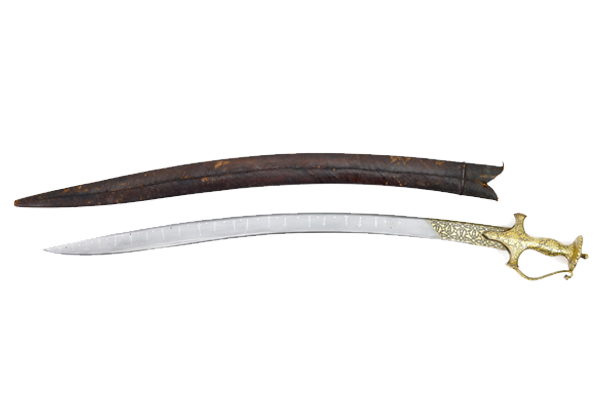
The Sosun Pattah, or “lily leaf sword,” is among the most graceful types of Indian sabers. Its broad, curved blade resembles the shape of a leaf, offering superb slicing momentum while maintaining reach. It was a favorite among Mughal cavalry, admired for its balance and beauty.
Many Sosun Pattahs were highly decorated, showcasing India’s fusion of artistry and weapon design during the Mughal era.
Yataghan Sword (Turkey / Balkans)
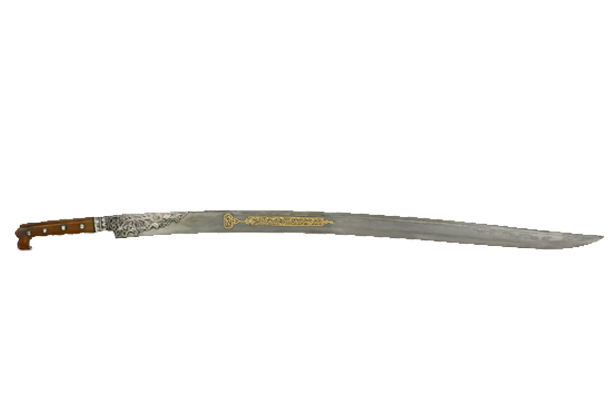
The Yataghan is a short Ottoman sword or long knife with a distinct forward curve and no crossguard. Its flared pommel improved grip, and its compact design made it ideal for infantry combat. Both soldiers and civilians carried Yataghan blades for daily use.
Often elaborately ornamented with silver and ivory, the Yataghan stands as one of the most practical and artistic types of Ottoman swords.
Urumi Sword (South India)

The Urumi is one of the most unusual types of Indian swords. Flexible and coiled, it functioned as both whip and blade. Originating from Kerala’s martial art of Kalaripayattu, it required incredible skill to wield safely.
The Urumi represented the mastery of flow — the idea that strength lies in motion, not resistance. It remains a stunning example of India’s ingenuity in sword design.
Kukri (Nepal)

The Nepalese Kukri is one of the most famous types of Himalayan blades. Its inward-curved shape makes it ideal for chopping and slicing. Carried by Gurkha soldiers, the Kukri became a symbol of bravery and loyalty recognized worldwide.
Beyond combat, it serves as a tool and ceremonial object, representing the spirit of Nepal’s mountain warriors and craftsmen.
Kora Sword (Nepal)

The Kora is a forward-curved Nepalese sword used for rituals and warfare. Its wide, heavy tip produces immense cutting power, making it one of the most distinctive types of Nepalese swords. The Kora’s engravings of Hindu deities reflect the deep spiritual roots of Himalayan forging.
As both sacred and practical, it remains a powerful symbol of Nepalese tradition and craftsmanship.
Ram-Dao Sword (Nepal)
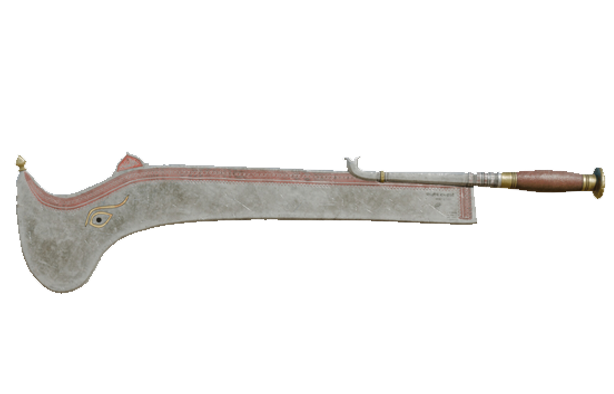
The Ram-Dao is Nepal’s ceremonial execution sword, traditionally used in Dashain festivals to represent the triumph of good over evil. Its heavy forward-curving blade requires immense strength and precision.
Although largely ceremonial today, the Ram-Dao embodies the spiritual aspect of weapon-making — where the blade is both sacred and symbolic.
Kha-Phur Sword (Tibet)
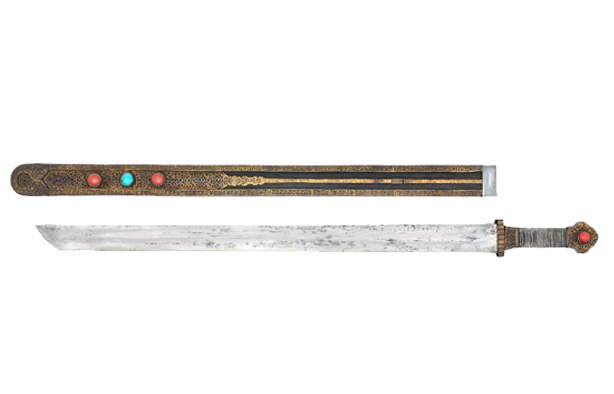
The Kha-Phur is a Tibetan short sword with a broad base and slightly curved edge, often used for close defense or ceremonial wear. Forged from meteoric iron and engraved with sacred mantras, it symbolized divine strength and protection.
As one of the rarest types of Tibetan swords, it blends practicality, artistry, and deep religious significance. Many examples include silver inlay, turquoise bezels, and scrollwork inspired by Buddhist iconography — making the Kha-Phur both a personal weapon and a spiritual talisman.
Bhutanese Patang Sword (Bhutan)
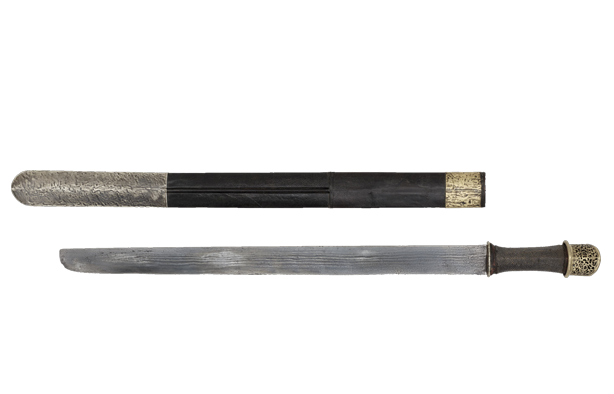
The Bhutanese Patang is the national sword of Bhutan and one of the most elegant types of Himalayan blades. It features a straight, single-edged blade with a gently widening tip and a distinctive wooden or ivory hilt wrapped in ornate metalwork. The Patang is traditionally worn horizontally across the lower back by nobility, monks, and warriors.
More than a weapon, the Patang represents honor, discipline, and Bhutanese cultural identity. Many historic Patangs were forged with imported high-carbon steel and decorated with silver, gold plating, and dragon motifs. Today, it remains an important ceremonial symbol in Bhutanese culture — especially during royal processions and festivals.
Sword of Manjushree (Nepal / Tibet)
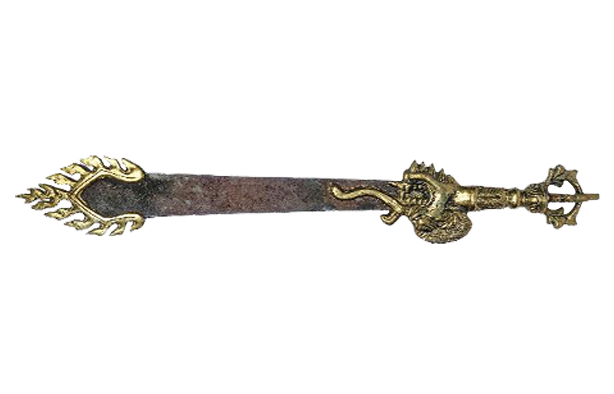
The Sword of Manjushree — the Buddhist deity of wisdom — is one of the most iconic spiritual swords of the Himalayas. According to legend, Manjushree used this sword to cut through the mountains surrounding the Kathmandu Valley, draining the ancient lake and making the land habitable for humans.
Symbolically, the sword represents the cutting of ignorance, illusion, and suffering. Its design varies, but it is typically shown as a long, flaming blade with a straight or slightly curved profile, representing the “fire of wisdom.” Many Nepalese temples and statues depict Manjushree holding this sword aloft, signifying enlightenment and clarity of mind.
Khadga Sword (India / Nepal)

The Khadga is a sacred curved ritual sword in Hindu and Buddhist tradition, distinct from battlefield weapons. It features a pronounced forward curve, a thick spine, and elaborate decorations such as lotus motifs, flames, or depictions of deities. Historically, the Khadga is associated with warrior-goddesses like Durga and Kali, symbolizing divine power, protection, and the destruction of negative forces.
Unlike functional swords, the Khadga was primarily used in ceremonies, royal rituals, and temple offerings. In Nepal and India, priests still use Khadga swords in ritual dances and blessings. The sword’s shape — heavy at the front and narrow near the hilt — reflects both symbolic strength and the sweeping motion of spiritual purification.
The Spirit of the Eastern Sword
From Persia’s curved sabers to Tibet’s ritual blades, these types of Eastern swords reveal a legacy where craftsmanship meets spirituality. Each weapon — curved or straight — embodies harmony between strength, balance, and wisdom.
At Everest Forge, we continue this heritage. Every hand-forged sword pays tribute to ancient forging traditions across the East — where steel was shaped not just by fire, but by purpose.
Request a Custom Eastern or Himalayan Sword
If swords like the Shamshir, Talwar, Khanda, Kora, or Himalayan Kukri inspire you, our artisans at Everest Forge can hand-forge a custom blade rooted in the rich traditions of the East. From elegant Middle Eastern sabers to powerful Indian war swords and Nepalese ceremonial blades, we craft personalized pieces that honor centuries of spiritual, cultural, and martial heritage.