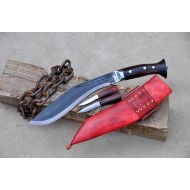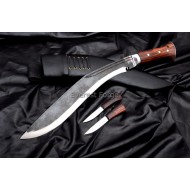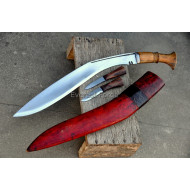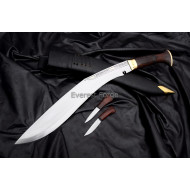
- Model: Kukri/Khukuri
- Product Code: OWNSIRUPATE
- Location: Kathmandu,Nepal
Available Options
A Hand-Forged Sirupate Kukri/Khukuri, Built the Way You Want It
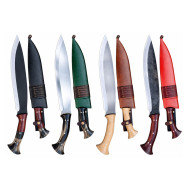
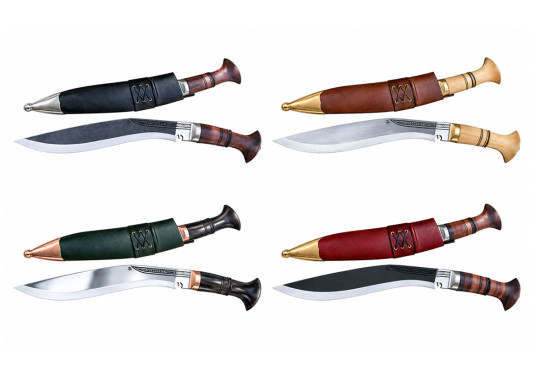
Choose the blade finish, the handle, the bolster and chape metals, the scabbard colour and whether to add the karda and chakmak — then we forge that exact khukuri. Every selection updates the preview on screen. There are 2,016 possible combinations, and each one is a build our smiths in Kathmandu make routinely.
Underneath every combination is the same blade: 12 inches of hand-forged 5160 spring steel in the slim sirupate profile, with the cho notch at the base, sharpened and ready for use. The sirupate is the fast, light kukri/khukuri of the Nepali hills. This one began with a well-worn blade we saw carried by a shepherd while trekking — light enough to carry all day and quick enough to clear a trail with a flick of the wrist.
Your Six Choices
Blade length and construction are fixed on this pattern. For anything outside these six groups, use our custom forge service.
What Is a Sirupate Kukri/Khukuri?
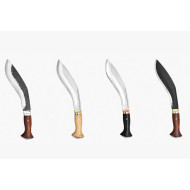
Sirupate is a Nepali name that describes the blade's shape: slim and tapering, like the long narrow leaf of siru, a hill grass. Where many kukri/khukuri patterns carry a broad, heavy belly for chopping, the sirupate keeps its blade narrow along most of its length. The weight is lower, the tip moves faster and the blade passes through cuts with less resistance. It is the khukuri for people who carry one all day rather than those who swing one all day.
Like every genuine kukri/khukuri, it carries the cho (also called the kaudi) — the small notch at the base of the edge. The cho stops sap and blood from running onto the handle, marks where sharpening ends, and carries a traditional meaning as a sign of the forge.
Which Blade Finish Suits a Sirupate?
Handle, Bolster and Chape
Rosewood is our standard handle: dense, warm reddish-brown and comfortable in the wet. Whitewood gives the strongest contrast against a dark blade. Buffalo horn is glossy black and takes a deep polish, but is the least forgiving of very dry heated rooms. Leather is warm in cold hands and gives a sure grip; it needs an occasional leather conditioner to stay supple.
The bolster sits at the join of blade and handle, and the chape protects the tip of the scabbard. Each comes in silver-tone (a bright white metal), brass or copper, and you choose them separately. Matching metals give a classic, unified look; a brass bolster with a copper chape, or silver-tone with brass, gives a quieter contrast. Brass and copper soften to a patina with handling; silver-tone stays bright longest.
Scabbard, Karda and Chakmak
The scabbard, or dap, comes in seven leather colours. Black and brown hide field dirt best; red, blue, green and yellow make a statement; white is the most striking and shows wear soonest.
Choose Yes for the karda and chakmak to add the two companion pieces that ride in pockets on the back of the scabbard. The karda is a small utility knife for the fine work a kukri/khukuri is too large for. The chakmak is a blunt, hardened steel used to burnish and straighten the edge in the field, and it was once struck against flint to make fire. Many buyers leave them out for a lighter, simpler carry; traditionalists would not carry a khukuri without them.
Want a Sirupate We Do Not List Here?
A longer or shorter blade, a chirra fuller, an engraved name, a different handle shape or a fully traditional pattern — anything outside this option list goes through our custom forge service, where we quote your design individually.
Request a Custom Forge →Why This Sirupate Works
Standard Build Specification
Blade, handle and overall length are fixed on this pattern and do not change with your selections. Weight varies slightly with handle material and rises a little with the karda and chakmak. Because every piece is hand-forged, small variation in weight, dimensions, grain and finish is normal.
An Honest Note on This Sirupate
An honest note. Three things worth saying plainly. First, the sirupate is built for speed, not mass. It clears brush, cuts cord and handles camp work beautifully, but it will not chop heavy wood like a broad-bellied kukri/khukuri — if chopping is your main job, look at our configurable farmer's kukri. Second, 5160 is not stainless. It will rust if left wet or stored in a damp scabbard; keep it lightly oiled. Third, the silver-tone option is a bright white metal, not sterling silver. It looks the part and wears well, but it is priced as a working fitting, not a precious one.
This Sirupate Suits
- Hikers and trekkers who want a kukri/khukuri they will actually carry
- Trail clearing, brush work and general camp tasks
- Collectors of Nepali patterns who want the slim hill profile
- Buyers who want to see their exact combination before it is forged
Look Elsewhere If
- Heavy chopping and splitting is your main job — choose a broad-bellied pattern
- You want a sterling silver ceremonial piece — ask through custom forge
- You want a stainless blade that tolerates neglect
- You need a different blade length — see our other sirupates or custom forge
How Your Order Is Made
Caring for Your Kukri/Khukuri
Wipe the blade dry after use and after handling — skin acid marks carbon steel quickly. Keep a light film of oil on the steel in storage, and do not leave the khukuri in its scabbard for long periods, because leather holds moisture against the steel. When you sheathe it, put the khukuri in first and the karda and chakmak in last; a full pocket pressing on the scabbard can make the khukuri tight to draw. If the dap feels tight over time, wood shavings cut from the core by the edge are the usual cause, and tipping the scabbard out clears them. Treat a leather handle with a little leather conditioner now and then. Our kukri/khukuri maintenance guide covers sharpening and storage in more detail.
Shipping, Returns and Warranty
Every piece is prepared at the forge in seven to ten days, and shipping adds a further seven to ten days. Orders to the USA and Canada travel with FedEx; everywhere else ships on a DDP service, which means duties and taxes are settled before the parcel moves so there is nothing to pay on delivery. Every piece carries the Everest Forge manufacturer warranty against defects in forging and heat treatment. Because a configured khukuri is made to your specification, it falls outside our standard returns window except where the blade is faulty — full terms are on our shipping and returns page. Import rules on edged blades vary by country and are the buyer's responsibility to check before ordering.
Explore More Everest Forge Blades
Questions About the Sirupate Kukri/Khukuri
What is a sirupate kukri/khukuri?
A sirupate is a slim kukri/khukuri pattern from Nepal, named for the narrow leaf of siru, a hill grass. It keeps the blade narrow along most of its length instead of swelling into a heavy belly, so it is lighter and faster than broader patterns. It is valued for trail work, brush clearing and all-day carry.
Should I choose a sirupate or a broad-bellied kukri/khukuri?
Choose by the work. The sirupate is for speed and carry: clearing brush, trail work and camp tasks where a light blade saves your arm. A broad-bellied kukri/khukuri carries more weight forward and chops far harder, which suits splitting and heavy wood. If chopping is your main job, our configurable farmer's kukri is the better choice.
What are the karda and chakmak?
They are the two traditional companion pieces carried in pockets on the back of a khukuri scabbard. The karda is a small utility knife for fine work such as whittling, food preparation and cutting cord. The chakmak is a blunt, hardened steel used to burnish and straighten the edge in the field, and in the past it was struck against flint to make fire. Choose Yes to add both, or No for a lighter, simpler carry.
What is the notch near the handle?
That is the cho, also called the kaudi. It stops sap and blood from running onto the handle, marks the point where the sharpened edge ends, and is traditionally read as a sign of the forge and of the khukuri's Nepali origin. Every genuine kukri/khukuri carries one.
Which blade finish should I choose?
Black coated is the most rust-resistant and the best choice for wet trails or humid storage. Raw forge is the traditional village look and hides marks from use. Satin is the easy all-round choice. Polished shows the slim sirupate line best, but needs the most care and shows every scratch.
Which handle should I choose?
Rosewood is our standard and the safest choice for hard outdoor use. Whitewood gives the strongest contrast against a dark blade. Buffalo horn is the most striking and takes a deep polish, but can develop fine checks over years in very dry heated rooms. Leather is warm in cold hands and grips well; give it a little leather conditioner now and then to keep it supple.
Is the silver bolster and chape real silver?
No. The silver-tone option is a bright white metal, chosen for a silver look on a working khukuri. It stays bright longer than brass or copper and needs no special care. If you want sterling silver fittings for a ceremonial piece, ask through our custom forge service and we will quote it.
Do the bolster and chape have to match?
No, you choose them separately. Matching metals give a classic, unified look, which is the traditional choice. Mixing them — a brass bolster with a copper chape, for example — gives a subtle contrast. The preview shows the combination before you order.
How is this different from your other sirupate kukris?
This is the configurable one: a 12-inch sirupate where you choose every finish and fitting. We also make a 10-inch sirupate, the classic compact size, and a 13-inch panawal sirupate with scales riveted through a full-width tang. Choose this one when you want to decide the look yourself.
Will 5160 steel rust?
Yes, if you let it. 5160 is a high-carbon spring steel, not stainless, and that is a deliberate trade: it is far tougher and takes a better working edge than stainless steels in this class, at the cost of needing care. Wipe it dry after use, keep a light film of oil on it and do not leave it in the scabbard for months.
Can I order it left-handed?
Yes. Write "Left Handed" in the order note and the forge will take care of the rest.
Can I order a different blade length or an engraved name?
Not through this configurator, which keeps the blade at 12 inches. A longer or shorter blade, an engraved name, a chirra fuller or any other change outside the listed options goes through our custom forge service, where we quote your design individually.