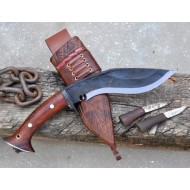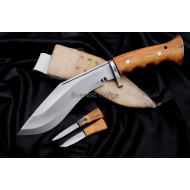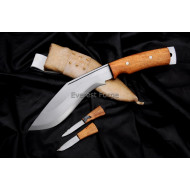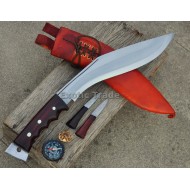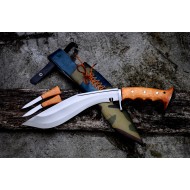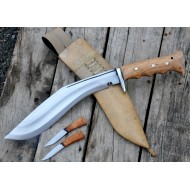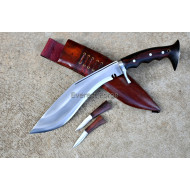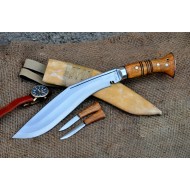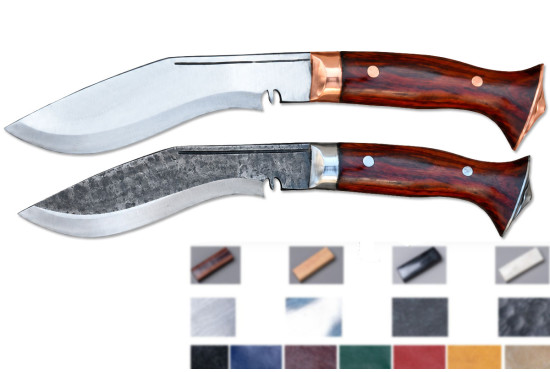
- Model: EDC Kukri/Khukuri
- Product Code: OWNWDCK005
- Location: Kathmandu,Nepal
Available Options
A Hand-Forged EDC Kukri/Khukuri, Built the Way You Want It
Choose the blade finish, the handle, the fittings and the scabbard colour — then we forge that exact khukuri. Every selection updates the preview on screen. There are 480 possible builds, each one a knife our smiths in Kathmandu make routinely, and you can add a display stand.
Underneath every combination is the same little blade: 5 inches of hand-forged 5160 spring steel in the inward-curving kukri/khukuri profile, on a full tang riveted through a 4.5-inch grip, in a buffalo leather sheath with a belt loop. At 9.5 inches overall it is the smallest blade we make that still works like a khukuri — the one you carry every day rather than the one you hang on a wall.
Your Four Choices
Blade length and construction are fixed on this pattern. For anything outside these options, use our custom forge service.
Why a 5-Inch Kukri/Khukuri?
Most khukuris are built to chop. This one is built to be with you. Five inches of blade is enough to keep the kukri's inward curve and its forward belly — so it still bites into wood and slices with the weight of the blade rather than the strength of your wrist — while staying small enough to ride on a belt all day without catching on anything.
In Nepal, small khukuris of this size are ordinary household tools rather than showpieces: they cut cord and vegetables, whittle, open sacks, trim branches and do the hundred small jobs that never need a 12-inch blade. That is the job this one is forged for. It will not replace a full-size khukuri for splitting kindling or clearing brush, and it is not meant to.
Which Blade Finish Suits an EDC Blade?
For a knife that lives in a sheath on your belt, raw forge, acid wash and black coated all age better than polished.
Handle, Fittings and Scabbard
Rosewood is our standard: dense, dark and sure in a wet hand. Whitewood is the pale timber and gives the strongest contrast against a dark blade. Buffalo horn is glossy black and takes a deep polish, though it is the least forgiving of very dry heated rooms. Yak bone is the brightest of the four, close to ivory, and the one that turns a working EDC knife into a gift. All four are riveted through the same full tang.
The fittings come in silver-tone, a bright white metal that stays bright longest; brass, warm gold and the classic partner for rosewood; copper, warmer and quickest to darken with handling; and black, the quietest match for a black coated blade. The scabbard is buffalo leather with a belt loop, in six colours: black and brown for a working carry, red, green, blue and white when the knife is a gift or a collection piece.
Want an EDC Khukuri We Do Not List Here?
A longer or shorter blade, a guard, a different sheath style, an engraved name or a matched set of small khukuris — anything outside this option list goes through our custom forge service, where we quote your build individually.
Request a Custom Forge →Why This EDC Khukuri Works
Standard Build Specification
Blade, handle and overall length are fixed on this pattern and do not change with your selections. Because every piece is hand-forged, small variation in weight, dimensions, grain and finish is normal, and a raw forge blade shows natural forging marks that make each one different.
An Honest Note on This Khukuri
An honest note. Three things worth saying plainly. First, this is a small knife. It carries the kukri/khukuri shape honestly, but five inches of blade will not split kindling or clear brush — for that you want our configurable survival khukuri or 3 Chirra Beast. Second, the silver-tone fittings are a bright white metal, not sterling silver. Third, 5160 is not stainless, and an everyday carry blade sees more sweat and damp than a display piece: wipe it dry, keep a light film of oil on it, and do not leave it sheathed wet. Black coated and acid wash finishes make that upkeep easier.
This EDC Khukuri Suits
- Everyday carry, where a full-size khukuri is too much knife
- Camp cooking, cord, cardboard, whittling and general utility work
- Anyone who wants a real Nepali khukuri in a pocket-sized package
- Gifts — a yak bone handle with brass fittings presents beautifully
Look Elsewhere If
- You want to chop or split wood — see the survival khukuri or 3 Chirra Beast
- You want a display piece for a wall — a larger blade carries a room better
- Your local rules restrict carrying a fixed blade in public
- You want a stainless blade that tolerates neglect
How Your Order Is Made
Caring for Your Kukri/Khukuri
Wipe the blade dry after use and after handling — skin acid marks carbon steel quickly, and a carried knife gets handled far more than a displayed one. Keep a light film of oil on the steel; for a knife used around food, a food-grade oil such as camellia is the sensible choice. Do not store it sheathed for long periods, because leather holds moisture against steel. Condition the sheath every few months, and give a timber, horn or bone handle a little oil once or twice a year. Touch the edge up on a fine stone — a small blade needs very little work to bring back. Our kukri/khukuri maintenance guide covers sharpening and storage in detail.
Shipping, Returns and Warranty
Every piece is prepared at the forge in seven to ten days, and shipping adds a further seven to ten days. Orders to the USA and Canada travel with FedEx; everywhere else ships on a DDP service, which means duties and taxes are settled before the parcel moves so there is nothing to pay on delivery. Every piece carries the Everest Forge manufacturer warranty against defects in forging and heat treatment. Because a configured khukuri is made to your specification, it falls outside our standard returns window except where the blade is faulty — full terms are on our shipping and returns page. Rules on owning and carrying fixed blades vary by country and sometimes by city, and they are the buyer's responsibility to check before ordering.
Explore More Everest Forge Blades
Questions About the EDC Kukri/Khukuri
What can a 5-inch khukuri actually do?
Everything a good utility knife does, with the added bite of a forward-curved blade: cutting cord and cardboard, food preparation, whittling, trimming small branches, opening sacks and general camp work. What it will not do is chop or split wood, which needs blade weight this knife deliberately does not carry.
Is it a real khukuri, or just a small knife shaped like one?
It is a real one, forged the same way as our large khukuris: 5160 spring steel, hardened and tempered by hand, with the inward curve and forward belly that make a kukri/khukuri cut the way it does. Small working khukuris are ordinary household tools in Nepal rather than a modern invention for the export market.
Which handle should I choose?
Rosewood is our standard and the safest for daily use: dense, stable and comfortable when wet. Whitewood gives the strongest contrast against a dark blade. Buffalo horn is glossy black and takes a deep polish, but can develop fine checks over years in very dry heated rooms. Yak bone is the brightest and the most gift-like. All four are riveted through the same full tang, so the choice is about look and feel, not strength.
Which finish lasts best in daily carry?
Acid wash and black coated. Acid wash hides scratches and handling marks better than anything else on this page, and black coated shields the flats from moisture so only the bare edge needs regular oiling. Raw forge also ages well because the surface is already dark. Polished looks superb and shows every mark within a week of real use.
Are the silver fittings real silver?
No. The silver-tone option is a bright white metal chosen for a silver look. It stays bright longer than brass or copper and needs no special care. The black fittings are the quietest match for a black coated blade.
Is it safe to use around food?
Yes, with normal care. Carbon steel reacts with acidic foods and will darken, which is harmless and forms a protective patina over time. Wash and dry it straight after use rather than leaving it wet, and use a food-grade oil such as camellia rather than machine oil if the knife will mostly be used in a kitchen or camp.
Can I carry it on my belt every day?
The sheath is made for it, with a belt loop cut to the blade. Whether you may carry it in public is a different question and depends entirely on where you live: fixed-blade rules vary by country, state and sometimes city, and owning a knife and carrying it are separate legal questions almost everywhere. Check your own rules before ordering.
Does it come sharp?
Yes. Every Everest Forge blade ships sharpened and ready to use, so open the parcel with care. A blade this size takes very little work to keep keen — a few passes on a fine stone will bring it back after weeks of use.
Should I choose this or a full-size khukuri?
Choose this one if the knife will be carried and used for small jobs. Choose a full-size khukuri if you want to chop, split or clear: our configurable survival khukuri is 12 inches of blade, and the 3 Chirra Beast adds fullers to the same size. Many owners end up with one of each.
Will 5160 steel rust?
Yes, if you let it. 5160 is a high-carbon spring steel, not stainless, and a carried knife meets more sweat and damp than a displayed one. Wipe it dry, keep a light film of oil on it and do not store it wet in the sheath. Black coated and acid wash finishes reduce the upkeep considerably.
Can I order it left-handed?
Yes. Write "Left Handed" in the order note and the forge will take care of the rest.
Can I order a different blade length or an engraved name?
Not through this configurator, which keeps the blade at 5 inches. A longer or shorter blade, a guard, a different sheath or an engraved name goes through our custom forge service, where we quote your build individually.